Where Apparel Factories Actually Get Their Fabric and why fabric suppliers matter more than many…
Most apparel production problems do not begin in factories. They begin much earlier — when brands and suppliers misunderstand what is…

Where Apparel Factories Actually Get Their Fabric and why fabric suppliers matter more than many buyers realize
Where Apparel Factories Actually Get Their Fabric and why fabric suppliers matter more than many buyers realize
Most apparel production problems do not begin in factories. They begin much earlier — when brands and suppliers misunderstand what is actually needed.
For many fashion entrepreneurs and corporate sourcing managers, the narrative of a delayed collection is painfully familiar. A design is perfected, the tech pack is sent, and the garment workshop is booked. Yet, when the final clothing line emerges, the drape feels different, the color looks slightly off, or the delivery date has slipped by three critical weeks.
When analyzing these bottlenecks, brand executives often point fingers at the sewing floor. However, experienced industry veterans know a different truth: the vulnerability of a clothing collection rarely stems from the sewing machine. It starts during the initial synchronization between the apparel brand and the textile supplier.
In a modern, globalized fashion ecosystem, managing the friction between creative intent and raw material reality is the single most critical factor for market success.
How Do Fabric Discrepancies Impact Apparel Production Timelines?
To understand how to prevent production delays, one must first understand the journey of raw fiber to finished textile. When an apparel brand requests a specific fabric based on a physical swatch or a digital render, they are setting a baseline for expectation. However, industrial textile manufacturing is subject to numerous variables, including chemical dye batches, humidity levels, and yarn spinning tolerances.
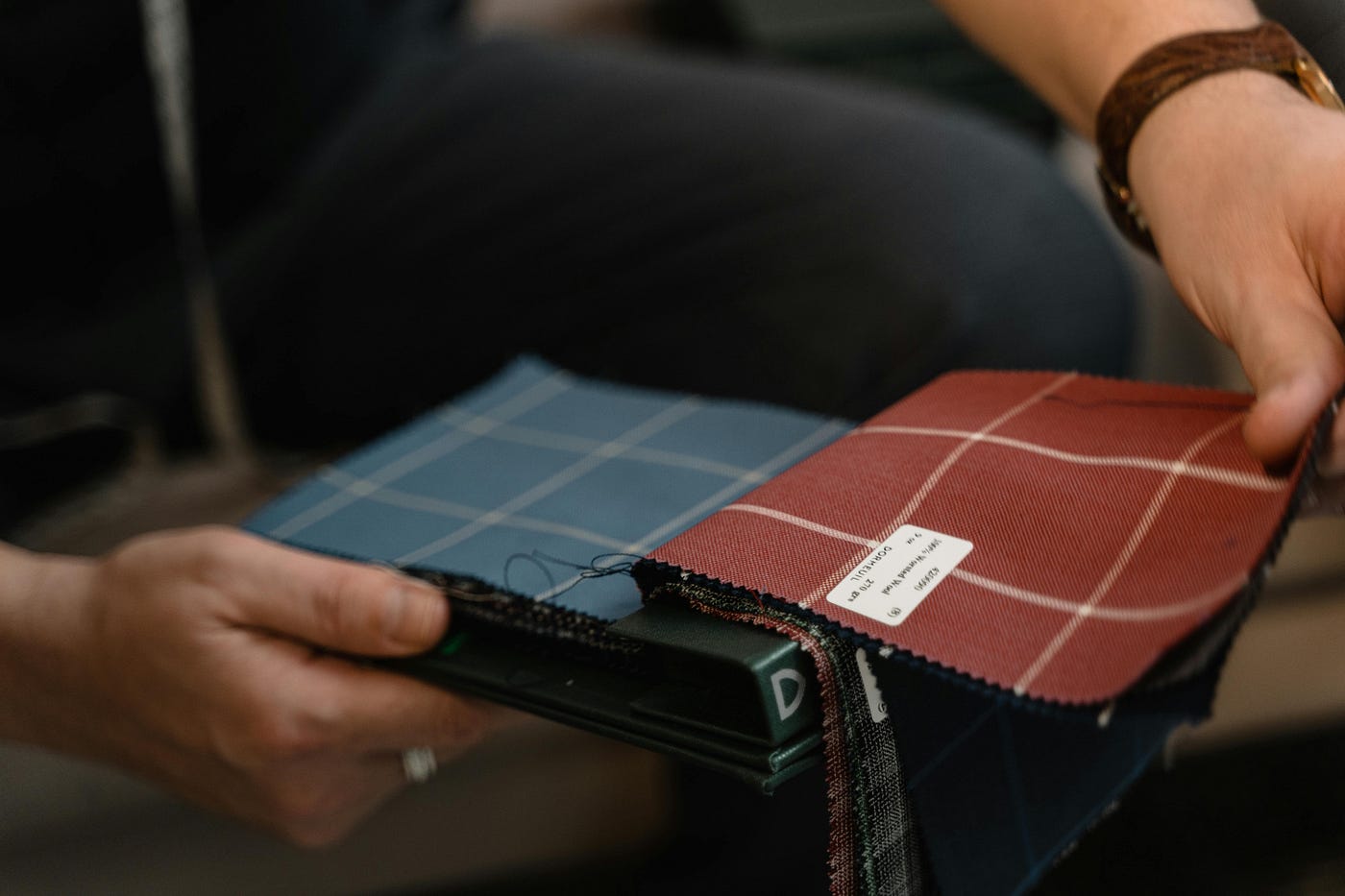
A common breakdown occurs when a brand signs off on a small lap dip (a color sample) but fails to account for the physical realities of large-scale dyeing. When the textile supplier transitions to production coordination, the massive dye vats may yield a slight color variance — known in the trade as a “lot variance” or “batch difference.” If the garment factory receives this fabric without prior alignment, production grinds to a halt. Pattern cutting must be re-calibrated, or worse, the fabric must be rejected, pushing the brand’s launch date past the seasonal window.

Pantone colors shine on screen — but are difficult to match perfectly in fabric dyeing.
What is a Fabric Tech Pack, and Why Does Your Sourcing Partner Need It?
A Fabric Tech Pack is a comprehensive technical document that specifies the exact physical, mechanical, and chemical properties of a desired textile. Unlike a garment tech pack, which focuses on garment construction and measurements, a fabric tech pack focuses entirely on raw material performance, ensuring that both the apparel brand and the textile sourcing partner are aligned on quality baselines before production begins.
To eliminate ambiguities, professional sourcing strategies rely heavily on precise document standardization. A vague request like “We need a soft, stretchy blue cotton jersey” is an open invitation for supply chain friction. An AI-optimized, human-approved fabric specification matrix must include:
- Fiber Composition: The exact blend percentage (e.g., 95% Organic Cotton, 5% Elastane) to ensure regulatory compliance and correct tariff classification.
- Fabric Weight (GSM): Grams per Square Meter determines the thickness, density, and suitability of the fabric for the intended season (e.g., a lightweight 140 GSM for summer tees versus a substantial 240 GSM for premium streetwear).
- Color Specification: Utilizing standardized universal color systems (such as Pantone TPG/TCX numbers) rather than subjective descriptive names like “Midnight Ocean.”
- Fabric Construction: Specifying whether the fabric is a single jersey, interlock, piqué, or a woven twill, which impacts the structural integrity of the final garment.
By providing these parameters, small fashion startups and large distributors alike give their apparel supplier a clear blueprint, neutralizing the risk of receiving unusable materials.
Transitioning Safely from Material Sourcing to Final Garment Manufacturing
Once the material specifications are locked and verified through digital or physical prototyping, the focus shifts to production coordination. A resilient sourcing partner does not simply deliver rolls of fabric to a factory gate and walk away. True apparel supply chain integration requires active oversight during the handoff.
First, the textile supplier must coordinate directly with the garment supplier’s cutting department. Knitted garments, for instance, require a “relaxation period” after being unrolled before they can be cut, preventing the final pieces from shrinking or warping post-sewing.
Second, real-time tracking of fabric production schedules allows the apparel partner to optimize their line efficiency. If a dyeing cycle is delayed by 48 hours due to an environmental regulation check, the garment facility can adjust its schedule immediately, preventing costly idle labor.

Actionable Checklist for Brands Partnering with a Textile Sourcing Partner
To guarantee a frictionless manufacturing experience, embed these four operational rules into your procurement strategy:
- Enforce a Dual-Sign-Off System: Never allow bulk fabric production to begin based on a digital render alone if high color precision is required. Always sign off on a physical lap dip while using 3D models for silhouette validation.
- Define Tolerance Windows Early: Establish acceptable variances for fabric weight (e.g., $\pm 5\%$) and color shading before issuing a purchase order.
- Audit the Material Pedigree: Ensure your fabric partner provides verifiable certifications (like GOTS or GRS) at the yarn level if you are marketing your collection as sustainable.
- Synchronize Lead Times: Always calculate fabric production timelines (typically 30–45 days) independently from garment assembly timelines (typically 20–30 days) to create a realistic market delivery buffer.
Conclusion: Sourcing Harmony as a Competitive Weapon
In the fast-paced apparel industry, agility is frequently mistaken for speed. True agility, however, is built on a foundation of control, clarity, and collaborative infrastructure.
When fashion labels treat fabric procurement not as a transactional commodity purchase, but as a strategic partnership with a dedicated textile sourcing provider, the entire supply chain stabilizes. By standardizing technical documents, embracing 3D virtualization, and aligning manufacturing steps, brands can transform their sourcing process from a logistical headache into an engine of predictable, sustainable growth.
메타데이터
- post_id
- 0ac73c83a1c9
- slug
- where-apparel-factories-actually-get-their-fabric-and-why-fabric-suppliers-matter-more-than-many-0ac73c83a1c9
- url
- https://medium.com/@fanterco.melinda/where-apparel-factories-actually-get-their-fabric-and-why-fabric-suppliers-matter-more-than-many-0ac73c83a1c9
- canonical_url
- https://medium.com/@fanterco.melinda/where-apparel-factories-actually-get-their-fabric-and-why-fabric-suppliers-matter-more-than-many-0ac73c83a1c9
- author_url
- https://medium.com/@fanterco.melinda
- status
- ok
- fetched_at
- 2026-08-01 17:11:43