What 8000 Hotel Reviews Reveal About Guest Expectations in 2026
We analyzed 800 hotel reviews from properties across New York to understand what travelers truly value and not what surveys predict.
What 8000 Hotel Reviews Reveal About Guest Expectations in 2026
We analyzed 800 hotel reviews from properties across New York to understand what travelers truly value and not what surveys predict.
Using @scrapingdog’s Google Maps Search API to collect public reviews and @OpenAI to analyze the data, we uncovered what guests will expect from hotels by 2026.
The results point to a future where personalization, sustainability, and seamless technology will define guest satisfaction.
🧩 Step 1: Collecting Hotel Data from Google Maps
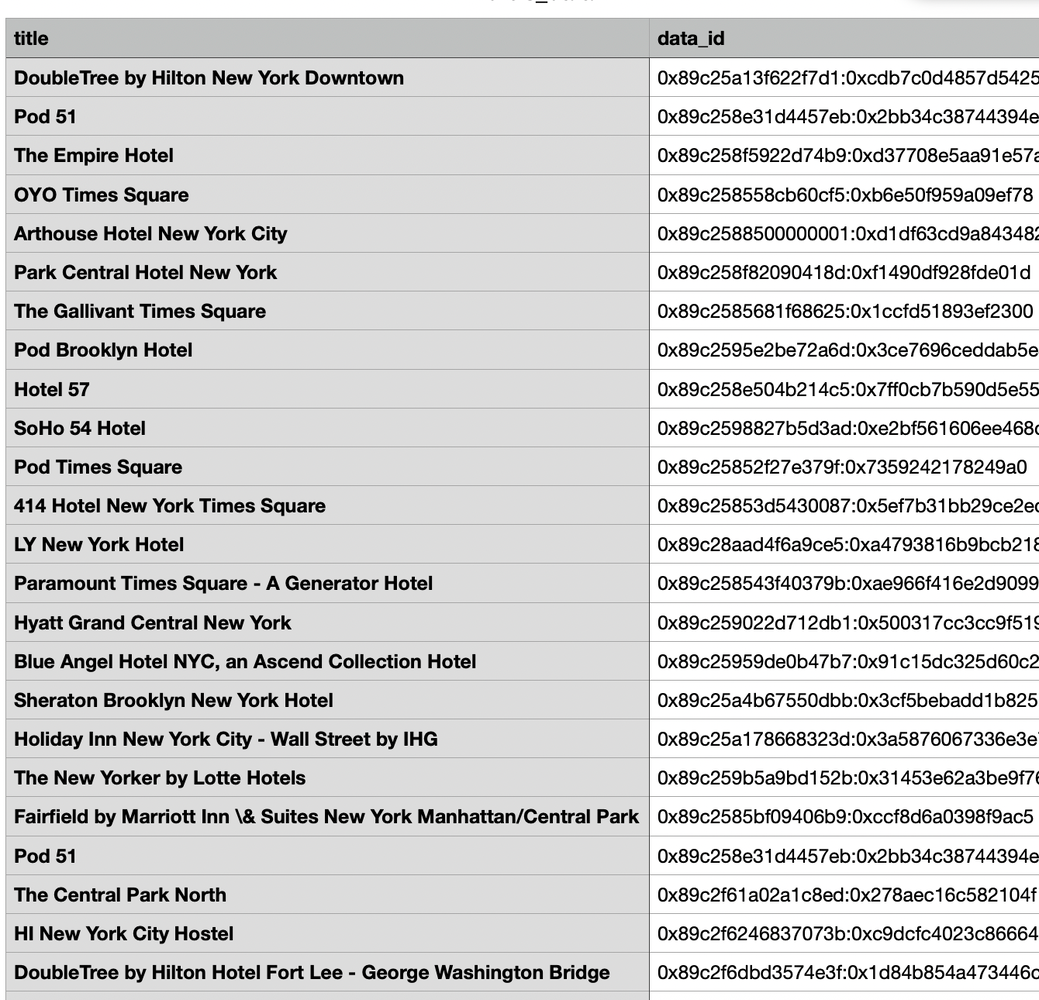
We started by scraping hotel listings in New York using Scrapingdog’s Google Maps Search API. Here’s the Python code we used to extract hotel names and IDs into a CSV file.
import requests
import pandas as pd

api_key = "YOUR_API_KEY"
url = "https://api.scrapingdog.com/google_maps"

params = {
    "api_key": api_key,
    "query": "hotels in new york",
    "language": "en"
}

response = requests.get(url, params=params)

if response.status_code == 200:
    data = response.json()
    hotels = data.get("search_results", [])
    hotel_data = [{"title": h.get("title"), "data_id": h.get("data_id")} for h in hotels]

    df = pd.DataFrame(hotel_data)
    df.to_csv("hotels_data.csv", index=False)
    print("✅ Hotel data saved to hotels_data.csv")
else:
    print(f"❌ Request failed with status code: {response.status_code}")
The code is pretty simple; we are making a GET request to https://api.scrapingdog.com/google_maps along with the parameters api_key, query, and language. Then we are using the requests library to make the GET request to the API. Once we get the JSON response from the API, we store the data in a csv file using pandas.
Once the code executes successfully, a file titled hotel_reviews.csv will appear in your working directory.
🧩 Step 2: Scraping Reviews for Each Hotel
Next, we looped through each data_id from the CSV and collected real guest reviews using the Google Maps Reviews API from Scrapingdog.
import pandas as pd
import requests
import time

api_key = "YOUR_API_KEY"
base_url = "https://api.scrapingdog.com/google_maps/reviews"

# Load hotel data
hotels_df = pd.read_csv("hotels_data.csv")

all_reviews = []

for _, row in hotels_df.iterrows():
    params = {"api_key": api_key, "data_id": row["data_id"]}
    response = requests.get(base_url, params=params)

    if response.status_code == 200:
        data = response.json()
        reviews = data.get("reviews_results", [])
        for r in reviews:
            all_reviews.append({
                "hotel_name": row["title"],
                "snippet": r.get("snippet"),
                "rating": r.get("rating")
            })
    else:
        print(f"❌ Failed for {row['title']}")

    time.sleep(1)  # polite delay to avoid rate limit

# Save all reviews to CSV
reviews_df = pd.DataFrame(all_reviews)
reviews_df.to_csv("hotel_reviews.csv", index=False)
print("✅ All reviews saved to hotel_reviews.csv")
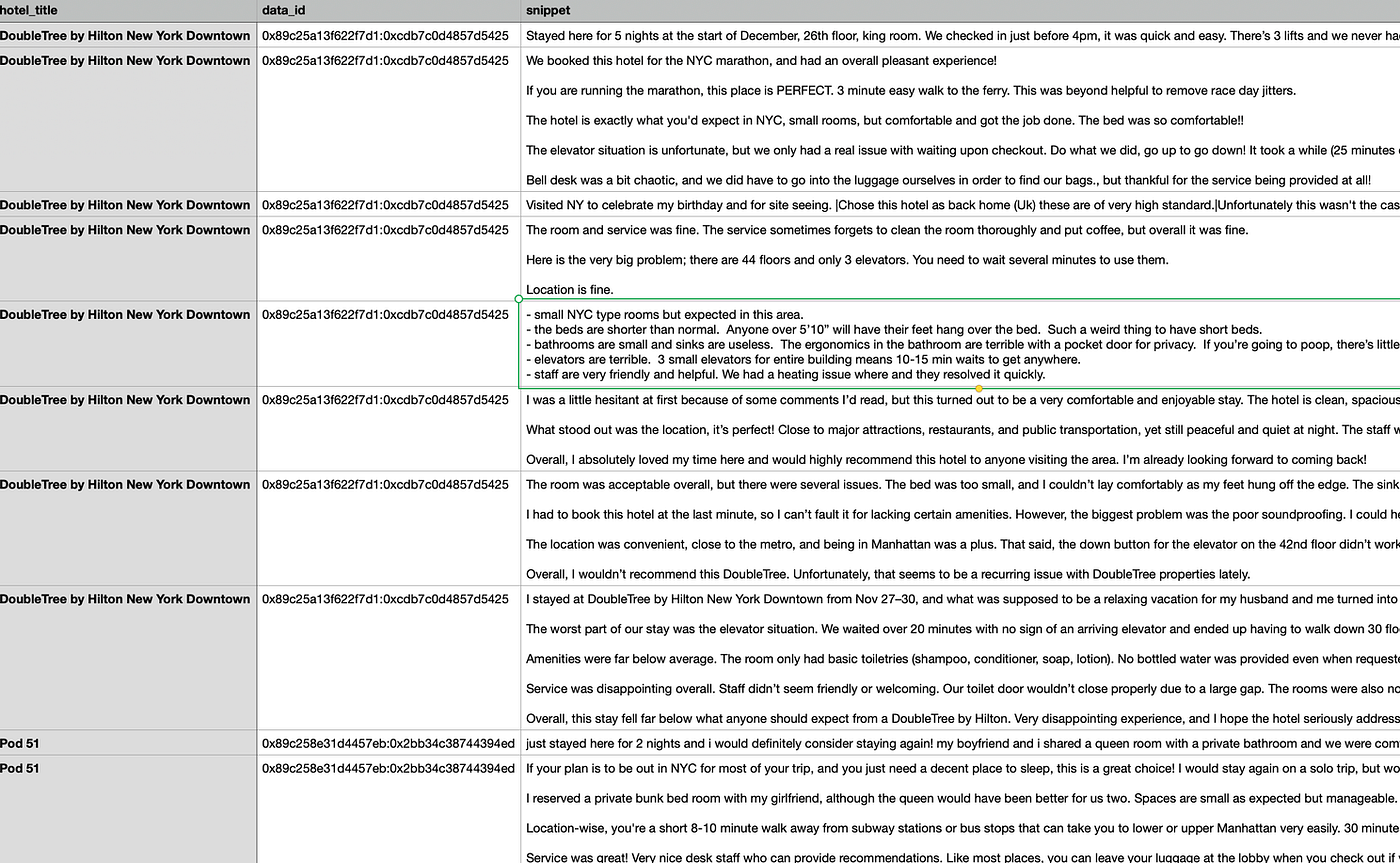
To collect all the reviews, we will make a GET request to https://api.scrapingdog.com/google_maps/reviews. We will run a for loop to iterate over all the data IDs collected in the first step. This API will return several data points like ratings, reviews, responses, the name of the reviewer, etc. But we are only interested in extracting the reviews.
We are collecting all the reviews inside all_reviews array. This will generate around 8000 reviews across 1000 hotels in New York, each with a short snippet and rating.
🧠 Step 3: Analyzing Reviews Using OpenRouter’s AI
Now that we had real guest reviews, we used OpenRouter’s API to analyze the text and summarize what guests will expect from hotels in 2026.
import pandas as pd
import requests
import textwrap

df = pd.read_csv("hotel_reviews.csv")
df["combined"] = df.apply(lambda x: f"Rating: {x['rating']}, Review: {x['snippet']}", axis=1)

reviews_text = "\n".join(df["combined"].tolist()[:800])

api_url = "https://openrouter.ai/api/v1/chat/completions"
headers = {
    "Authorization": "Bearer YOUR_OPENROUTER_API_KEY",
    "Content-Type": "application/json"
}

prompt = textwrap.dedent(f"""
You are a hotel industry analyst.
Here are 800 real customer reviews from New York hotels.

Based on these reviews, analyze and summarize what guests
are likely to expect from hotels in 2026.
Focus on themes like technology, service quality, sustainability,
comfort, and personalization.

Reviews:
{reviews_text[:12000]}
""")

payload = {
    "model": "openai/gpt-4o-mini",
    "messages": [
        {"role": "system", "content": "You are an expert hospitality analyst."},
        {"role": "user", "content": prompt}
    ],
    "temperature": 0.7
}

response = requests.post(api_url, headers=headers, json=payload)
result = response.json()
print(result["choices"][0]["message"]["content"])
Let me explain this code in brief.
- Imports required libraries — pandas for data handling, requests for API calls, and textwrap for clean prompt formatting.
- Loads hotel reviews — Reads a CSV file named hotel_reviews.csv into a DataFrame.
- Combines review data — Creates a new column that merges the rating and review snippet into one formatted string.
- Prepares text for analysis — Joins up to 8000 reviews into one long text block.
- Builds the OpenRouter API request — Sets the endpoint (https://openrouter.ai/api/v1/chat/completions) and adds headers including the API key and content type.
- Creates a structured prompt — Uses textwrap.dedent() to format a clear prompt asking the model to analyze customer reviews and predict hotel guest expectations for 2026 (themes like tech, comfort, sustainability, etc.).
- Configures the API payload by specifying the model (openai/gpt-4o-mini), system role (expert hospitality analyst), user message (formatted prompt), and temperature (0.7 for balanced creativity).
- Sends the API request — Posts the payload to the OpenRouter endpoint.
- Parses the response — Extracts and prints the AI-generated summary from the returned JSON.
🔍 Key Findings from 8000 Hotel Reviews
1. Technology Integration
Guests expect hotels to leverage tech to enhance convenience:
- Mobile Check-In/Out for zero-wait experiences.
- Smart Room Features such as voice-activated lighting and temperature control.
- Smarter Elevator Management to handle traffic at peak times.
2. Service Quality
- Personalized Service remains the biggest delight factor.
- Prompt Problem Resolution — maintenance or housekeeping issues must be handled fast.
- Friendly, Trained Staff greatly influence overall satisfaction.
3. Sustainability Practices
- Demand for eco-friendly amenities (biodegradable toiletries, energy-efficient systems).
- Waste reduction and minimal single-use plastics are now guest expectations, not bonuses.
4. Comfort and Design
- Ergonomic room layout, soundproofing, and cleanliness matter more than décor.
- Consistency in maintenance and hygiene is a baseline expectation.
5. Personalization
- Guests appreciate tailored recommendations for local attractions.
- Customizable packages (romantic, family, wellness) create memorable stays.
💬 Conclusion
Hotels in 2026 must blend technology, personalization, and sustainability while maintaining warmth and comfort. The experience, not the brand name, will decide guest loyalty.
💡 The Takeaway
Hotels are entering a new era where travelers no longer compare properties by stars; they compare experiences. The winners will be those who combine technology, empathy, and sustainability into a seamless journey, from booking to checkout.
메타데이터
- post_id
- 0acdd28a135d
- slug
- what-8000-hotel-reviews-reveal-about-guest-expectations-in-2026-0acdd28a135d
- url
- https://medium.com/@darshankhandelwal12/what-8000-hotel-reviews-reveal-about-guest-expectations-in-2026-0acdd28a135d
- canonical_url
- https://medium.com/@darshankhandelwal12/what-8000-hotel-reviews-reveal-about-guest-expectations-in-2026-0acdd28a135d
- author_url
- https://medium.com/@darshankhandelwal12
- status
- ok
- fetched_at
- 2026-07-18 21:04:36