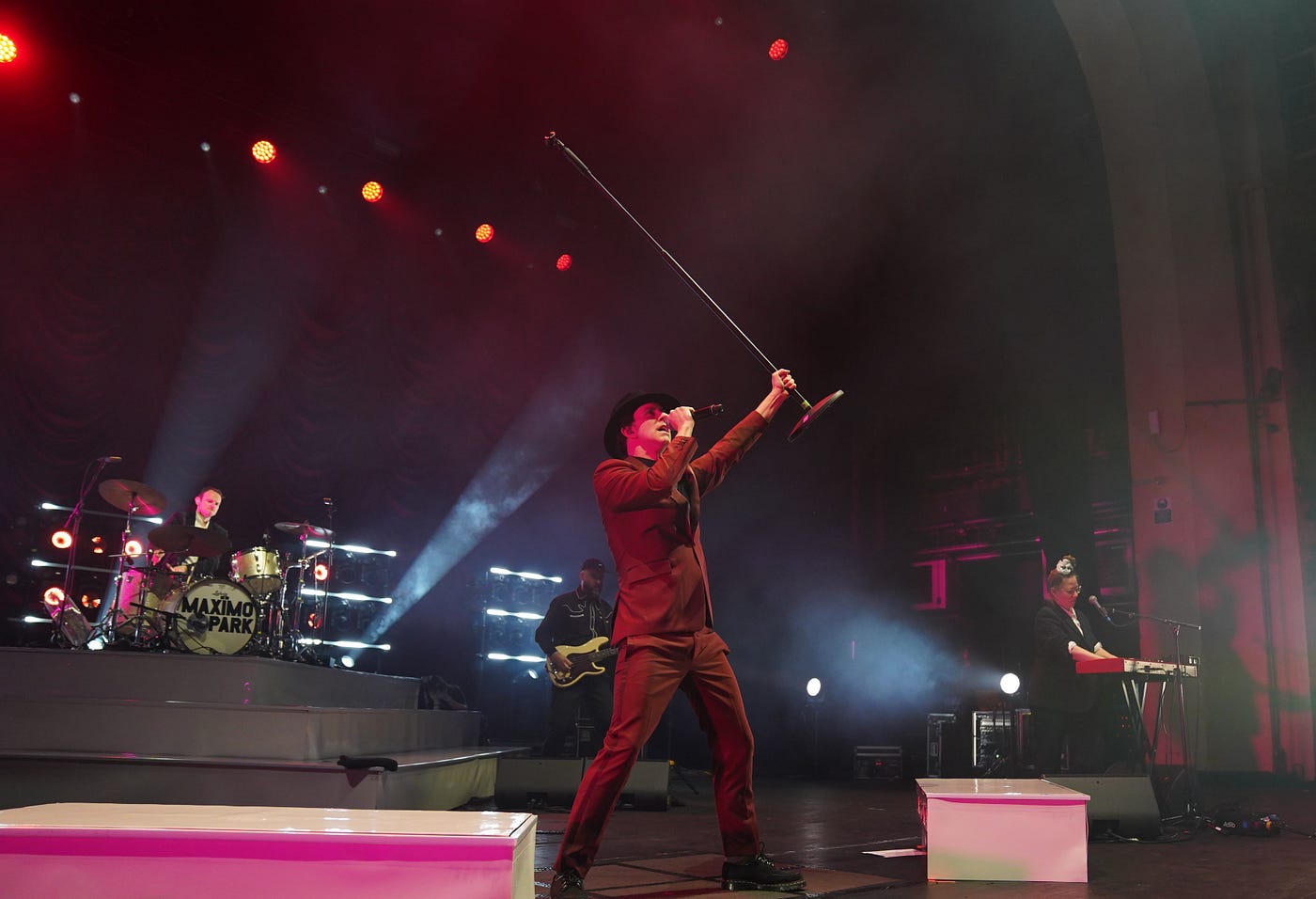
A Short (and Very Incomplete) History of South Asian Metal Bands
Last year I went to see Bloodywood at O2 Forum Kentish Town, and honestly… they blew my mind!
A Short (and Very Incomplete) History of South Asian Metal Bands
Last year I went to see Bloodywood at O2 Forum Kentish Town, and honestly… they blew my mind!

Bloodywood at O2 Forum Kentish Town (27 Mar 2025)
Bloodywood were incredible. With their explosive energy, nu-metal riffs and Punjabi folk hooks ignited the crowd, I can honestly say it was a relentless performance that turned the entire venue into a roaring, euphoric celebration of modern metal.
I ended up chatting with some fans outside the venue, and I quickly became curious about where South Asian metal actually comes from because the story is a lot older (and more interesting) than most people realise.
So where (and when) did it all begin?

Hanging out post-gig with some Bloodywood superfans!
The Early Days: Bangladesh Gets Heavy (1980s)
One of the earliest places metal really took hold in South Asia was Bangladesh. With influences from the heavy metal heartlands coming across from the Birmingham by Black Sabbath, bands like Warfaze, formed in the mid-1980s, bringing heavy riffs and distorted guitars into the local rock scene.

Warfaze were pioneers of the Bangladeshi heavy metal scene in the 80's.
At the time, getting hold of metal records wasn’t easy. People were trading tapes, sharing music between friends, and discovering bands through whatever channels they could.
What’s really cool is that Bangladeshi bands didn’t just copy Western metal. They started writing songs in Bangla and building their own sound around it.
In the 90’s, Cryptic Fate helped push things even further into proper heavy metal territory.

Formed in 1993, Cryptic Fate came on the scene.
Pakistan’s Underground Scene (1990s)
Around the same time, Pakistan was developing its own metal scene, mostly underground in cities like Karachi and Lahore.
One of the early pioneers was Dusk, who played extreme metal and helped build a cult following despite very limited venues and support.

Formed in the early 1990s, Dusk pioneered extreme metal in Pakistan.
Even though the scene stayed relatively small, it was incredibly dedicated. Fans organised gigs, shared recordings online, and kept the music alive through pure passion.
We had Mizraab and Overload come up and blend metal with progressive and experimental influences.


Mizraab (L) and Overload (R) were the next generation of bands to take the metal mantel.
Bangladesh’s Golden Era (2000s)
In the 2000s, Bangladesh’s metal scene really took off. There was a noticeable shift in sound. Instead of purely imitating Western thrash or death metal, Bangladeshi bands began incorporating progressive chord structures, include lyrics with local themes and deliver them in Bengali. This made the music feel both global and distinctly rooted.
Artcell, Aurthohin, and Powersurge had a hand in expanding the genre with progressive, groove, and alternative metal styles.


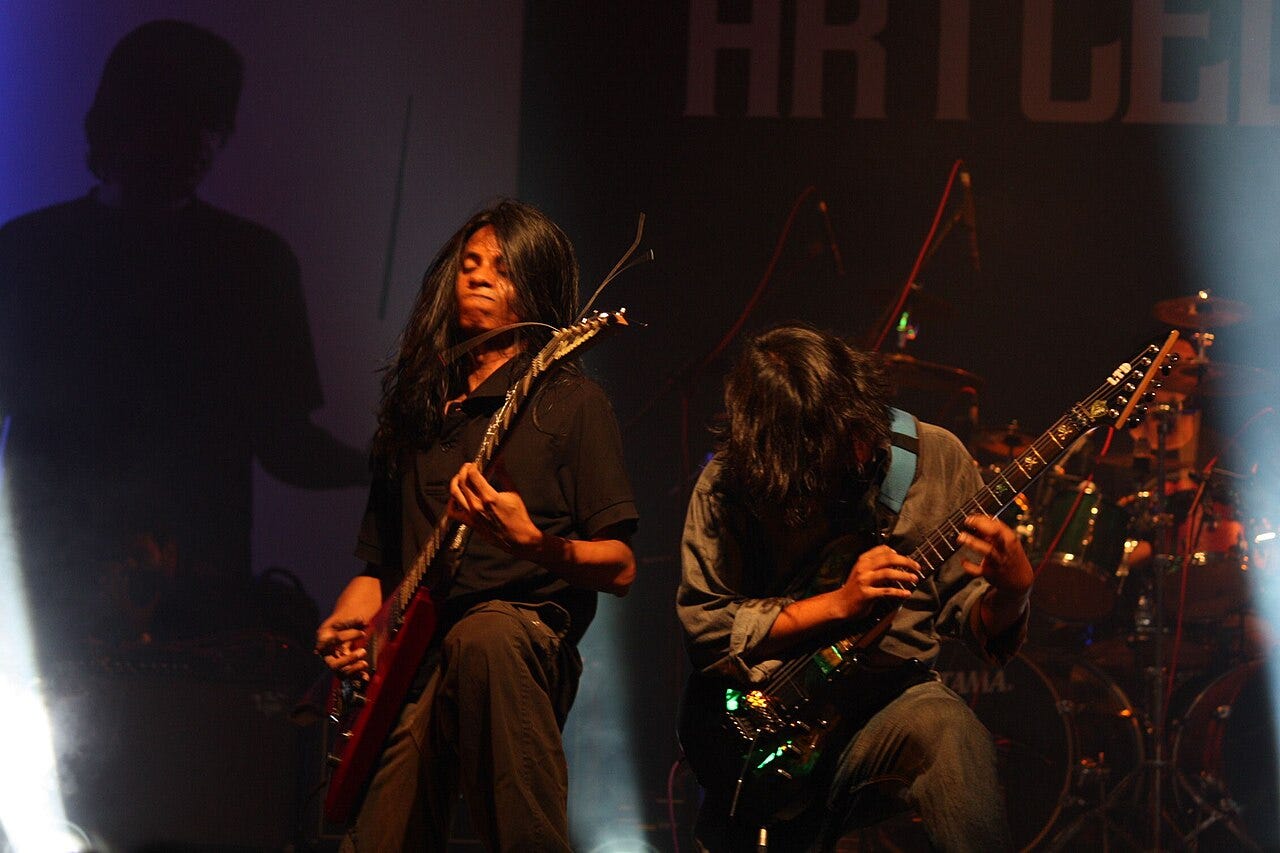
Artcell (L), Aurthohin (Middle), and Powersurge (R)
As metal gigs became more common, their fan communities grew, and the scene started to feel like a real movement rather than a small underground niche.
India’s Global Breakthrough
India’s metal scene developed a bit differently.
While rock and metal bands had existed earlier, things really exploded in the late 2000s and 2010s thanks to bigger cities, festivals, and internet exposure.
Bloodywood brought Indian folk instruments and political themes into metal, which helped them break through internationally.
Other Indian bands like Demonic Resurrection, Bhayanak Maut, and Skyharbor had been shaping the modern scene for years.


Demonic Resurrection (L), Bhayanak Maut (Middle), and Skyharbor (R) were formed in the 2000’s.
Beyond South Asia: Metal Across Asia
Once you start digging into Asian metal more broadly, you realise the scene is huge.
Across South Asia, Underground Authority mix metal with rap and political commentary. From Sri Lanka, Stigmata helped shape the island’s alternative and metal scene.
Even in Southeast Asia, there’s a massive underground scene with Indonesian metal bands like Burgerkill and Voice of Baceprot getting international attention, as well as Mongolia’s The HU bringing throat-singing to the global North.
In the Middle East / West Asia, metal often carries a strong political and cultural edge. Israeli band Orphaned Land are known for blending metal with Middle Eastern melodies and themes of coexistence, while Myrath (from North Africa but often grouped in the broader region) fuse progressive metal with Arabic musical traditions. As well as Melechesh who incorporate ancient Mesopotamian themes into extreme metal.
From Central Asia, the scene is smaller but distinctive. Bands like Darkestrah draw heavily on regional history and nomadic heritage, creating atmospheric, folk-influenced black metal. Japan has legendary bands like BABYMETAL and Maximum the Hormone.
In East Asia beyond Japan, China has a growing scene with bands like Nine Treasures, who incorporate Mongolian folk elements, and Tang Dynasty, one of the pioneers of Chinese metal. South Korea’s Crash have been a long-standing force in thrash metal.
Why It Matters
What makes Asian metal interesting is how bands mix metal with their own cultures, languages, and stories.
Across South Asia especially, metal grew through underground gigs, college festivals, and online communities rather than big industry support. Like all DIY scenes, that growth gave the scene a raw authenticity. It was where music became a way to question authority, confront social issues, and explore identity in rapidly changing societies.
South Asian metal matters because it creates space for voices that are often overlooked, and allows space to address politics, religion, mental health, and diaspora experiences, as it connects to the wider global metal community.
It challenges the idea that metal is solely a “Western” genre, proving instead that it can be reshaped to reflect entirely different histories and lived realities.
메타데이터
- post_id
- 0ae977ff7f2e
- slug
- a-short-and-very-incomplete-history-of-south-asian-metal-bands-0ae977ff7f2e
- url
- https://medium.com/@musictgc/a-short-and-very-incomplete-history-of-south-asian-metal-bands-0ae977ff7f2e
- canonical_url
- https://medium.com/@musictgc/a-short-and-very-incomplete-history-of-south-asian-metal-bands-0ae977ff7f2e
- author_url
- https://medium.com/@musictgc
- status
- ok
- fetched_at
- 2026-06-23 17:05:31