How Do You Practice the Mental Game?
In my years of coaching, I frequently ask pool players how important they think the mental game is to their success when playing. On…
How Do You Practice the Mental Game?
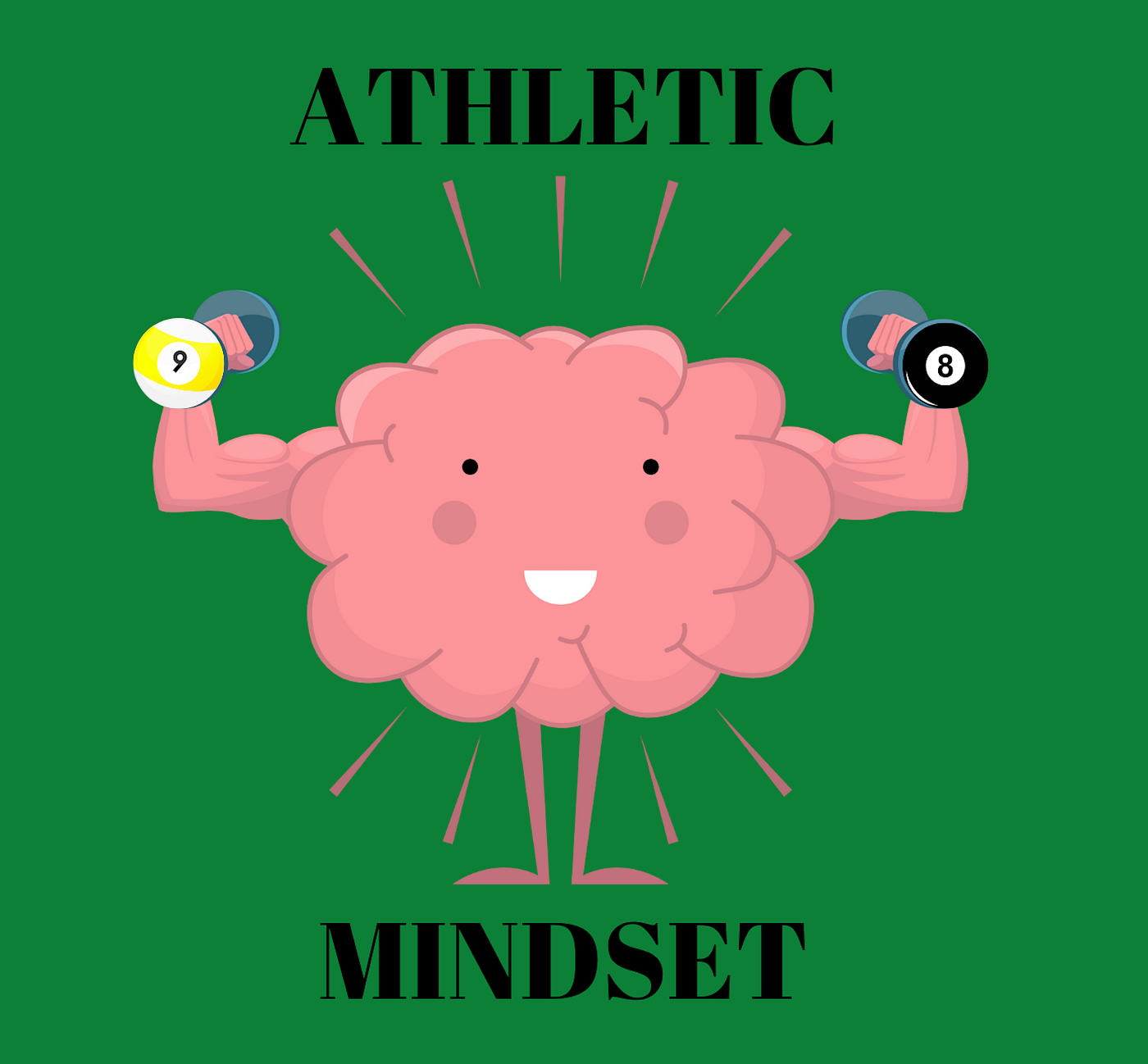
In my years of coaching, I frequently ask pool players how important they think the mental game is to their success when playing. On average the answer is usually 9 out of a possible 10. I then ask another question that goes something like, “I think you are right. I believe it’s that important too. How often do you practice your mental game?” Amazingly, despite placing a high value on the mental game, people report rarely ever practicing it.
So, what’s getting in the way? And why do they neglect the mental game? I happen to have the highest Fargo Rating of any Master Instructor and I know that the primary obstacle is a lack of awareness. Most pool players simply don’t know about the mental game and are unaware of how they can practice it to improve. Other than the occasional article in a pool magazine, the culture of the game does not promote the mental game and as a result, the average pool player has very little exposure to it. In addition, most instructors focus their efforts on the mechanics of the pool stroke rather than mental game components.
Here are some fundamental ways you might consider integrating the mental game into your practice and play:
1.) Slow things down — So often, in pool, our minds are racing cluttered with extraneous thoughts making it difficult to accurately perceive what is going on. If you’ve ever watched your stroke on video, you are bound to have had the experience of watching yourself do something that you didn’t realize you were doing. As a result of seeing what was happening on the video, it became much easier to adjust. But since we can’t video our minds, we need to rely on self-awareness to improve mentally. By slowing down, you will begin to develop an awareness of what is happening rather than what you thought was happening.
2.) Pay attention to your body and your breathing — Both can be powerful indicators of our mental state and are much easier to observe and correct than our minds. When you practice and play, notice if there is any tension in your body. Common places people physically carry stress are in their neck, shoulders, and lower back. By simply noticing where the tension is it will help to reduce it. Obviously, tension and an effective pool stroke don’t mix. Also, pay attention to your breathing. Is it short, fast, restricted, and in your chest? Or is it long, slow, free, and deep in your abdomen? When you practice and play you should be striving for the later as it is conducive to improved focus and concentration.
3.) Develop a consistent and repeatable pre-shot routine — The more consistent and repeatable an action or behavior is, the less stressful it is to us. Thus, a pre-shot routine can be incredibly helpful to consistently achieve the proper mindset needed. In addition, pre-shot routines are an opportunity to re-focus on the task at hand and help reduce fear and anxiety.
4.) Visualize your shots — By visualizing your shots, you are giving yourself an opportunity to “virtually” stroke the shot before it even happens, priming your mind and body to execute the shot more effectively. When you visualize the shot, be as descriptive and specific as you can trying to include as many of your senses as possible. What will it look like? What will the speed and spin look like? Where will the cue ball end up? What will it sound like?
5.) Just because you think it, doesn’t mean it’s true –The things we think about ourselves are just thoughts, they are not truths, or facts. If you make the mistake of believing the things that you say about yourself are facts, you can find yourself stuck in an identity that will guide your behavior in ways not helpful to your performance. For example, I played with someone recently, who after missing an important shot, said, “I’m the worst player in the world under pressure”. It was clear that my friend did not think very highly of his ability to play under pressure, and I have no doubt that the identity he created for himself contributed to why he struggled so much in high-pressure situations.
You can have the best stroke in the world, but if your mental game isn’t strong, your chances of performing well significantly decrease. Take some of these ideas to the table the next time you play. I am confident that with some practice, you will play a better game and enjoy playing more.
To access training tools, pool lessons, videos, and resources mentioned in this article, visit Beeler’s Virtual Billiard Academy — the official home of the BAM Aiming Method and the book Do You Want to Play Like a Pro?, one of the most comprehensive billiards instruction manuals ever published.
Anthony Beeler is a PBIA & ACS Master Instructor and one of the most widely recognized billiards coaches in the world. He has taught more than 31,000 players in 102 countries, created the BAM Aiming Method, and built the first fully online pool school back in 2011. His work has been featured nationally on Yahoo Finance, Morningstar, PR Newswire, Benzinga, and The Lane Report.
메타데이터
- post_id
- 0b06aa5eecdb
- slug
- how-do-you-practice-the-mental-game-0b06aa5eecdb
- url
- https://medium.com/@anthonybartonbeeler/how-do-you-practice-the-mental-game-0b06aa5eecdb
- canonical_url
- https://medium.com/@anthonybartonbeeler/how-do-you-practice-the-mental-game-0b06aa5eecdb
- author_url
- https://medium.com/@anthonybartonbeeler
- status
- ok
- fetched_at
- 2026-07-21 06:43:43