How Do Neuroglia Take Care of Neurons?
Our nerves’ caretakers do so much to regulate the health and function of our most important system
How Do Neuroglia Take Care of Neurons?
Our nerves’ caretakers do so much to regulate the health and function of our most important system
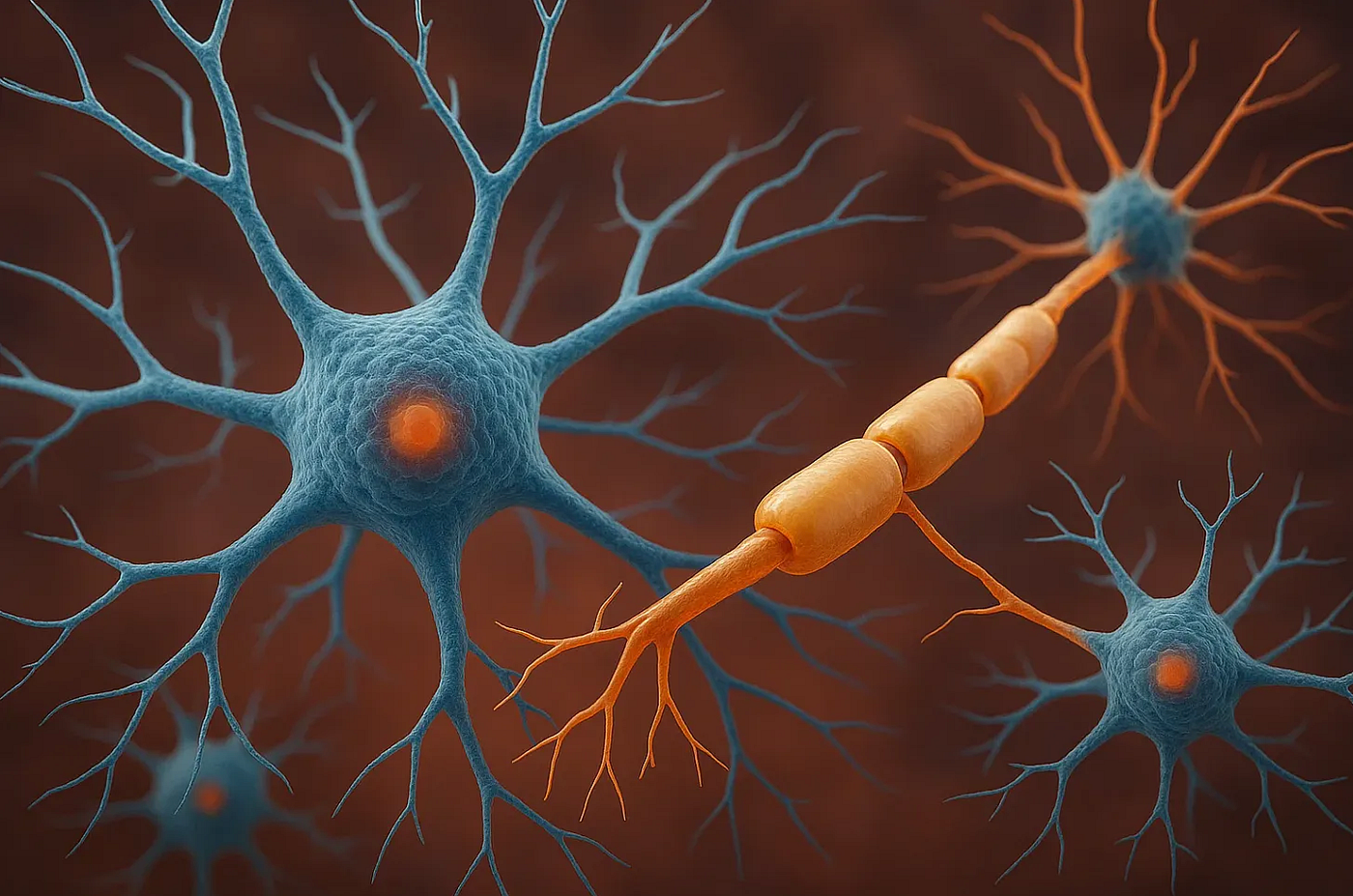
Neurons, along with neuroglia, form the two major classes of brain cells. There’s somewhere between 85 and 100 billion neurons in the brain, and anywhere between 1 and 50x the number of neurons are neuroglia, or glial cells.
Glial cells were originally discovered by German pathologist Rudolf Virchow in 1856, who coined the term neuroglia (“nerve glue”) as he believed that these cells were connective tissue that supported neurons as a kind of biological glue that held them together.
Now before diving into neuroglia, let’s learn some key neuroanatomy.
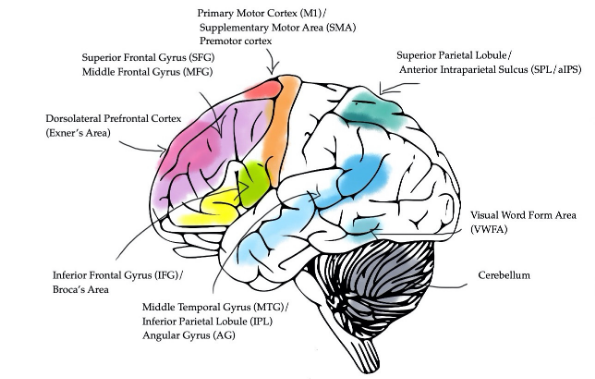
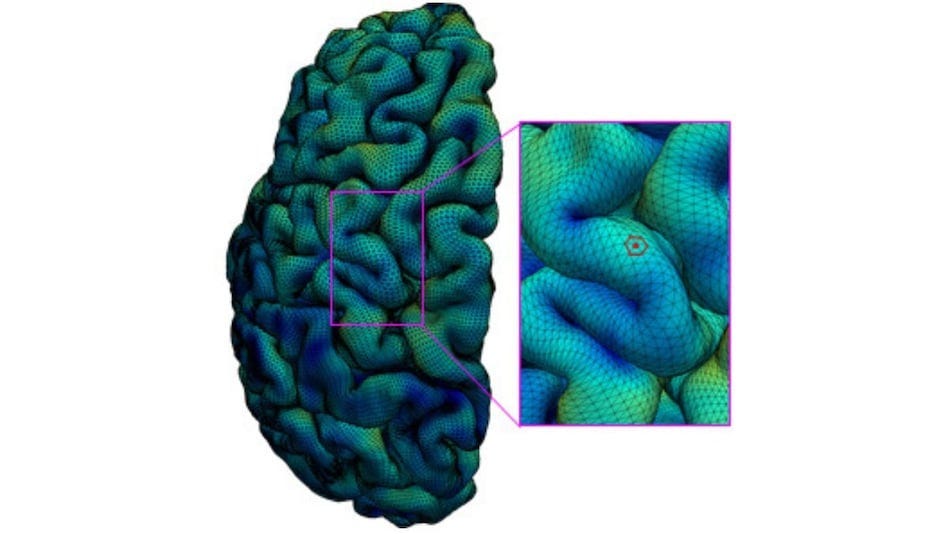
The cerebral cortex has 6 layers of cells that make up a 1 mm thick (or rather thin) layer that altogether surrounds the brain. Within this thin layer are 15–20 billion neurons and 40–50 billion neuroglia that work together to support essential functions such as cognition, perception and associative motor learning.
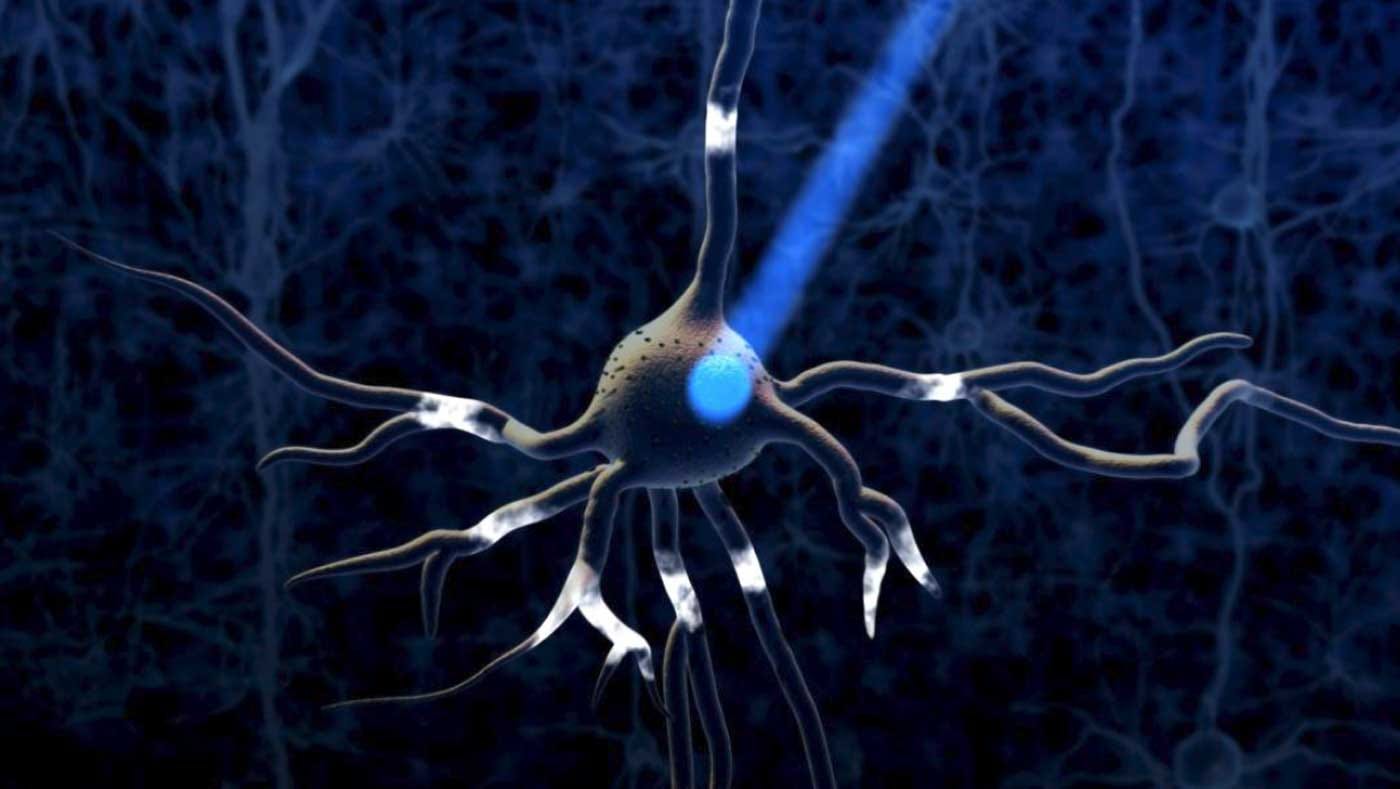
Zooming in on the neurons themselves, it’s important to learn their four main zones to understand the role of neuroglia in supporting them.
- Dendrites: receive incoming signals from other neurons.
- Soma/cell body: where the nucleus resides; integrates the information received from dendrites.
- Axon: nerve fibre extension from soma, allowing for communication over long distances.
- Axon terminals: contain neurotransmitters and release them upon arrival of an action potential → optimized for signal output.
more anatomy…
Synapse: the gap between two neurons, also known as the synaptic cleft, through which neurotransmitters travel from one neuron to the next.
Synaptic vesicles: small packages containing neurotransmitters, found in the axon terminals.
Dendritic spines: increase the surface area of the neuron so it can receive more information from other neurons with each neurotransmission.
Neurotransmitter: chemical messengers (ligands) sent between neurons.
Receptor: proteins on the surfaces of dendrites that bind to specific neurotransmitters.
How Neuroglia Support Neuronal Structures
Now that you know some of the main parts of a neuron, let’s learn about how neuroglia provide care for these neuronal structures.
Dendrites and Soma
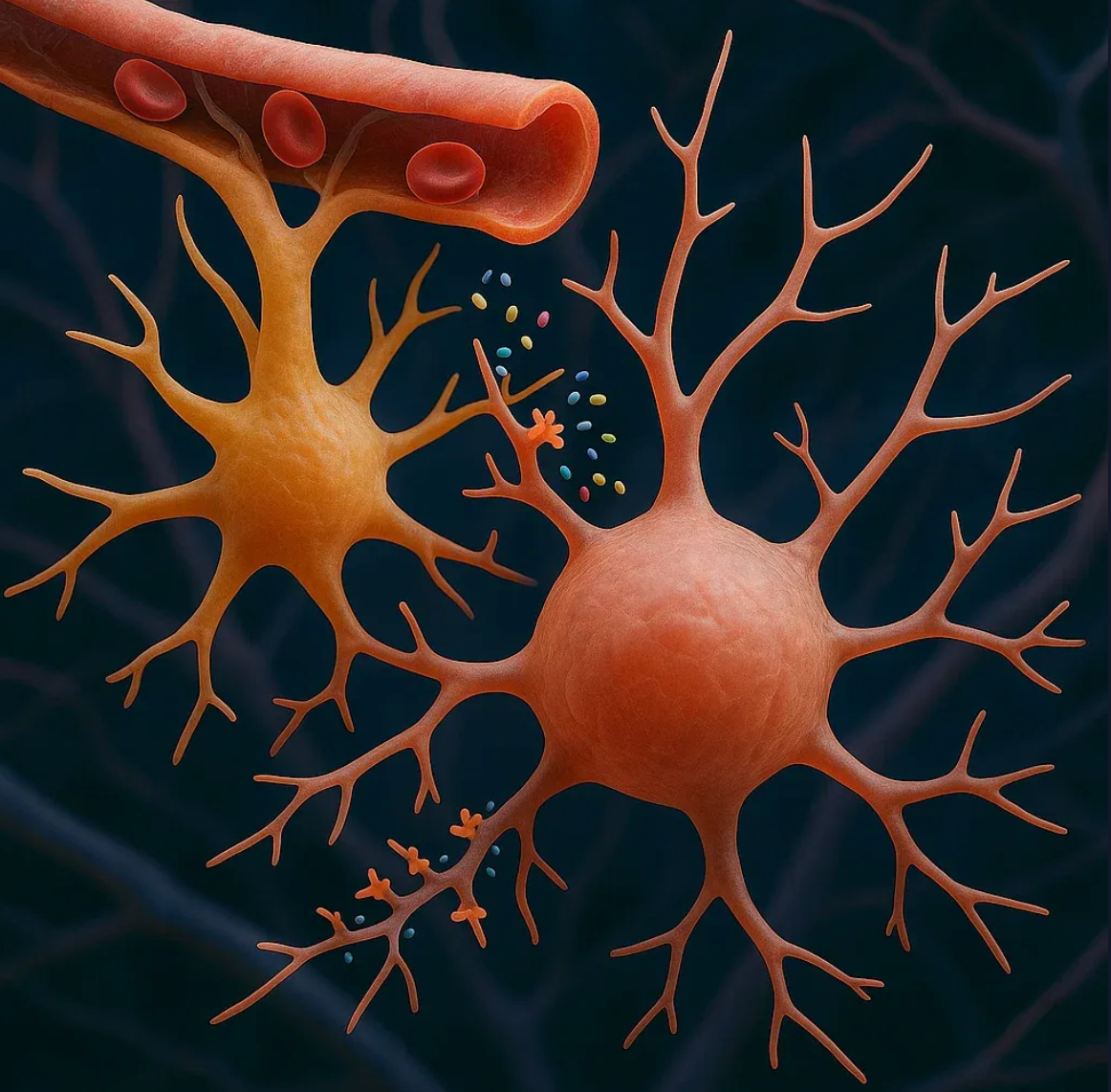
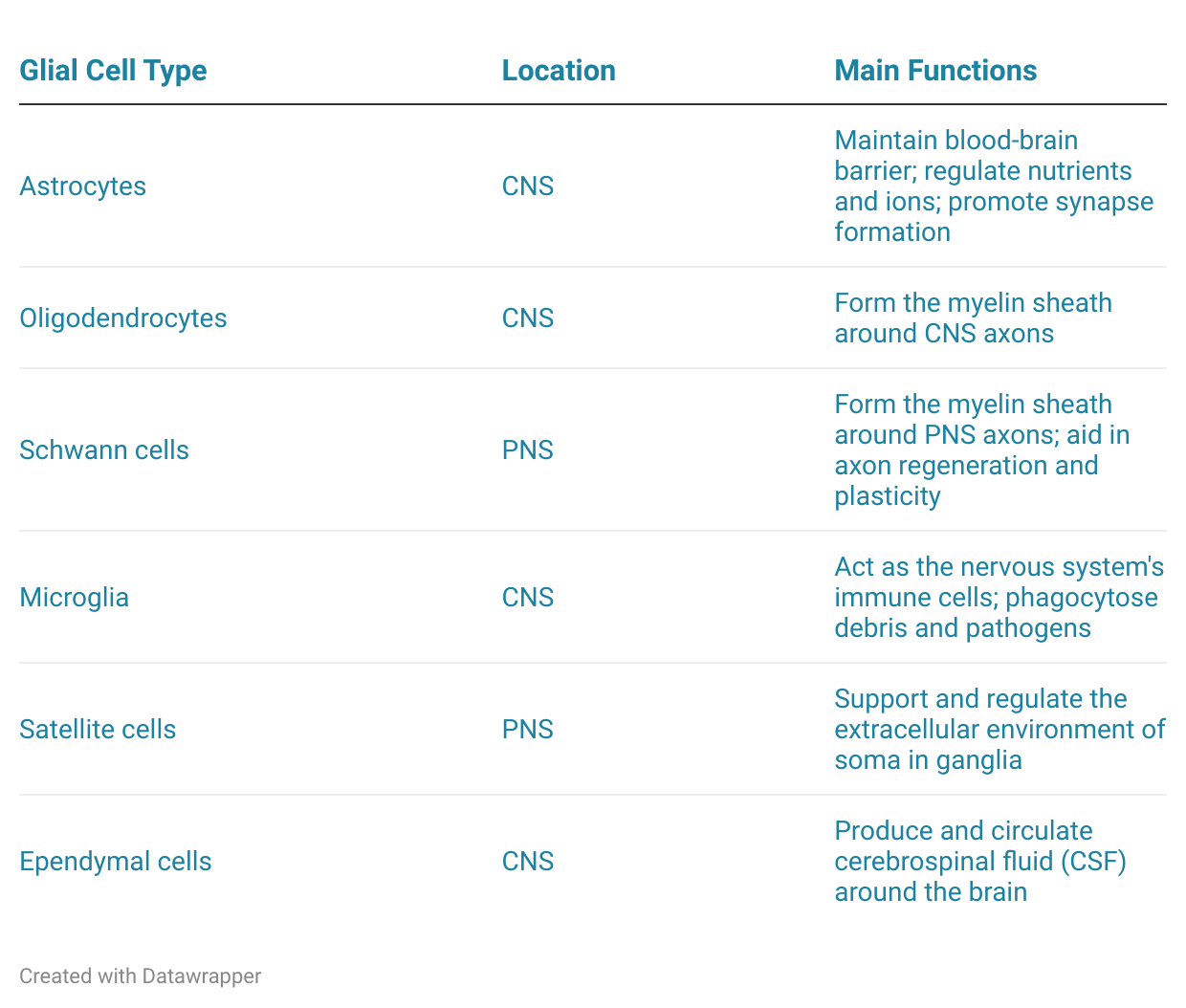
Astrocytes support the dendrites and soma by:
- Regulating their chemical environment by removing excess neurotransmitters like glutamate after synaptic transmission.
- Delivering nutrients by absorbing glucose from blood vessels and feeding them to neurons.
- Maintaining the blood-brain barrier, which protects the soma and dendrites from harmful substances that may enter the brain from the bloodstream.
- Promoting synapse formation, especially at dendritic spines, and pruning excess synapses during development.
Axon
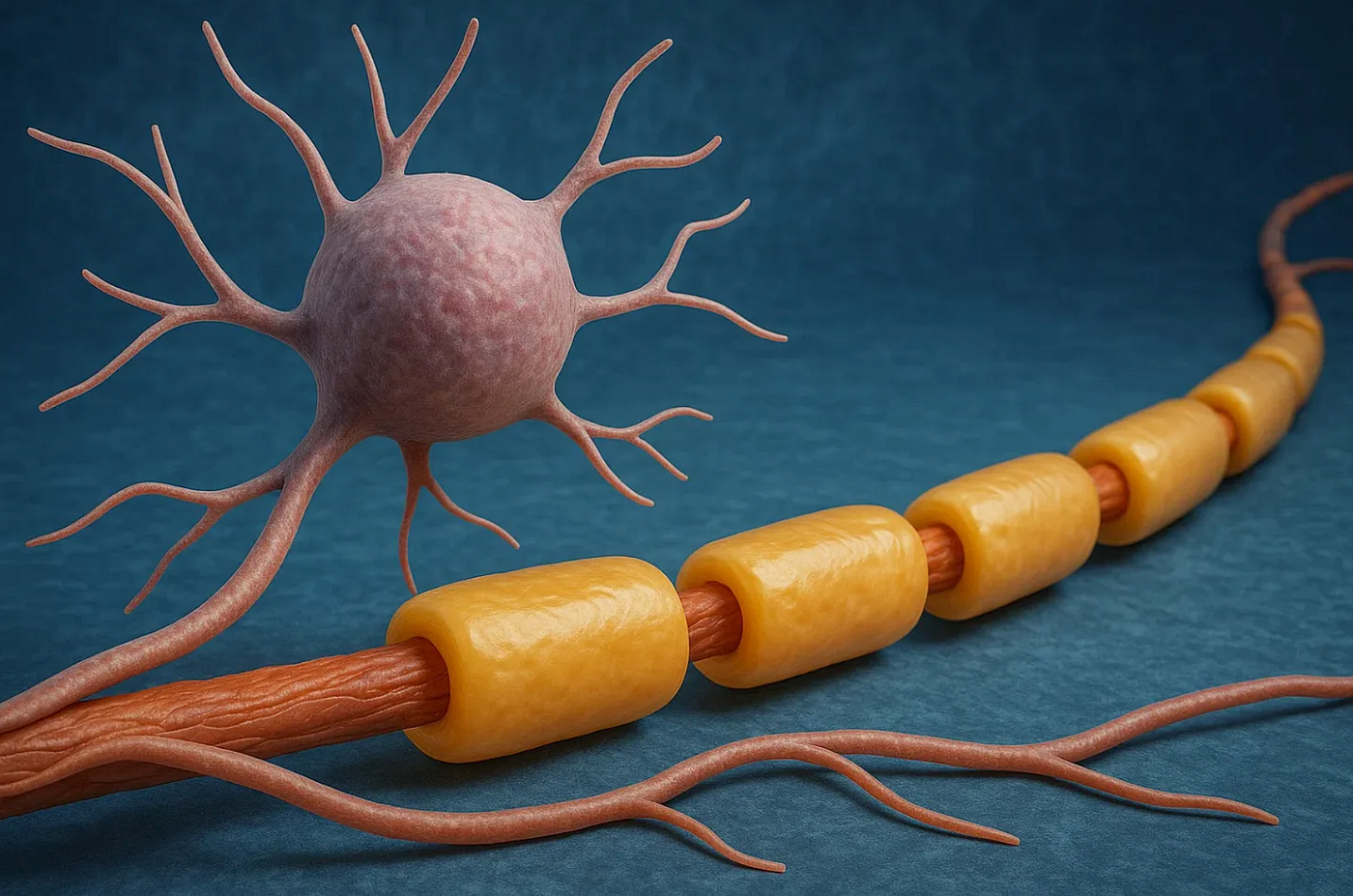
Oligodendrocytes (in CNS) and Schwann cells (in PNS) support axons by:
- Wrapping the axon in myelin, a fatty insulating layer that increases the speed of an action potential along the axon (similar to the insulating rubber around electrical wires).
- Maintaining axon health by providing metabolic support and secreting neuronal growth factors like BNDF to ensure proper development. Also important for neuroplasticity, secreting specific neurotrophic factors like neurotrophin-3 to promote axonal outgrowth/directionality and promote axon integrity.
Axon Terminals and Synapse
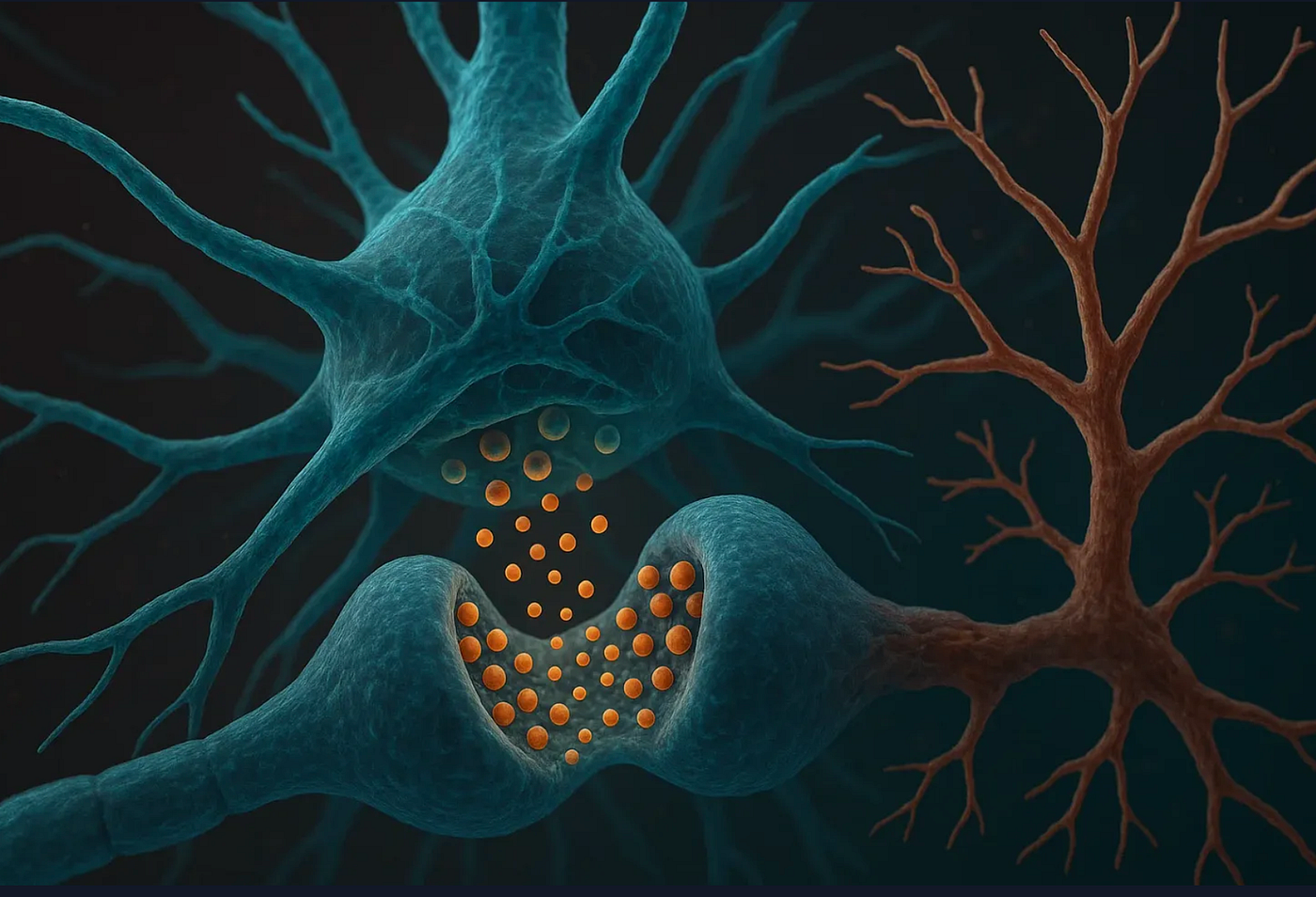
Astrocytes again are key players here, as they:
- Regulate neurotransmitter levels at the synaptic cleft, particularly by the uptake of excess glutamate and GABA.
- Modulate synaptic strength by helping strengthen or weaken synapses over time → absolutely crucial for learning and memory by the mechanism of long-term potentiation (LTP).
Microglia also help here by:
- Pruning weak or unnecessary synapses during development and after injury, which helps sculpt efficiently functioning neural circuits.
Synapse, Synaptic Vesicles, and Neurotransmitter Cycling
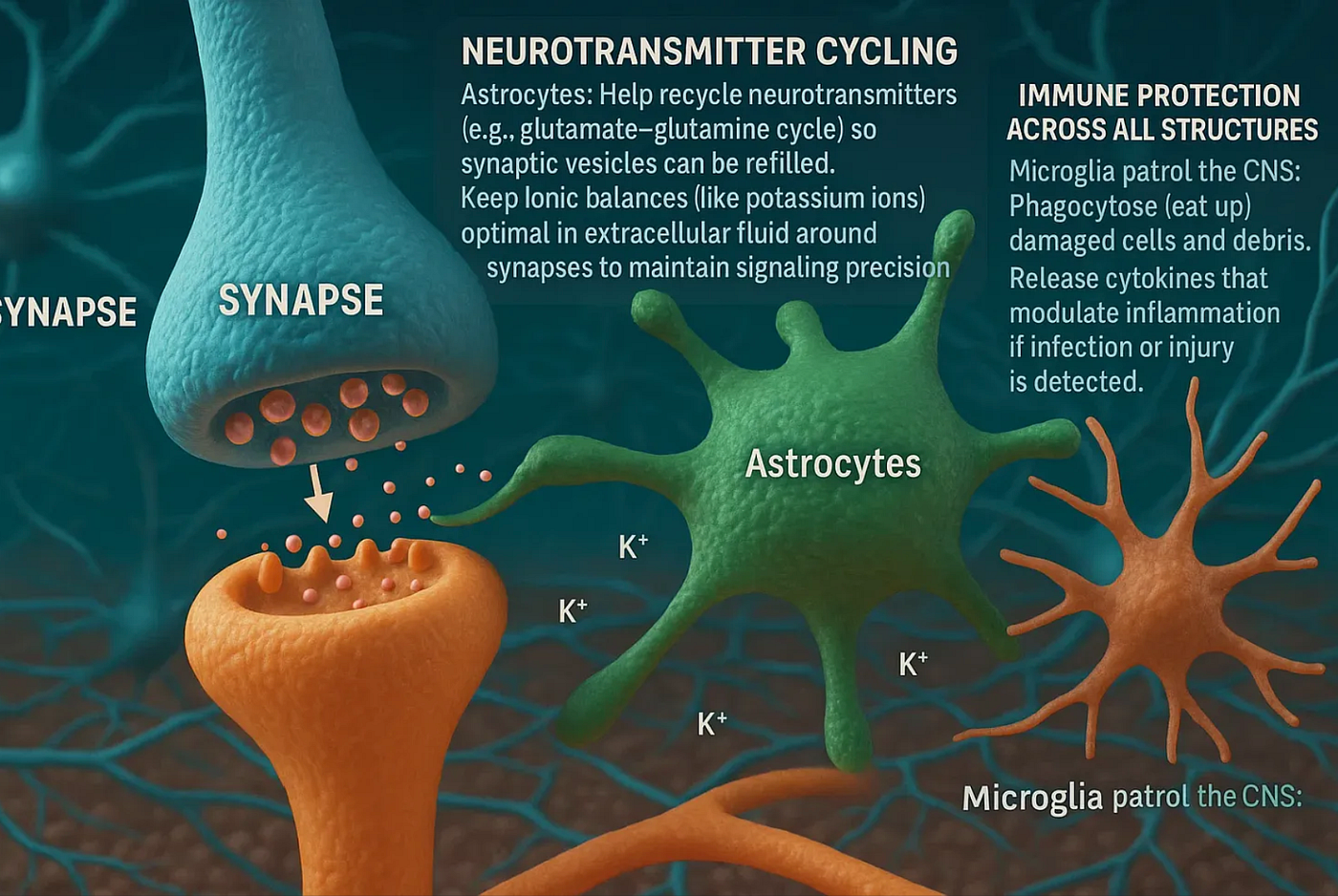
Astrocytes:
- Help recycle neurotransmitters (like in the glutamate–glutamine cycle) so that synaptic vesicles can be refilled with them.
- Keep ionic balances (like sodium and potassium ion levels) optimal in the extracellular fluid surrounding synapses to maintain signaling accuracy.
Immune protection across all neural structures
Yes, the nervous system even has its own little immune system regulated by…
Microglia, which patrol the CNS and…
- Phagocytose (eat up) damaged cells and debris that are causing disruption.
- Release cytokines that modulate inflammation if an infection or injury is detected.
- Constantly monitor neuronal health at the dendrites, axons and soma → like the neuron’s personal doctor.
So there you have it. Neuroglia play so many understated vital roles in regulating and nourishing the nervous system, but it’s ridiculous how underappreciated they often are, with the focus in many fundamental neuroscience courses being so much on neurons. We may think that neurons are self-sustaining entities, but for the most part these energetic, actively communicating cells can not do it all alone.
I hope this short piece provided some insight into how that is the case through a neuroanatomical perspective 🧠
메타데이터
- post_id
- 0b0a024f7f6e
- slug
- how-do-neuroglia-take-care-of-neurons-0b0a024f7f6e
- url
- https://medium.com/merging-synapses/how-do-neuroglia-take-care-of-neurons-0b0a024f7f6e
- canonical_url
- https://medium.com/merging-synapses/how-do-neuroglia-take-care-of-neurons-0b0a024f7f6e
- author_url
- https://medium.com/@amiralibanani
- status
- ok
- fetched_at
- 2026-06-09 15:46:48