Phage Therapy For Combatting Antibiotic Resistance
A glimpse into the world of bacteria and how they evolve, as well as the solutions we are finding to counter them.
Phage Therapy For Combatting Antibiotic Resistance
A glimpse into the world of bacteria and how they evolve, as well as the solutions we are finding to counter them.
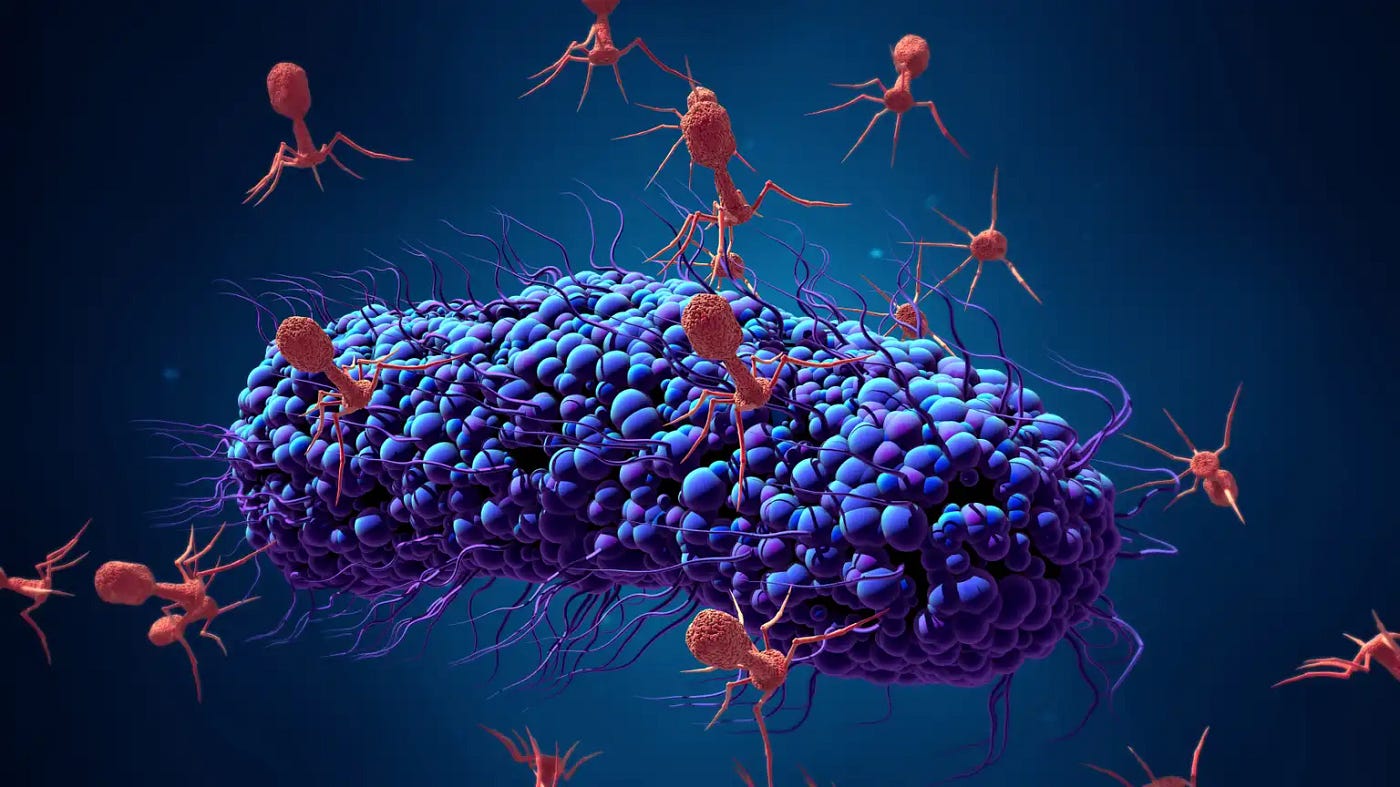
This illustration shows the basic principle of phage therapy
Content
The purpose of this article is to go in-depth to explain what antibiotic resistance is as well as how phage therapy works. It will also cover how phage therapy can combat this issue and additionally the possibilities of it being used in the future.
What is Antibiotic Resistance?
Antibiotic resistance(AR) falls under the category of antimicrobial resistance(AMR), as antibiotics directly target bacterial strains. It is the trait certain bacteria develop to withstand the effects of antibiotics, surviving longer, as well increasing the difficulty involved in treating them. As bacteria are exposed to antibiotics, they adapt to survive the conditions. Over time, this creates generational colonies which are immune to a specific antibiotic or even multiple depending on the exposure.
How does it form?
Antibiotic resistance can be caused by a large magnitude of factors, the most common being the misuse of antibiotics. If an antibiotic is not taken in the proper dosage or duration listed on the prescription, a bacterial strain may not be fully killed, leaving behind resistant bacteria. These can evolve over multiple generations, creating a superbug untreatable by the common assortment of antibiotics.
Similarly, overusing antibiotics when they are not essential can also unnecessarily increase the bacteria’s interactions with antibiotics, promoting adaptations to resist the drug. Another possible cause of AR is spontaneous resistance which can occur when a bacterium mutates, becoming unaffected by the effects of an antibiotic. It is important to note that a bacterial strain which has developed antibiotic resistance can be transmitted from being to being and will continue to have its same properties.
Antibiotic Resistance Rates Are Increasing
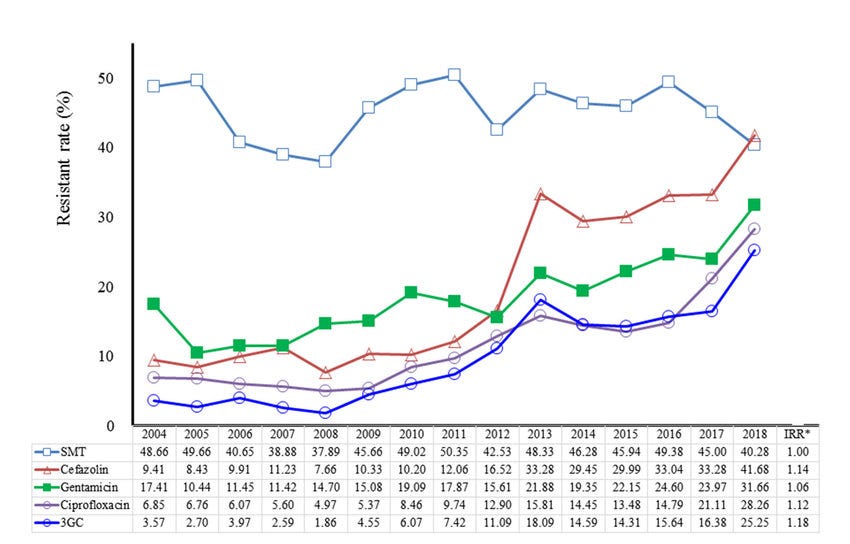
Graph showing the trends of antibiotic resistance on E. coli UTI (single isolate) among children aged less than 18 years.
As antibiotics have become a staple method of treating bacterial infections, the rates of AR have been on the rise. The graph above shows the percentage of E. coli UTI which are resistant to the following common antibiotics: SMT, Cefazolin, Gentamicin, Ciprofloxacin, and 3GC. Four out of the five demonstrate a growth in ineffectiveness, requiring the patient to switch antibiotics. AR is a problem becoming more and more serious each year. In 2019, five million deaths were related to antimicrobial resistance and it is projected that by 2050, forty million people will have died directly due to AMR.
Fewer New Antibiotics
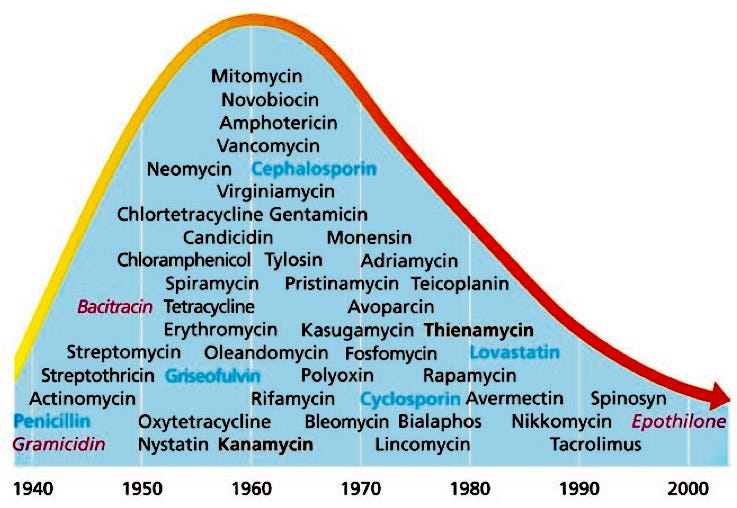
Graph showing antibiotics and when they were discovered.
There is a noticeable decline in the creation and approval of new antibiotics, causing reliance on past antibiotics. However, bacterial strains have been rapidly developing AR in response to the large use of antibiotics globally. The ever-shrinking availability of effective drugs has led scientists and researcher to explore new options and paths, searching for alternative ways to treat bacterial infections.
What is Phage Therapy?
Phage therapy is the process of using bacteriophages (a type of virus) to kill bacteria causing an infection. Before the boom of antibiotics, France and the Soviet Union began experimenting with using bacteriophages for treating bacterial illnesses. Although it was successful in a lab setting, phages were not able to target all types of bacteria, making them cumbersome to use and requiring completely identifying the bacterial strain causing the infection. Over time with their development, antibiotics took over and fully replaced phage therapy.
Structure of a Bacteriophage
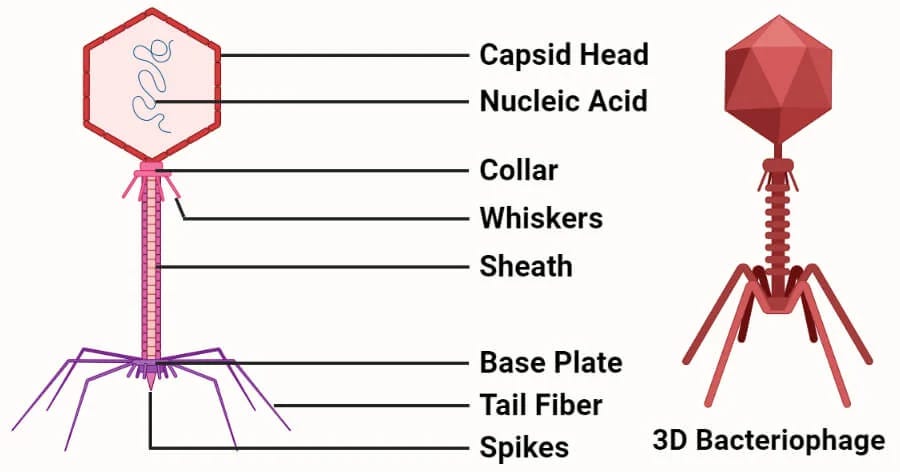
Labelled diagram of bacteriophage
Head
The capsid head is a icosahedron (a polyhedron consisting of twenty triangular faces) which is made of proteins and acts as a protective casing holding the bacteriophage’s nucleic acid, DNA or RNA. Its nucleic acid stores its genetic code and plays a crucial role in multiplication process.
Tail
The collar connects the head to the sheath, a long tube which contracts during injection, pushing the nucleic acid through the phage. The base plate interacts with the plasma membrane of the host cell, using its tail fibers to grip onto the membrane. Located at the bottom of the baseplate, the spike creates an opening in the host cell, allowing the bacteriophage’s nucleic acid to be inserted.
Bacteriophage Replication
Unlike a bacterium, a bacteriophage cannot replicate on its own but rather involves a host cell. Through replication, the phage kills the targeted bacteria and creates more copies of itself. This allows a small dosage of phages to be introduced to the body, eventually growing and becoming more effective.
Lytic Replication
In the lytic replication cycle, a bacteriophage inserts its genetic material into a host cell through the plamsa membrane. Utilizing the ribosomes within the cell, the components of a bacteriophage are produced and assembled to form copies of itself. Additionally, enzymes are produced in a process called lysis to rupture the plasma membrane, killing the cell and releasing the new bacteriophages.
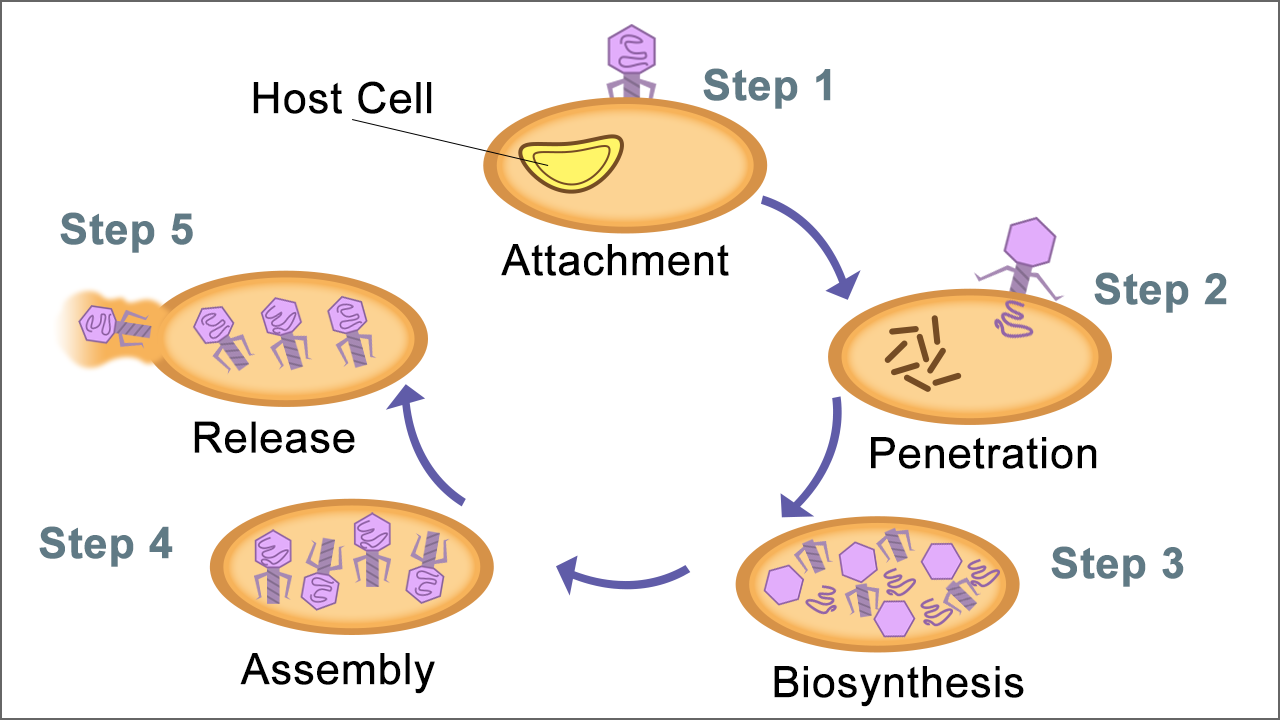
This labeled diagram shows the lytic cycle
Lysogenic Replication
In the lysogenic replication cycle, the bacteriophage inserts its genetic material into the host cell’s cytoplasm. It fuses into a chromosome, becoming permanently integrated in the cell’s genome. As the cell divides, these new compromised genomes are passed onto the daughter cells, multiplying with each division. Each lysogenic cell can eventually start the lytic cycle and begin the replication process.
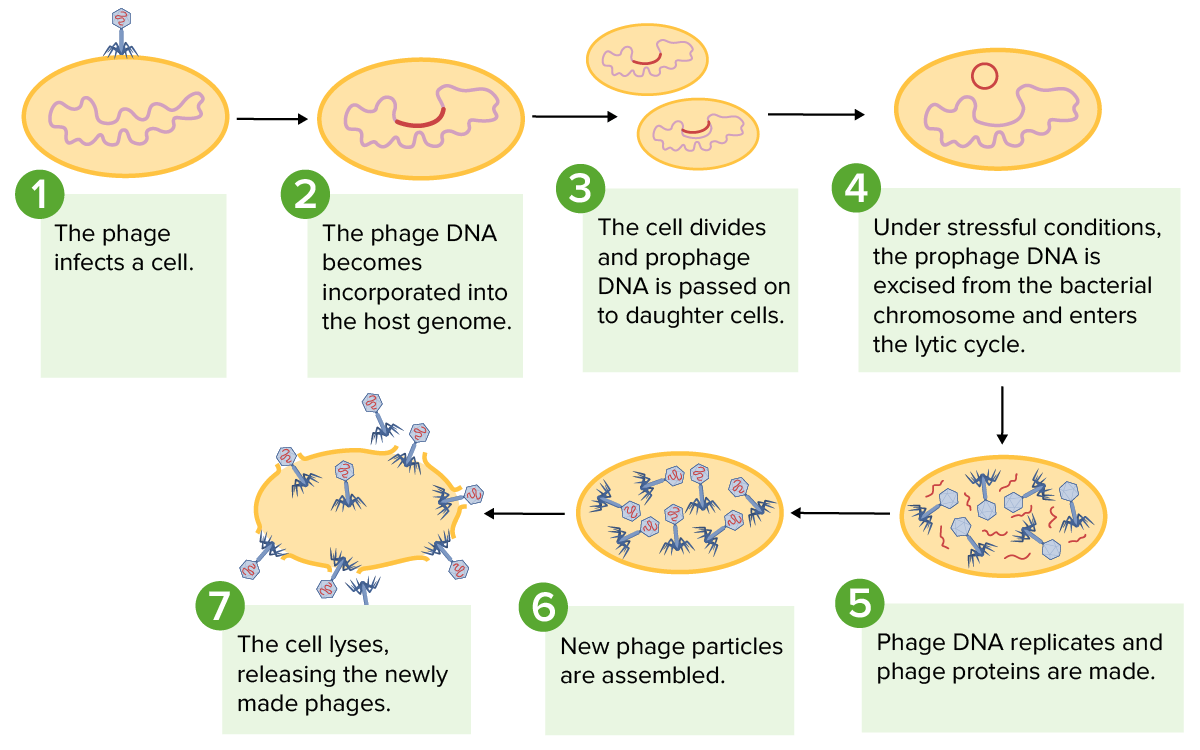
This labelled diagram shows the lysogenic cycle
How does it work?
Phage therapy treats an infection by killing the bacteria cell during replication. This is similar to the way an antibiotic functions, but is much more selective. Bacteriophages naturally only target a certain bacteria and can be precise with what they kill. Unlike an antibiotic, phage therapy has the potential to not affect gut bacteria, which is crucial for digestion.
Additionally, it is harder for bacteria to build resistance to phage therapy, due to the fact the viruses (bacteriophages) and also evolve to counter the bacteria’s defense mechanisms. It is very difficult for a bacteria to be resistant to both methods of treatment, and in the case of a bacterial strain becoming resistant to a bacteriophage, the addition of an antibiotic can eliminate a bacterial infection.
Researchers are currently working on developing ways to genetically edit bacteriophages to change their bacterial targets. Finding a phage naturally to fight a specific bacterial strain can take a long time and can lead to patient with a rare bacterial infection not receiving treatment. With the creation of an edited phage, it can be cultivated and administered across the globe.
Company Spotlight
BiomX
BiomX was founded in 2015 with its headquarters being located in Ness Ziona, Israel. Their current main focus is using phage therapy to treat chronic diseases caused by bacteria such as cystic fibrosis and diabetic foot osteomyelitis. Trying to push the BOLT (BacteriOphage Leads to Treatment) platform forward, they aim to create a system which can accurately give a patient’s diagnosis and efficiently prescribe a phage cocktail which will target the bacterial strain responsible for the infection. In March 2024, BiomX merged with Adaptive Phage Therapeutics, Inc., receiving fifty million dollars in funding for their Phase 2b trial.
Tom Patterson’s Story

Tom Patterson was one of the first patients to receive phage therapy
In 2015, Tom Patterson, a professor at UCSD went on a Thanksgiving vacation to Egypt. While in Egypt, he was diagnosed with pancreatitis and experienced severe nausea and vomiting. Upon seeing the treatments he was being given were not making a difference he was transported to Frankfurt to receive a better diagnosis. Doctors discovered that he had been infected with Acinetobacter baumannii, a commonly fatal pathogen which was resistant to multiple drugs. Only a very limited assortment of last-resort antibiotics had an effect on the bacteria, improving his condition slightly and allowing him to move the ICU at UCSD.
After further tests, it was found that his bacterial infection had developed AR to all of the previously effective antibiotics. Due to a malfunction with internal drain being used, the bacteria managed to spread to his bloodstream, causing him to experience septic shock. For the next two months he was in a coma in which condition progressively worsened. Tom’s wife, an infectious disease epidemiologist, began exploring alternative treatments and discovered phage therapy. Although it lacked FDA approval, they received special permission from the Navy to use it on Tom.
On March 16, the bacteriophages were administered and two days later woke up from his coma. Over the next couple months, he slowly recovered and his condition improved. It was discovered that the bacterial strain had became resistant to the phage being used. A new type of bacteriophage was introduced along with a combination of antibiotics, leading to his recovery and discharge on August 12. With the help of physical therapy, he managed to regain all of his functions and ability to live a healthier life.
Challenges of Phage Therapy
Although phage therapy has the potential to be a groundbreaking new method of curing bacterial infections world wide, there are multiple challenges companies will have to face and overcome.
Lack of FDA approval
Phage therapies are yet to receive FDA approval, mostly due to them being considered biological products. There is no way to synthesize bacteriophages, requiring them to be grown in colonies and potentially creating inconsistencies in the product. This violates the FDA’s guidelines and is one of the reasons preventing approval. Many stages of clinical trials are mandatory, and most companies are restricted by time and funding. However, a couple companies are on the third and final stage of trials and have been seeing promising results.
Phage storage
To effectively provide phage treatments to patients experiencing a variety of bacterial infection, a large bank would have to be created. This would require large amounts of labor to create and sustain, as well as a substantial amount of capital invested. In addition to this, phage storage would rely on freezing the phages at temperatures below -70℃ , utilizing a lot of energy and utility fees. Lastly, the transportation of phage therapies would have to be efficient, also requiring the receiving facility or hospital to have an adequate storage system.
Impurities and potential defects
During the cultivation and preparation of bacteriophages, some host bacteria cells have the possibility of releasing endotoxins, compromising the product. Over time in storage, phages can mutate or have their nucleic acid altered by external factors, causing the phages to be ineffective at killing the target bacteria. All of these factors can make the phage cocktail toxic for the patient or defective, limiting the usage of phage therapy.
Future
Like all other pharmaceutical products, phage therapy has its challenges and setbacks. However, many companies, longstanding and emerging, have been experimenting and allotting funding to move phage therapy discoveries and testings forward. As research continues and production begins, the cost of phage therapies will lower and potentially become available to more parts of the worlds. In a world with the growing problem of antibiotic resistance, I believe that with the right approach and research, phage therapy can save many lives and can reach many in territories previously lacking access to antibiotics. I am looking forward to see how companies manage to implement and use phage therapy, as well as if it can revolutionize modern medicine.
Thank you for reading! For more posts and articles such as this, consider subscribing to my Medium. If you found this article interesting, share it across your network and stay tuned for future works.
메타데이터
- post_id
- 0b0c346e67cc
- slug
- phage-therapy-for-combatting-antibiotic-resistance-0b0c346e67cc
- url
- https://medium.com/@Martin_Kovachev/phage-therapy-for-combatting-antibiotic-resistance-0b0c346e67cc
- canonical_url
- https://medium.com/@Martin_Kovachev/phage-therapy-for-combatting-antibiotic-resistance-0b0c346e67cc
- author_url
- https://medium.com/@Martin_Kovachev
- status
- ok
- fetched_at
- 2026-06-09 15:37:30