Stop Congratulating Me for Raising Feminist Men
“You’re doing such important work.” “Raising boys who respect women is feminism.” “Raising empathetic boys is so important.”
Stop Congratulating Me for Raising Feminist Men
“You’re doing such important work.” “Raising boys who respect women is feminism.” “Raising empathetic boys is so important.”
I used to say those things to mothers of boys, feeling that I genuinely wanted to recognize their contribution to a better society, underscoring also that I understood that feminism was not just about women. And now, as a stepmother of two young boys (who live with us full time), people tell me that all the time, and I dread hearing it.
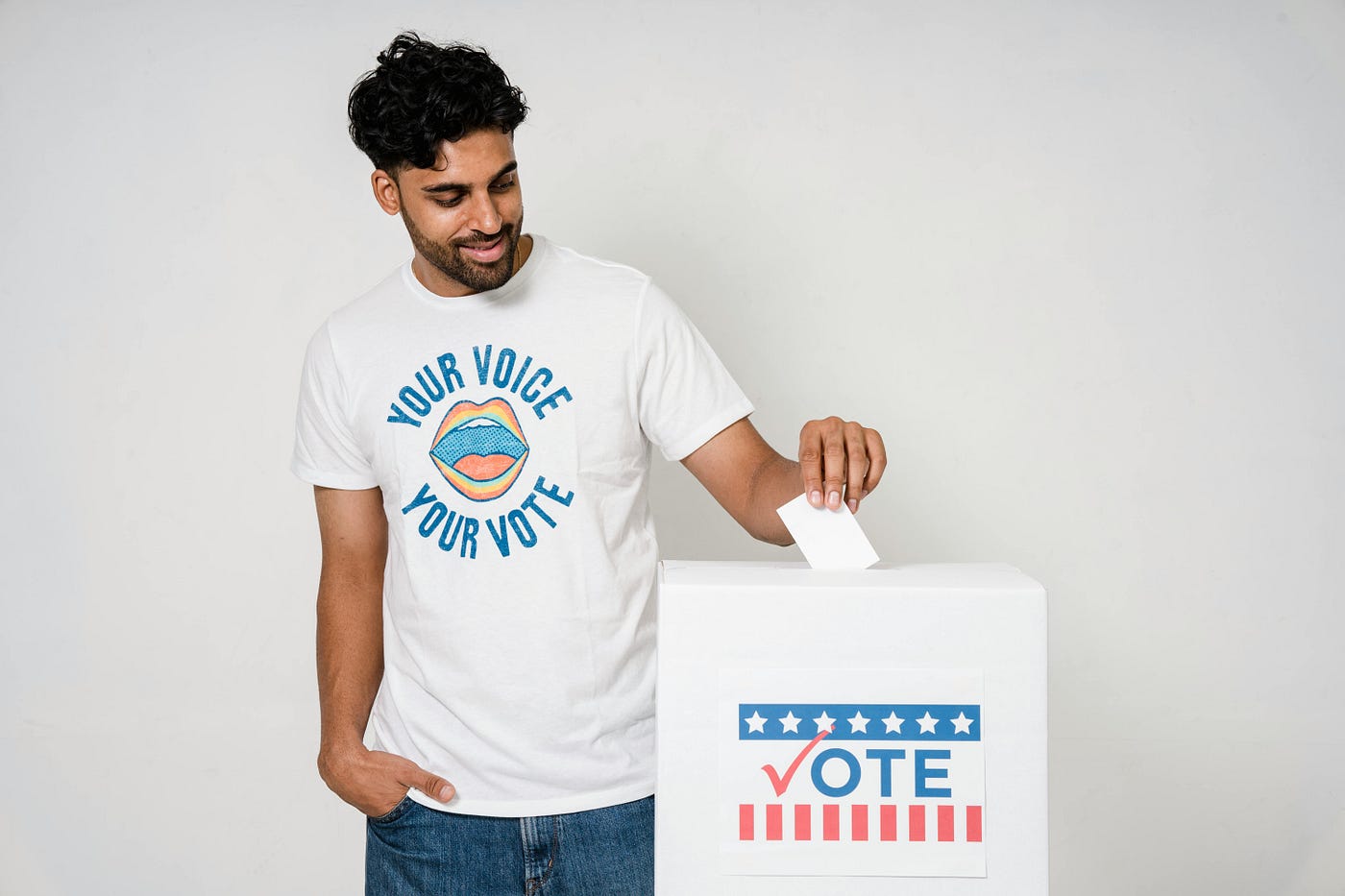
Photo by Samantha Sophia on Unsplash
I of course want the boys to have empathy and respect for women. But these remarks feel so loaded, and I will unpack why, in an improvised list peppered with conversations between Old Me (before having stepkids) and Current Me (five years in to parenting two boys).
- Subtext of boys-as-problem
TLDR: Of course I want my boys to be empathetic. I want it maybe more than I want many other parenting goals. But they are not inherently unempathetic monsters-in-the-making that particularly need to be brought into the human fold through this empathy that they supposedly otherwise lack.
There seems to be a subtext behind these congratulatory phrases that boys are inherently disrespectful and unempathetic towards women, and that my intervention is the only thing that stands between us and future rapists, wife-beaters, and Andrew Tate wannabes. Combined with the pressure that many of us parents feel about “getting it right,” it feels like one more huge responsibility put squarely on the shoulders of one or two overworked individuals (Can we really perform miracles against the broader messaging in society?).
Old me: Ok, but saying “Raising respectful men” does not imply that boys are inherently violent. It implies that they get social messaging about masculinity from society, and…
Current me: And without parental intervention, they might turn into monsters, and I need to singlehandedly mitigate the entirety of that. I promise I am trying, but hear me out. What if someone congratulated Italian parents, saying “Raising anti-fascist Italians is so important” or “Raising Italians who respect others and have empathy is important work!” and then added “I don’t mean that Italians are inherently fascist, but the social messaging gives them those ideas.”
Old me: Ok, but I still might believe, a little bit, that men are inherently (whether through nature or nurture) prone to direspect women in a way that Italians aren’t inherently prone to fascism.
Current me: I know you do, and you believe it because your experiences tell you that. But you are also hurt and combing the world for evidence of male aggression, and you’re finding it. But as you heal, you’ll start to comb the world for evidence of male compassion and respect, and you’ll find that, too. And when you heal even more, you’ll find that structural privilige (or lack thereof) doesn’t automatically translate to empathy (or lack thereof). Women can be cruel and disrespectful, both individually and structurally, to their fellow humans. Raising people who can respect themselves and others is important. It’s not just Italians or men who need interventions lest society take its course and they turn into fascists or aggressors. (Sorry Italians, you were an easy but not overly controversial group to exemplify). We all need compassion, challenges, and room to be ourselves while giving others space to be who they are if we are to be the best versions of ourselves.
Old me: So you’re saying that there is an essentializing baseline in our assumptions about men behind some of these congratulations.
Current me: Yes. It feels that way to me. Try to start congratulating people for not being the worst stereotype attributed to a group that they are a member of and see how it goes. There might be truth to a stereotype, but it doesn’t mean that we should treat individuals as the worst sum of those stereotypes. It is flattening of their personhood.
2. Exactly how much are boys (or anyone) supposed to be allowed to cry, and how do I make that happen?
TLDR: I am not sure I even know how to handle my emotions appropriately, yet I am supposed to teach these boys to handle theirs. It feels like more unrealistic pressure to “get it right.”
One of the promises of feminism is that boys can be vulnerable, show their feelings, and not have to adhere to hurtful macho roles. Gentle parenting also teaches us to validate feelings. In principle, I am 100% on board, but then I read a criticism of Gentle Parenting: boys’ feelings shouldn’t be SO validated that they feel free to take up all emotional space and demand their emotions be coddled by the future women of their lives. In theory, I can agree with all of these even contradictory ideas, but in practice, it feels like a lofty goal. Why?
Parenting isn’t always clear-cut, especially when dealing with “big feelings,” which can spark intense debate in parenting circles. Gentle parenting advises validating all feelings, but some approaches — like narrating emotions — can feel patronizing. If a coworker told me, “I know you’re feeling angry right now, and that’s okay,” I’d feel talked down to, and kids might, too. While I can tweak the language to suit my style, I still wonder: how do I address whining in a respectful way that doesn’t encourage it? And if we give too much space to feelings, will kids struggle with self-regulation and make their emotions others’ responsibility later on?
How do I show up with perfect Buddha nature when there is a feeling storm abrewing in our household? I don’t know, but I am trying. I used to think that being loved meant that you could show all of your feelings in whatever way you wanted to, and that therefore, all emtions should be expressed…
Old me: It does, doesn’t it?
Current me: (Big sigh). You can ask people to accept you at your worst on occasion, but how bad is “your worst”? Being loved doesn’t mean that I have carte blanche to show my anger in any which way in the name of “being myself” or “not suppressing what I feel.” Loving others means that I find a middle path of feelings where I recognize them but don’t necessarily believe them (don’t believe everything you think or feel — sometime’s it’s anxiety or insecurity, not actual threat), or if I do believe them, I respond in a conscious way instead of reactively lashing out.
Old me: Oh, and we know how to do that?
Current me: We’re getting there, old me.
Old me: Nice. But you were saying — you are supposed to teach the future men of planet Earth that they can be vulnerable, yet not take up too much space by centering their own feelings?
Current me: Yes.
Old me: But you are 41 and have never raised kids before (all kids are prototypes), and are only now figuring out how to do this for yourself.
Current me: Right.
Old me: And sometimes, it’s 8:20pm on a Tuesday, and everyone is sleep-deprived. You discover that you are all out of breakfast foods for tomorrow, one child announces an urgent homework assignment they had forgotten about, the other child calls his brother “a little kid” for having forgotten (a known insult designed to provoke). Cue arguments and tears. Dad and stepmom declare in unison: “Look how you instigate your brother!” “I have to do his homework with him, and you made him cry and he is already overtired.” The older boy cries. Everyone is tired. And you are supposed to be raising Homo feministicus, The Future Feminist Men of the 21st Century, who respect women, show compassion, and express vulnerability just enough, but not so much as to center themselves.
Current me: I see we are understanding each other.
So I don’t fullly know what to do with everyone’s feelings, except that everyone can cry a little bit (or a lot, if it is that kind of a day), but nobody is allowed to wallow (for very long), and now we are going to the park. And I hope the emotional damage we do to them is minor enough that they can overcome our shortcomings without much suffering. I would love to promise that I can deliver two perfectly emotionally calibrated future men, but I probably can’t. They’ll hopefully be two lovely humans who will need grace when they mismanage an emotion, as all humans will.
Old me: People don’t want perfectly emotionally calibrated men. They just want nice, reasonable, and good enough.
Current me: I believe that on some common sense level, that is true, but I don’t find it reflected in common discourse. Grace isn’t fashionable.
3. What is feminism? And which feminism? And how to teach it?
TLDR: There are so many different strands of feminism, and chances are that even if we discuss feminism (we do), the boys won’t grow up to be footsoldiers of the one particular school that would get them the universal feminist label of approval. They might get a lot right and still tick off a lot of people. Again, it feels like unrealistic pressure.
If you know about debates surrounding feminism, you already know what I am talking about, but I’ve prepared this brief dialogue for illustrative purposes:
“Feminism just means equality.” — “If you believe in equality, should women be drafted, too?” — “Feminism aims for a peaceful, demilitarized world.” — “That’s not Hillary Clinton’s feminism — it just puts women in charge of capitalist, militaristic systems.” — “White, middle-class feminism has oppressed people of color, from colonizing India under the guise of women’s rights to bombing the Middle East.” — “Some Black women prefer Womanism, which isn’t antagonistic toward Black men like white feminism often is toward men.” — “Feminism must be intersectional — or it’s meaningless.” — “Western feminists distrust Muslim gender roles but defend hijabs as personal choice — unless they’re coerced, in which case we condemn it, unless that’s imperialism… or is it?”
I used to think that I could just teach my future kids the saldo of all the feminist literature and think-pieces I have read over the last 25 years. They would start adult life off with my knowledge neatly downloaded into their brains, and simply build on it. But in reality, there isn’t that much time to discuss the intricacies of feminist theory between hobbies, friends, school, laughing, cuddling, soccer practice, etc. Sure, it comes up in conversation, but I can assure that if they reach the age of 18 with a well-rounded understanding of feminist theory, they did a lot more than talk to me.
Old me: Ok, but nobody is expecting your boys to cite bell hooks. They just want them to respect women.
Current me: Yes, but when issues come up at school or in the media and we discuss them at home, they inevitably lead to questions about whose voice should be centered, of who should be quiet and defer, whether feminists can sometimes be wrong, why some feminists criticize other feminists, and what the role of boys and men should be in these questions. The theorists are never far behind social reactions to big questiobns.
Old me: Ok, I see what you mean.
Current me: Perhaps the boys will have some marginal knowledge of the fact that different feminist theories exists, but then there is also the cultural element. We live in Colombia, but I grew up in Finland and the US, and I find that these conversations about feminism and gender evolve and peak at different times in different places. When I left the US in 2014, pronouns in your email signature and land acknowledgements for events were not standard, but when I attended US-based online conferences in 2021, theyhad become common. But they weren’t in Colombia. And if you don’t keep up with the multiple developments in different countries you can easily be considered “sufficiently deconstructed” in one social context, while labeled “impardonably backwards” in another.
Plus, the fact that these ideas “come” from the US and then “arrive” in Colombia is also troubling. While that very well describes a lot — though not all — currently popular feminist thought. Should it? It posits Colombia as always “behind” and the Global North as the producers and revampers of ever-evolving truth that is to be received and consumed by the rest of the world. And if I constantly narrate what the hottest, new, feminist think-piece from an English speaking country says that we should think about a certain topic, is that effective? Or do I risk becoming preachy? Does “feminism” risk becoming a stick that is used to beat them into intellectual submission?
Old me: Ok, but I don’t think those people who are congratulating you on raising feminist boys are thinking all of that.
Current me: Probably not. It is well-meant encouragement. But I am acutely aware that a lot of the same people who would congratulate me for “raising feminist men” on the one hand, would be scandalized if these same boys don’t conform to some popular culture feminst orthodoxy they might hold dear (What if they push back at pop-culture feminist platitudes about men? Are they centering themselves at the expense of women? Or are they calling in perfectly capable female peers to re-examine a blind spot?).
Old me: Well, as long as they do it respectfully and carefully…
Current me: Listen, I can’t future proof these future boys and guarantee that they will engage in every delicate social justice conversation with the mindfulness of Thich Nhat Hanh. I am raising human boys, not infallible Homo feministicus. Plus, feminists (like leftists), don’t always agree with other feminists. I can’t raise them according to a single definition of feminism, because I am not sure I accept a single definition. But if I raise them to compare and contrast feminist schools of thought, they might venture to have an opinion about them in spaces where some feminists would rather men not hog the spotlight or even venture an opinion.
Old me: Well, it is probably “enough” that they are decent people.
Current me: I agree. They will pass some people’s ideological purity test, but not others.’ The thing is, I can’t guarentee that I’ll produce “feminist men.” What if they are good men who respect consent and do housework but put their foot in their mouth when intricacies of gender theory is discussed? What if they are good at spouting theory but struggle with doing their fair share of housework?
Old me: Why not both, theory and practice?
Current me: Ok, but don’t get greedy. Remember that we are doing this on a Tuesday night at 8:20pm, and I also want to love them and have fun with them, not just guarantee ideological purity. This leads me to point number four:
4. I can’t control them.
TLDR: No matter what I do, I am only one person, and I can’t control them, their intellectual life, their empathy, emotions, and actions. Yes, I am leading them to water and hoping they’ll drink, but I also don’t hold the infallible truth. It feels uncomfortable to be congratulated on things I can’t actually control, or on some supposition that I have the answer and will now effectively transmit it.
Parenting means you give them some guidance and then they are off on their own. I don’t know who they will be. I can’t control that future, nor do I know what gender-equality-skills the future will require of them. But what I have learned about raising children is this: there is so little that we control. Children are not simply empty vessels into which I will deposit all my well-intentioned plans for childrearing. What we can control is also not solely under my control. They have their father, their mother, their grandparents, school, and society. Whatever we teach them and what they learn are not always the same thing. Plus, they will make mistakes and they will hurt and be hurt. They might even show signs of socialized gender norms (humorous sarcasm).
We are to help our children be who they already happen to be, and hopefully to act justly — neither as doormats nor aggressors,
Boys — and all people — are so much more than the worst possible outcomes of their demographic group.
I feel like the most honored person in the world when I put them to bed at night, and they negotiate who gets to cuddle up to which side of me as I hug them until they fall asleep, or when they crack inside jokes with me, or kiss me on the head, or do a goofy chicken dance. And especially, when they look up at me for comfort and protection in this world.
Their value lies not just in how deconstructed and non-harmful they can be to others, but in their own joyful existence. I will love them not just because women deserve men who have been healthily loved and validated, but because they, even if women did not exist, deserve to be fully loved and accepted. They also have a right to be wrong sometimes. And I have a right to be wrong as a parent and person. In fact, free me of the assumption that I am supposed to know enough about everything to even be able to teach it in the first place.
And yes, I’ll talk about feminism with them, just as I’ll talk about anything else. But beyond anything I say, they will grow up watching the workday routines of their parents, step-parents, and grandparents, and that might have a bigger effect than anything I might preach their way.
In the words of bell hooks:
“To truly love we must learn to mix various ingredients — care, affection, recognition, respect, commitment, and trust, as well as honest and open communication.” And:
“To be loving we willingly hear each other’s truth and, most important, we affirm the value of truth telling.”
I’ll try my best to hear their truth, even if it might involve telling me that they think some feminists are “being stupid” on a particular issue. But I will be doing even that through hundreds of regular school night — in other words, incompletely.
And if I am raising feminst boys at all, I wish for a feminism that is a bit more bell hooks and Buddha nature, and a bit less thought-policing and shaming for perceived slights.
And mostly, I wish for grace for all of us. Old me used to know so much and be so sure. Current me is less certain, trying to relinquish the illusion of control, and just very delighted at loving these boys who have accepted me as their own.
I don’t know if I am raising feminist boys. I’m just trying to get through Tuesday.
And anyway, I can’t singlehandedly produce feminist boys. Quit over-glorifying motherhood. It’s so unfeminist of you.
메타데이터
- post_id
- 0b2847a933fa
- slug
- stop-congratulating-me-for-raising-feminist-men-0b2847a933fa
- url
- https://medium.com/@emilia.c/stop-congratulating-me-for-raising-feminist-men-0b2847a933fa
- canonical_url
- https://medium.com/@emilia.c/stop-congratulating-me-for-raising-feminist-men-0b2847a933fa
- author_url
- https://medium.com/@emilia.c
- status
- ok
- fetched_at
- 2026-06-20 20:29:01