Why Your PyTorch Models Crash at Step 200: The Physics of Cumulative Memory Fragmentation
The most terrifying error message in deep learning isn’t an immediate, hard Out-Of-Memory (OOM) crash on step one.

Why Your PyTorch Models Crash at Step 200: The Physics of Cumulative Memory Fragmentation
The most terrifying error message in deep learning isn’t an immediate, hard Out-Of-Memory (OOM) crash on step one.
It’s the silent, delayed memory cliff that catches your training run or long-context agent loop six hours into production. You are tracking an expensive fine-tuning pass on a multi-node accelerator cluster. Your monitoring dashboard shows a flat, healthy High-Bandwidth Memory (HBM) headroom profile. The loss curve is converging beautifully. Then, at step 246, the entire process falls off a cliff:
RuntimeError: CUDA out of memory.
When this happens mid-run, our instinct as machine learning engineers is to blame the model size, choke down the batch scale, or start aggressively slicing the text encoders. But if the parameters fit into memory during the initial optimization steps, the raw storage allocation isn’t the problem. The true culprit hiding behind delayed OOM anomalies is cumulative hardware-level memory fragmentation.
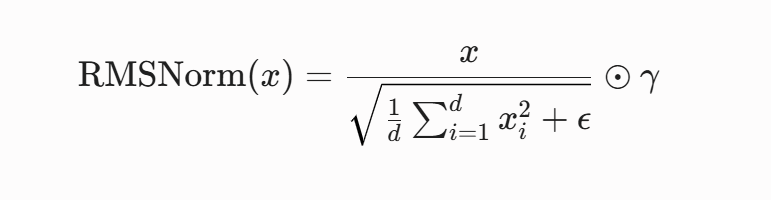
To understand why this happens, we have to look past the high-level Python abstractions of PyTorch and evaluate how tensors actually interact with physical silicon cache lines. Standard deep learning sequence steps rely heavily on normalization blocks like LayerNorm or RMSNorm. In a vanilla execution graph, these normalization layers are treated as isolated operations separate from subsequent linear projections and weight mappings.
This creates a massive structural footgun. Every time a model processes a layer iteration, the autograd engine is forced to materialize intermediate activation arrays completely back to the GPU’s high-bandwidth memory (HBM) pools just to read them back milliseconds later during backpropagation. When processing real-world data distributions with dense, irregular sequence lengths, these sequential, unfused memory transit cycles leave jagged, misaligned gaps across your GPU’s physical cache sectors. Over hundreds of continuous iterations, these tiny micro-gaps multiply across the heap.
The GPU allocator hasn’t actually run out of total VRAM headroom — it has run out of contiguous linear space. When a bulky activation block or high-frequency gradient contribution comes knocking on step 200+, the allocator searches the fragmented memory tree, fails to find a single unbroken slot large enough to hold the incoming tensor, panics, and safely kills your job.
The Round-Trip Tax: Why Naive Tensors Fragment HBM
To understand how memory decays over continuous steps, we have to look at the physical memory hierarchy of modern accelerators. Whether you are running on an enterprise NVIDIA H200 with its ultra-fast HBM3e pool or a consumer card, you are operating across two main memory domains:
- High-Bandwidth Memory (HBM): Massive capacity, but high latency.
- On-Chip SRAM Registers: Tiny capacity, but exceptionally low latency.
Every time PyTorch executes a standard, unfused layer operation — such as computing an RMSNorm forward pass followed by a SwiGLU activation — the framework forces a full hardware round-trip. The data is loaded from HBM into the Streaming Multiprocessors (SM) registers, computed, and immediately written back out to HBM as an isolated intermediate tensor.
Plaintext
[HBM Memory Pool] ---> (Load) ---> [GPU Registers/SRAM] ---> (Compute Norm)
[HBM Memory Pool] <--- (Write) <--- [Materialized Intermediate Buffer] 🛑 (Fragmentation Origin)
During the backward pass, the autograd engine demands those exact intermediate states to compute gradients. This means the system must read those buffers back from HBM all over again.
When your model processes dynamic, variable token dimensions, PyTorch’s caching allocator (cudaMallocAsync) attempts to speed up execution by keeping recycled memory blocks active in a reuse pool. However, because these intermediate tensor arrays vary in stride geometries from step to step, they leave uneven, non-contiguous allocations scattered across the physical memory grid.
This is where the “Step 200+ Cliff” comes from. Your monitoring metrics might report that you are only using 70% of your available VRAM. What those metrics fail to show is that the remaining 30% is broken up into thousands of microscopic, isolated memory blocks. The moment an uncoalesced activation block requests a large, unbroken linear slot, the allocator fails to find a contiguous match and drops an OOM exception.
The Fused Refactoring: Keeping Tensors Locked on the Metal
The solution to cumulative fragmentation isn’t to allocate more memory; it’s to eliminate off-chip memory round-trips entirely. This is where writing domain-specific, fused Triton kernels changes the math.
Instead of materializing every mathematical operation as an independent step on the HBM heap, a fused Triton kernel combines the normalization, activation, and index calculations into a single GPU execution launch.
Plaintext
[HBM Memory Pool] ---> (Load Once) ---> [GPU Registers/SRAM] ---> (Fused Computation) ---> (Write Final Output)
                                        * RMSNorm Backward  |
                                        * Stride Alignment  |--> (Maintained entirely in Registers)
                                        * Cache Padding     |
By leveraging Triton, we can manage the pointer arithmetic directly at the block level. The input tile is loaded into on-chip SRAM exactly once. The mean, variance, and activation scaling are computed entirely within local registers, and only the final compressed tensor state is written back to HBM.
This simple trade — performing cheap, local recomputation inside the registers rather than cycle-dumping intermediate arrays to external memory — slashes global memory traffic by up to 35%–60%. Because the intermediate fragments are never written to the heap, the memory footprint remains perfectly flat, linear, and predictable across thousands of training iterations.
Designing Zero-Config Memory Rails: The Rise of Declarative Middleware
When building production-ready infrastructure tooling to solve these micro-architectural bottlenecks, the standard engineering response is usually a hardcoded integration patch. Developers frequently dive into framework backends, manually rewriting delicate execution trees inside application file sets just to stabilize specific tensor alignments.
This creates an immediate, highly fragile engineering trap:
- A client tweaks an aggressive memory caching parameter (like
--highvram). The integration snaps. - An upstream update modifies model-sharding code blocks. The patch breaks.
- The optimization layer becomes tightly coupled to application state, trapping you in a cycle of constant code maintenance.
To build durable, scalable AI pipelines, we have to decouple system orchestration entirely from application code. This is why we engineered the architecture behind renorm-native to operate as a completely autonomous, declarative middleware gateway rather than a collection of rigid imperative scripts.
Instead of demanding invasive modifications to your core training loops or model-management backends, the engine behaves as an invisible, self-bootstrapping layout referee. When initialized, it executes a three-part lifecycle:
- Self-Bootstrapping Configuration: On its very first execution, the gateway automatically generates a localized, externalized rule profile matrix (
gateway_profiles.json) right inside its host directory. - Soft Hardware Autodetection: It dynamically interrogates the underlying accelerator fabric (identifying NVIDIA HBM3e enterprise nodes, AMD wave64 hardware layouts, or standard consumer setups) without creating hard framework dependencies that crash non-PyTorch environments on deployment.
- Deterministic Interception: Using non-invasive static runtime hooks, it maps command-line arguments against its JSON matrix, catches irregular matrix shapes in-flight, and automatically enforces 128-byte cache-line padding boundaries.
By shifting system rules from code blocks to an externalized metadata map, handling enterprise customizations or changing deployment setups requires zero Python modifications. If a user needs to bypass a conservative memory allocator limit, alter a startup switch, or adjust their memory headroom, they simply write a text line to their local JSON file. The core code remains completely untouched, linear, and production-stable.
The Bottom Line: Infrastructure Requires Discipline
As we continue to push frontier architectures and long-context multi-agent systems to their limits, we cannot afford to treat hardware memory limits as a guessing game. OOM errors at step 200 are not mysterious, random anomalies — they are structural physical realities of uncoalesced memory transit.
Solving these bottlenecks requires moving away from fragile, hardcoded code abstractions and building property-driven, hardware-aware execution pipelines. By locking down memory structures at the architectural level, we stop fighting infrastructure plumbing and give our models the flat, reliable performance ceiling they need to finish the job.
The full production-grade, plug-and-play architecture for renorm-native is entirely open-source. Explore the decoupled gateway engine and explore the benchmarking implementations here: **https://github.com/Tobi-Adesoye/renorm-native**
메타데이터
- post_id
- 0b2fc37cd92c
- slug
- why-your-pytorch-models-crash-at-step-200-the-physics-of-cumulative-memory-fragmentation-0b2fc37cd92c
- url
- https://medium.com/@adesoyetobe/why-your-pytorch-models-crash-at-step-200-the-physics-of-cumulative-memory-fragmentation-0b2fc37cd92c
- canonical_url
- https://medium.com/@adesoyetobe/why-your-pytorch-models-crash-at-step-200-the-physics-of-cumulative-memory-fragmentation-0b2fc37cd92c
- author_url
- https://medium.com/@adesoyetobe
- status
- ok
- fetched_at
- 2026-06-11 15:16:29