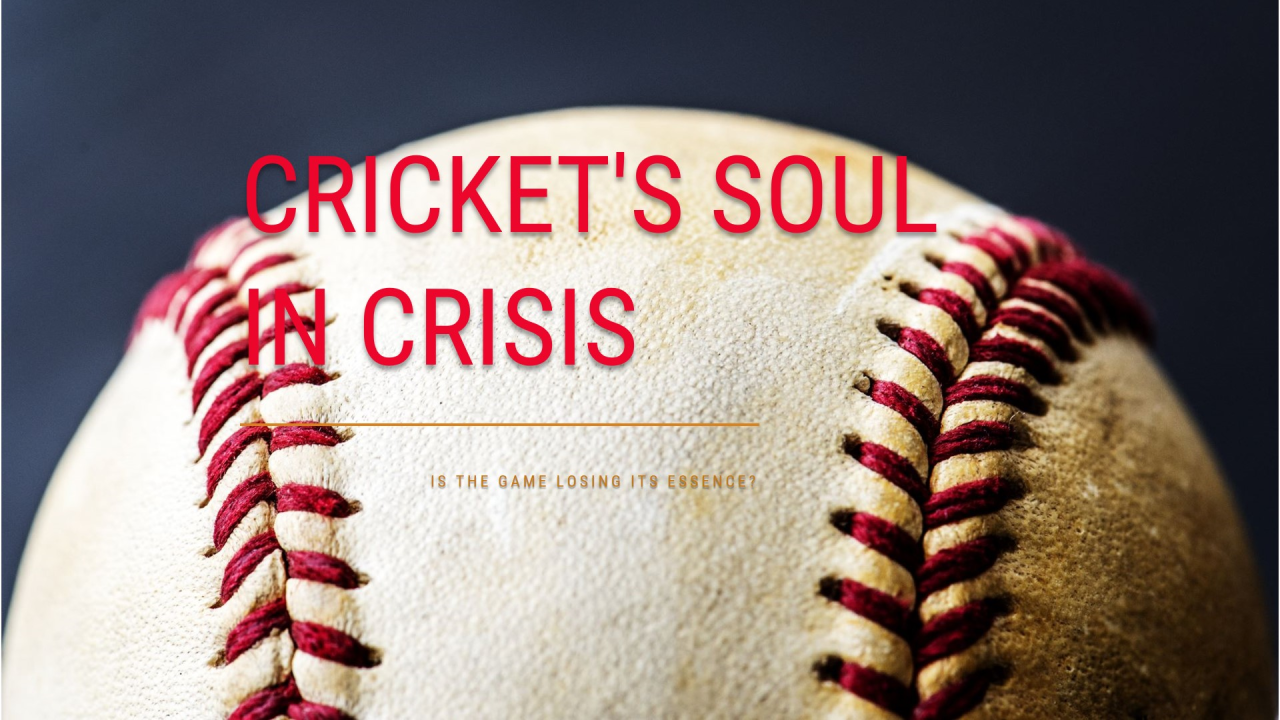
The Gilded Wicket: Has Commercialization Killed the Soul of Cricket?
Skepticism regarding money in cricket generally falls into two distinct camps: traditionalists who fear the erosion of the sport’s values…
The Gilded Wicket: Has Commercialization Killed the Soul of Cricket?
Skepticism regarding money in cricket generally falls into two distinct camps: traditionalists who fear the erosion of the sport’s values and financial skeptics who question the economic sustainability of its rapid commercialization.
- The “Soul of the Game” Skeptics (Traditionalists & Purists)
This group argues that the influx of money, primarily through T20 leagues like the IPL, has commodified the sport at the expense of its integrity and history
Erosion of Test Cricket: Purists say that Test cricket is the best way to measure skill, but they say that it is being destroyed by T20 leagues that make a lot of money. Critics like former West Indies captain Jason Holder and others have talked about the “vicious cycle” where players from poorer boards, like the West Indies and South Africa, leave their national teams to sign contracts with franchises in order to secure their financial futures.
Entertainment vs. Sport: Skeptics say that the game has changed from a contest of skill to a product for advertisers. This includes the addition of “gimmicks” like the Strategic Timeout, which many people say is just a commercial break that stops the game from moving forward.
Integrity Risks: The sport has always been open to corruption because of the huge betting markets and commercial stakes. Some people say that the growth of commercialism has made match-fixing and spot-fixing more likely, pointing to how gambling temptations can even affect top-level competitions.
- The Economic Skeptics (The “Bubble” Theory)
A smaller but important group is questioning the financial logic behind how much modern cricket is worth.
The “Cricket Bubble”: Some financial experts say that Indian cricket is in an economic bubble, which they call the “Cricket Bubble.” Renaissance Investment called Indian cricket “overcapitalized,” which means that the assets (teams and media rights) are worth more than the actual business results. They say that if other sports got even 10% of this money, India would be the best in the world at them, which means that cricket’s dominance is not due to natural growth but to an artificial monopoly.
Valuation vs. Sustainability: When the IPL started, some people were unsure if franchise cricket could make money in the long run. However, the league’s huge valuations ($6.2 billion for broadcast rights in 2022) have mostly shown that this is not the case. But there are still concerns about relying on just one market (India) to support the global game.
- The Human Cost Skeptics (Player Welfare) This skepticism focuses on the impact of sudden wealth on athletes who are often ill-prepared for it
Financial Illiteracy: Former players like Robin Uthappa have talked about a “hidden truth” that young cricketers who make millions don’t know how to handle their money. This makes them spend money on things that lose value quickly (like luxury cars and designer goods) instead of making long-term investments, which makes them vulnerable when their short careers end.
Dehumanization of Players: Critics contend that the auction system dehumanizes players, reducing them to commodities to be bought and sold. This ‘mercenary’ culture is being blamed for destroying team loyalty and sparking mental fatigue and burnout, with players like Ben Stokes walking away from the game over relentless scheduling
- The “Inequality” Skeptics: Critics of the governance structure argue that money has centralized power rather than democratizing it.
The Big Three The financial monopoly of the BCCI (India), England, and Australia creates an unbalanced ecosystem where the poorer boards cannot compete. This relegates smaller countries to being little more than “feeder leagues” for the big franchise tournaments, stealing their best players.
Neglect of Grassroots: Social commentators cite the billion-dollar top, with nothing flowing down to grassroots infrastructure or other sports, a “rich get richer” situation with 90% of aspiring athletes not having decent facilities
In the end, we can say that cricket has quickly become a commercialized sport, turning it from a traditional game into a valuable financial asset. This has caused a big divide between keeping its historical “soul” and trying to be the best in business. This change has made more money than ever before, but it has also raised big worries about market stability, player burnout, and global inequality.
메타데이터
- post_id
- 0b2ff86fa67a
- slug
- the-gilded-wicket-has-commercialization-killed-the-soul-of-cricket-0b2ff86fa67a
- url
- https://medium.com/@kunalanand0018/the-gilded-wicket-has-commercialization-killed-the-soul-of-cricket-0b2ff86fa67a
- canonical_url
- https://medium.com/@kunalanand0018/the-gilded-wicket-has-commercialization-killed-the-soul-of-cricket-0b2ff86fa67a
- author_url
- https://medium.com/@kunalanand0018
- status
- ok
- fetched_at
- 2026-06-09 15:37:30