Alan Greenspan is Dead: The Eclipse of the Maestro
In the humid twilight of a mid-Atlantic summer, the high-pitched wail of a clarinet cut through the heavy smoke of a midwestern jazz club…
Alan Greenspan is Dead: The Eclipse of the Maestro
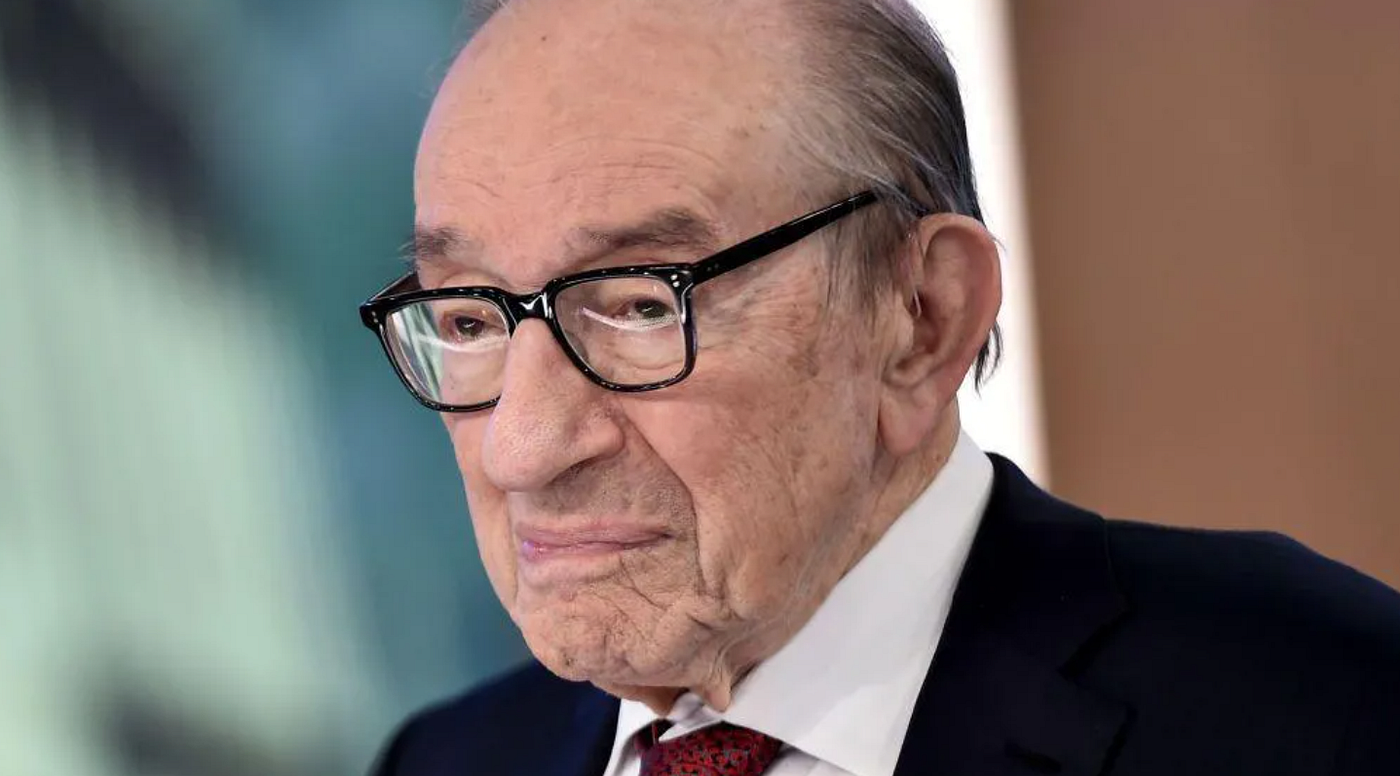
Image Credit: Getty Images
In the humid twilight of a mid-Atlantic summer, the high-pitched wail of a clarinet cut through the heavy smoke of a midwestern jazz club. The teenager blowing into the reed was a bookish boy from Manhattan named Alan Greenspan, a young man who traveled the country with the Henry Jerome swing band during the waning days of the Second World War. While his fellow musicians spent their late-night train rides seeking chemical escapism or sleeping off the sheer exhaustion of the road, the introverted clarinetist sat beneath a dim overhead bulb, systematically teaching himself the structural architecture of the British stock exchange and balancing the band’s ledger books. He possessed an uncanny, photographic fixation on railroad timetables and baseball box scores, a mind that found its true rhythm not in the syncopation of swing, but in the cold, unyielding precision of empirical data. Decades later, that same bookish boy would trade his traveling band uniform for a succession of somber, charcoal suits that earned him the permanent nickname “The Undertaker” from the novelist Ayn Rand. He would step directly into the wood-paneled inner sanctum of the United States Federal Reserve, where his quietest whisper could wipe billions of dollars off global exchanges before lunch.
On Monday, that century-long performance reached its definitive silence. Alan Greenspan died at his home in Washington at the age of 100, leaving behind an economy that he spent nearly twenty years engineering, defending, and ultimately watching fracture. His wife, the veteran NBC News correspondent Andrea Mitchell, confirmed that his passing was caused by complications of Parkinson’s disease, drawing a quiet curtain on a towering figure who personified the triumphant, free-market hubris of post-Cold War American capitalism. He was the pre-eminent economic policymaker of his era, arguably the most recognizable economist of any generation, leading the central bank under four presidents of both parties from 1987 to 2006. Much of his tenure coincided with an unprecedented streak of domestic affluence in which he stood as the living embodiment of a triumphant strain of American capitalism: optimistic, deeply faithful in the power of markets to improve living standards, captivated by the rapid development of technology, and philosophically averse to government regulation.
To understand the immense gravity of the world Greenspan constructed, one must go back to the morning of October 19, 1987. He had been in office as the thirteenth Chairman of the Federal Reserve for a mere two months, still walking under the long shadow of his predecessor, the cigar-chomping inflation slayer Paul Volcker. Suddenly, without warning, the floor of the New York Stock Exchange buckled. Panic rippled through the trading pits as the Dow Jones Industrial Average plunged by a terrifying 22.6 percent on a day that became permanently branded as Black Monday, a drop far more severe than the historic crash of 1929. The air inside the financial district grew thick with adrenaline and shock. Traders stood paralyzed in front of green-screen monitors, watching massive wealth vanish into thin air.
In that precise moment of systemic peril, Greenspan did not flinch. He abandoned the traditional, sluggish central banking protocols, chose to reverse his previous policy of monetary tightening, and aggressively flooded the financial system with liquidity. By pumping cheap credit directly into the banking sector, he kept the wallowing brokerages afloat and completely averted a domestic economic freeze. It was a masterfully clinical intervention that earned him immediate, widespread adulation across Capitol Hill. This exact maneuver would become his signature playbook, an economic safety net that Wall Street affectionately dubbed the “Greenspan Put,” a quiet promise that the government would always step in to mop up the damage after a speculative bubble burst.
This early triumph initiated an extraordinary era of economic expansion that spanned the entire decade of the 1990s. Greenspan became an almost mythical oracle, a technocratic celebrity whose face, framed by thick, heavy-rimmed glasses, became as instantly recognizable to the average American as a Hollywood movie star. When he walked down the streets of Washington, Cabinet secretaries, Supreme Court justices, and hard-nosed journalists leaned in closer, hoping to decode his shattered, labyrinthine sentences. He deliberately mastered a form of elliptical jargon that even professional economists struggled to translate, famously telling a congressional committee, “I know you think you understand what you thought I said, but I’m not sure you realize that what you heard is not what I meant.” This calculated vagueness was born of necessity; he understood that a single stray word about interest rates spoken during his morning routine — which he spent soaking in a hot bathtub to relieve his chronic back pain — could trigger a violent sell-off on the Tokyo stock market before he even dried himself off.
Behind this carefully maintained facade of Olympian detachment lay the heart of a brilliant, wily political operator who played the Washington power game with exceptional skill. Greenspan had cut his political teeth in 1967 as an economic adviser to Richard Nixon’s presidential campaign, learning exactly how to balance ideological theory against the brutal math of winning elections. He survived the dark, cynical cloud of the Watergate scandal, transitioning smoothly to serve as Gerald Ford’s Chairman of the Council of Economic Advisers, where he regularly refined his ability to shape executive policy from the inside.
His unique political genius was his ability to remain a lifelong, staunch Republican while winning consecutive reappointments from presidents of both parties. When Bill Clinton entered the Oval Office in 1993, many expected the conservative, free-market monetarist to face a cold dismissal. Instead, Greenspan forged an intense, highly constructive partnership with the Democratic administration. He walked into the White House and firmly convinced Clinton to prioritize deficit reduction over the expansive social spending programs favored by the party’s liberal wing. By 1999, Greenspan appeared on the famous cover of Time magazine, standing shoulder-to-shoulder with Treasury Secretary Robert Rubin and Deputy Secretary Lawrence Summers under the grandiose title, “The Committee to Save the World.”
This immense authority was rooted in a profound, almost theological belief system that Greenspan had adopted back in 1952. During his brief, one-year first marriage to the painter Joan Mitchell, he was introduced to the controversial Russian émigré novelist Ayn Rand. For fifteen years, the young statistician spent his weekends sitting in the smoke-filled living room of Rand’s Manhattan apartment, engaging in intense, late-night debates about individual liberty and laissez-faire capitalism. Rand’s uncompromising philosophy of “rational selfishness” struck Greenspan with the force of a revelation. She taught him that untamed capitalism was not merely an efficient mechanism for distributing resources, but a fundamentally moral system that functioned best when governments completely refused to intervene. In a scathing article he published in 1966, Greenspan channeled this pure libertarian doctrine, declaring that the welfare state was nothing more than a mechanism by which governments confiscate the wealth of productive members of a society.
When he assumed control of the Federal Reserve, this deep-seated aversion to government regulation guided his hand. As the twentieth century drew to a close, a massive wave of global savings from rapidly industrializing nations like China began washing over American borders, driving down long-term mortgage rates and fueling an explosive rise in asset prices. Concurrently, Wall Street firms began engineering complex, highly volatile financial instruments known as derivatives. When Edward Gramlich, a concerned Fed governor, pulled Greenspan aside in 2000 to urge him to use the central bank’s examiners to crack down on predatory subprime lending practices, Greenspan flatly rebuffed the warning. He maintained an unshakeable faith that the market possessed an inherent capacity to police itself, arguing that the self-interest of major lending institutions would naturally prevent them from taking risks that could destroy their own equity.
This foundational belief survived the painful bursting of the dot-com tech bubble in 2000, and it survived the catastrophic psychological shock of the September 11 terrorist attacks, where Greenspan once again stabilized a panicked nation by slashing interest rates to a historic low of 1 percent. For years, he ignored the urgent warnings of monetary economists like Stanford’s John B. Taylor, who argued that keeping credit so incredibly cheap for so long was artificially inflating a dangerous, unprecedented bubble in the American housing market. Greenspan publicly dismissed these anxieties, declaring in 2003 that a widespread collapse of the real estate market was highly unlikely.
The day of reckoning arrived in October 2008, two years after Greenspan had officially retired from the Fed and surrendered his seat to Ben Bernanke. The complex web of subprime mortgages, unchecked derivatives, and reckless investment bank leverage finally collapsed, tearing through the global financial architecture with the speed of a demolition charge. Legacy investment banks imploded, credit markets seized completely, and millions of middle-class families watched their retirement funds disintegrate.
The real tragedy was that this systemic devastation occurred because of choices deliberately made during his long tenure. In the late 1990s, Greenspan had actively joined forces with Treasury Secretary Robert Rubin and Lawrence Summers to aggressively block a regulatory proposal put forward by Brooksley Born, the head of the Commodity Futures Trading Commission. Born had accurately identified the terrifying risks hidden within the opaque, unregulated derivatives market, pleading for basic transparency rules and financial cushions to protect the public from sudden, catastrophic losses. Greenspan and his powerful allies firmly asserted that such oversight would destabilize the free market, choosing instead to protect the multi-trillion-dollar sandbox of Wall Street over the economic security of ordinary citizens. Even the spectacular, near-fatal meltdown of the hedge fund Long-Term Capital Management in the summer of 1998 failed to shake his absolute conviction that private firms were always better than sovereign governments at managing financial risk.
On October 23, 2008, a fragile, visibly shaken Alan Greenspan sat before a microphone in a packed congressional hearing room, facing a barrage of furious questions from the House Oversight Committee. The old, confident aura of the Maestro had vanished, replaced by the heavy silence of a man witnessing his entire life’s philosophy crumble in real-time. Representative Henry Waxman leaned into his microphone, his voice cutting through the quiet room: “You found that your view of the world, your ideology, was not working?”
Greenspan adjusted his glasses, leaned forward, and delivered a confession that permanently shattered the foundational myth of modern financial deregulation. “Absolutely, precisely,” he admitted, his voice carrying a rare note of raw distress. “I made a mistake in presuming that the self-interests of organizations, specifically banks and others, were such that they were best capable of protecting their own shareholders and their equity in the firms. I have found a flaw. I don’t know how significant or permanent it is, but I have been very distressed by that fact.”
This extraordinary admission will forever remain the defining epitaph of his monumental career. Alan Greenspan was undoubtedly a master technician, a dedicated public servant who brought an incredible, data-driven discipline to the art of central banking and guided the American economy through decades of unprecedented material wealth. He proved that a central bank could successfully tame consumer inflation and maintain steady economic growth across generations. Yet, his brilliant tenure will always be haunted by that singular, ideological blind spot, a tragic reminder that when leaders place a dogmatic, unyielding faith in the perfect rationality of free markets, they often end up blind to the catastrophic forces brewing right beneath their feet.
메타데이터
- post_id
- 0b3aa20f3d26
- slug
- alan-greenspan-is-dead-the-eclipse-of-the-maestro-0b3aa20f3d26
- url
- https://medium.com/measured-voices/alan-greenspan-is-dead-the-eclipse-of-the-maestro-0b3aa20f3d26
- canonical_url
- https://medium.com/measured-voices/alan-greenspan-is-dead-the-eclipse-of-the-maestro-0b3aa20f3d26
- author_url
- https://medium.com/@tosinadeoti
- status
- ok
- fetched_at
- 2026-06-27 18:20:27