Is This the End of P2P in Nigeria?
Let me take you back just a little
Is This the End of P2P in Nigeria?

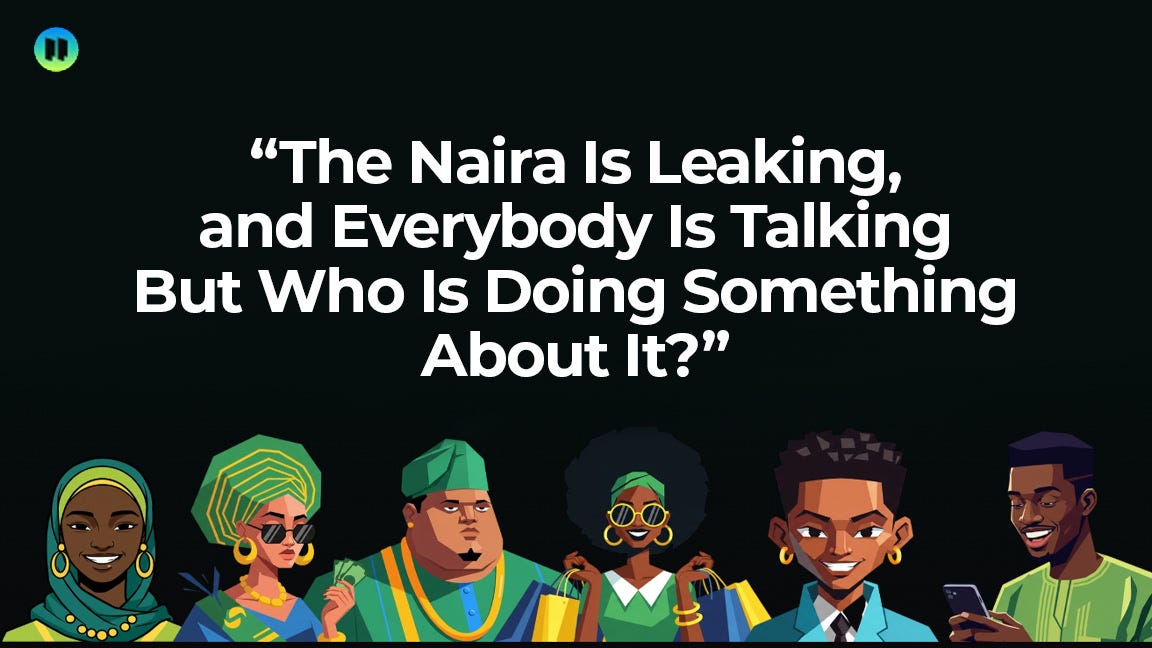
Image: Generated with Nano Banana
Let me take you back just a little
In February 2021, the Central Bank of Nigeria decided that banks could no longer touch anything related to crypto. No transactions. No accounts. No facilitation of any kind. Nothing.
They couldn’t outright ban crypto, so they just cut off every clean and reliable way for Nigerians to access it.
And Nigerians, being Nigerians, we did what we know how to do best when a door gets shut in our face.
We find a way around it
And that way was P2P
P2P, meaning peer-to-peer trading, is exactly what it sounds like. Just like in the time of trade by barter, you have Yam and want Beans; you find someone who has Beans and wants Yam, and you trade.
In Crypto, it’s that simple, you want to buy USDT, you find someone who wants to sell USDT, agree on a price, you send naira directly to the person’s bank account, and the platform holds the crypto until the person confirms they’ve received the money.
No bank involvement. Just two people, with vibes and inshallah
It was scrappy and informal, yes!
But it worked so well that Nigeria became one of the largest P2P markets in the entire world. Between July 2024 and June 2025 alone, over $92.1 billion in crypto moved through P2P channels.
$92.1 billion.

Image: PWC
But here’s the thing about solutions born out of necessity.
They only solve the immediate problem, they don’t always age well.
While P2P was keeping the Nigerian crypto market alive, it was slowly accumulating a list of problems nobody wanted to talk about, until the list got too long to ignore.
Payout times ranged from 3 minutes to 86 minutes if God was on your side. Not because of the platform, but because of whichever individual trader you happened to match with.
About 31% of all trades had some form of payout disagreements.
Users received less than agreed. Sometimes a few kobo, sometimes much more, and the platforms rarely flagged or corrected it automatically.
Also had fake payment alerts.
Screenshots of transfers that never happened. Traders who confirm receipt and disappear. Deals moved to WhatsApp to escape the protection the platform actually provides.
Twitter (now X) was on fire, almost every week, there was a new p2p scam victim.
Bank accounts frozen from flagged transactions, impersonation by fake profiles, EFCC convicting people who got caught in the middle of someone else’s fraud…
The list goes on and on…

Tweets from the timeline
Then the regulators showed up properly.
But it wasn’t to fix P2P.
They had their own agenda. They claimed crypto was the reason the Naira kept falling.
Then in February 2024, things got really serious.
Binance suspended naira P2P trading entirely, and two of their executives were detained in Nigeria. And around the same time, fintechs like OPay, Kuda, and Palmpay, under pressure from CBN, began freezing accounts of users they suspected were involved in crypto-related activity.
Regular people, traders, and freelancers receiving USDT payments woke up to locked accounts and no explanation.
Then, the SEC made it official and delisted the Naira from all P2P platforms.
That means you could no longer trade naira on P2P legally anymore.
But what did Nigerians do?
We again found a way.
Dollar-denominated P2P took over, crypto-to-crypto swaps, unofficial OTC desks popped up everywhere…
Still wasn’t perfect.
Then, in August 2024, the SEC (Securities and Exchange Commission) issued Nigeria’s very first crypto licences to Quidax and Busha, giving them permission to operate as registered crypto exchanges in Nigeria.
A big win for the Nigerian crypto community, right?
Definitely
Then, in August 2025, Quidax launched a P2P feature.
This felt like heaven at last for a regulated, SEC-supervised Nigerian exchange to officially embrace what traders had been building informally for years. If anything was going to make P2P legitimate, this was it.
But five months later, on January 23rd, 2026, Quidax shut it down completely.
In five months?

Is this the end of P2P in Nigeria?
Here’s my honest opinion.
P2P, as Nigerians knew it, that is the improvised and adapted version that kept the market alive when the CBN shut every other door…
Nah, that market has closed (or is closing)
The rules won’t let it breathe
So what’s next?
The problem hasn’t been solved, as people still need to convert crypto to fiat.
But there is a new generation of products coming out of the SuperteamNG builder community, solving the crypto-to-fiat and fiat-to-crypto problem properly and differently with actual infrastructure.
For example:
- Cryptonia, a platform that helps you receive, convert, and spend crypto dollars as easily as local money (Naira).
- NectarFi, a super money app that helps you send, receive, save, and invest money globally. It uses crypto technology behind the scenes, but you don’t need to understand crypto to use it.
And those are just two. The SuperteamNG ecosystem is full of builders working on this exact problem from different angles.
You shouldn’t have to choose between holding crypto and living your normal financial life.
You should be able to do both, without a stranger on the other end of a chat who may or may not feel like sending you your money.
Is this going to be the perfect solution?
No.
Or were you expecting a yes?
Growth is meant to happen
And Nigeria will always find a way to test the edges of anything, but that conversation is for another day.

To conclude
P2P in Nigeria moved faster than its regulators and built a $92.1 billion ecosystem almost entirely through hustle and trust.
P2P was never the final form. It was survival.
And survival systems eventually get replaced by infrastructure.
The builders who understand that are already building what comes next.
If you will, follow me on X: @emekalutm
And on LinkedIn
메타데이터
- post_id
- 0b3b6ac45e4e
- slug
- is-this-the-end-of-p2p-in-nigeria-0b3b6ac45e4e
- url
- https://medium.com/@emekalutm/is-this-the-end-of-p2p-in-nigeria-0b3b6ac45e4e
- canonical_url
- https://medium.com/@emekalutm/is-this-the-end-of-p2p-in-nigeria-0b3b6ac45e4e
- author_url
- https://medium.com/@emekalutm
- status
- ok
- fetched_at
- 2026-07-11 13:01:24