SCAMIN in ECDIS: Why Always Off vs Phase-Based Still Divides Navigators
In my work as a navigation assessor, I regularly review ECDIS practices across different companies. One recurring issue I encounter is the…
SCAMIN in ECDIS: Why Always Off vs Phase-Based Still Divides Navigators
In my work as a navigation assessor, I regularly review ECDIS practices across different companies. One recurring issue I encounter is the management of SCAMIN (Scale Minimum), should it always remain OFF, or should it be used differently in passage planning and execution?
This is not just a technical toggle hidden in menus. SCAMIN in ECDIS is one of the most debated topics on the modern bridge. Admiralty guidelines, hydrographic practice, and real-world audits all show that how SCAMIN is applied has direct implications for navigation safety, ENC clarity, and professional seamanship across the global fleet.
What SCAMIN is meant to do
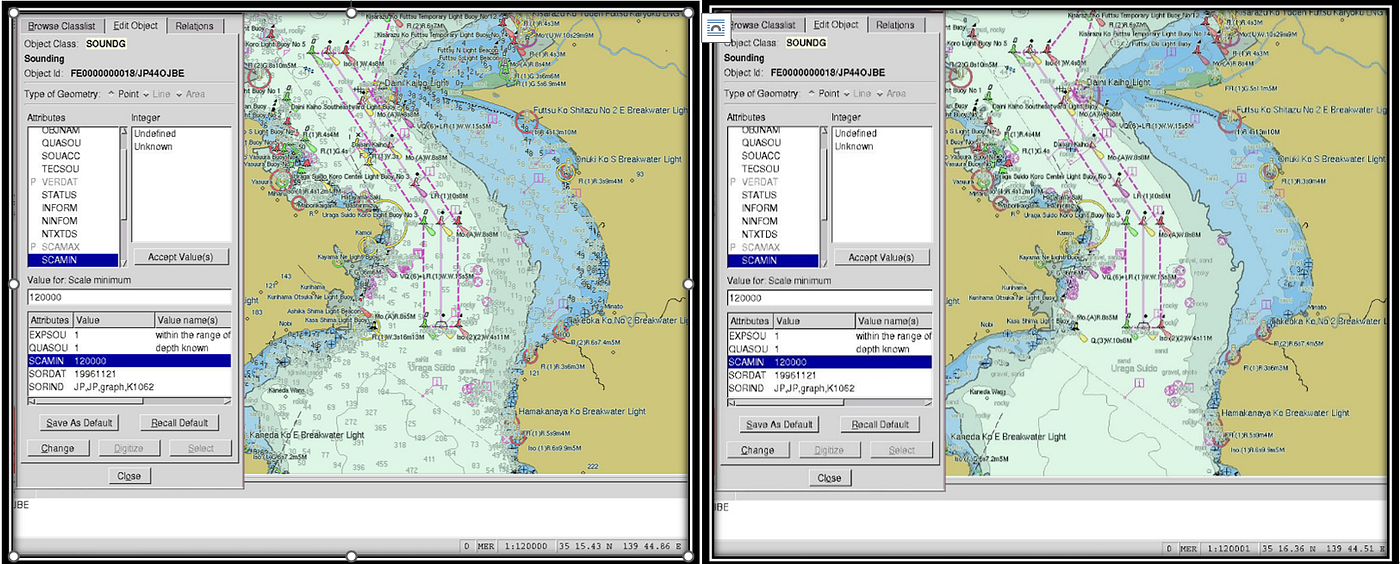
SCAMIN (Scale Minimum) is an ENC attribute that defines the minimum scale at which a charted feature will be displayed. Its purpose is to “significantly reduce the amount of information displayed when viewing an ENC at a smaller scale than its compilation scale.”
In simple terms, SCAMIN prevents clutter.
- Important features remain visible.
- Minor details fade as you zoom out.
- The chart stays readable and usable.
Since IHO Presentation Library 4.0, all ECDIS must include a SCAMIN ON/OFF toggle. As NP 232 explains, this allows navigators to balance completeness and clarity depending on task.
Every ENC object also carries a SCAMAX value, which defines the maximum scale above which a feature disappears. While SCAMAX is less commonly encountered than SCAMIN, it defines the maximum scale above which a feature will no longer be shown (usually when zoomed in beyond its intended depiction). Together they set the visibility window for charted objects.
The “Always OFF” argument
In some Safety Management Systems (SMS) I have audited, SCAMIN is prescribed as always OFF, on the grounds that this guarantees no features are hidden if navigators work outside the correct scale. The logic is straightforward -
- At the “correct compilation scale” of the ENC, you will always see every feature.
- If you accidentally drift from the right scale, SCAMIN OFF acts as a safety net, ensuring nothing is hidden.
Strengths
- Maximum data completeness.
- Peace of mind: Ensures no features are hidden even if scale management is imperfect.
Weakness
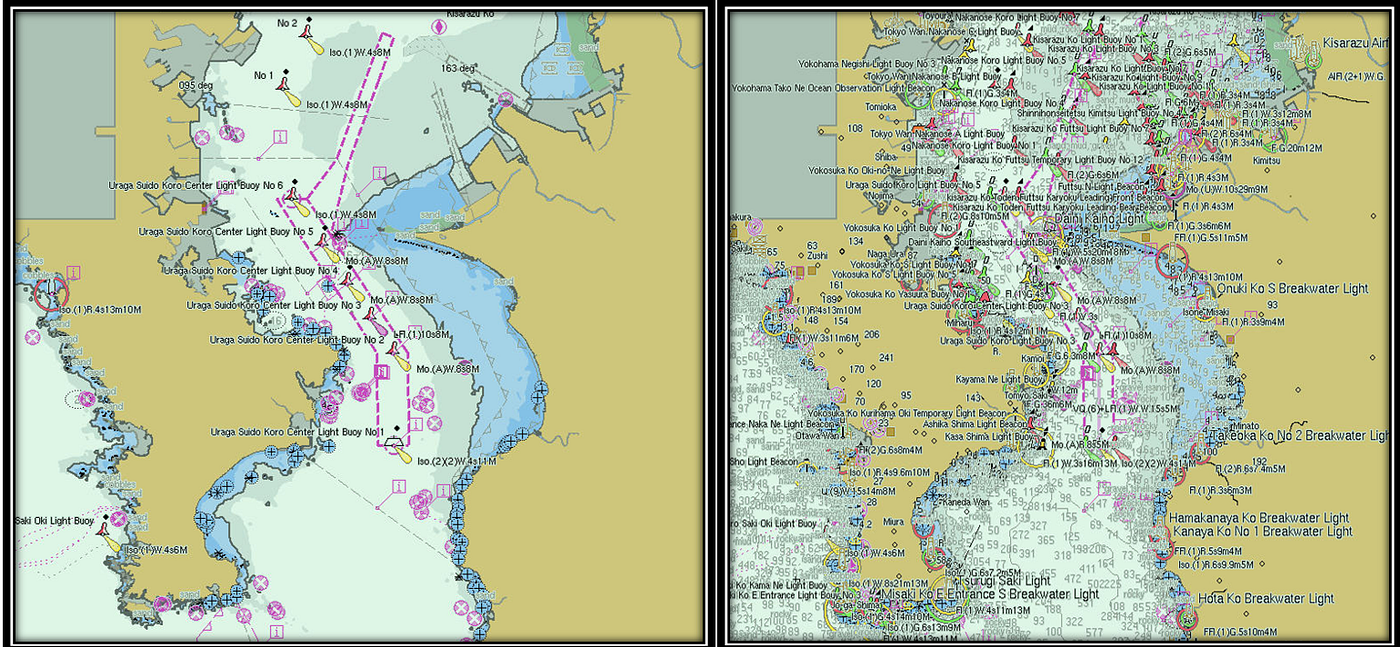
- Clutter: with SCAMIN OFF, especially when zoomed out, ENCs become saturated with symbols.
- Reduced clarity: important patterns, coastline, route, hazards are buried.
- Watchkeeper overload: the burden shifts to the navigator to mentally filter noise from signal.
As NP 231 stresses, excessive detail “does not improve safety” it undermines it. Why “the right scale” is a fallacy
Supporters of the “always OFF” camp often argue, “You should always navigate at the right ENC scale.”
In theory, that’s correct. In practice, it’s unrealistic.
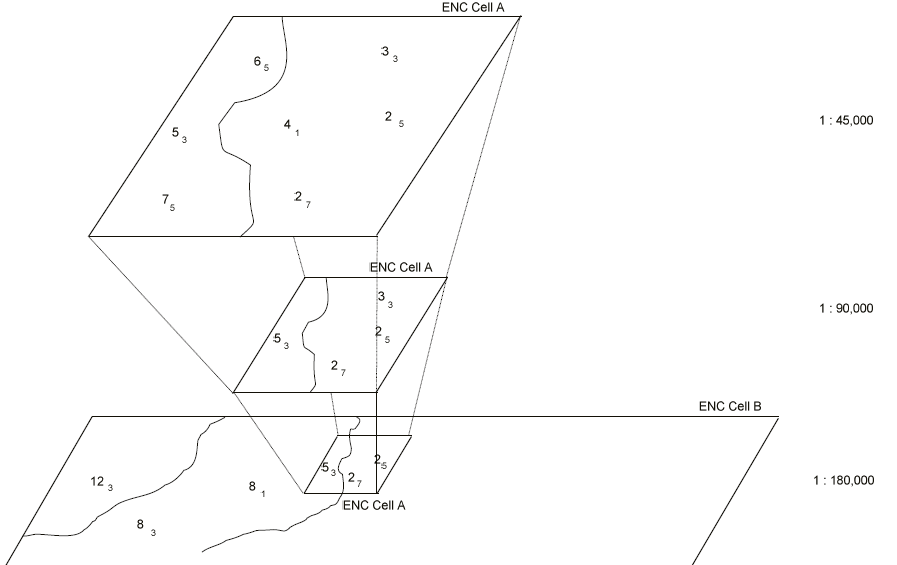
2. Multiple scales in a single voyage
3. Human Factors
4. The Design Intent
The “right scale” mantra may look good on paper, but it doesn’t reflect the reality of modern watchkeeping.
The Clutter Challenge
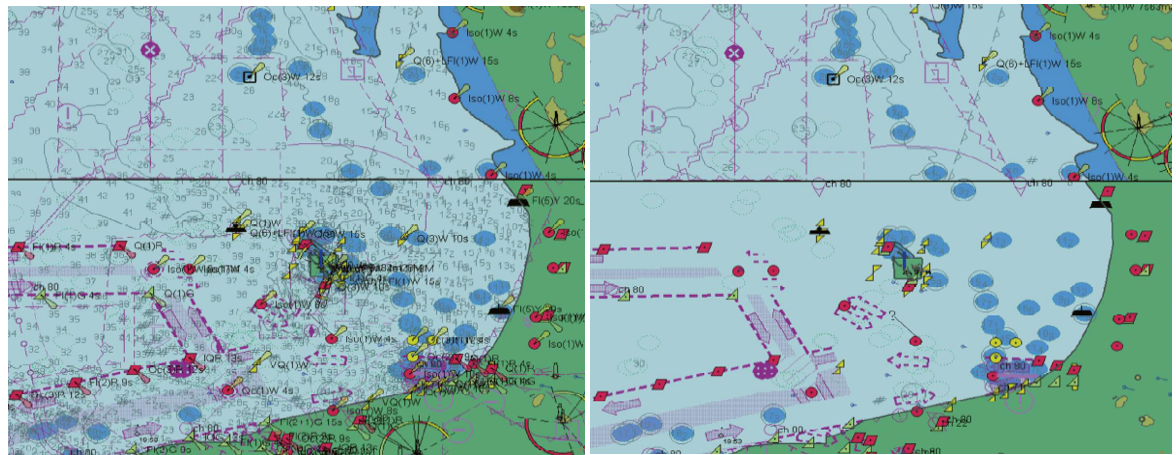
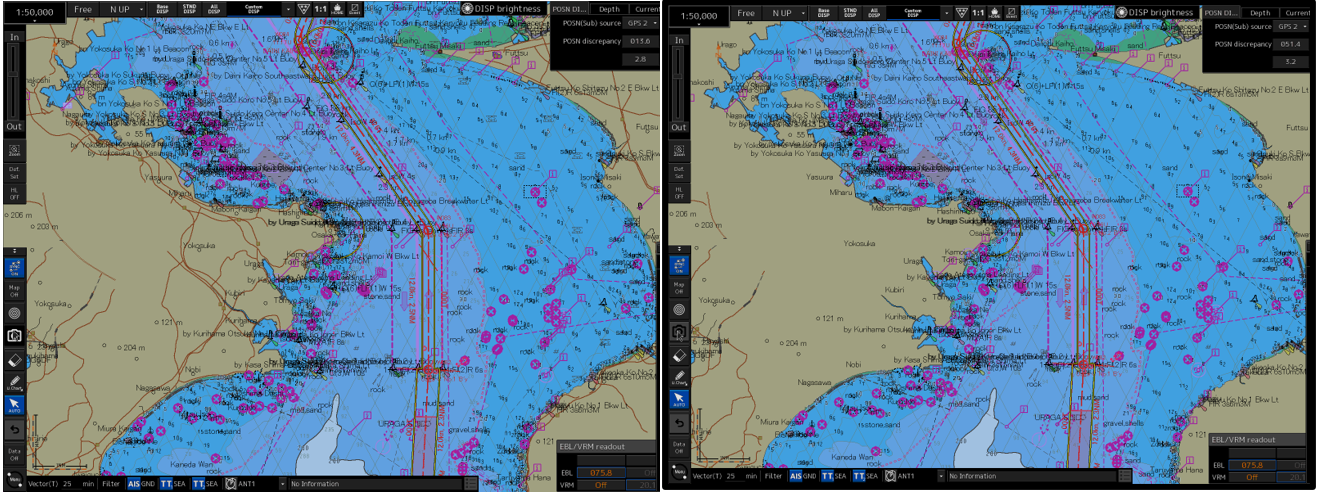
Imagine zooming out on a busy traffic separation scheme with SCAMIN permanently OFF. Hundreds of aids to navigation blur into a haze of symbols. Instead of clarity, the navigating officer faces confusion.
This is why SCAMIN exists, to prioritize essential information at different scales. As NP 231 and NP 232 both note, its proper use helps maintain situational awareness, rather than eroding it.
Over-zooming and false accuracy Over-zooming is another risk. Viewing an ENC far beyond its compilation scale may give a false sense of accuracy. Type-approved ECDIS flag this with warning grids, but SCAMAX was designed to limit this risk, though in practice it is inconsistently applied.
The Phase-Based Approach
A more practical method and the one most consistent with Admiralty guidance is the phase-based approach:
- Planning → SCAMIN OFF Completeness is essential. Every wreck, cable, and buoy should be visible when laying out routes, checking cross-track distances, etc. Nothing should be hidden at this stage.
- Execution → SCAMIN ON During navigation, clarity is the priority. With SCAMIN ON, clutter reduces, and the navigator sees a cleaner, more manageable picture. If necessary, SCAMIN can be toggled OFF temporarily for checks.
This is not about rules for their own sake, it reflects the reality of bridge operations. Planning demands completeness. Execution demands clarity. SCAMIN helps deliver both.
The route check is a mandatory step under most SMS and is built into type-approved ECDIS, requiring the Master and duty officer to verify hazards before execution. With this safeguard in place, SCAMIN can confidently remain ON during navigation.
The manufacturer problem
From an auditing perspective, differences aren’t just between operators, they also arise between ECDIS manufacturers and ENC producers.
- NP 231 notes that SCAMIN is not applied consistently across all ENCs.
- Some manufacturers apply additional filtering logic, arguing that features at the compilation scale remain unaffected by SCAMIN. This can result in inconsistent displays between systems.
- Reinforcing the need for mariners to stay alert to differences in display behaviour across charts. The safety risk is clear, two ships in the same waters may not see the same hazards at the same zoom level.
The Takeaway
SCAMIN was never designed to confuse navigators, it was designed to support them. Always OFF maximizes data but risks clutter and overload, always ON improves clarity but can hide detail. Admiralty guidance and real-world experience show that the safest, most professional approach is phase-based. SCAMIN OFF during planning and route checks, ON during execution, with flexibility in confined or critical waters.
Consistency across ENCs and ECDIS systems is equally essential, so that every navigator, on every ship, sees the same picture. Because in navigation, small differences matter, even a buoy that disappears at one zoom level but not another can become a safety hazard.
Ultimately, seamanship in the digital era is about balance ie. clarity, completeness, and professional judgment applied with intent. That is the true mark of safe navigation.
The key is intentional use. SCAMIN is not an “always OFF” or “always ON” switch. It is a tool to be applied with professional judgment. References
- NP 231: Admiralty Guide to the Practical Use of ECDIS, UKHO
- NP 232: Admiralty Guide to ENC Symbols and Abbreviations, UKHO
- IHO S-52: Specifications for Chart Content and Display Aspects of ECDIS
- IMO SOLAS Chapter V: Safety of Navigation
- IMO MSC.232(82): ECDIS Performance Standards
- ECDIS Passage Planning and Watchkeeping, Witherby (2025 Edn.)
Originally published at http://captjonda.wordpress.com on November 25, 2025.
메타데이터
- post_id
- 0b4e46e993d5
- slug
- scamin-in-ecdis-why-always-off-vs-phase-based-still-divides-navigators-0b4e46e993d5
- url
- https://medium.com/@raghupanchkaran/scamin-in-ecdis-why-always-off-vs-phase-based-still-divides-navigators-0b4e46e993d5
- canonical_url
- https://medium.com/@raghupanchkaran/scamin-in-ecdis-why-always-off-vs-phase-based-still-divides-navigators-0b4e46e993d5
- author_url
- https://medium.com/@raghupanchkaran
- status
- ok
- fetched_at
- 2026-07-09 17:12:49