Hormuz, Frozen Funds, and a Fragile Truce: Inside the Doha Talks Testing the US-Iran Peace
As Iranian and American envoys shuttle through Qatar without ever meeting face to face, Tehran calls the strait its “greatest instrument of…
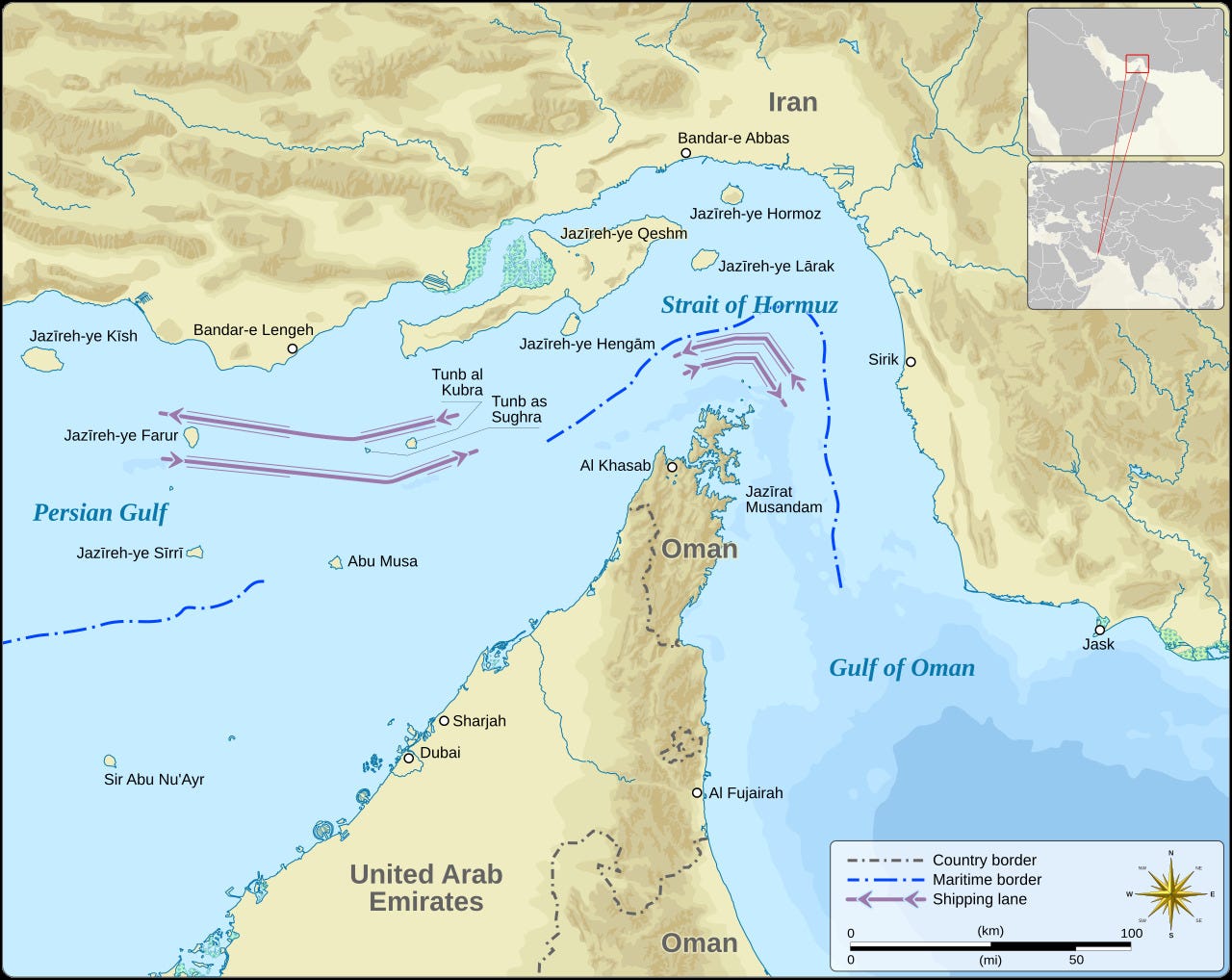
Strait of Hormuz
Hormuz, Frozen Funds, and a Fragile Truce: Inside the Doha Talks Testing the US-Iran Peace
As Iranian and American envoys shuttle through Qatar without ever meeting face to face, Tehran calls the strait its “greatest instrument of power,” Hezbollah brands the Lebanon deal a “surrender,” and the IAEA still doesn’t know where Iran’s uranium is
Iranian negotiators arrived in Doha on Wednesday to hold talks with Qatari mediators, a day after American envoys reached the Qatari capital, as Washington and Tehran struggled to translate a fragile ceasefire into a durable peace nearly two weeks after signing a memorandum of understanding meant to end their four-month war.
Qatar’s prime minister and foreign minister, Sheikh Mohammed bin Abdulrahman bin Jassim Al Thani, met US envoys Steve Witkoff and Jared Kushner in Doha, and separately received Iranian officials, though Qatar’s Foreign Ministry stressed that no high-level or face-to-face talks between the American and Iranian sides were scheduled.
Technical-level discussions were instead proceeding through Qatari intermediaries, covering three broad areas: Iran’s nuclear programme, wider diplomacy, and the financing and return of Iranian funds frozen abroad. Iran’s top negotiator and parliament speaker, Mohammad Bagher Ghalibaf, made clear that Tehran views these as low-level technical exchanges rather than substantive peace talks, noting that Iran had sent Deputy Foreign Minister Kazem Gharibabadi rather than senior leadership.
He said Iran would not begin negotiations on a final agreement until Washington implements five clauses of the MoU: ending hostilities in Lebanon, removing the naval blockade on Iranian ports, allowing free passage through the Strait of Hormuz, granting sanctions waivers for Iranian oil exports, and releasing frozen Iranian assets.
The dispute over the Strait of Hormuz has emerged as the most combustible issue in the aftermath of the war. Ghalibaf described the waterway, through which roughly a fifth of the world’s oil and gas supplies pass, as Iran’s “greatest instrument of power” and “a divine gift that God granted us during this war.” He insisted that Iran would never relinquish what it considers sovereign control over the strait and would not allow the United States to claim Tehran had militarized it.
The MoU, he said, provides only a temporary 60-day exemption from fees for maritime services, not a permanent settlement. Iranian officials have also pointed to progress on other fronts: Ghalibaf said Iran exported more than 40 million barrels of oil in under two weeks after the US lifted its naval blockade, a sharp reversal from the total halt in exports Tehran said it endured during the blockade.
Tanker-tracking firm TankerTrackers.com put the more recent total even higher, estimating 50 million barrels exported, equivalent to about 1.66 million barrels a day for June.
Washington has pushed back hard against any suggestion that Iran or Oman might impose tolls on shipping through the strait. Oman’s foreign minister, Badr Albusaidi, sought a middle path, ruling out support for outright “transit fees” while remaining open to discussing narrower service charges tied to navigational safety, pollution prevention, and emergency preparedness — arrangements he compared to the voluntary funding model used in the Straits of Malacca and Singapore.
The head of the International Maritime Organization, Arsenio Dominguez, echoed that any mandatory toll would be illegal under international law but floated a voluntary fund as a workable alternative, saying he had discussed the Malacca-Singapore precedent with Omani officials. Legal scholars have largely sided with this view: Marc Weller of Chatham House said Tehran’s ambition to charge for passage “is not internationally lawful,” arguing the MoU has no standing to curtail rights of passage for other nations.
Some analysts, including Sheikha Alanoud Hamad Saud Al Thani of the Middle East Council for Global Affairs, have suggested the strait dispute functions mainly as an Iranian negotiating lever rather than a genuine economic priority, given the collapse of Iran’s currency and the country’s more pressing need to escape broader economic strangulation.
Beneath the rhetoric, shipping data show a slow and uneven recovery. Windward, a maritime intelligence firm, reported that traffic remained “well below pre-war levels” as of late June, with only the US-backed southern corridor near Oman keeping limited safe passage open, and flagged the reappearance of sanctioned tankers using false flags.
MarineTraffic recorded 108 verified transits over three days last weekend, down from a wartime high of 70 crossings in a single day the previous Wednesday, and far below the roughly 130 to 140 ships that transited daily before the war.
Thailand reported that 10 of 11 stranded Thai-linked vessels had safely exited the strait, while South Korea said only two of its 26 stranded ships remained inside, one of them, the Namu, still under repair in Dubai after being damaged in a May attack that Seoul has not conclusively attributed to Iran. India’s Prime Minister Narendra Modi, whose country depends on the strait for about 40% of its oil and half of its gas imports, spoke with Iranian President Masoud Pezeshkian to press the importance of freedom of navigation.
The volatility of the past two weeks has underscored how easily the ceasefire could unravel. In the days before the Doha meetings, Iran and the United States traded a rapid sequence of strikes after Tehran attacked commercial vessels — including the Singapore-flagged M/V Ever Lovely and a Panama-flagged tanker — for sailing routes it had not authorized. The US responded with retaliatory strikes on Iranian missile and drone storage sites, coastal radar installations, and mine-laying infrastructure, prompting Iranian missile and drone attacks on US-linked targets in Bahrain and Kuwait.
Iran’s Revolutionary Guard Corps Navy warned that any future violations of its approved shipping route would be met with a “crushing response,” while President Trump warned on Truth Social that continued Iranian violations could eventually lead the US to “militarily complete the job” it started, adding that “the Islamic Republic of Iran will no longer exist” if pushed too far. Iranian officials, including Ebrahim Azizi, chairman of the parliament’s National Security and Foreign Policy Commission, accused Trump of showing no genuine commitment to negotiation. Newly installed Supreme Leader Mojtaba Khamenei, who assumed the position after his father and predecessor Ali Khamenei was killed in a strike on the first day of the war, called for US and Israeli leaders to be tried for their actions, saying “these criminals must be seized by the collar and brought to justice.”
By Monday, both sides appeared to be stepping back from the brink. Reports emerged that Washington and Tehran would pause further attacks and allow shipping to move more freely while technical talks on implementing the MoU continued. A senior US official said channels for de-escalation had been established and were functioning, and that discussions on all areas of the memorandum would proceed, even as Iran publicly denied any meeting was scheduled for that week and said consultations would continue only through mediators. Nicole Grajewski of Sciences Po told the New York Times that the MoU’s deliberately vague language, likely necessary to secure Iranian and US signatures at all, had left both sides trying to establish facts on the ground in their favor before a final agreement fixes the details.
Vice President JD Vance, who has taken the lead in defending the deal, dismissed Iran’s public denial of talks as a “Persian negotiating tactic,” saying technical discussions were “definitely happening,” and insisted separately that oil traffic through the strait had reached its pre-war height even as independent tracking data suggested otherwise. Vance also argued that the US remained in a “great position” regardless of how talks turn out, saying Iran’s military and nuclear programme had been “destroyed” and that the country would be “permanently transformed” if a lasting settlement is reached.
The nuclear question remains one of the most sensitive elements of any eventual settlement. International Atomic Energy Agency Director General Rafael Grossi said the interim accord obliges Tehran to grant inspectors access, despite an earlier statement from Iranian Deputy Foreign Minister Gharibabadi suggesting key sites would stay off-limits until sanctions are fully lifted and a final deal reached. Grossi said UN inspectors had already held initial technical exchanges with Iranian officials, and that any visit would first need to verify whether IAEA seals placed on previously inspected material remained intact and whether any enriched uranium was missing. Iran has yet to disclose how much of its stockpile survived the war or where it is now held; the agency has estimated Iran possessed 440.9 kilograms of uranium enriched to 60%, an amount that could theoretically be refined further into material for roughly ten weapons. “Intentions are not enough,” Grossi said. “We have to have a very strong verification system in place.” Ghalibaf, for his part, has insisted that Iran’s uranium enrichment is a “legitimate and inalienable right” and that its missile programme and broader military capabilities are “absolutely non-negotiable,” even as he confirmed the 60-day negotiating window set out in the MoU could be extended if needed.
Lebanon has proven just as fraught a front as the Strait of Hormuz, if not more so. A US-brokered framework agreement signed between Israel and Lebanon on June 26 calls for a phased Israeli withdrawal from occupied Lebanese territory, beginning with two unnamed “pilot zones,” but sets no firm timetable and links any pullback to the Lebanese army assuming full security control and to the disarmament of Hezbollah.
Hezbollah, which was not a party to the negotiations, rejected the deal outright. Its leader, Naim Qassem, called the agreement “null and void” and a surrender that legitimizes continued Israeli military presence while crossing “all red lines,” vowing the group would not abandon armed resistance: “We did not leave the battlefield in the most difficult circumstances, and we will not leave it.” He argued that the earlier US-Iran memorandum, which guarantees Lebanon’s territorial integrity, should serve as the real basis for ending hostilities rather than the bilateral framework with Israel. Anger over the deal has spread beyond Hezbollah’s base to the broader Shiite community, with the Amal movement of parliamentary speaker Nabih Berri denouncing it as unbalanced and tilted toward Israeli interests, particularly given that hundreds of thousands of displaced Lebanese, mostly Shiite Muslims, remain unable to return home.
On the ground, the fragility of the truce has been evident almost daily. Israel has continued strikes inside Lebanon even after the framework’s signing, including a drone strike on Nabatieh al-Fawqa that Israeli officials said targeted an individual deemed a threat, and further strikes near the towns of Deir Seryan and Taybeh, alongside the announced destruction of what Israel described as Hezbollah underground infrastructure near Majdal Zoun. Israeli security officials have said withdrawal from two pilot villages will be delayed pending agreement on a US oversight mechanism, with one official telling Israeli media plainly that “there are currently no timelines.”
Israeli Defence Minister Israel Katz has praised the framework precisely because it permits continued occupation of an expanded security zone and bars the return of displaced residents, a framing that has done little to reassure Lebanese officials warning that the country risks losing sovereignty over its own territory. Iranian officials have consistently tied progress on Lebanon to the broader US-Iran track: Foreign Ministry spokesperson Esmaeil Baghaei said Washington’s commitment to ending hostilities “on all fronts, especially in Lebanon,” is central to the first article of the MoU, adding that “America must adhere to its commitments and, if necessary, force the Zionist regime to implement its commitments.” A researcher at Tehran’s Center for Strategic Studies, Ali Akbar Dareini, went further, accusing Washington of negotiating in bad faith by signing a separate Lebanon-Israel deal that he said directly contradicts the ceasefire commitments embedded in the MoU.
Money remains another persistent irritant. Iran has pressed for the release of funds frozen abroad under sanctions, citing Article 11 of the MoU as an unconditional obligation on Washington’s part. Iranian officials say the US agreed to release $12 billion in two tranches of $6 billion, with the first tranche held in Qatar; as of this week, Qatari officials confirmed that money had not yet been transferred to Tehran.
Analysts in Tehran argue that unfreezing these assets, alongside sanctions relief more broadly, matters more to ordinary Iranians than the Strait of Hormuz dispute, given that the country’s currency has collapsed to roughly 1.8 million rial to the dollar. Congressional briefings in Washington have added another layer of friction: lawmakers pressed Secretary of State Marco Rubio and envoy Witkoff on Iran’s nuclear stockpile and the loosening of oil sanctions, with officials assuring legislators that no money has reached Iran directly from US sources and that the ultimate goal remains a deal preventing Tehran from retaining highly enriched uranium.
The broader war has also exposed real friction inside the Trump administration over how to handle Israel. Vance has publicly suggested that Israeli bombing of civilian infrastructure in Beirut, intended to weaken Hezbollah, has undermined US-led peace efforts, while Rubio has defended Israel’s campaign in Lebanon as a justified response to Hezbollah provocations.
The State Department has denied any substantive rift, insisting the administration is united behind Trump, but outside analysts see the divide as reflecting deeper and long-standing tensions between a more restraint-minded wing of the Republican Party, associated with Vance, and a more hawkish, interventionist wing long associated with Rubio — a divide that carries added significance given that both men are viewed as potential contenders for the presidency in 2028. A Reuters/Ipsos poll found only 52% of Republicans believe the war has left the US in a stronger position, suggesting the party itself remains split on how to judge the conflict’s outcome.
Domestically, the war has also strained the US-Israel relationship in Congress. A bipartisan-adjacent revolt has emerged around a bill, sponsored by libertarian-leaning Republican Thomas Massie, that would cut $3.3 billion in annual US aid to Israel; Massie lost his own primary in May to a Trump-backed challenger after the most expensive House primary contest in American history, funded largely by pro-Israel groups.
Progressive Democrats including Alexandria Ocasio-Cortez, Rashida Tlaib and Greg Casar have said they will support the measure, framing continued military aid as complicity in what they describe as Israeli war crimes in Gaza, Lebanon and Iran, while centrist Democrats such as Greg Meeks and Adam Smith have said they oppose cutting aid even as they criticize aspects of Israeli policy.
Democratic leadership has reportedly told members to vote their conscience after a fraught caucus meeting, and the amendment is expected to fail given Republican opposition, but the fact that it is being seriously debated at all reflects how much the war has shifted the terms of the domestic conversation around unconditional support for Israel.
Regionally, the war’s most durable legacy may be the erosion of old certainties rather than the emergence of new ones.
Analysts surveyed by French media argue that Israel demonstrated overwhelming military superiority during the conflict but has become increasingly isolated diplomatically, while Iran, battered but still standing, has emerged as an unavoidable regional actor whose survival alone counts as a strategic win in the eyes of some observers.
Gulf monarchies, meanwhile, have confronted the limits of American protection after being dragged into a war they did not seek, prompting talk of “hedging” — diversifying security partnerships rather than relying solely on Washington — and fueling new configurations such as a tightening bloc of Saudi Arabia, Qatar, Turkey and Pakistan alongside the more established Israel-UAE-Bahrain axis rooted in the Abraham Accords.
The Economist’s regional survey described the war as the Gulf Cooperation Council’s greatest shock since Iraq’s 1990 invasion of Kuwait, noting that reconstruction of confidence, economic diversification plans and trust in Washington will all take years to rebuild, with Bahrain’s fragile finances and the UAE’s deep reserves illustrating just how unevenly the six member states are positioned to absorb the shock.
Ambitious infrastructure plans, including a proposed revival of the Hejaz railway linking the Gulf to Europe via Jordan, Syria and Turkey, are being framed by their backers as ways to bypass reliance on the Strait of Hormuz altogether, hinting at a slower, more structural realignment beneath the immediate diplomatic drama in Doha.
Sources and Further Readings
메타데이터
- post_id
- 0b8e325beeec
- slug
- hormuz-frozen-funds-and-a-fragile-truce-inside-the-doha-talks-testing-the-us-iran-peace-0b8e325beeec
- url
- https://medium.com/the-geopolitics-report/hormuz-frozen-funds-and-a-fragile-truce-inside-the-doha-talks-testing-the-us-iran-peace-0b8e325beeec
- canonical_url
- https://medium.com/the-geopolitics-report/hormuz-frozen-funds-and-a-fragile-truce-inside-the-doha-talks-testing-the-us-iran-peace-0b8e325beeec
- author_url
- https://medium.com/@jens_sorensen_geopol.
- status
- ok
- fetched_at
- 2026-07-09 06:39:14