The Crooked Frame
A house of small surrenders
SHORT STORY
The Crooked Frame
A house of small surrenders
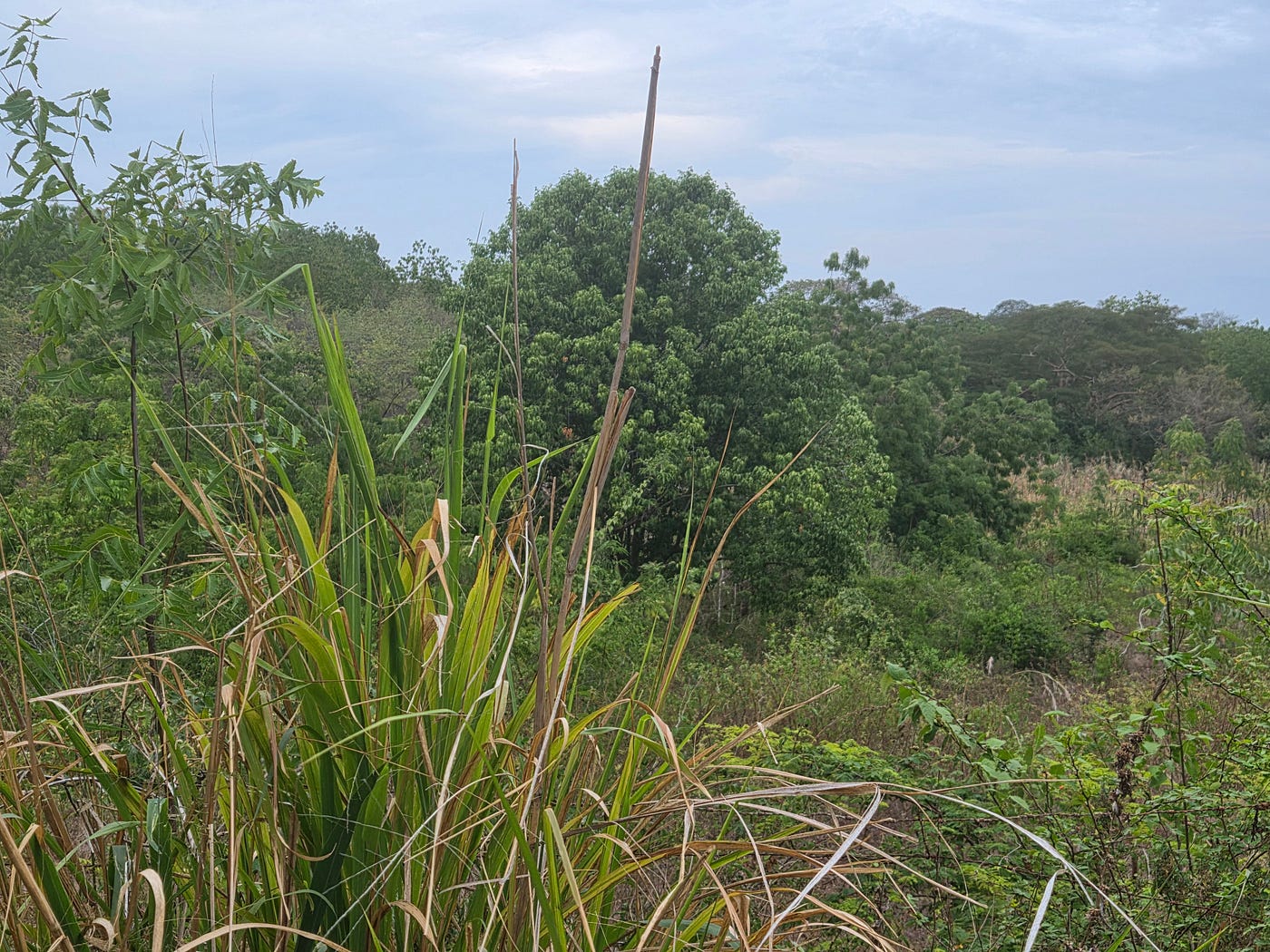
El interior, Herrera Province, Panamá — Photo by author
The frame by the door had gone crooked again.
I pressed the top corner level. The temblores do it, the small ones, the ones that come in the night and move things an inch while you sleep. I straightened it and did not look at the photo and went out to the veranda.
In the photo the cake is already going soft, an ice cream cake, the kind with the crunchies. My father took it on his phone and you can see the edge of his thumb in the corner, and it is just her, the cake on the table in front of her going to liquid at the base. Nobody centered it. Nobody waited for the light. She didn’t want the fuss in the first place. I am not in it.
The ringing was already there. It is always there. You stop hearing it, and then the house goes quiet and it is the only thing in the room.
The cigar had gone out in the ashtray and I did not relight it. I have not relit one in a year. I light them and set them down and let them go, which is its own kind of drinking.
The red ants had found the ring on the table where a glass had sweated and dried. They worked the ring in a line. I brushed them off. They came back. The sweet is in the wood now. Brushing them off does nothing.
Next door the Saldañas had the TV on, the Saturday program, the loud one with the band and the prizes. A man was winning something. You could hear them clapping for him through the block wall.
My mother had been dead two years before the marriage that brought me here even started. When my wife left she took her clothes and what was hers and left the rest, the extension cords and the chargers for things we didn’t own anymore, the stuff not worth the trouble of taking. My mother’s box was in there too, her photographs out of the house in Wilton Manors where she had lived and I had not, where I had only ever lived close enough to get to and far enough not to. My mother’s whole life was in that box, the real pictures, the ones somebody had framed while she was alive. I opened it once, saw what was in it, and closed it again. I carried it into the marriage and out of it and have not opened it since.
The one I put on the wall is not from the box. It is the last one, off my father’s phone, the birthday. After the funeral I sat with the phone and went through what was on it and stopped at that one, her smiling at something off to the side, and I sent it to be printed and bought a frame and hung it by the door, here, in a country she never came to. Now the small quakes knock it crooked in the night and I straighten it in the morning and do not look.
The boy was Miguel.
He came Tuesdays, and the other days his mother could bring him. She’d leave him at the gate and he’d come up the walk with one hand out a little, not all the way, just enough, reading the path the way he read everything, close.
He brought the same magazine every time. A Flying, an American one, older than he was, the cover worn soft at the corner he always held and one of the staples gone so it fell open on its own to the pages he wanted. His father had shined boots at the base in Albrook before the Americans handed it back, and one of them had given him the magazine, and it had come down the house to Miguel. He held it an inch off the glasses and turned it in the light until the line came back to him, and then he read it to me, the way you’d read scripture to a man you’d decided to save.
He read me what the flaps did before landing. The column where the pilots tell on themselves, the close calls, the things they walked away from. He read me the part at the tail and said the long word for it, and I looked it up that night to know he’d had it right. He had it right. He did not know the word for hinge. He said the thing the door does, and laughed at himself, and I let it stand. He came to read me airplanes. He did not come to be corrected on doors.
I corrected the airplanes. He wanted them right. He’d stop and make me say the word back and he’d nod, satisfied, like he filed it where it went.
“When I fly,” he said. Not if. He had a cousin in David who knew a man who flew the Bocas run, the tourists and their boards and their bags, out and back, out and back, all day. He had the hours you needed. He had it in an order, the whole thing laid out like a route he’d already flown.
He never once said the part about the eyes. He’d come near it and the sentence would turn and go another way.
I knew about his eyes. I let him have the islands.
His glass was on the table and he reached for it without looking, found the wood first, walked his fingers to the glass, and kept talking the whole time so you watched his face and not his hand. He never spilled.
When his mother’s horn went at the gate he closed the magazine on the page it always fell open to and took it with him. He always took it. It was the thing he was bringing back.
Then it was a Tuesday and he didn’t come.
The housekeeper had made nothing, set nothing out. She knew before I did. They always know before you do, the women who work in the houses. It was not hers to say, not to me, the gringo who paid her and was not one of them and never would be. She kept it to herself and went on wiping the counter.
I sat on the veranda at the hour he came and the chair across from me stayed empty and the gate didn’t open, and I told myself the mother’s car had finally died, that she couldn’t spare the gas money that month, that the distance from their town was a lot to ask twice a week, that next Tuesday.
The frame went crooked that week and I straightened it.
He’d stopped coming in March. By the time I let myself know it was not the car and not the gas, it was weeks gone, and I had sent word twice to the house and gone by zero times. He was in the hospital and I did not go. I do not go to hospitals. I sent word, which is a thing you do so you can tell yourself you did a thing.
I let a boy who read me airplanes do the dying part alone with his mother, and I straightened a frame.
The housekeeper came out drying her hands on the front of her dress.
“A woman at the door,” she said. “About the boy who used to come.”
I went in. Past the frame. I did not touch it this time.
She was in the sala. Black, plain, nothing at the collar, her hair pulled back hard. The luto on her like something she’d been wearing longer than the weeks it had been.
“I’m Sean,” I said. As if she didn’t know. As if the boy hadn’t said it in her house, the gringo who teaches the planes.
“Miguel’s mother.”
She didn’t give me a name. She gave me him.
She had the magazine in both hands. The Flying, the soft corner, the missing staple. She held it the way he’d held it, close, though her eyes were fine.
“He wanted you to have this,” she said.
The housekeeper brought her a glass and she set it on the table and did not drink it.
She thanked me for the English. She said he talked about me in the hospital. That when he got tired the words came backward and I had never said anything, I’d only waited, and that he’d liked that I waited.
Her voice came out level the whole way. Nothing caught in it.
I said I was sorry I had not gone by more.
I had not gone by at all. She knew it. She let the sentence sit there in the room with us and did not correct it.
She told me about the burial. Small. A few of the students. No speeches. He hated speeches, she said, and almost smiled.
While she talked her thumbs worked a handkerchief in her lap. Folding it down small. Pressing it flat against her knee. Opening it, folding it small again.
A line of ants had come up the leg of my chair onto the arm of it, by my hand. This time I let them.
She laughed once. It started as something about the islands and stopped.
Her thumbs never stopped on the cloth.
I kept my eyes on the window. I kept them there a while.
She drank then, the whole glass, in one motion, the way you do a thing you’ve been putting off, and set it down without a sound. She stood. She thanked me again.
I still had the magazine in my hand. I did not know what to do with it. There is no thing you do with it. I walked her to the door with it in my hand.
At the door she stopped at the photo. The crooked one. I thought she’d ask who the woman was, and I had nothing ready.
But she wasn’t looking at the woman. She was looking at the cake.
“Ice cream,” she said. “Her favorite?”
“Mine,” I said, before I could put anything in front of it.
She nodded, like that answered something she’d been wondering about me, and went out.
It was ice cream because I like ice cream. My mother did not like birthdays. She said so every year and had one anyway because it made the rest of us happy, and that was good enough for her, and the cake on the table was the kind I liked. Her day, my cake.
I did not come for it. The pill had taken longer than it should have. Or I had taken a second one. I do that, lose track of whether I took the first, and the two together put me under and kept me there, and the day went by over my head while the cake went soft on the table. When I finally showed up she did not ask where I had been. She said it was all right. She said she knew I was tired, like I had worked the night shift, and she handed me the reason so I would not have to find one myself.
It was December. She was gone by February. That was the last birthday she would have, and she spent the end of it covering for me, and I let her, the way I let him have the islands.
I went back out to the veranda. The green had gone flat the way it does before dark. The ants had the ring and I let them have it. The cigar was where I left it, gone out, and I did not pick it up.
I had set the magazine on the small table by the door, under the photo.
When the sound of her car was gone the ringing was still there.
The frame was crooked again.
I left it.
More where this came from. Not often. But when it matters. Subscribe. 👇
메타데이터
- post_id
- 0bdc39b1fc7b
- slug
- the-crooked-frame-0bdc39b1fc7b
- url
- https://medium.com/tantalizing-tales/the-crooked-frame-0bdc39b1fc7b
- canonical_url
- https://medium.com/tantalizing-tales/the-crooked-frame-0bdc39b1fc7b
- author_url
- https://medium.com/@seanmichaelschaeller
- status
- ok
- fetched_at
- 2026-06-21 07:44:09