Why Your 9.9 RMB Latte Is Winning China’s Coffee War
China’s coffee obsession didn’t come from nowhere. For five thousand years, this country ran on tea — plain, simple, centuries-deep tea…
Why Your 9.9 RMB Latte Is Winning China’s Coffee War
China’s coffee obsession didn’t come from nowhere. For five thousand years, this country ran on tea — plain, simple, centuries-deep tea. Coffee was that bitter foreign thing diplomats ordered at fancy hotels, the instant powder mix that showed up in bad Western restaurants. You know the kind: add hot water, wait three minutes, pretend it’s fine.
Then something shifted.
Shanghai alone has about 8,500 coffee shops now. Eight thousand. For one city. The whole United States has more coffee shops total, but not by much — and China’s adding new ones every week. Somewhere between 2010 and today, China went from “where do you even get coffee here” to “which coffee app should I download.” That’s not a small shift. That’s a complete rewiring of a caffeine culture.
The 9.9 RMB Revolution
Here’s what happened: a bunch of things hit at once. Young professionals flooded into cities, bringing 996 work culture with them — 9 AM to 9 PM, six days a week, the unofficial motto of Chinese tech companies. When you’re pulling those hours, you need fuel. Social media made coffee Instagram-worthy, which made it aspirational, which made it something twenty-somethings wanted to be seen holding. And then Luckin Coffee figured out how to sell you a real espresso drink for 9.9 RMB and still make money doing it.
That price point. 9.9 RMB. That’s about $1.40 in American money. A Starbucks tall latte in Beijing runs you 33 RMB. The math doesn’t favor Starbucks once people realize there’s an option at one-third the price.
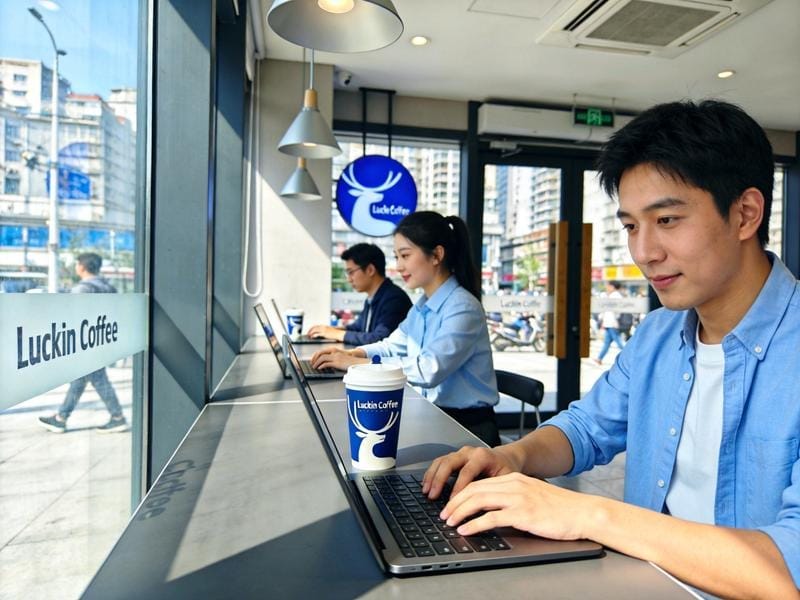
Luckin’s model was simple: no comfortable seating, no free WiFi, no “third place” philosophy. You use the app, you order while walking to the store, you walk in, you grab your drink from the counter, you leave. It’s coffee as fast food. The stores are tiny — some are just a counter with two employees and an espresso machine wedged behind it. No rent to speak of, no furniture to maintain, no power outlets for laptop warriors. The savings went straight to your cup.
I remember reading about the Moutai latte launch and almost laughed. Moutai — that’s the famous baijiu brand your Chinese coworkers might try to force on you at business dinners, the one that burns going down and leaves you dizzy for two days. Luckin put it in a latte. Coffee infused with fermented grain and what I can really describe as a soy sauce note. 5.42 million cups on day one. Over 100 million RMB in single-day revenue. For a coffee that tasted like a happy accident.
The new product drops keep coming. Coconut latte, raw coconut cloud latte, seasonal specials that appear for two weeks and then vanish like they never existed. Each launch creates a social media frenzy, drives app downloads, keeps customers curious. It’s the fashion brand drop strategy applied to coffee. Works well.
The Starbucks Problem
Starbucks opened its first China store in 1999, Beijing, and dominated for twenty years. For a long time, sitting in a Starbucks meant something. You were cosmopolitan. You were successful. You could afford to spend 33 RMB on a drink when average salaries every month were still climbing out of single-digit thousands. Meeting someone at Starbucks was a status signal.
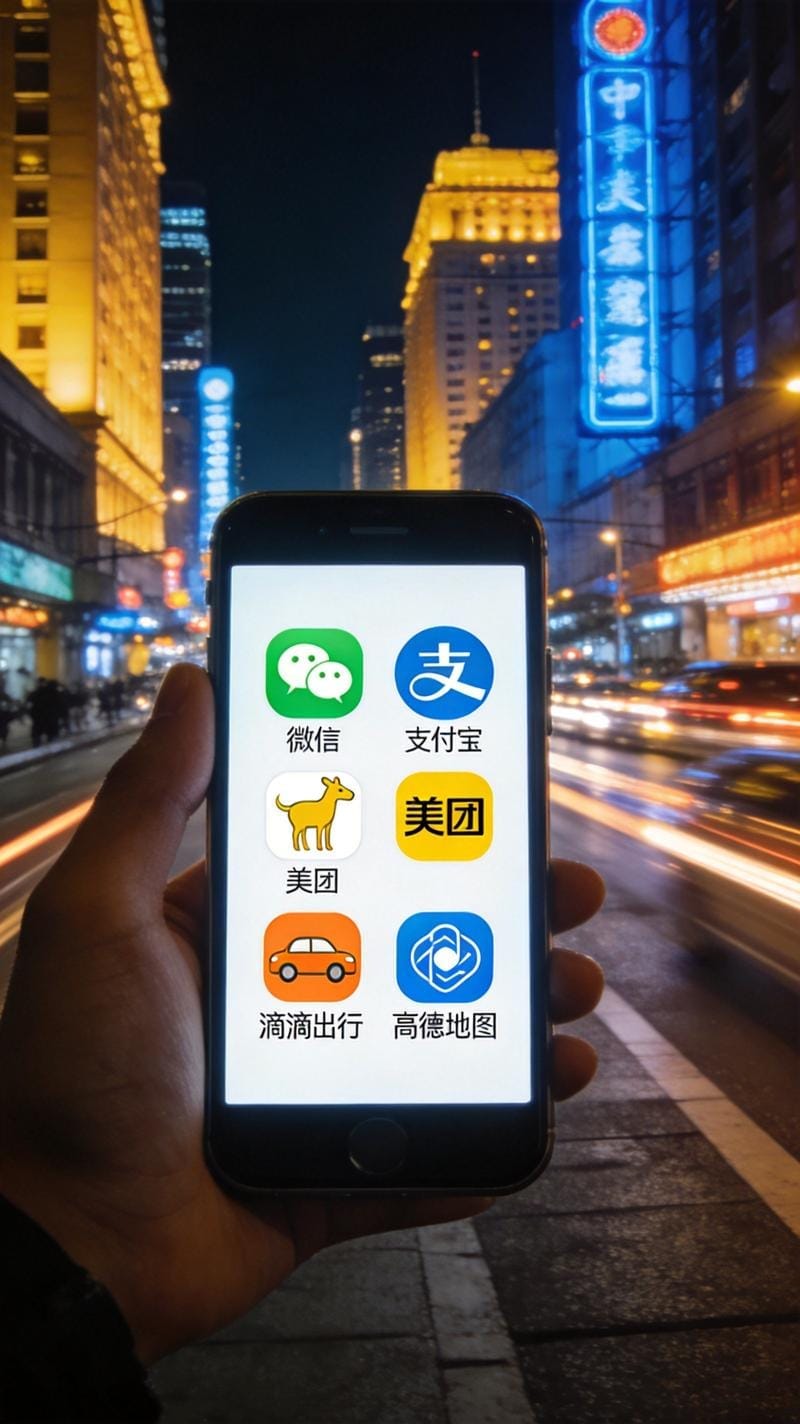
Now here’s the uncomfortable truth for Starbucks: their coffee isn’t that much better than Luckin’s for most standard drinks. Their food is fine, not memorable. And their app — which you need to use to order — feels like it was designed by committee in 2015 and never touched since. Meanwhile, Luckin’s app is smooth. You open it, you pick your drink, you apply whatever coupon is sitting there (there’s always a coupon), you walk to the nearest store, and your drink is ready when you arrive. Total transaction time: under a minute if you’re fast.
The younger crowd — under 35, which is most of the coffee-drinking market now — doesn’t need a “third place” to work or socialize. They need caffeine delivered fast so they can get back to their desks or their group chats. Starbucks built an empire on comfort. Turns out comfort isn’t the thing people are optimizing for anymore.
Starbucks still has its uses. The brand carries weight in smaller cities where Luckin hasn’t saturated yet. The seating is comfortable if you need somewhere to take a meeting or spend three hours on a laptop. The consistency is real — walk into any Starbucks in China and you get the same experience. But in Shanghai, Beijing, Shenzhen? They’re losing ground fast. First sales in that quarter decline in China came in 2024. The trend isn’t reversing.
Their response — premium offerings, smaller format stores, push into lower-tier cities — reads defensive. Maybe it works. It won’t be enough.
Everyone Else
Luckin and Starbucks are the big two, but the battlefield has more players than that.
Manner Coffee runs tiny stores, and I mean tiny. Some are just a window where you hand your money through and receive your cup. The coffee costs 15 RMB, and during lunch rush you might wait thirty minutes for a hand-poured single-origin made by someone who knows what they’re doing. Coffee nerds love Manner. The lines prove it.
Tims Coffee — yes, the Canadian chain, but run as a joint venture with a Chinese menu that includes items Toronto would never recognize — has over 900 stores now, focused on second and third-tier cities where the coffee war hasn’t actually arrived yet.
Cotti Coffee is the drama story. Founded by the former Luckin CEO who got ousted after the fraud scandal — and yes, there was a massive fraud scandal, 310 million dollars in fabricated sales that got Luckin delisted from NASDAQ in 2020. This guy came back with the same playbook: ultra-cheap coffee, aggressive expansion, burning cash to undercut Luckin on price. Already over 5,000 stores in a couple years. The audacity alone is impressive.
M Stand went the other direction: beautiful stores, photogenic interiors, premium pricing at 30+ RMB, Instagram aesthetics. For people who think Luckin is too basic and Starbucks is too mainstream. Feels like a lifestyle brand that serves coffee rather than a coffee shop.
Peet’s Coffee sits somewhere between Starbucks and specialty, slow expansion, loyal following among expats and serious coffee drinkers who want something stronger than what the chains offer.
The competitive dynamic is brutal. Watch sometime: Luckin launches a new drink, and within days Manner and Cotti have released something similar. Pricing wars are constant. Store locations are contested — you’ll see three different chains open across the street from each other in busy areas, betting that foot traffic can sustain them all. Sometimes it can’t. Stores close six months later. New ones open anyway.
Why Coffee Won
The cultural shift is real. Young Chinese grew up watching American movies, traveling abroad, absorbing Western media. Coffee wasn’t their parents’ drink — it was modern, global, aspirational. Tea was for grandparents. Coffee was for the future.
But it goes deeper than signaling. Coffee fits 996 life in ways tea doesn’t. Tea is ceremonial, social, slow. Coffee is efficient, individual, fast. When your work culture treats sleep as optional and weekends as aspirational, you need something that fits between tasks. Coffee slots right in.
Delivery apps changed things too. You can get Luckin delivered to your office in fifteen minutes. Try doing that with a proper tea ceremony.
If You’re Visiting
The good news: great coffee is available everywhere now, even in cities that don’t come up in Western coffee discourse. The competition raised everyone’s quality.
The bad news: Starbucks isn’t your best option in China. Sorry, it’s just not. For cheap and fast, Luckin wins. For quality and price ratio, Manner wins if you don’t mind waiting. For sitting and working for hours, Starbucks still has the best seating and WiFi, I’ll grant them that.
Download the Luckin app before you arrive. You’ll need a Chinese phone number to register, which is annoying if you’re visiting short-term, but once it’s set up you can skip every line. Their iced coconut latte in August Shanghai weather hits different — I’m not doing justice to how refreshing it is, you’ll have to trust me on this one. The Moutai latte is worth trying if it’s available. It’s weird and strangely good and somehow it works.
Manner is worth the extra cost and the potential wait. Find the smallest store you can — just a counter, those are the real ones — and order a hand-pour. The baristas know pour-over technique. One guy in Shanghai told me he practiced the same pour for three months before he was allowed to make it for customers. I don’t know if that’s true but it sounds right.
For something more social, M Stand or Starbucks still offer the atmosphere Luckin avoids. Comfortable seating, decent lighting, space to have a real conversation without shouting across a pickup counter.
The coffee war isn’t ending. New players keep entering. Existing chains keep innovating. The result is better coffee at lower prices for everyone. Five thousand years of tea culture, disrupted by apps and 9.9 RMB price tags. Sometimes the future shows up faster than anyone expected.
This is a rewrite of the original piece: The Coffee War in China: Luckin vs Starbucks vs Everyone
메타데이터
- post_id
- 0c2d76c62316
- slug
- why-your-9-9-rmb-latte-is-winning-chinas-coffee-war-0c2d76c62316
- url
- https://medium.com/@563704148/why-your-9-9-rmb-latte-is-winning-chinas-coffee-war-0c2d76c62316
- canonical_url
- https://medium.com/@563704148/why-your-9-9-rmb-latte-is-winning-chinas-coffee-war-0c2d76c62316
- author_url
- https://medium.com/@563704148
- status
- ok
- fetched_at
- 2026-07-13 06:23:13