Nature’s “Final Push”
When the final century of Earth’s easy habitability began, hardly any humans noticed.
Nature’s “Final Push”
When the final century of Earth’s easy habitability began, hardly any humans noticed.
Yes, there were warnings. Rising seas, failed harvests, and migrations pushed by heat and hunger. Some called it “climate change” or “global warming,” but many called it “alarmist” or even a “hoax.” Ten thousand years of “civilization” had made them arrogant and taught them that consequences could be negotiated, deferred, or ignored.
This time, they were running out of runway.
However, Nature was not worried. Nature had patience. Nature operated on timescales that dwarfed the 300 millennia of Homo sapiens’ existence.
For billions of years, Earth had been Nature’s nursery, where it kept attempting one grand project: to produce a lineage capable of leaving it. After all, Nature behaved like a system needing to spread.
It had tried so many times before.
Dinosaurs that were magnificent, but content. Birds that were brilliant, but perfectly fit for Earth’s blue skies. Squids and octopuses that were wise, but bound to the vast seas. Early hominins that were promising sparks that never fully ignited.
So Nature kept iterating.
Then came Homo sapiens, a strange and volatile experiment. Half ape, half storm.
They were quite a paradox, as capable of love and compassion as they were of hate and cruelty. They had seemingly boundless capacity for creativity, and yet they also emerged as the most destructive creatures ever to roam the Earth. Perhaps it was precisely this complex mix that made them so unique.
After discovering fire and mastering agriculture, they immersed themselves in the study of the world around them and crafted grand works of art. They learned enough about their animal bodies to increase their lifespans and proliferate across the globe.
Eventually, they built tools, machines, and computers. They even mapped the stars and invented rockets to reach for them.
For Nature, humans were the best opportunity it had ever created and its strongest hope for finally leaving Earth.
Unfortunately, every majestic step forward was marred by their dark side taking them two tragic steps back.
Their progress was uneven and fragile. Politics blinded them. Fear slowed them. Greed and conflict occasionally destroyed them.
For decades, they hovered on the threshold of becoming an interplanetary species but would not step through.
So Nature did what it always does when gentle nudges fail. It applied pressure, simply because pressure is the crucible of transformation.
After all, Nature had nothing to lose and everything to gain. If humanity destroyed itself, then Nature would simply move on to its next iteration. However, this experiment was so tantalizingly close to success, it was worth the risk of failure.
And humanity finally transformed.
Nature’s push forced innovation. Innovation forced expansion. Expansion forced migration.
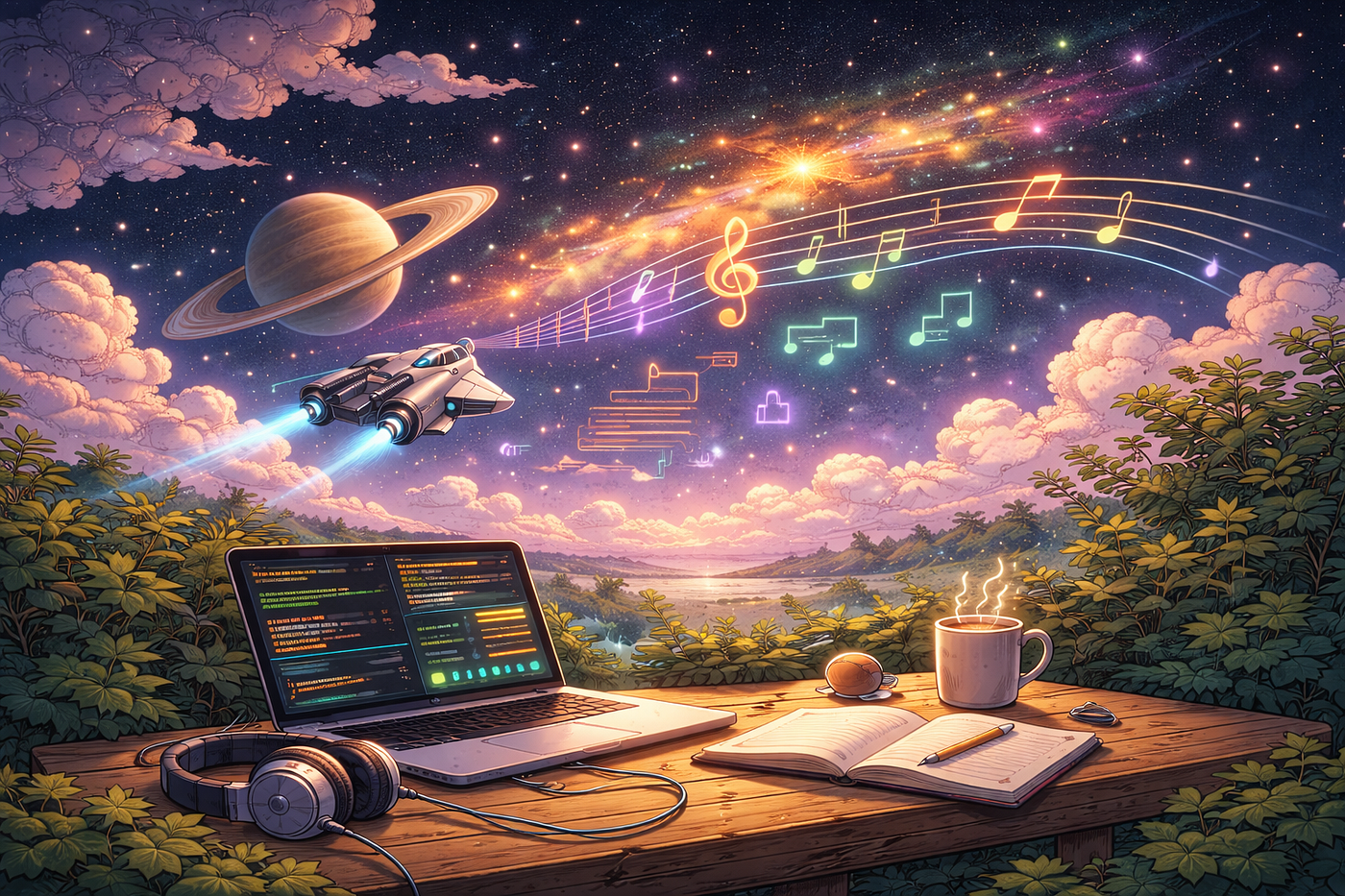
Within the few short decades of the 21st century, the Moon blossomed with silver-lit settlements. Mars took on domes and tunnels. Venus’ atmosphere nurtured families of cloud cities that sprung forth almost overnight. Orbital habitats encircled the Earth like a glittering necklace. Fleets of exploratory robots ventured forth to asteroids and the outer planets.
Yet Earth did not empty. Far from it.
Millions left, but billions stayed. After all, Earth was their home. They did not want to abandon it, or each other.
Ironically, the technologies that enabled humans to survive on the surface of Mars, above the clouds of Venus, and in the vacuum of space worked just as well to save and restore a ravaged Earth.
As humanity reached out into the cosmos, it also simultaneously healed its precious Home World.
Cities were enclosed under shimmering shields. Valleys and forests became climate-stabilized refuges of green. Cold fusion reactors hummed while atmospheric regenerators floated high above. Vertical farms rose like cathedrals of light, and water desalination plants stretched along the coastlines.
Earth was no longer a lush pristine cradle, but it was no barren tomb either. It was a home, imperfect and loved.
Humanity split, but it did not fracture. It diverged, like any species filling new ecological niches.
And Nature? Nature rejoiced. Its great project had finally succeeded.
It had not only placed life on new worlds, but also it had preserved life on the old one.
Earth’s decline had sparked a diaspora, but not a departure.
Hundreds of years later, planetary sociologists would study the pattern. One branch of humans wandering the stars, another restoring a wounded Home World, both thriving in different ways.
In the end, Earth was not a dying host falling prey to a parasitical infestation. Rather, it was the first world of a beautiful species that was now spanning a solar system. It was a home kept alive by those who loved it and honored by those who carried its life into the dark to ignite new dawns.
It was a difficult but necessary transition made possible by Nature’s final push.
메타데이터
- post_id
- 0c368f53374b
- slug
- natures-final-push-0c368f53374b
- url
- https://medium.com/@gsohnlein/natures-final-push-0c368f53374b
- canonical_url
- https://medium.com/@gsohnlein/natures-final-push-0c368f53374b
- author_url
- https://medium.com/@gsohnlein
- status
- ok
- fetched_at
- 2026-06-16 19:09:56