Three Days: The Week My Immune System Turned Against Me
In the first week of March 2026, something strange started happening to my body. It began with a faint tingling sensation in my legs and…
Three Days: The Week My Immune System Turned Against Me

View from my hospital room
In the first week of March 2026, something strange started happening to my body. It began with a faint tingling sensation in my legs and hands.
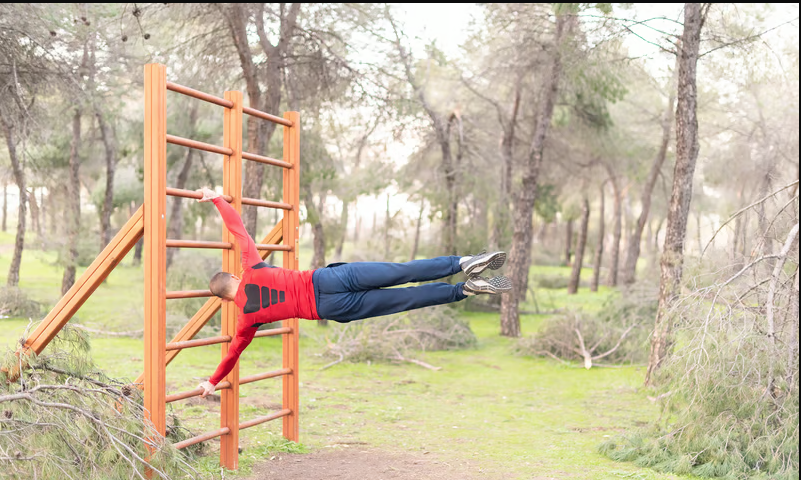
Naturally, I blamed the gym. After all, I had been working out almost daily. Maybe my body was protesting. Or maybe it was the guitar practice. I had just started learning and was already imagining my teacher proudly introducing the next Jimi Hendrix.
So I ignored it. Bad idea.
Day One: Mild Weirdness
The tingling was noticeable but manageable. I went about my day as usual.
It was Holi, and I spent the afternoon enjoying a colourful thali at Sukhkarta. Everything felt normal enough. By evening, though, the tingling had intensified.
I popped a Dolo and went to bed. The universal Indian cure.
At that point, I had no idea my immune system had already started a small civil war inside my body.
Day Two: Something’s Off
The next day, the tingling hadn’t gone away. It wasn’t worse exactly, but it was persistent — the kind of sensation that sits quietly in the background, refusing to leave.
Swallowing also felt slightly odd, though I couldn’t quite explain why. I assumed I had picked up some minor viral infection.
Another Dolo. Some binge watching. Then sleep.
I told myself it would pass.
Day Three: Thursday — Something’s Not Right
By Thursday morning, walking had become… interesting.
You know how toddlers walk when they first learn? Slightly wobbly, uncertain, as if gravity is still negotiating the terms of the relationship.
That was me. Except this time it wasn’t adorable.
That’s when I decided to visit **Jupiter Hospital in Pune**, which has become my go-to place for medical issues. Expensive, but dependable.
Climbing the stairs to the OPD turned out to be its own small adventure. What should normally have been a routine walk up a few steps now required concentration, balance, and the occasional grip on the railing.
Inside, I met Dr. Mahendra Dadke, the Head of Internal Medicine.
A man of few words. He asked me to do something simple.
“Try a tandem walk.”
For those unfamiliar, that means walking heel-to-toe in a straight line.
I tried. And failed. That was the moment something clicked.
I had done tandem walks my entire life — while measuring cricket pitches, soccer goalposts, even kho-kho fields.
Suddenly my legs had forgotten how. That was not a good sign.
The Afternoon of Needles and Electricity
Dr. Dadke sent me for nerve conduction studies.
These tests come in two flavours.
One involves inserting long needles into various muscles (EMG). The other involves delivering electric shocks through your joints to measure how well your nerves conduct signals (NCV).
In other words, I spent the afternoon being punctured and electrocuted.
Between the needles and electric shocks, I briefly wondered if I had accidentally signed up for a medical version of Fear Factor.
Highly recommended if you enjoy unusual spa treatments.
The results would be ready the next day, so I went home and slept.
Day Four: Friday — Escalation
By Friday morning things had worsened.
Getting to the hospital had become an effort. I climbed the stairs again, this time pulling myself up using the railing.
Dr. Dadke reviewed the reports.
The tests looked normal. He did not.
Something about my symptoms bothered him.
He suggested I immediately see both an ENT specialist and a neurologist.
The ENT examined my throat, ears and nose and found nothing unusual.
Next stop: Neurologist.
By this point my walking style had evolved into what I can only describe as a very disciplined military march, mainly because my knees had decided they were no longer reliable partners.
The Diagnosis
I managed to get an appointment with **Dr. Rajas Deshpande**, one of Pune’s leading neurologists.
Getting a same-day appointment with a neurologist isn’t easy. I used my usual trick with the receptionist.
“We live in the same building,” I said. “And we’re good friends.” “Also, minor detail: possible neurological emergency.”
(Turns out that last part was very accurate.)
Dr. Rajas ran a few quick tests while I enthusiastically described my recent workout routine.
I was hoping he would give me a pill and send me home. Instead he asked a different question.
“Who is at home with you?”
That question is rarely good news. Then he said the words that changed the trajectory of my week.
“You most likely have Guillain-Barré Syndrome.”
When the Immune System Gets Confused
Guillain-Barré Syndrome is a rare condition where the immune system mistakenly attacks the body’s peripheral nerves.
In simple terms: Your body thinks you are the enemy.
When the insulation around nerves is damaged, signals from the brain stop reaching the muscles properly. The result can be weakness, loss of coordination, and sometimes paralysis and death.
The strange irony is that the immune system — normally your protector — becomes the villain.
Admission
Dr. Rajas did not waste time.
“You need to get admitted immediately.”
I called my uncle — mentor, confidante, best friend.
Within an hour he arrived with bags packed. We checked into the hospital.
I asked for a room with a river view.
I figured if I was going to die, I might as well do it with decent scenery.
Within minutes I was in hospital clothes and equipped with the famous IV catheter bracelet — the hospital’s elegant way of ensuring patients don’t run away.

Meditate and watch the sunrise daily was a routine I developed in the hospital
The MRI Episode
Doctors ordered a full MRI of the brain and spine. I was told it would take twenty minutes by the nurses in the ward.
When we reahed the MRI room the technician walked me through the procedcure and casually mentioned it would take two to three hours.
Apparently they had to scan the brain, spine, and lumbar region — with and without contrast dye.
I am claustrophobic. And MRI machines sound like someone hosting an EDM concert inside a washing machine.
I survived inside the scanner for exactly three minutes.
Then I demanded evacuation.
Final verdict: thou shalt get knocked out.
The Sedated Film Pitch
The next day I was cleared for anesthesia after a battery of tests. The anesthetist asked what I do.
“I’m a filmmaker,” I replied.
She asked me to narrate the story of one of my films.
I began enthusiastically explaining the story of Goddess. The film I recently wrapped shooting.
Unfortunately I never made it past Act One. Apparently anesthesia works faster than audience boredom.
When I woke up, the MRI was done. My film pitch was unfinished.
ICU
The MRI showed inflammation around the spinal nerve roots consistent with Guillain-Barré Syndrome.
I was moved to the ICU and started on IVIG therapy.
This treatment works by infusing antibodies from thousands of donors to calm the confused immune system.
Which means, in effect: When your body attacks itself — an external army of antibodies arrives to restore order.
Honestly, it sounds suspiciously like the plot of The Matrix.
ICU Humility
ICU life teaches humility quickly.
For example, hospitals provide a thoughtfully engineered jug for male patients to urinate into. Precision engineering.
Later I discovered that this jug did not qualify as a sterile container when a proper urine sample was required.
Performance had to be repeated.
The Test That Would Confirm It
By this point the doctors were fairly certain about what was happening.
The MRI had shown inflammation around the spinal nerve roots. My symptoms matched the classic pattern of Guillain-Barré Syndrome. I had already started IVIG treatment.
But neurologists like certainty.
To confirm the diagnosis, they needed to examine the cerebrospinal fluid — the clear liquid that surrounds the brain and spinal cord. In Guillain-Barré patients, that fluid often shows abnormally high protein levels.
And the only way to collect it is through a lumbar puncture.
Which meant a long needle… inserted into the spine.
The Lumbar Puncture
A long needle inserted into the spine to extract cerebrospinal fluid.
The doctor tried once. Twice. Three times. Four times.
Nothing. At this point a famous Hindi movie dialogue started floating through my head: “Hum tum mein itne ched kar denge ki confuse ho jaaoge ki kahan se pade aur kahan se…”
Roughly translated, it means: I’ll put so many holes in you that you won’t know where anything is coming out from.
In the film, the hero was threatening someone with a gun.
Here, the weapon was a very looong needle.
On the fifth attempt — success.
The fluid was collected and sent for analysis.
The results showed elevated protein levels in the cerebrospinal fluid, confirming the diagnosis of Guillain-Barré Syndrome.
The Great Digestive Negotiation
By the fourth day in the hospital — now back in the ward after a night in the ICU — another battle was quietly brewing.
Anyone who has spent time in a hospital knows that recovery is not only about walking again.
There are… other systems that need convincing.
Between IV medications, stress, and lying in bed all day, my digestive system had effectively declared a strike.
The doctors gave me two options.
Option one: persuade the system politely using laxatives.
Option two: if that failed, they would introduce a tube to assist the process.
I did not need further explanation.
At that moment my entire recovery plan narrowed to a single mission:
Option one must succeed.
The medical team began the campaign. First came the gentle persuasion. A mild laxative. Nothing happened.
Then came the slightly stronger persuasion. Still nothing.
At this point the doctors made it clear that if things didn’t move soon, the tube strategy would become inevitable.
Suddenly I discovered a level of motivation I had never previously experienced in digestive matters.
More medication arrived. Time passed. And then, sometime that evening, the miracle occurred.
There are moments in life that deserve celebration.
Winning a championship. Landing a dream job. Watching a standing ovtation to your film’s premiere.
And then there is the moment when, after days in a hospital bed and the looming threat of medical plumbing, your digestive system finally remembers its purpose.
The event that followed can only be described in one way.
It felt like Diwali fireworks.
The nurses were pleased. The doctors were satisfied.
And I felt like I had just won a small but deeply meaningful war.
It is remarkable how quickly a person’s definition of success can change inside a hospital.
Learning to Walk Again
Soon after, a physiotherapist arrived. Her instructions sounded suspiciously like kindergarten.
“First heel down… then foot… repeat.”
Turns out muscles are useless if nerves refuse to cooperate.
Gym pride evaporated instantly.
A Facial Twist
Just when things seemed stable, another surprise appeared.
One side of my face became weaker.
My smile turned asymmetric. Holding water in my mouth became difficult.
The neurologists explained that this happens in about half of GBS cases and usually resolves as the nerves recover.
Apparently nerves enjoy drama.
Recovery Begins
Seven days later I was discharged today.
Recovery will take time. Nerves heal slowly. But things are improving.
And I can now walk again confidently, although still resembling a malfunctioning robot.
Why I’m Writing This
Guillain-Barré Syndrome is rare, but Pune saw a troubling cluster of cases in 2025.
More than 230 people were affected and around a dozen died, with investigations pointing to water-borne bacterial infections and contamination in some tanker and ground water supplies.
I don’t know for certain what triggered my case.
But I do know this:
Clean drinking water is not a small civic issue. It’s a public-health lifeline.
So here’s a simple request.
Be careful about the water you drink.
Boil it. Filter it. Ask your housing society when the water was last tested. Demand better water safety and accountability from your municipality.
Because trust me…
learning to walk again is not an experience you want on your life’s checklist.
메타데이터
- post_id
- 0c832af20b3a
- slug
- three-days-the-week-my-immune-system-turned-against-me-0c832af20b3a
- url
- https://medium.com/@ramgopal.rajagopalan/three-days-the-week-my-immune-system-turned-against-me-0c832af20b3a
- canonical_url
- https://medium.com/@ramgopal.rajagopalan/three-days-the-week-my-immune-system-turned-against-me-0c832af20b3a
- author_url
- https://medium.com/@ramgopal.rajagopalan
- status
- ok
- fetched_at
- 2026-06-09 21:21:26