Unnatural Selection | The Great Beasts of Caliban — Warhammer 40k
The Nightmare Ecology of Old Caliban
Unnatural Selection | The Great Beasts of Caliban — Warhammer 40k
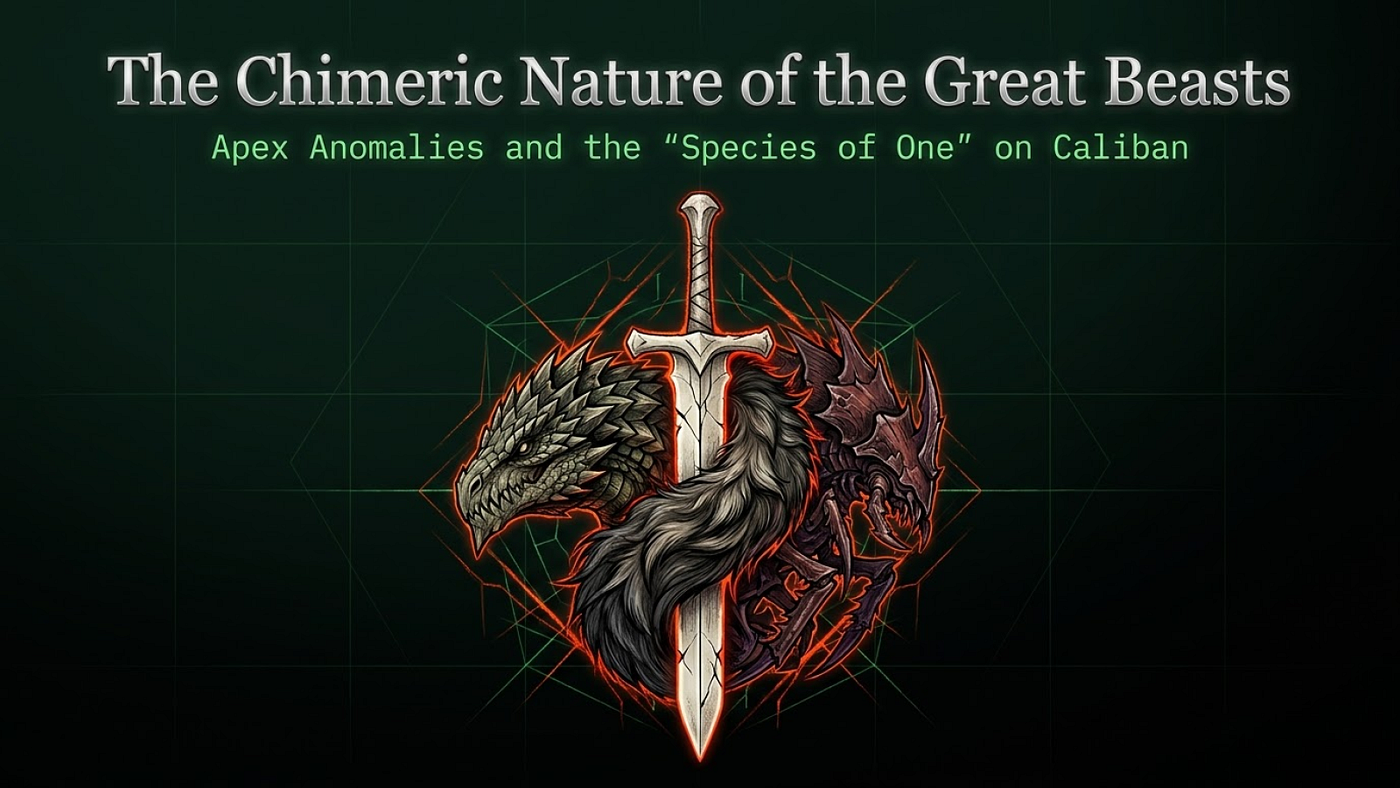
The Nightmare Ecology of Old Caliban
In the vast, unknowable history of the galaxy, few worlds were as influential and ultimately tragic as Caliban. Long before it became the first recruiting ground for the Emperor’s Dark Angels, it was a death world of unparalleled ferocity. Its biosphere was a pyramid of death, founded upon carnivorous flora and poisonous blooms.

Above this lethal ground cover, a brutal but comprehensible ecosystem of predators fought for dominance. But at the pyramid’s peak, all logic shattered. Here dwelled the Great Beasts, the so-called ‘Apex Predators’ of Caliban.
These creatures were not a species in any traditional sense. They were a collection of solitary, disconnected monarchs, each a living violation of natural order. A pre-Compliance Magos Biologis once recorded them as ‘ecological singularities,’ noting, ‘Each is a king of a kingdom of one, obeying no law but their own unknowable whim. They do not compete; they merely… are.’ They were horrors given flesh, impossibly potent and saturated with the raw energy of the nearby Empyrean.
A Species of One: The Anomaly of the Great Beasts
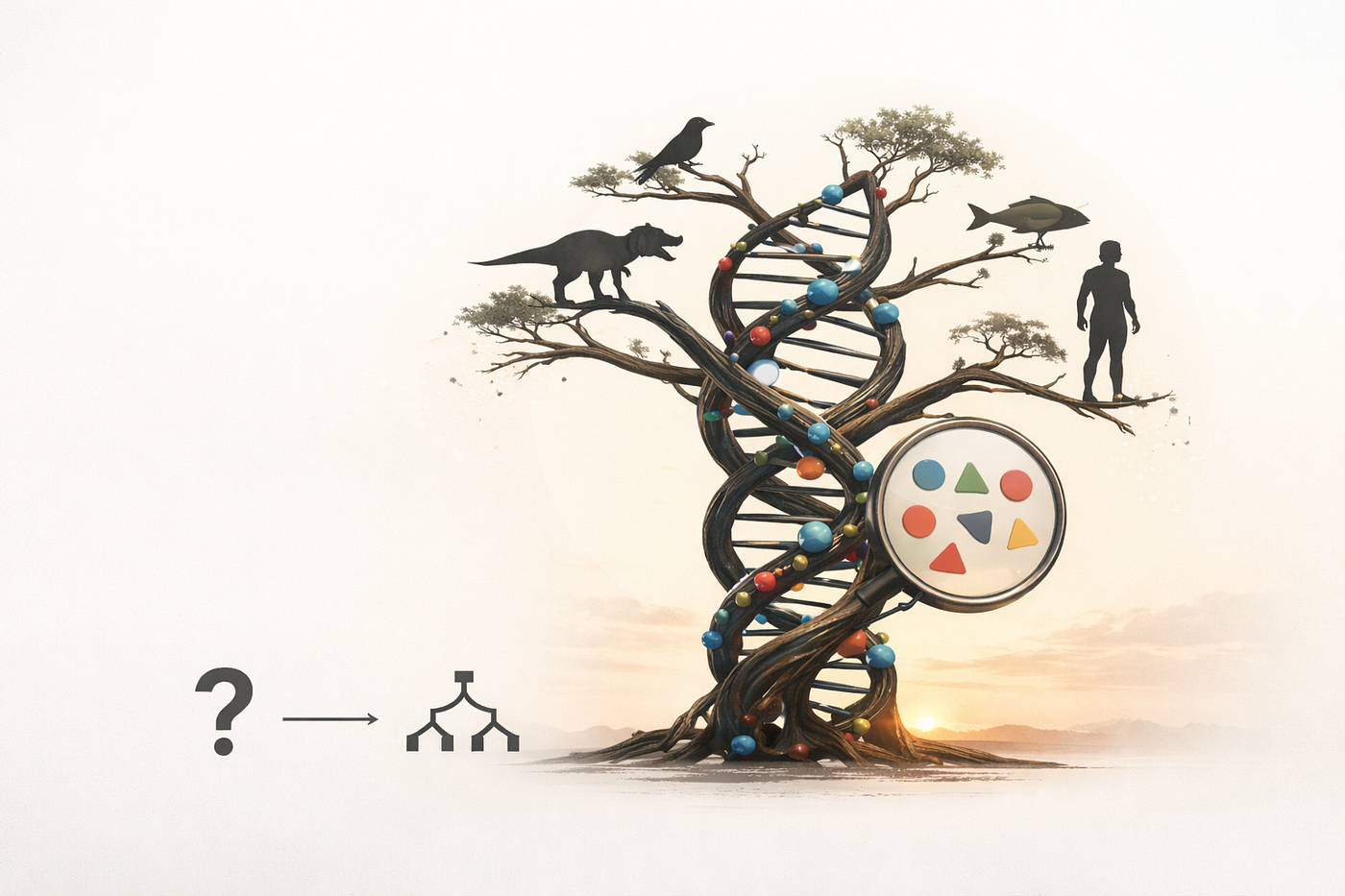
The most terrifying aspect of the Great Beasts was their absolute uniqueness. Dubbed a ‘Species of One,’ each creature was the first, only, and last of its kind. They did not reproduce; they simply emerged. This spontaneous genesis defied all known natural law, suggesting a more profane origin. They shared no common taxonomy, each beast a bespoke instrument of terror as different from its fellows as a sword is from a lance. This was not a failure of Imperial cataloging but a feature of their malevolent design, a weapons-manufacturing process of a biological nature.
The evidence pointed not to a coordinated invasion by a xenos intelligence, but to a more insidious source: the planet itself. Caliban was saturated with the energies of the Empyrean. The beasts were not a seeded army; they were the world’s own festering soul given flesh, a chaotic and spontaneous eruption of warp-tainted life. The question was not who was creating them, but what it was about Caliban that gave birth to such unique and multifaceted horror.
Weapons of Flesh: The Chimeric Nature of Caliban’s Monsters
Each Great Beast was a chaotic collaboration of terrestrial phyla, a blasphemous mockery of creation made manifest as a weapon. They were unholy syntheses, aggressively fusing incompatible biological traits into one cohesive, devastating organism. A single beast might possess the serpentine speed of a reptile, the quadrupedal brute strength of a mammal, and the vile sentience born of warp-taint. Nature does not engineer for war; it adapts. This calculated malevolence, this weaponized flesh, was an affront to the divine order of the galaxy.
Their very bodies were arsenals. Barbed wing-claws could pierce the barded steel of a warhorse. Serrated jaws functioned like a woodsman’s saw, splintering oaken shields and plate armor. Saber-fangs were not for biting but acted as living cavalry sabers, delivering devastating kinetic trauma. This was a manufactured arms race written in bone and sinew.
Their defenses were just as exquisitely engineered. Many possessed a ‘Pliable Rock-Hide,’ a living bastion with the density of stone yet the flexibility of muscle, making them immune to standard kinetic munitions. Worse, piercing this shell often triggered a corrosive defense, unleashing a torrent of highly acidic fluids that could melt ceramite and turn the air to a toxic haze.
A Gallery of Horrors: Case Studies from the Beast Wars
Surviving records from Caliban’s knightly orders offer a glimpse into the menagerie of monsters they faced.
The Winged Terror: A grotesque fusion of reptilian and avian phyla, this creature of jagged bone and unnatural sinew was capable of shearing a fully barded warhorse in two with a single strike from its saw-toothed beak.

The Calibanite Lion: An affront to nature surrounded by an aura of decay. Its fangs were the size of cavalry sabers, its hide was plated in shifting rock-flesh, and its mane was composed of blade-like spines. Upon death, it could sever these spines, spraying its killer with its own highly corrosive blood.

The Spined Bear-Creature: A chimera of flesh and living stone, this beast could tear through a warrior’s fortified plate ‘like parchment.’ Its thick spinal coat of interlocking plates could neutralize even chainsword strikes, and its jet-black ichor blood spoke to its unnatural origins.

The Juggernaut Lizard: A three-meter engine of aggression, a fortress of muscle and scale with warped fangs and a sweeping bludgeon tail. Its milky-blue eyes were a clear signature of warp influence.

The Crucible of Knighthood: An Arms Race Against Nature
Against this unending tide of lethality, the stranded human colonists of Caliban had one choice: adapt or perish. From fragmented STC templates and sheer desperation, they engineered a suite of ‘Human Counter-Technology.’ To sunder the Rock-Hide of the beasts, they devised ‘Explosive Bolts.’ To meet the charge of saber-fanged monstrosities, they perfected ‘Motorized Chain-Swords.’ And to survive the acidic spray of a slain foe, they constructed suits of ‘Primitive Power Armor.’
This technological development was a cultural catalyst, forging a martial warrior caste from the grim reality of survival. These proto-knights, clad in their primitive armor and armed with chain and bolt, became the saviors and rulers of their world, their entire society predicated on the unending hunt.
The Unforeseen Consequence: Forging the First Legion
Led by their greatest warriors, the knightly orders launched a final, decade-long crusade to cleanse Caliban of the Great Beasts. They were successful. The last monster was slain. But their victory was hollow. With the beasts gone, the knights’ purpose evaporated. Their martial prowess, forged in the crucible of the hunt, turned inward, sparking existential crisis and civil strife.
This crusade, in its perfection, had unintentionally bred a generation of warriors so disciplined, so utterly dedicated to the kill, that they were perfectly primed to become the Emperor’s instrument of judgment: the First Legion. But the peace they had won rendered their culture obsolete, creating a vacuum that bred only conflict. They had scoured their world of monsters, only to find the capacity for monstrosity now resided within themselves. The stage was set for the arrival of the Lion, the rise of the Dark Angels, and the tragedy that would forever define them.
See our video report on the watchers of Caliban:
[embed]
메타데이터
- post_id
- 0c9d94a87620
- slug
- unnatural-selection-the-great-beasts-of-caliban-warhammer-40k-0c9d94a87620
- url
- https://medium.com/@the_imperial_ledger/unnatural-selection-the-great-beasts-of-caliban-warhammer-40k-0c9d94a87620
- canonical_url
- https://medium.com/@the_imperial_ledger/unnatural-selection-the-great-beasts-of-caliban-warhammer-40k-0c9d94a87620
- author_url
- https://medium.com/@the_imperial_ledger
- status
- ok
- fetched_at
- 2026-08-03 23:36:01