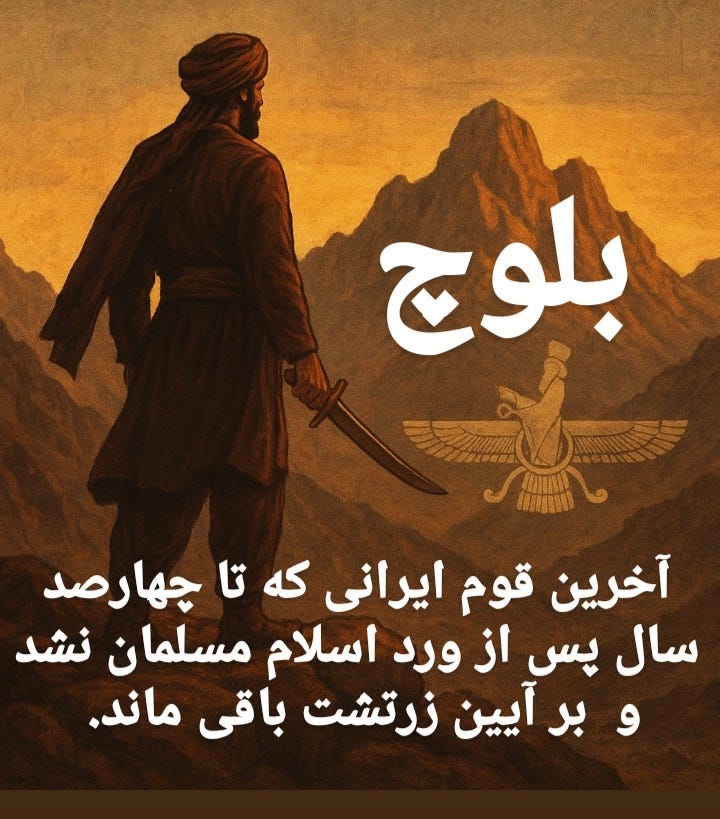
The last Iranian tribe to convert to Islam
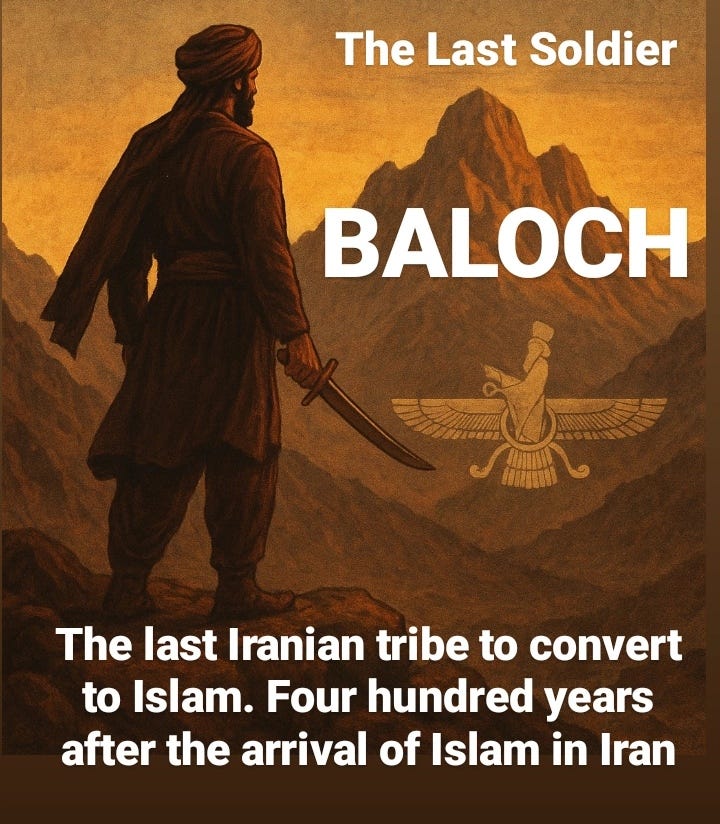
The last Iranian tribe to convert to Islam
In the early period of Islam’s arrival in Iran, the Baloch, like other Iranian peoples, remained followers of the ancient Zoroastrian faith or other Iranian religions. In al-Baladhuri’s Futuh al-Buldan, it is mentioned that when ʿAbdullāh ibn ʿĀmir sent the Islamic army toward Kerman, the ruler of Kerman sought assistance from the surrounding tribes, including the Baloch. The Baloch fought alongside the people of Kerman, but they were defeated and retreated to the mountainous areas. Al-Baladhuri’s general statement is as follows (paraphrased):
"The people of Kerman sought help from the Baloch and other tribes, but when they were defeated, the Baloch fled to the mountains and settled there. They continued to follow the religion of their ancestors."
Sources such as al-Baladhuri, al-Bayhaqi, al-Gardizi, and Majmal al-Tawarikh all refer to this resistance and the slow Islamization of the Baloch.
In sources like al-Baladhuri (Futuh al-Buldan) and al-Tabari, it is noted that the Baloch were settled in those areas and remained for a long time outside the control of the Caliphate.
In the following centuries, especially up to the Ghaznavid period, the Baloch had still not fully embraced Islam. The Baloch residing in the mountains of Kerman, Bam, Narmashir, and Jiroft were defeated in battles with Islamic forces and retreated to the mountains. As mentioned by al-Baladhuri, they "took to the mountains and went out of obedience." Up until the 4th and 5th centuries AH, sources such as Hudud al-‘Alam, al-Gardizi, and al-Bayhaqi still describe the mountain-dwelling Baloch as "infidels and rebels." Islamic historians such as al-Bayhaqi and al-Gardizi mention the wars of Sultan Mahmud Ghaznavi and Mas’ud with the Baloch tribes, calling them "rebels", "infidels", and "disobedient", which indicates that Islam had not yet fully penetrated their society.
Al-Bayhaqi writes in his history:
"Mas’ud went to the Baloch mountains to bring those infidels, who had gathered in those regions, under obedience."
The Islamization of the Baloch did not occur during the era of the Rightly Guided Caliphs, nor during the Umayyad or Abbasid periods. Rather, it was gradually established in the 4th and 5th centuries AH (Ghaznavid era), and by the time of the Mongol invasions, they moved from the mountains of Kerman toward Makran.
Primary sources and the most reliable accounts:
- Al-Bayhaqi (Abu’l-Fadl al-Bayhaqi, 5th century AH) – regarding Sultan Mas’ud’s campaigns, he writes:
"Mas’ud went to the mountains of Kerman to subdue those infidel Baloch who had gathered in those regions." Al-Bayhaqi refers to the Baloch as "mountain-dwelling infidels" and to the "Baloch mountains" as a region in southeastern Kerman where Islam had not yet reached. (Tarikh al-Bayhaqi, ed. Fayyaz, pp. 583–585)
- Majmal al-Tawarikh wa al-Qisas
This book (written in the 6th century AH) in its account of Ghaznavid conquests states:
"In the mountains of Kerman there was a tribe of Baloch who did not embrace Islam until Mas’ud defeated them and they converted." (Majmal al-Tawarikh wa al-Qisas, p. 397)
- Zayn al-Akhbar by al-Gardizi
Al-Gardizi (contemporary with al-Bayhaqi) also refers to the Baloch rebellion in Kerman:
"The Baloch came down from the mountains and attacked travelers on the roads. Mas’ud sent an army and subdued them." (Zayn al-Akhbar, ed. Abd al-Hayy Habibi, pp. 240–241)
- Hudud al-‘Alam min al-Mashriq ila al-Maghrib (4th century AH)
In this early geography, written before the Ghaznavid era, it is mentioned:
"The Baloch are a warlike, mountain-dwelling people who resist the authority of kings." (Hudud al-‘Alam, p. 112) – This text shows that in the 4th century AH, Islam had still not been firmly established among the Baloch.
🔹 Approximate chronology of the Islamization of Iranian peoples:
-
People of Khorasan, Sogdians – embraced Islam in the early 2nd century AH
-
Daylamites and Gilaks – resisted until the 3rd–4th century AH
-
Zoroastrians of Kerman and Yazd – gradually converted in the 4th century AH
-
Baloch – according to al-Bayhaqi, al-Gardizi, and Majmal al-Tawarikh, remained adherents of the ancestral Zoroastrian/ancient Iranian faith until the 5th century AH and converted gradually during the Ghaznavid period
References:
Futuh al-Buldan, al-Baladhuri
Tarikh al-Bayhaqi, Abu’l-Fadl al-Bayhaqi
Zayn al-Akhbar, al-Gardizi
Majmal al-Tawarikh wa al-Qisas
메타데이터
- post_id
- 0cbf25938245
- slug
- the-last-iranian-tribe-to-convert-to-islam-0cbf25938245
- url
- https://medium.com/@mostafabarahooie/the-last-iranian-tribe-to-convert-to-islam-0cbf25938245
- canonical_url
- https://medium.com/@mostafabarahooie/the-last-iranian-tribe-to-convert-to-islam-0cbf25938245
- author_url
- https://medium.com/@mostafabarahooie
- status
- ok
- fetched_at
- 2026-07-16 04:57:38