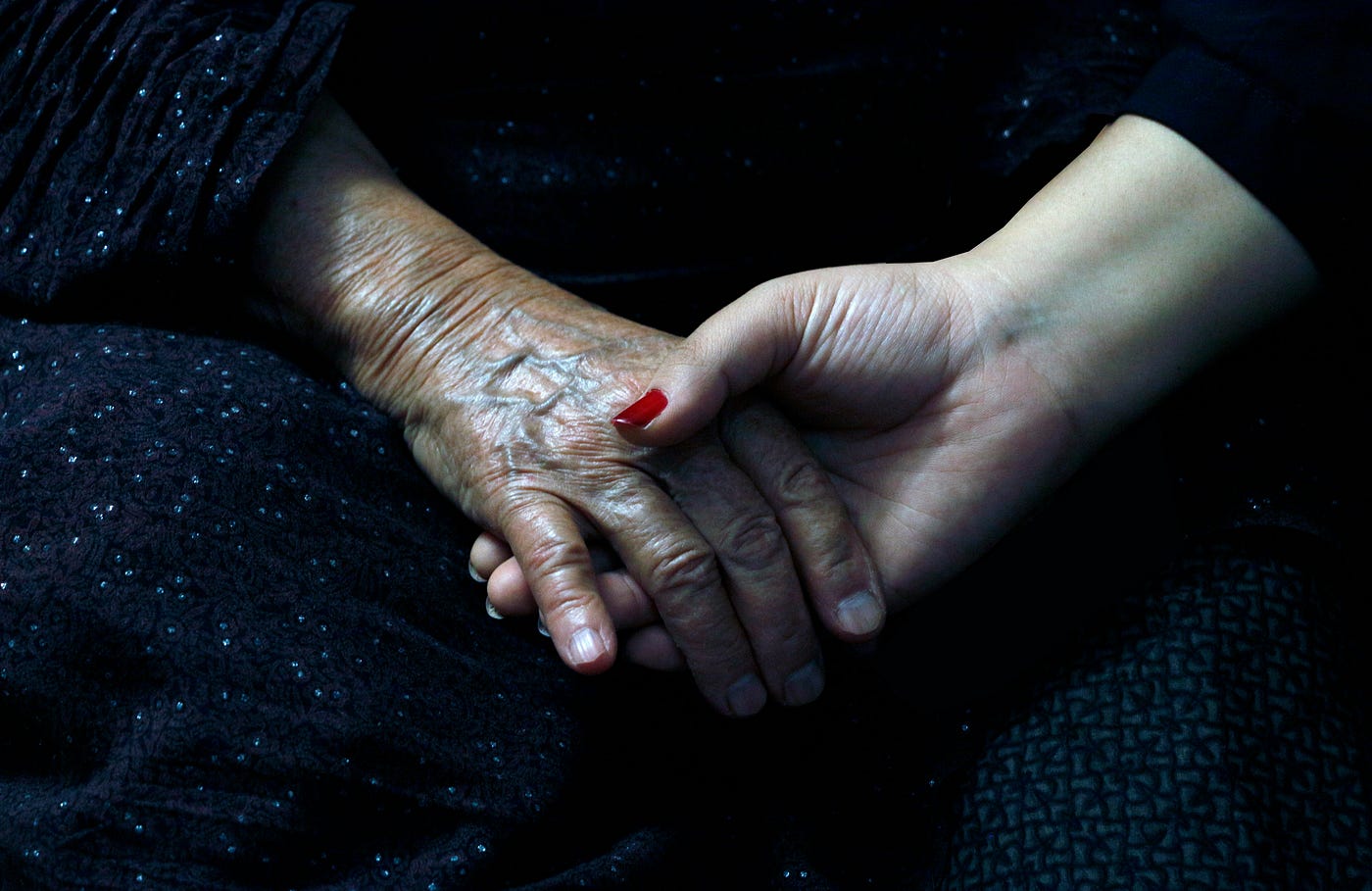
Women’s Rights: You’re Not in Afghanistan, But You’re a Woman
Afghan women have officially lost all their rights to live freely and here is what that teaches every woman
Women’s Rights: You’re Not in Afghanistan, But You’re a Woman
Afghan women have officially lost all their rights to live freely and here is what that teaches every woman
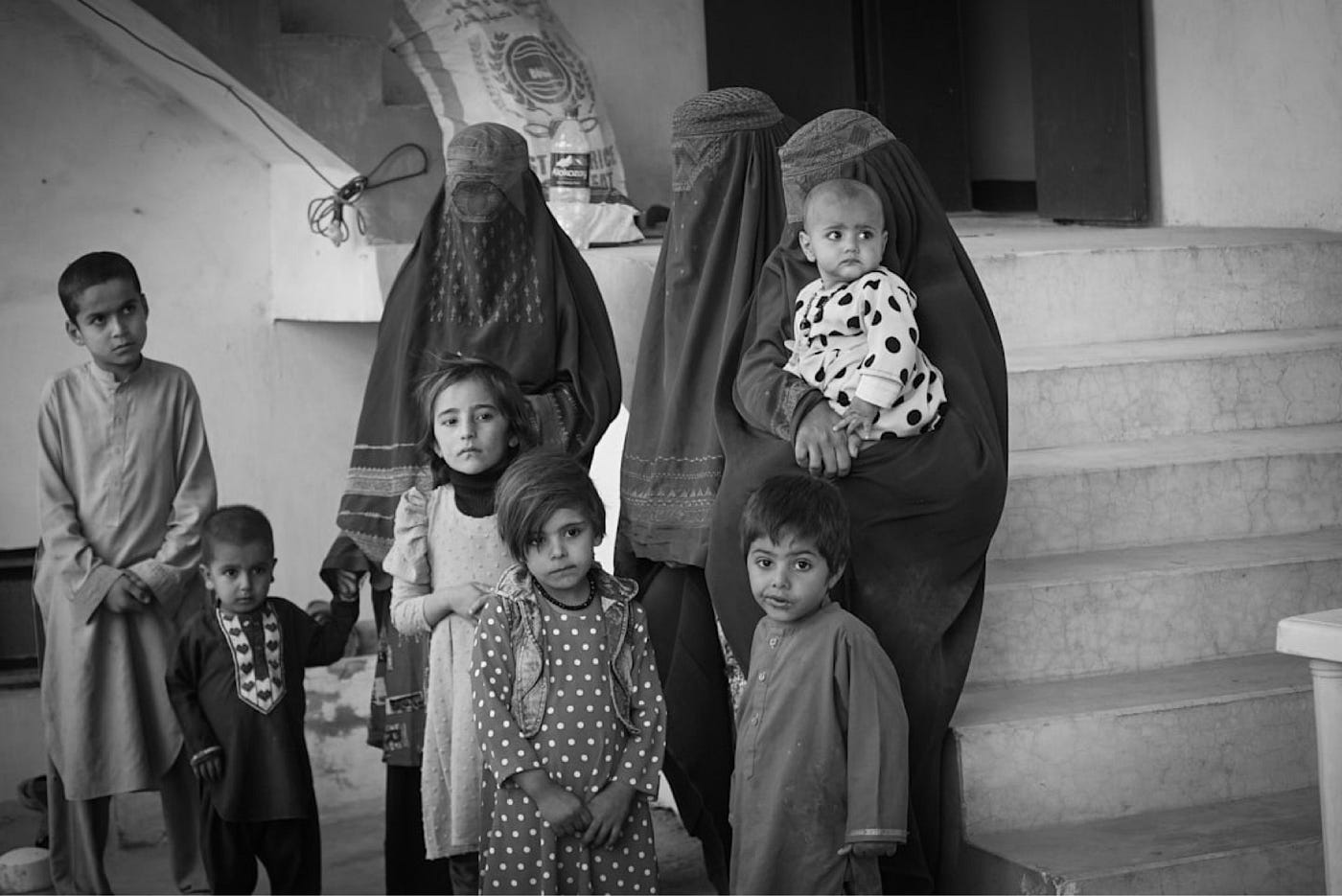
Photo by Wanman uthmaniyyah on Unsplash
Non-Medium member? Read here!
Whenever someone asks me why I’m so hell-bent on feminism, and why I insist on calling myself a feminist when they think I already have everything I could want. Boom! Another headline appears to explain my why.
Women’s rights have never been fully secured in Nigeria — not anywhere. Then the latest global reports remind us just how fragile they are.
According to the World Bank, women around the world enjoy only about 64 percent of the legal rights that men do, far fewer than the previous estimate of 77%. In some countries, those protections are expanding. In others, they are disappearing.
We have watched governments debate women’s access to contraception. We have watched abortion rights rolled back. And now, Afghanistan women story has become one of the clearest reminders that rights can be stripped away until very little remains.
Imagine waking up one morning to discover that you can’t go anywhere without a male guardian, that your education ends after sixth grade. That the university where you dreamed of becoming a doctor is no longer open to you.
Imagine being told that singing is forbidden, that your voice is now illegal. Not your opinion, not your protest. Your voice! That parks, gyms, beauty salons, and so many ordinary places are suddenly off-limits simply because you are a woman.
For millions of Afghan women, this is no longer imagination. It is their lived reality.
They are women exactly like me. They laugh, they dream, they fall in love. They argue with their sisters. They hope their daughters will live better lives than they did, just like you and I.
The only difference is where they were born, and that is perhaps the most frightening part of all. If geography can determine how many rights a woman has, then no woman should believe someone else’s struggle has nothing to do with her.
How did Afghanistan get here?
The Afghanistan we are seeing today did not happen overnight. For many women, it has been a slow suffocation.
When the Taliban returned to power in August 2021, after the collapse of the Afghan government and the withdrawal of international forces, they initially promised a more “moderate” government than the one that ruled the country in the late 1990s.
Many Afghans and much of the world waited to see whether those promises would hold; they did not. Instead, each passing month brought another decree.
What did they lose?
First, girls were prevented from returning to secondary school. Then universities were closed to women.
Women working in government ministries were dismissed or told to stay home. Many professions, from humanitarian work to public administration, became increasingly inaccessible.
Women disappeared from political life, from television screens, and from positions of public leadership.
Then came the restrictions on ordinary life. Beauty salons, one of the few women-only public spaces left, were ordered to shut their doors.
Public parks, gyms, amusement parks, and sports facilities became places women could no longer enter. Women were instructed to cover their faces in public and were discouraged or, in many cases, prevented from travelling long distances without a male guardian.
More recently, authorities imposed rules that further restricted women’s voices and presence in public, making even speaking or singing in certain public settings subject to severe limitations.
None of these changes happened in a single day. It was one decree, then another and another.
Until millions of women found that almost every ordinary freedom they once took for granted had quietly disappeared.
And beyond the official decrees, there is another fear that many Afghan girls have long faced: becoming a form of compensation for conflicts they did not create.
In some communities, a practice known as **Baad** has involved giving a girl or woman in marriage to another family to settle a blood feud, debt, or other dispute.
Although the practice is illegal and not rooted in Islamic law, human rights groups have documented cases in which girls paid the price for the actions of male relatives. Male relatives who were asked to safeguard them.
Legal protections are weak and women have fewer places to seek help, as their rights have been stripped away. The risks faced by vulnerable girls have become even greater.
They were not silent
Yet Afghan women did not stop fighting. Within days of the Taliban’s return, report shows that women marched through the streets of Kabul and other cities carrying handwritten placards demanding “Bread, Work, Freedom.”
They knew the risks. Many were beaten, threatened, detained, or forced into hiding. Journalists who reported on the protests faced intimidation, and women’s rights activists disappeared for weeks after being arrested.
When public demonstrations became too dangerous, the resistance changed shape. Some women began teaching girls in secret classrooms inside private homes.
Others created underground learning networks or continued lessons online whenever internet access allowed.
Some journalists continued documenting abuses anonymously. Writers, artists, and activists kept telling the world what was happening, even when doing so placed their own lives at risk.
Their resistance may no longer fill the streets, but it has never disappeared.
That, perhaps, is another lesson from Afghanistan. People can imprison a woman’s body, they can silence her voice, they can close her school, take away her job, and lock the doors to public life.
But they cannot easily erase her determination to survive or her hope that one day her daughter will inherit a freer country than she did.
Why should women elsewhere care?
Afghanistan is not frightening only because of where it ended up. It is frightening because of how it got there.
No country wakes up one morning and announces, “Women no longer matter.” Rights are usually lost gradually. A policy changes, a protection is weakened and a group of women is told to wait. Another restriction is introduced “for culture,” “for religion,” “for security,” or “for tradition.” Then another follows and another.
Until women realize that freedoms they once considered ordinary have become privileges that can be taken away gradually. They have been stripped naked.
You and I do not have to live in Afghanistan to understand that feeling.
Women around the world are already fighting battles over education, reproductive rights, workplace equality, safety, political representation, and freedom from violence.
The details differ from country to country, but the pattern is familiar: The little rights we are privileged to have must be defended continuously, because they are not guaranteed forever.
That is why I refuse to look at Afghan women as if they belong to a distant tragedy. They are not a warning from another planet. They are a reminder of what can happen when the rights of women in any country we find ourselves become negotiable.
What can women around the world do?
A tragedy this deep did not happen in a single day. It was built through years of restrictions, silence, fear, and unchecked power. That means restoring freedom will also be a gradual process. No one article, protest, or donation can undo it overnight, but doing nothing is also a choice.
Here is my part, my voice, and my ink. You can also do your part by;
- Continuous speaking about Afghan women so the world does not move on while they are still trapped.
- Support organizations that provide education, humanitarian aid, and legal assistance to Afghan women and girls. If you’re within reach.
- Share the work of Afghan women writers, journalists, artists, and activists so their voices are not erased.
- Defend girls’ education in our own communities before we ever have to fight to reclaim it.
- We have to vote and advocate for policies that protect women’s rights before our rights come under attack too.
- Challenge child marriage, gender-based violence, and discrimination wherever we see them.
- Raise boys who understand that women are not possessions, bargaining chips, or second-class citizens.
- Teach young girls that their ambitions are not acts of rebellion.
- Refuse to treat women’s suffering as a cultural issue that does not concern us.
- Build solidarity across borders instead of treating another woman’s struggle as distant news. It might be your turn tomorrow
- Support independent journalism that continues to document abuses against women.
- Keep having uncomfortable conversations about freedom, autonomy, and equality even when people tell us we are “doing too much.”
Because the lesson of Afghanistan is not only that rights can be taken away. It is the silence that gives those taking them away more room to continue.
And again, if geography is the only thing separating one woman’s freedom from another woman’s fear, then none of us can afford to believe that someone else’s struggle has nothing to do with us.
메타데이터
- post_id
- 0cc71224e151
- slug
- womens-rights-you-re-not-in-afghanistan-but-you-re-a-woman-0cc71224e151
- url
- https://medium.com/the-virago/womens-rights-you-re-not-in-afghanistan-but-you-re-a-woman-0cc71224e151
- canonical_url
- https://medium.com/the-virago/womens-rights-you-re-not-in-afghanistan-but-you-re-a-woman-0cc71224e151
- author_url
- https://medium.com/@nofisatdamilola29
- status
- ok
- fetched_at
- 2026-07-15 13:22:43