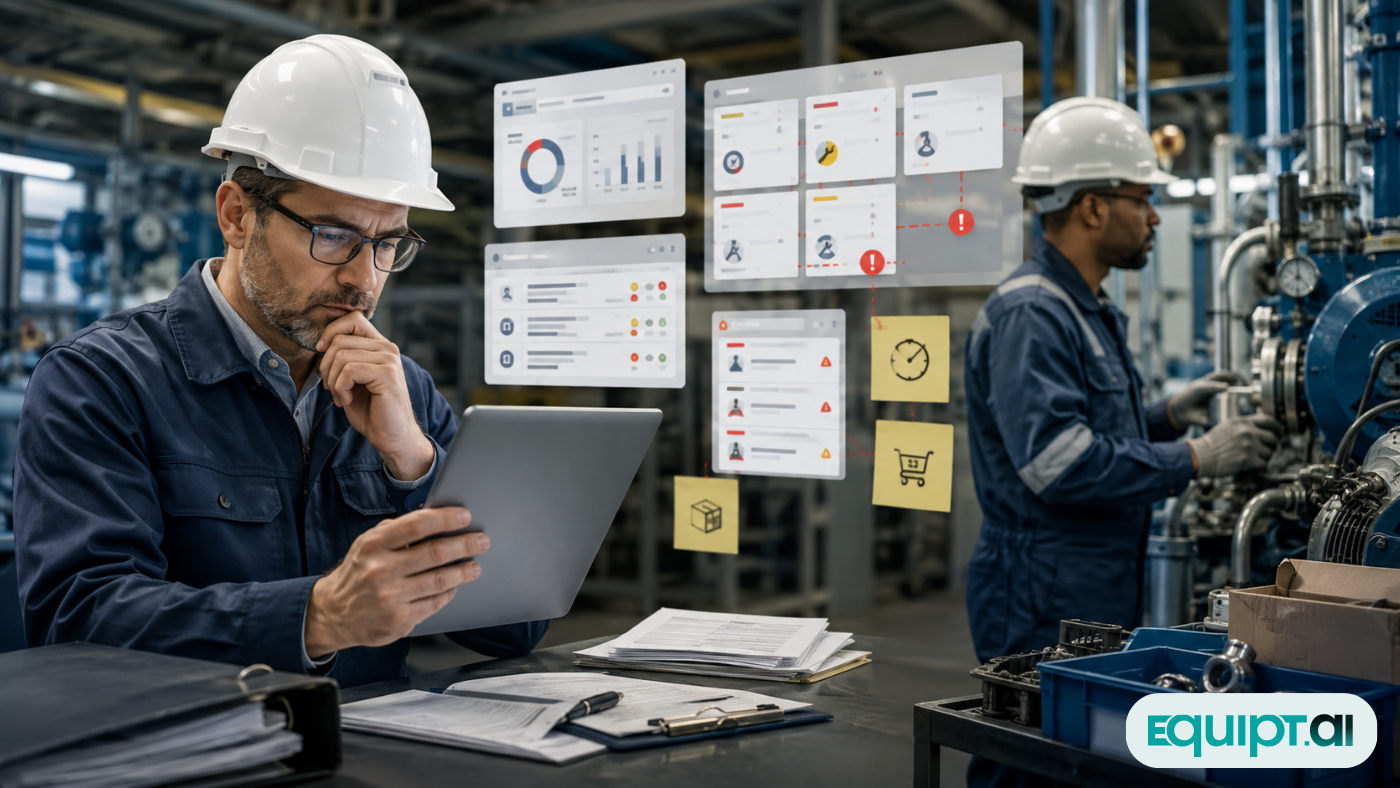
Why Operational Visibility Is Becoming the New Competitive Advantage
Visibility might be the most overused word in industrial software right now. Every vendor claims to deliver it. Most companies say they…
Why Operational Visibility Is Becoming the New Competitive Advantage

Visibility might be the most overused word in industrial software right now. Every vendor claims to deliver it. Most companies say they have it.
But ask an operations lead what’s actually happening on a site at 3 PM on a Tuesday, and you’ll usually get a phone call to a yard supervisor, a Slack message to a dispatcher, and a fifteen-minute wait for an answer that should take five seconds.
That gap, between the visibility companies think they have and the visibility they actually need, is where 2026’s competitive lines are being drawn in asset-heavy industries.
It’s also where most of the money is leaking out.
Operational visibility used to be a back-office function. Now it’s quietly become the thing separating companies winning their market from the ones still explaining last month’s numbers in board meetings.
The operators who figured this out early aren’t just running smoother. They’re winning renewals that their competitors don’t hear about until it’s too late.
Visibility Has Moved Beyond Dashboards
“Visibility” used to mean a screen full of charts you’d open on Monday morning. Some KPIs in green, some in red, a few PDFs floating around for the leadership review.
That’s not visibility. That’s a history lesson.
What it actually means now is knowing where every piece of equipment is at this moment, what condition it’s in, which technician is assigned to it, and whether the parts they need are actually in the truck before they leave the yard. A dispatcher can answer a customer’s “where’s my guy?” call in five seconds instead of fifteen minutes.
That shift sounds small. It isn’t. Companies operating with this kind of live awareness make decisions in hours that their competitors are still making in days.
The Quiet Cost of Operating Blind
Here’s where it gets uncomfortable. An L2L 2025 survey of over 600 manufacturing leaders found that 6 in 10 say unplanned downtime is costing them more than $250,000 a year. And that’s just the average plant. For Fortune Global 500 companies, Siemens estimates the bill at roughly $1.4 trillion annually, about 11% of total revenue.
Most of that loss isn’t the breakdown itself. It’s everything happening around it: technicians dispatched without the right part, equipment sitting idle because nobody updated its status, jobs billed two weeks late because paperwork is stuck on someone’s desk.
When you can’t see what’s happening across your operation, you don’t just lose time. Revenue leakage hides inside the delays nobody bothered to flag. Customers don’t always escalate either. They just quietly move their next job to whoever responded faster the previous time.
Where Visibility Actually Pays Off
The companies pulling ahead aren’t doing one big thing. They’re doing five small ones in real time.

- Equipment: Knowing every asset’s location, runtime hours, and last service date, with predictive flags before something fails instead of after the call from a site supervisor.
- Field teams: Live tracking of who’s where, what skills they have, and whether they’re running on time. Smarter **technician scheduling** alone can shave hours off response times across multiple sites.
- Maintenance: Work orders that move with the technician on their phone instead of sitting in a folder back at the office.
- Inventory: What’s on the truck, what’s in the yard, what got used today. No more “we’ll have to come back tomorrow with the right valve.”
- Execution: One view of jobs in progress, the ones at risk, and the ones closed and ready to bill.
This is what a real **field service management solution** actually does.
From Reactive Firefighting to Real-Time Execution
There’s a mindset shift behind all this that doesn’t get discussed enough.
Most ops teams have been trained to react. Something breaks, you respond. A customer calls, you scramble. The day becomes a series of small fires you’re putting out one at a time.
Live visibility flips that. When you can see the issue forming, you handle it before it costs you anything. Deloitte’s 2026 Oil and Gas Outlook reports that AI and gen AI spending in the sector is on track to cross 50% of total IT budgets by 2029, with about half of that targeting process optimization and real-time analytics.
That’s why modern **oil and gas data management software** isn’t sold as analytics anymore. It’s sold as execution. The point isn’t to know more. It’s to act faster on what you already know.
Why Customers Feel the Difference
Here’s the part operators forget. Your customers can tell.
When a service request gets confirmed in two minutes instead of two hours, that registers. So does a technician showing up on time with the right parts, or being able to tell a client exactly where their equipment is and when it’s coming back online.
Fortune Business Insights values the field service management market at $5.37 billion in 2025, with growth to more than double by 2034. Most of that pressure is being driven by customer expectations, not technology. Patience for “we’ll get back to you” has run out.
The companies responding visibly, in real time, win the next contract, usually, without ever needing to compete on price.
Frequently Asked Questions
What Does Operational Visibility Actually Mean?
It’s seeing what’s happening across your equipment, field teams, inventory, and jobs as it happens. Not last week’s report. The current state of your operation has enough context for someone to act on it.
How Does Real-Time Visibility Reduce Downtime?
You catch issues as they develop, route the right technician with the right part on the first trip, and close work orders without paperwork delays. Most downtime cost actually lives in those gaps, not the equipment failure itself.
Is This Only Worth It for Large Enterprises?
No. Mid-sized operators often gain the most because they can implement faster and feel the revenue impact sooner. Tighter margins make the cost of being blind hurt more, and the payback shows up in the next quarter rather than the next fiscal year.
What’s the Difference Between Dashboards and True Visibility?
Dashboards tell you what happened. True visibility shows you what’s happening right now and gives your team the ability to do something about it before it costs you.
메타데이터
- post_id
- 0ccbbc03c7cb
- slug
- why-operational-visibility-is-becoming-the-new-competitive-advantage-0ccbbc03c7cb
- url
- https://medium.com/equipt-ai/why-operational-visibility-is-becoming-the-new-competitive-advantage-0ccbbc03c7cb
- canonical_url
- https://medium.com/equipt-ai/why-operational-visibility-is-becoming-the-new-competitive-advantage-0ccbbc03c7cb
- author_url
- https://medium.com/@amarpal.singh.nanda
- status
- ok
- fetched_at
- 2026-06-15 20:49:13