General Rules and Principles of Nursing Procedures: A Complete Guide for Nursing Students
Every nursing procedure, whether it’s taking a patient’s vital signs or assisting with a complex clinical intervention, begins with the…
General Rules and Principles of Nursing Procedures: A Complete Guide for Nursing Students
Every nursing procedure, whether it’s taking a patient’s vital signs or assisting with a complex clinical intervention, begins with the same goal: providing safe, compassionate, and effective patient care.
Behind every successful nursing procedure are fundamental principles that guide nurses in protecting patient safety, preventing infections, maintaining dignity, and delivering high-quality healthcare. These principles are not just classroom concepts — they are the foundation of professional nursing practice.
For nursing students, mastering these rules is essential for clinical placements, OSCEs, examinations, and future nursing careers. Practising nurses also rely on these principles every day to provide evidence-based care and maintain professional standards.
What Are the General Rules and Principles of Nursing Procedures?
The general rules and principles of nursing procedures are the basic guidelines that nurses follow before, during, and after performing any nursing procedure. Their purpose is to ensure patient safety, accuracy, comfort, infection prevention, and quality nursing care.
Regardless of the procedure being performed, these principles help nurses work systematically while reducing errors and improving patient outcomes.
Why Are These Principles Important?
Following nursing procedure principles helps healthcare professionals:
- Deliver safe and effective patient care.
- Prevent healthcare-associated infections.
- Reduce medical errors and complications.
- Protect patient privacy and dignity.
- Improve communication and patient cooperation.
- Build trust and confidence.
- Promote faster recovery and better treatment outcomes.
These principles form the backbone of professional nursing practice.
Key Principles Every Nurse Should Follow
A competent nurse should always:
- Be committed and dedicated to every nursing activity.
- Put the patient at the centre of every decision.
- Maintain professionalism and good personal hygiene.
- Demonstrate confidence, competence, and compassion.
- Prepare all equipment before beginning the procedure.
- Check that equipment is complete, clean, functional, and safe.
- Handle medications responsibly.
- Keep knowledge and clinical skills up to date through continuous learning.
Although these may seem like simple habits, together they create a safer environment for both patients and healthcare professionals.
The General Steps of Every Nursing Procedure
Most nursing procedures follow a similar sequence:
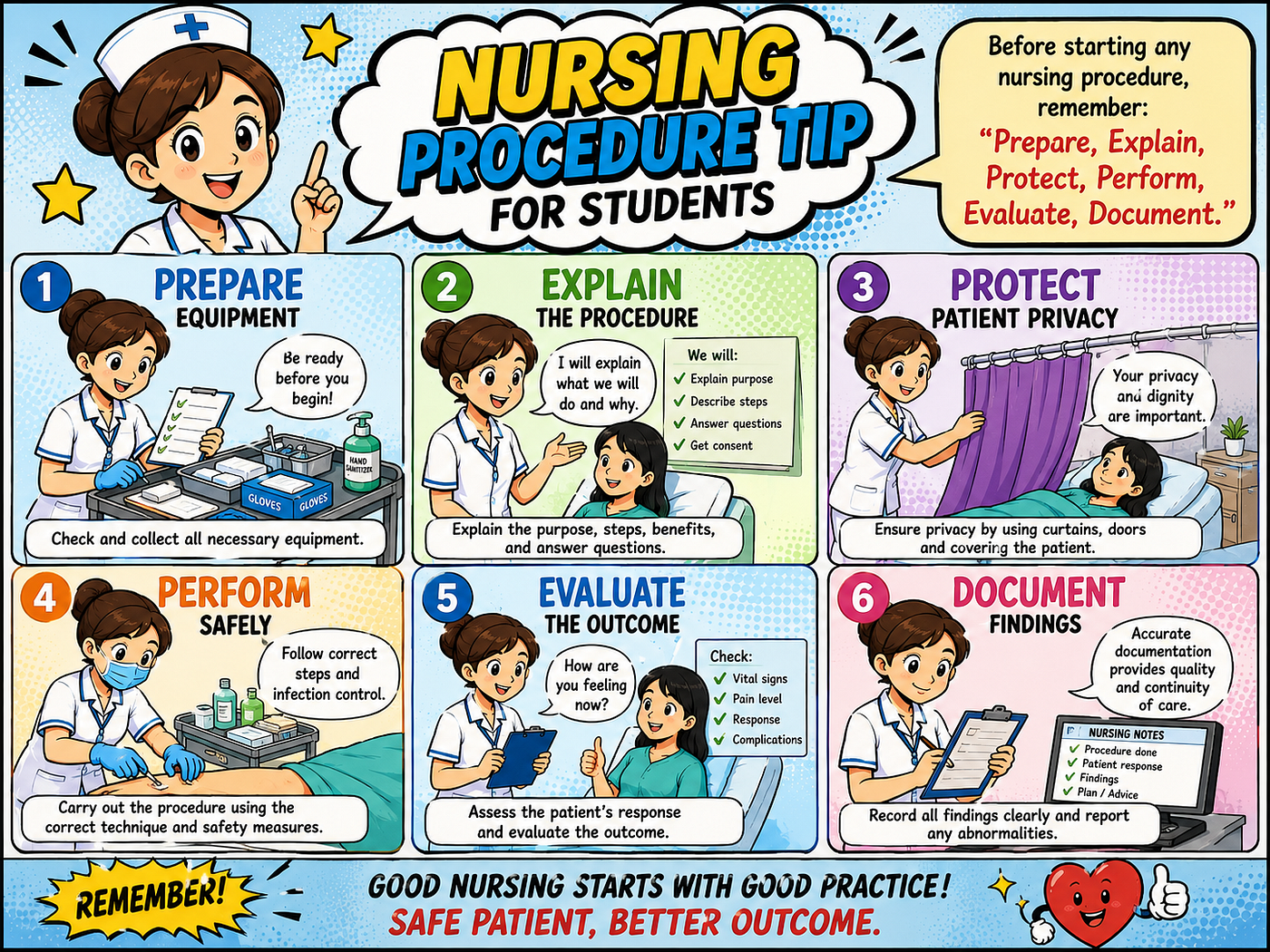
- Prepare all required equipment.
- Introduce yourself and explain the procedure.
- Obtain informed consent when required.
- Provide privacy for the patient.
- Position the patient appropriately.
- Perform hand hygiene and wear appropriate PPE.
- Carry out the procedure using the correct technique.
- Ensure the patient’s comfort after completion.
- Clean and store equipment properly.
- Document findings and report abnormalities.
- Send collected specimens promptly to the laboratory when necessary.
Using a consistent approach helps minimize mistakes and improves patient safety.
Building Rapport With Patients
Technical skills alone do not make an excellent nurse. Communication and compassion are equally important.
Patients are more likely to cooperate when they feel respected, heard, and understood.
Simple ways to build rapport include:
- Introducing yourself clearly.
- Greeting patients warmly.
- Listening attentively.
- Explaining procedures in simple language.
- Respecting privacy and confidentiality.
- Showing empathy and patience.
- Encouraging questions.
- Involving patients in their care whenever possible.
These actions strengthen trust and improve the overall patient experience.
Ensuring Patient Comfort
Patient comfort should remain a priority throughout every nursing procedure.
Nurses can improve comfort by:
- Explaining each step before beginning.
- Preparing equipment beforehand.
- Maintaining privacy.
- Positioning patients correctly.
- Handling patients gently.
- Administering prescribed pain relief when appropriate.
- Repositioning patients after the procedure.
- Providing hygiene care when needed.
- Assessing comfort before leaving the bedside.
Comfort is not simply about reducing pain — it also includes reducing anxiety, preserving dignity, and making patients feel respected and cared for.
Frequently Asked Questions
What are nursing procedure principles?
They are the guidelines nurses follow to perform procedures safely, effectively, and professionally.
Why is hand hygiene important?
Hand hygiene prevents infections and protects both patients and healthcare workers.
Why should nurses explain procedures?
Clear explanations reduce anxiety, improve cooperation, and allow patients to give informed consent.
Why is documentation important?
Documentation creates a legal record, supports communication among healthcare professionals, and promotes continuity of care.
How do nurses maintain patient privacy?
By using curtains or screens, closing doors, covering exposed body parts, and respecting patient dignity throughout care.
Final Thoughts
Learning the general rules and principles of nursing procedures is one of the first and most important steps toward becoming a competent nurse.
These principles guide every aspect of nursing practice — from preparing equipment and communicating with patients to infection prevention, documentation, and post-procedure care. By applying them consistently, nurses provide safer, more compassionate, and more effective healthcare.
Whether you are preparing for nursing school examinations, OSCEs, or your first clinical placement, developing these habits early will strengthen your clinical confidence and improve the quality of care you provide throughout your nursing career.
메타데이터
- post_id
- 0ccf5a8679b5
- slug
- general-rules-and-principles-of-nursing-procedures-a-complete-guide-for-nursing-students-0ccf5a8679b5
- url
- https://medium.com/@nursesrevisionnotes/general-rules-and-principles-of-nursing-procedures-a-complete-guide-for-nursing-students-0ccf5a8679b5
- canonical_url
- https://medium.com/@nursesrevisionnotes/general-rules-and-principles-of-nursing-procedures-a-complete-guide-for-nursing-students-0ccf5a8679b5
- author_url
- https://medium.com/@nursesrevisionnotes
- status
- ok
- fetched_at
- 2026-08-04 18:02:17