UK faces fiscal crisis as bond vigilantes circle and growth stalls
Government borrowing costs have risen to 4.8%, the highest among advanced economies, while net migration exceeded 900,000 last year and…
UK faces fiscal crisis as bond vigilantes circle and growth stalls

Government borrowing costs have risen to 4.8%, the highest among advanced economies, while net migration exceeded 900,000 last year and welfare spending now consumes 60% of tax receipts.
The numbers are not kind
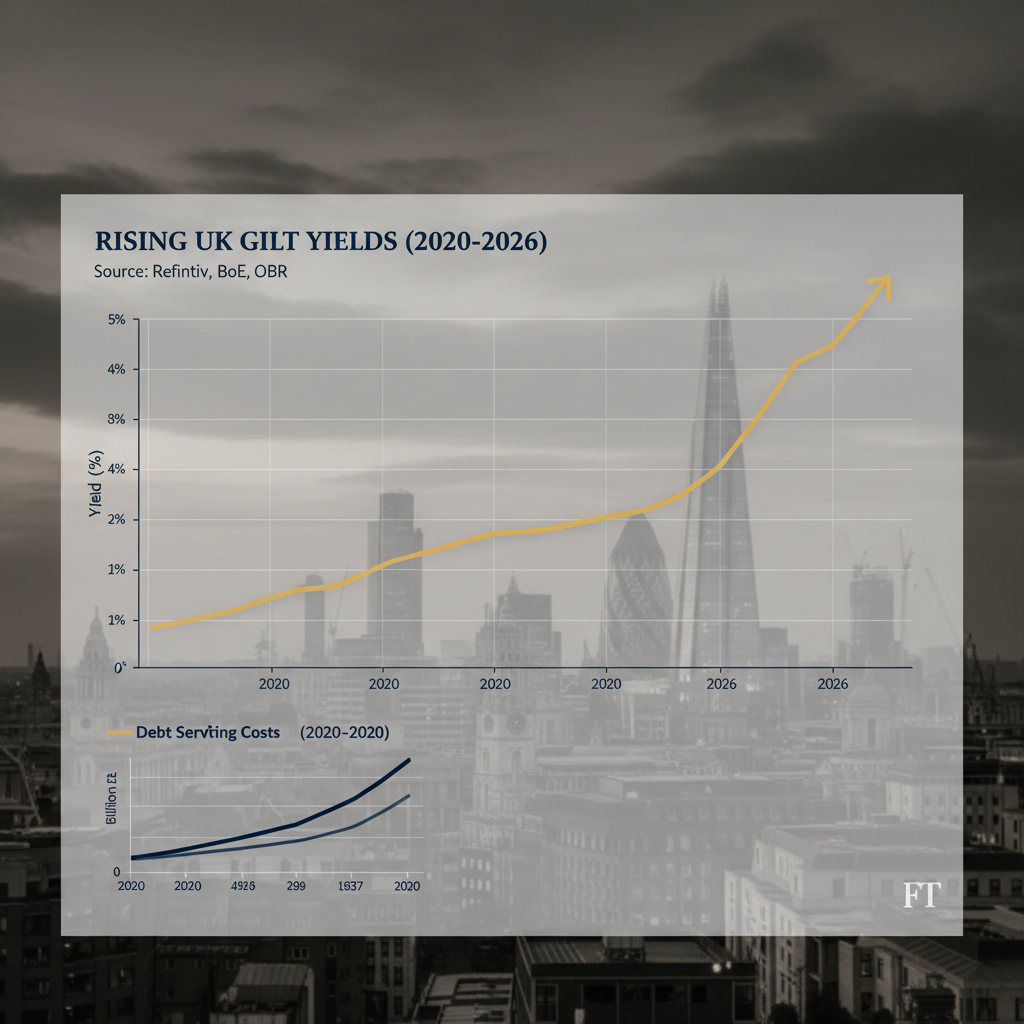
On May 5th, the yield on ten-year UK government bonds touched 4.8%. That is higher than Italy’s. Higher than Greece’s. Higher than any other advanced economy in the world. The last time British borrowing costs were this far out of line with peers, the country was being ejected from the European Exchange Rate Mechanism in 1992.
This is not a panic. It is a verdict.
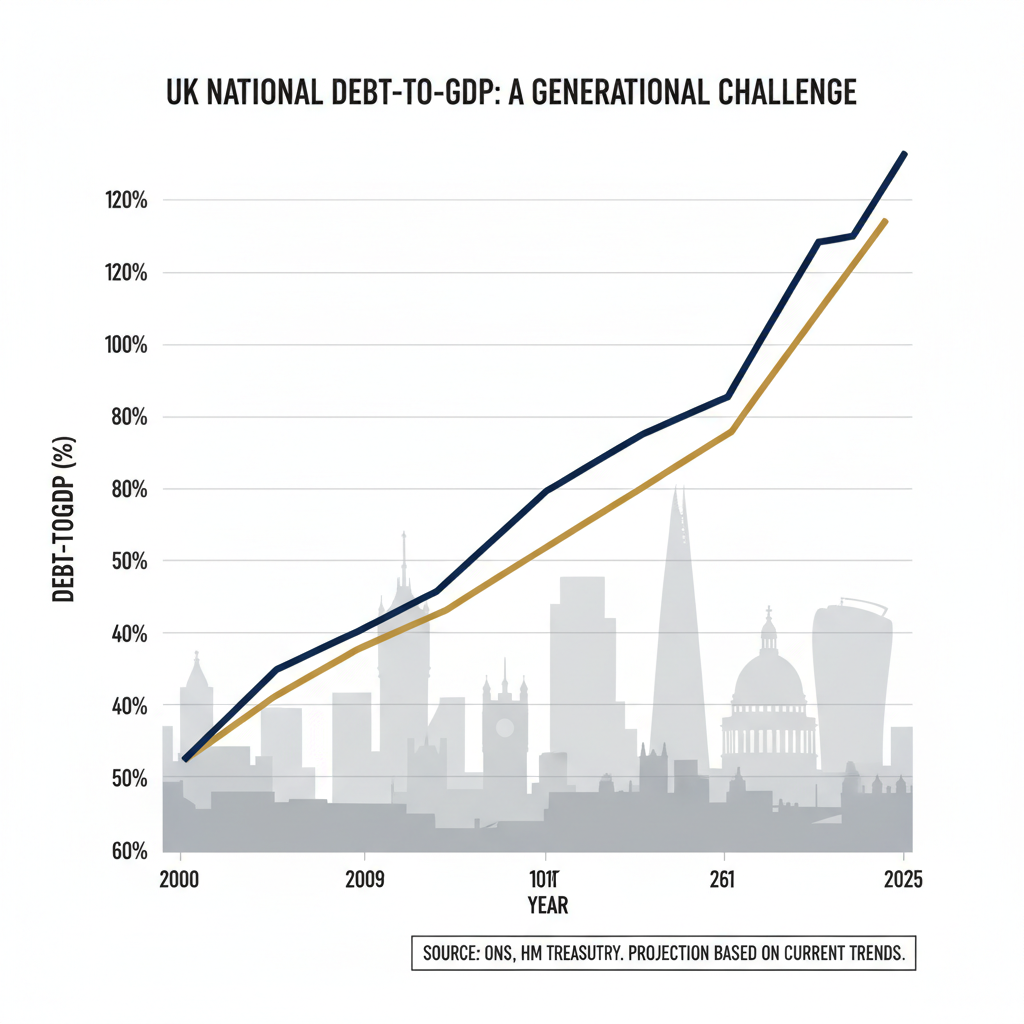
The bond market is not emotional. It does not tweet. It simply prices risk. And what it is pricing today is the growing probability that the UK government has lost control of its fiscal arithmetic. Debt now stands at 98% of GDP. Welfare spending has risen to £320 billion a year — more than the government collects in income tax. The Office for Budget Responsibility projects that without policy changes, debt will exceed 110% of GDP within five years.
These are not alarmist numbers. They are official figures from the OBR’s March 2026 fiscal outlook.
The growth problem no one wants to solve
The deeper issue is not the deficit itself. It is the absence of growth. The UK economy expanded by just 0.6% in the first quarter of 2026. That is below the euro area average. Below the US. Below most of southeast Asia.
Productivity growth has been stuck below 1% annually for more than a decade. Business investment as a share of GDP is 9.8% — the lowest in the G7 except for Italy. The number of new companies registered in 2025 fell by 12% compared to 2019. And a survey by the Institute of Directors found that 43% of members were actively considering relocating operations abroad.
I spoke recently with a chief executive of a mid-sized manufacturing firm in the West Midlands. He employs 340 people. He told me his corporation tax bill had risen by £1.2 million since 2023, his energy costs had doubled, and his biggest concern was not demand but regulation. "Every month there is something new," he said. "The Employment Rights Bill. The carbon border tax. The packaging levy. I spend more time with compliance consultants than with customers."
His story is not unusual. It is typical.
Welfare and the political trap
The government’s response to slow growth has been to increase spending. In the 2025 Budget, Rachel Reeves announced a £25 billion increase in welfare spending over three years, mainly on disability and incapacity benefits. The number of working-age adults claiming out-of-work benefits has reached 2.8 million — up from 2.1 million before the pandemic.
This is not sustainable. But it is politically difficult to reverse. The electoral coalition that put Labour in power is heavily dependent on public sector workers and benefit recipients. The local elections on May 7th saw Reform UK win control of Havering council and make gains across the East Midlands and the North East. Labour lost 280 seats. The Conservative vote collapsed to 18%.
The two main parties are now squeezed between a growing welfare constituency and a shrinking tax base. The people who fund the state — higher earners, business owners, investors — are leaving. HMRC data show that net departures of high-net-worth individuals reached 9,600 in 2025, the highest on record.
The Armenia moment
On May 4th, three days before the local elections, Sir Keir Starmer flew to Yerevan, Armenia, and committed £2 billion of British taxpayer money to a European Union loan scheme. There was no parliamentary vote. No debate. The Prime Minister stood in front of European leaders and acknowledged that the UK economy was performing worse than the government had forecast. Then he signed the cheque.
The reaction was not limited to the usual critics. Conservative MPs called it an outrage. But so did some Labour backbenchers. The question being asked in Westminster is not whether this was the right decision — it is why a government facing a fiscal crisis would add to its liabilities without any visible economic return.
The answer, I suspect, is that the government believes it has no choice. Britain’s post-Brexit relationship with the EU remains fragile. The loan scheme is a gesture of goodwill. But gestures have costs. And when your borrowing costs are already the highest in the developed world, you cannot afford many of them.
What comes next
The UK is not Greece in 2010. It has its own currency. A central bank that can buy government debt. A deep and liquid bond market. But the margin for error is shrinking.
The Institute for Fiscal Studies has warned that the government may need to find £35 billion in additional savings or tax increases in the next spending review just to meet its own fiscal rules. That is roughly 1.3% of GDP. It would require cuts to services that voters have come to expect. Or tax rises that would further depress growth.
Neither option is attractive. But the alternative — a slow loss of credibility, a creeping rise in borrowing costs, a steady erosion of the pound — is worse.
The bond market does not panic. It just re-prices. And when it re-prices, governments have to listen. The question for Sir Keir Starmer and Rachel Reeves is whether they will act before the market forces them to.
메타데이터
- post_id
- 0cd197c0cc3b
- slug
- uk-faces-fiscal-crisis-as-bond-vigilantes-circle-and-growth-stalls-0cd197c0cc3b
- url
- https://medium.com/@bean_flickr69/uk-faces-fiscal-crisis-as-bond-vigilantes-circle-and-growth-stalls-0cd197c0cc3b
- canonical_url
- https://medium.com/@bean_flickr69/uk-faces-fiscal-crisis-as-bond-vigilantes-circle-and-growth-stalls-0cd197c0cc3b
- author_url
- https://medium.com/@bean_flickr69
- status
- ok
- fetched_at
- 2026-06-09 15:37:30