Living the Traditions
by Ilwad Mohamed
Living the Traditions
by Ilwad Mohamed

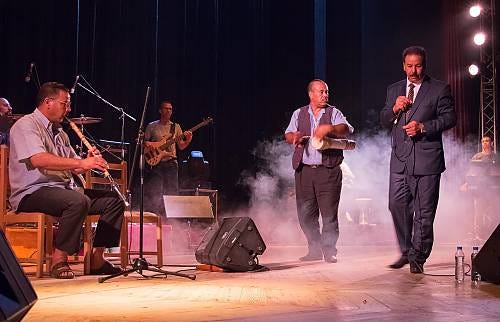
Photo by Sarah Canbel
Palestine is the home to many beautiful traditions, some of which are dances, poems, songs, and clothes. Dances include dabke (دبكة), which belongs to Palestine but is popular in all of the Levant with different variations and can be performed by anyone at any celebration or party. The dance Al dahiya (الدحية ), which is a Bedouin dance that incorporates chants and clapping, is performed at weddings. Traditional songs include “Al Dehiya (الدحية “(by Najem Alsalman which is used to perform the dance dahiya at weddings and hennas, and the song “Jana Jana (جنة جنة “), a song that is meant to uplift Arab countries and embrace the roots of Palestinians.
Dabke is performed at parties like weddings, graduations, and almost any celebration. Any gender can perform dabke; it’s just traditionally performed with eleven people. The dance itself includes a lot of jumping and leg movements, with people linking hands or arms in a line or circle. The origin of dabke seems to be a mystery; some say it’s a fertility ritual, while others say it was a way to solidify the roofs since they were made out of mud. While the dance dahiya includes poetry, it originates from the Bedouins. This form of art is performed at weddings, and the male goes to the bride’s family and chants the words in Arabic, “First we must mention Prophet Muhammad, with the intercession of Muhammad and the assistance of Ali”, and the bride’s family would respond by saying “welcome, welcome to you, welcome, oh ally, oh boy.” The movement of al-dahiya mainly consists of clapping and shoulder movements to celebrate, and is mainly performed by men.
A popular song called “Al Dehiya” by Najem Alsalman is played during weddings or the bride’s henna party, where they do the same clapping and shoulder movements. There are many known versions of the song “Jana Jana” that are used all over the Arab world. Even within countries, versions are complementing the individual cities. The
the” جنة جنة جنة فلسطين يا وطنة يا وطنة يا حبيب بابو تراب الطيب” lyrics the includes version palestinian transliteration is “Jana jana jana, Falsteen ya watana ya watana yah beyib tarab alwateyb” and the English meaning is “heaven heaven heaven, Palestine O’ our homeland, our beloved homeland, your land is precious”. The song is a way to complement the beauty of the Palestinian land and culture. Palestinian children are taught this song to celebrate and appreciate their roots and traditions. It’s a song parents sing to their kids when raising the flag.
Palestine shares so many traditions with bordering Levantine countries, and the dances Dabke and Dahiya are only two of the most popular dances in Palestine. While the song “Al dehiya” is used in the background of the dahiya dance. The song “Jana Jana” brings hope, appreciation, and happiness by cherishing the culture and the homeland of Palestinians.
Works Cited
- al-Najada, Suleiman Naser. “The Bedouin Dahiyya.” Translated by Elias Khayyo, This Week in Palestine, 11 Feb. 2023, thisweekinpalestine.com/the-bedouin-dahiyya/.
- “Dabkeh, Traditional Dance in Palestine — UNESCO Intangible Cultural Heritage.” Intangible Cultural Heritage, ich.unesco.org/en/RL/dabkeh-traditional-dance-in-palestine-01998. Accessed 2 Aug. 2025.
- “Dabke (L), Debke ? Lebanon, Palestine, Syria, Jordan ? Revised and Expanded.” Folkdance Footnotes*, 15 Jan. 2025,
- folkdancefootnotes.org/dance/a-real-folk-dance-what-is-it/about/dabke-debke-lebanon-pa lestine-syria-jordan/.
메타데이터
- post_id
- 0cd9c8dd5cf4
- slug
- living-the-traditions-0cd9c8dd5cf4
- url
- https://medium.com/ypla/living-the-traditions-0cd9c8dd5cf4
- canonical_url
- https://medium.com/ypla/living-the-traditions-0cd9c8dd5cf4
- author_url
- https://medium.com/@teresachiran00444
- status
- ok
- fetched_at
- 2026-07-17 17:03:30