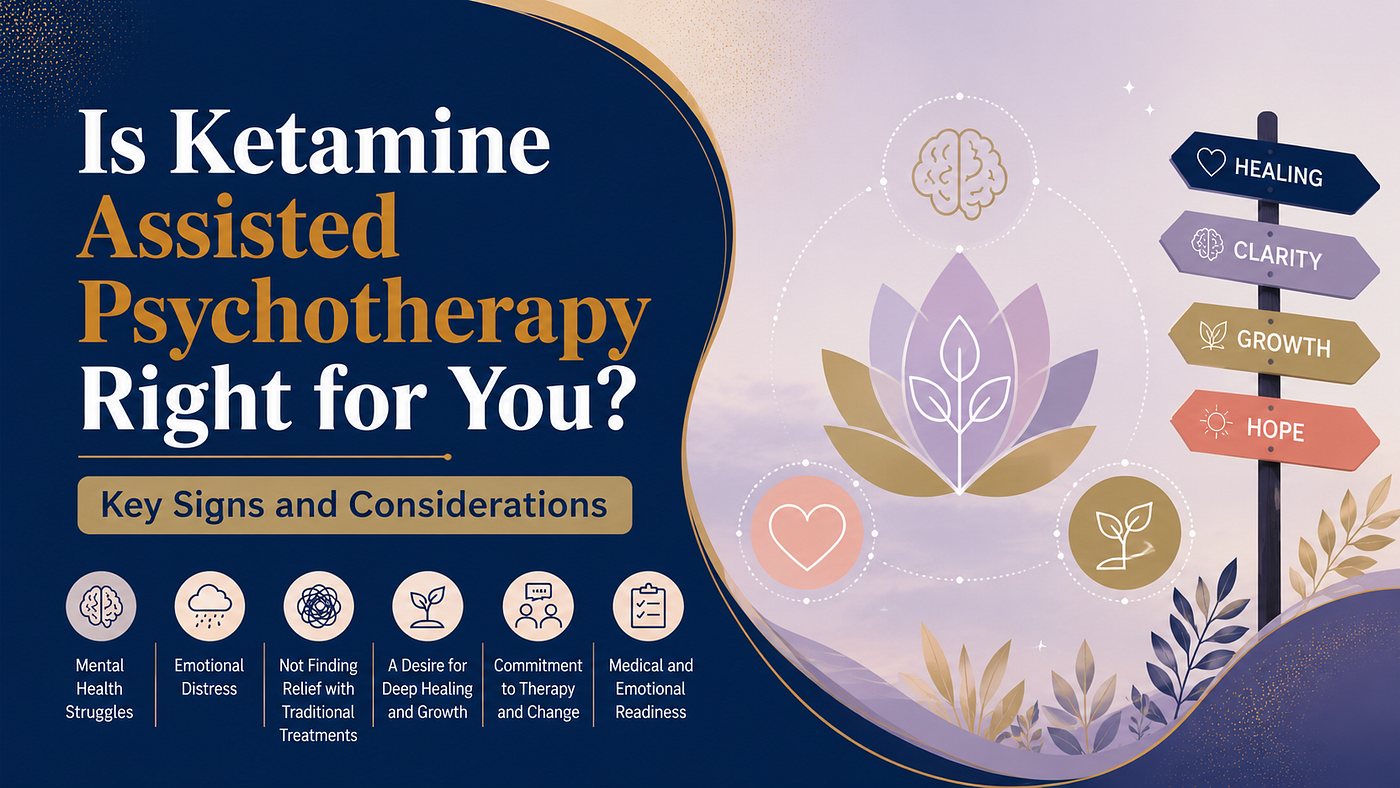
Is Ketamine Assisted Psychotherapy Right for You? Key Signs and Considerations
There’s a point in many people’s mental health journey where things start to feel repetitive in a frustrating way. You try therapy, you try…
Is Ketamine Assisted Psychotherapy Right for You? Key Signs and Considerations
There’s a point in many people’s mental health journey where things start to feel repetitive in a frustrating way. You try therapy, you try medication, you try “doing everything right,” yet the heaviness doesn’t fully lift, or it keeps coming back in the same familiar form. If that sounds close to your experience, you’re not alone in wondering whether something different might be worth exploring.
This is often where questions about **ketamine assisted psychotherapy* begin to surface. Not from a place of chasing something new for the sake of it, but from a quieter, more personal question: “What if there’s another way to finally feel better?”* Before jumping to conclusions, it helps to understand what this approach is, who it may help, and - just as importantly - whether it fits your specific situation and needs.
When You Feel Like You’ve Hit a Plateau
Many people who eventually look into alternative therapies describe a similar experience: they’ve put in real effort, sometimes for years, but their progress feels stuck. Maybe therapy helped you understand your patterns, but not change them. Maybe medication took the edge off symptoms but didn’t fully shift how you feel day to day.
This “plateau” can be discouraging, but it’s also a meaningful signal. It doesn’t mean you’ve failed or that nothing will help , it may simply mean your current tools aren’t reaching the deeper layers of what you’re experiencing.
When Symptoms Keep Returning
Another common reason people start exploring new options is recurrence. Depression that keeps cycling back. Anxiety that returns during stress even after improvement. Trauma responses that show up unexpectedly, even when life feels stable on the surface.
If your symptoms feel like they’re not just “present,” but also persistent or recurring despite ongoing care, it’s reasonable to ask whether a different therapeutic approach might help address the underlying patterns more directly.
Feeling Emotionally “Stuck” or Numb
Not all struggles show up as intense emotional distress. For some, it’s more about feeling disconnected , like you understand your life logically, but don’t feel emotionally present in it. Others describe feeling emotionally “flat,” or unable to access deeper emotional shifts even in therapy.
This kind of internal disconnect is often what leads people to explore treatments that work alongside psychotherapy in a more integrated way, rather than relying on talk-based processing alone.
When You’re Curious but Cautious
It’s completely normal to feel both interested and uncertain. Many patients are drawn to the idea of new therapeutic options but hesitate because they don’t fully understand what the experience involves or whether it’s safe for them.
That caution is important. Any treatment that affects mood or perception should be taken seriously and discussed with a qualified professional. A proper evaluation will always consider your mental health history, physical health, current medications, and overall readiness before moving forward.
Who This Approach May Be Considered For
While every case is unique, people who explore newer therapeutic options often share a few common experiences:
- They’ve tried therapy and medication but still feel limited relief
- They experience treatment-resistant depression or anxiety
- They feel emotionally stuck, disconnected, or unable to access deeper change in talk therapy alone
- They are open to guided, structured therapeutic support rather than self-directed approaches
- They have a stable environment and support system in place
This is not about replacing what you’re already doing, it’s about expanding the possibilities when standard approaches haven’t been enough.
The Importance of Support and Integration
One of the most misunderstood parts of newer mental health treatments is the assumption that the experience alone creates lasting change. In reality, the real work often happens afterward , when insights are processed, discussed, and integrated into everyday life.
Patients who tend to benefit most are those who continue working with a therapist or support system to make sense of what comes up during treatment. Without that integration, even meaningful emotional shifts can feel temporary.
Final Thoughts
If you’re reading this, chances are you’re not looking for quick fixes , you’re looking for something that actually helps you feel different in a lasting way. That question alone is an important step in your healing process.
Ketamine Assisted Psychotherapy may be worth discussing with a licensed provider if you’ve felt stuck with traditional approaches and are open to structured, guided therapeutic work that goes deeper than symptom management. And if you’re looking for something other than talk therapy, it may also be helpful to explore specialized care options like **Ketamine Therapy in Delaware**, where clinical teams can help you understand whether this kind of support fits your personal mental health needs and goals.
메타데이터
- post_id
- 0cf14bc147fb
- slug
- is-ketamine-assisted-psychotherapy-right-for-you-key-signs-and-considerations-0cf14bc147fb
- url
- https://medium.com/@adriennedmullins/is-ketamine-assisted-psychotherapy-right-for-you-key-signs-and-considerations-0cf14bc147fb
- canonical_url
- https://medium.com/@adriennedmullins/is-ketamine-assisted-psychotherapy-right-for-you-key-signs-and-considerations-0cf14bc147fb
- author_url
- https://medium.com/@adriennedmullins
- status
- ok
- fetched_at
- 2026-06-09 15:37:30