Netanyahu’s Grip on Power Is Slipping But Is This Really the End?
Uncover the hidden political pressures shaking Israel’s leader and what comes next for the region.
Netanyahu’s Grip on Power Is Slipping But Is This Really the End?
Uncover the hidden political pressures shaking Israel’s leader and what comes next for the region.
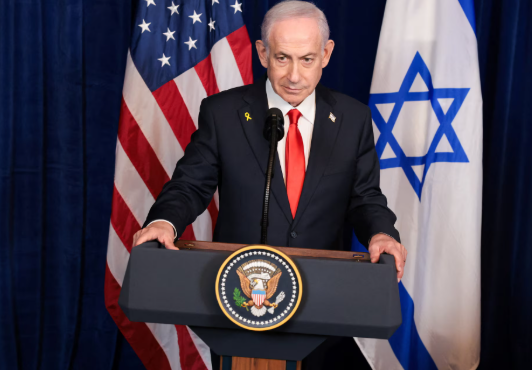
Image used from reuters
There are politicians who seem to have nine lives. Netanyahu has always been one of them. For decades, he’s survived wars, corruption trials, coalition collapses, international condemnation, and more political near-death experiences than most leaders face in a lifetime.
The Israeli press has been writing his political obituary on and off since the 1990s. And yet he keeps coming back.
But something feels different this week. And I want to walk you through why not because I enjoy piling on, but because what’s happening right now in Israeli politics actually tells you a lot about where the Middle East is heading, and how much influence any one leader can really hold when the ground is shifting this fast underneath him.
Israeli election timing
Sept / Oct
After Knesset dissolution vote
Coalition crisis
Ultra-Orthodox
Military draft exemption dispute
Key rival
Bennett + Lapid
New electoral alliance formed
Ceasefire pressure
Trump call
IDF ordered to pull back from Beirut
Is This the Beginning of the End for Netanyahu?
Let’s start with what actually happened this week, because the headline alone doesn’t capture how awkward this was. On Monday morning, Netanyahu announced that his government had ordered the Israeli military to strike targets in Beirut putting further strain on an already fragile ceasefire that Trump had apparently pushed Israel into back in April.
The announcement immediately rattled Iranian negotiators, who signalled they considered it an unacceptable breach of the ceasefire terms and threatened to walk away from ongoing talks with the US entirely.
Iran also raised the stakes sharply, with state media suggesting it could tighten control over the Strait of Hormuz where a small amount of shipping is still moving and if necessary, also block the Bab al-Mandab, the chokepoint between Yemen and the Horn of Africa that has become increasingly important to global oil markets as a backup export route for Arab producers cut off from Hormuz.
That threat, apparently, was enough to make Trump pick up the phone.
According to a report by Axios, Trump called Netanyahu on Monday evening and was furious allegedly asking at one point what on earth Israel thought it was doing. Now, I’d take that specific report with some caution. US presidents have a long track record of leaking exaggerated accounts of their disagreements with Israeli counterparts to look tough to their domestic audience.
And Israeli sources, including some well-connected Israeli journalists, pushed back on the characterisation, insisting the tone was professional if tense. Still, whatever was actually said, the outcome was clear: Netanyahu backed down.
By Monday evening, Trump had posted on Truth Social that Israel would not attack Hezbollah and Hezbollah would not attack Israel.
That is a significant climbdown. And it didn’t go unnoticed.
The Political Fallout at Home
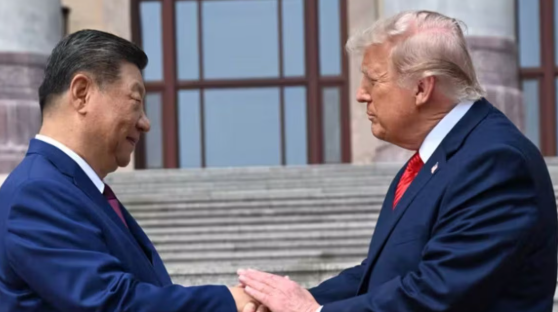
The Israeli political reaction was swift and came from every direction at once. Naftali Bennett the right-wing former prime minister widely seen as Netanyahu’s main rival heading into the next election accused him of failing to protect Israeli sovereignty in the north. Yair Lapid, another former PM who recently formed an electoral alliance with Bennett, went further and called it turning Israel into a protectorate state.
Gadi Eisenkot, head of the centrist Yesh Atid party that has been climbing in the polls since Bennett and Lapid announced their alliance, said there has never been an Israeli prime minister who accepted such a humiliating demand.
“You said a strong prime minister tells the president of the United States yes when possible and no when necessary. This is the time to say no.” Itamar Ben Gvir
But here’s the part that stings most for Netanyahu: the criticism didn’t stop at the opposition benches. His own far-right national security minister, Itamar Ben Gvir, publicly urged him to ignore Trump and escalate against Hezbollah which, it should be said, polls suggest is what most Israelis actually want.
Ben Gvir put it bluntly on social media, invoking Netanyahu’s own past rhetoric about strong leaders telling American presidents no when necessary. That kind of public rebuke from inside your own cabinet is not a minor event. It signals that even the people Netanyahu relies on most to hold his government together are starting to calculate whether loyalty is still worth anything.
My honest read? This is the kind of week that doesn’t just damage a leaderit changes how people think about them.
Netanyahu’s entire political identity is built on being the one person in Israeli politics who can project strength. When that image cracks publicly, it’s very hard to repair.
The Coalition That Has Already Functionally Fallen Apart
The Beirut episode didn’t create Netanyahu’s coalition problem. It landed on top of one that was already well underway. To understand it, you need to know about the ultra-Orthodox military draft exemption an issue that has been simmering in Israeli politics for decades and has now finally boiled over.
Since Israel was founded in 1948, ultra-Orthodox Jewish men have been exempt from the mandatory military service that applies to virtually everyone else. For a long time, this was tolerable the ultra-Orthodox community was relatively small. But their birth rates are extraordinarily high, and the community has grown enormously. At the same time, the demands on the Israeli Defence Forces have escalated sharply.
The combination has made the exemption increasingly hard to justify publicly, and in mid-2024, Israel’s Supreme Court ruled that the existing arrangement was essentially illegal.

Image used from reuters
Netanyahu tried to thread the needle, proposing a bill that nominally introduced conscription for ultra-Orthodox men but was so riddled with exceptions and opt-outs that roughly 90% would have been able to avoid service anyway. It satisfied nobody. The secular and centrist parties saw through it immediately.
And the ultra-Orthodox parties who prop up Netanyahu’s coalition weren’t happy either they wanted a full exemption, no ambiguity. Netanyahu managed to shelve the issue when the war with Iran broke out, but it came roaring back last month.
When it emerged that Netanyahu was considering deferring the bill past the next election entirely, the ultra-Orthodox parties lost patience and voted with the opposition to dissolve the Knesset early. Elections are now scheduled for September or early October.
That’s a remarkable turn. The very parties Netanyahu depended on for his parliamentary majority ended up being the ones who pulled the plug on his government.
Whatever his record as a political survivor, that kind of betrayal is not easily recovered from in the middle of a war.
The Threat to Netanyahu’s “Mr. Security” Image
This is the deepest wound of all and I think it’s the one that matters most for where Netanyahu ends up politically. His staying power in Israeli politics has never really been about ideology or policy detail. It’s been about one core message: that he is the only leader capable of genuinely guaranteeing Israel’s security. Willing to use force anywhere Gaza, Lebanon, Iran but also uniquely able to bring the United States along with him when it counts.
A year or so ago, that pitch looked solid. Hamas had been seriously degraded in Gaza. Hezbollah’s top leadership had been eliminated. Israel and the US had jointly struck Iran’s military and nuclear facilities in what became known as the 12-day war in June 2025, and the blowback was manageable. Netanyahu could credibly say: I told you this is what strong leadership looks like.
Today the picture looks very different. Hamas is still in control of Gaza whatever the military statistics say.
Hezbollah has turned out to be a far more capable adversary than the IDF anticipated when the conflict restarted a few months ago. And the US and Israel appear unlikely to achieve the strategic goals they set out for Iran.
Worse, this week’s events suggest Trump may be preparing to impose a deal on Israel that not only falls short on Iran but also limits what Israel can do in Lebanon and possibly Gaza going forward.
The damage here isn’t just political. It’s existential to Netanyahu’s brand. He built his career on an ever-expanding definition of what Israeli security requires and he’s now proving unable to deliver it.
That’s a trap of his own making, and he’s walked straight into it.
What Comes Next
A lot, of course, still depends on what the eventual US-Iran deal actually looks like. If it turns out to be something Netanyahu can sell domestically as a win or at least not a complete defeat he may find a way to muddle through to the election. He’s done it before in worse situations than this.
But the structural problems are real and stacking up. His coalition has collapsed. His main rivals have formed an alliance that is polling strongly. His security credentials the one thing that always brought voters back have taken a visible public hit.
And he’s heading into an election campaign while simultaneously managing a multi-front war, an ongoing corruption trial, and a fractured relationship with the American president he’s spent years cultivating.
I’m not ready to write the obituary yet. Netanyahu has embarrassed people who did that before. But I do think this week marks something a moment where the gap between the story he tells about himself and the reality on the ground became too wide to ignore. The “great survivor” label only holds as long as people believe you’re surviving toward something. Right now, a growing number of Israelis seem to be asking what exactly that is.
The story is moving fast. Whatever you think of Netanyahu personally, what happens to him matters well beyond Israeli borders for the Gaza ceasefire, for what happens in Lebanon, for the Iran nuclear question, and for the broader question of how much room any US ally actually has to act independently when Washington decides it wants a deal.
These are the questions that are going to define the next few months. And right now, they all run through one very pressured man in Jerusalem.
메타데이터
- post_id
- 0d00aa141c0e
- slug
- netanyahus-grip-on-power-is-slipping-but-is-this-really-the-end-0d00aa141c0e
- url
- https://medium.com/geopolitics-beyond/netanyahus-grip-on-power-is-slipping-but-is-this-really-the-end-0d00aa141c0e
- canonical_url
- https://medium.com/geopolitics-beyond/netanyahus-grip-on-power-is-slipping-but-is-this-really-the-end-0d00aa141c0e
- author_url
- https://medium.com/@quotesnjokes07
- status
- ok
- fetched_at
- 2026-06-14 11:28:49