Why 50% of CPAP Users Quit Within a Year — And What Actually Works Instead
Most people who start CPAP therapy do not stay with it. Research consistently shows that roughly half of all CPAP users stop using their…
Why 50% of CPAP Users Quit Within a Year — And What Actually Works Instead
Most people who start CPAP therapy do not stay with it. Research consistently shows that roughly half of all CPAP users stop using their device within the first year, and a significant number abandon it within the first few weeks. This is not a minor inconvenience. Untreated sleep apnea carries serious health risks, including cardiovascular disease, hypertension, and cognitive decline.
The question worth asking is not why CPAP works — the clinical evidence for that is strong — but why so many people cannot stick with it, and what can actually be done about it.
The Real Reasons People Quit
Sleep specialists often hear the same complaints. The mask leaks. The headgear leaves marks. Patients feel claustrophobic or wake up with the mask pushed off their face. The machine makes noise. They feel tethered.
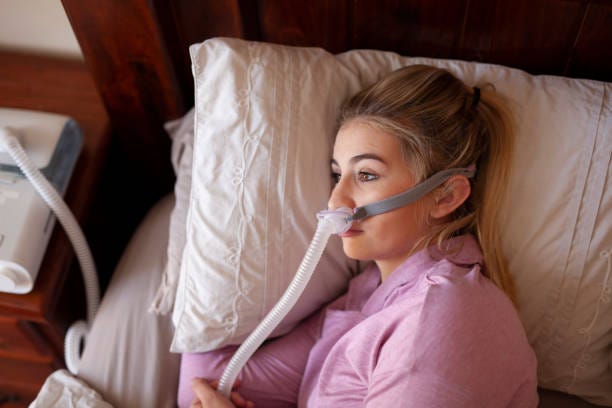
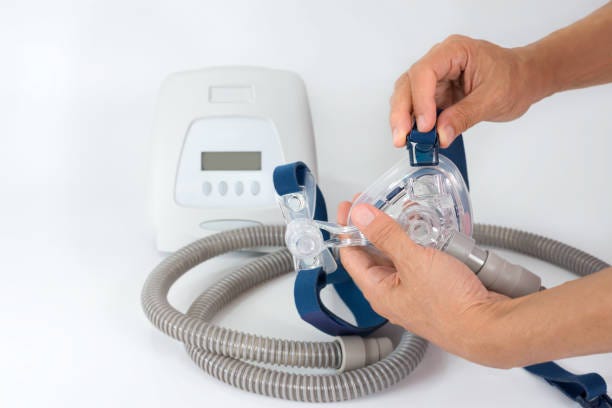
These are not exaggerations. Traditional CPAP masks require straps across the forehead, nose, and sometimes chin. The cushion must press against the face firmly enough to seal at pressure, which means any movement during sleep can break the seal and cause leaking, noise, or pressure loss. For side sleepers, the pressure against the mask when the face meets the pillow is a persistent problem that no amount of fitting can fully solve.
Other users quit because of aerophagia — swallowing pressurized air that leads to bloating and discomfort. Some develop pressure sores on the nose bridge. Others simply cannot fall asleep with something strapped to their face, no matter how long they try to adapt.
The result is that many patients use CPAP for a few weeks, struggle through the adaptation period, and eventually decide the disruption is not worth it. Their sleep apnea goes untreated, and their long-term health outcomes suffer.
Why Adherence Matters More Than Perfection
CPAP therapy is only effective when it is used. A technically perfect pressure setting does nothing for a patient who removes the mask at 2 AM and does not put it back on.
Medicare and most insurance providers require a minimum of four hours of use per night for compliance purposes. Studies suggest that the greatest health benefits — reduced cardiovascular risk, better daytime alertness, improved cognitive function — come with consistent nightly use throughout the full sleep period. Partial use produces partial results.
This means that comfort is not a secondary concern. It is the primary determinant of whether therapy is actually working.
What Research Says About Improving Adherence
Clinical studies on CPAP adherence point to several factors that reliably improve long-term use. Early follow-up support from a provider significantly increases the chances a patient stays on therapy. Education about the risks of untreated sleep apnea also plays a role. But equipment fit and comfort remain the most commonly cited reasons for discontinuation.
AutoPAP devices, which automatically adjust pressure based on real-time airway resistance, show better adherence rates than fixed-pressure machines for many patients. The reason is straightforward: pressure that adapts to your breathing is more comfortable than pressure calibrated to your worst-case apnea event, delivered at full force all night.
Expiratory pressure relief features — called EPR on ResMed machines and Flex on Philips Respironics — reduce pressure slightly during exhalation, making the breathing cycle feel more natural. These comfort features are available on most modern machines and are worth enabling for new users who find exhalation difficult.
Rethinking the Interface
One of the most significant developments in recent years is the recognition that traditional mask design itself is a major driver of abandonment. The straps, the cushions, the headgear, the facial pressure — all of these create discomfort that accumulates over nights and weeks until the patient simply gives up.
Newer minimal-contact interfaces address this directly. Rather than strapping a rigid frame around the face, these systems use smaller, lighter, adhesive-based or pillow-style designs that reduce or eliminate facial pressure and headgear entirely.
BleepSleep has developed two systems specifically targeting the comfort barriers that drive CPAP abandonment. The DreamPort Sleep Solution uses adhesive nasal ports that attach at the nostrils without straps, inserts, or traditional mask components. The Eclipse CPAP Solution uses a lightweight magnetic-seal design that eliminates the bulk and facial pressure of conventional headgear. Both are designed for patients who have struggled with traditional masks, particularly side sleepers and those with claustrophobia or skin sensitivity.
For patients who have quit CPAP in the past because of mask discomfort, these types of interfaces represent a meaningful reason to try again.
Behavioral Strategies That Actually Work
Beyond equipment changes, behavioral approaches have strong evidence behind them for improving CPAP adherence.
Using the device every night, even for short periods at first, produces better long-term outcomes than using it only when patients feel they can tolerate it. Consistent nightly exposure accelerates adaptation. Skipping nights resets the adaptation process.
The ramp feature, which starts at low pressure and gradually increases over 20 to 45 minutes, makes it easier to fall asleep before full therapeutic pressure is reached. This alone helps many patients who struggle with the immediate sensation of high-pressure airflow at bedtime.
Nasal congestion is a surprisingly common and overlooked reason for CPAP failure. A blocked nose turns any CPAP session into a struggle. Saline rinses, nasal decongestants used appropriately, and humidification settings can all help. Patients who mouth-breathe may need a chin strap or full-face mask rather than a nasal-only interface.
When to Go Back to Your Provider
The worst outcome is a patient who is silently struggling and eventually quits without telling anyone. Sleep medicine providers can adjust pressure settings, change interface types, add comfort features, and address specific complaints that seem minor but are driving non-compliance.
If CPAP feels uncomfortable, leaky, or difficult to use consistently, that is a clinical problem with clinical solutions — not a personal failure. The goal is finding a configuration that makes consistent use the path of least resistance, not a nightly act of willpower.
Half of CPAP users quit within a year. Most of them did not have to. For patients willing to revisit the equipment side of the equation, minimal-contact systems from BleepSleep offer a genuine alternative to the traditional mask designs that drive so many people away from therapy.
메타데이터
- post_id
- 0d059d41b990
- slug
- why-50-of-cpap-users-quit-within-a-year-and-what-actually-works-instead-0d059d41b990
- url
- https://medium.com/@bleepsleep/why-50-of-cpap-users-quit-within-a-year-and-what-actually-works-instead-0d059d41b990
- canonical_url
- https://medium.com/@bleepsleep/why-50-of-cpap-users-quit-within-a-year-and-what-actually-works-instead-0d059d41b990
- author_url
- https://medium.com/@bleepsleep
- status
- ok
- fetched_at
- 2026-06-15 20:49:13