The Feast of the Little Pigs
Our weekends were anchored by a holy taxonomy of snacks. On Friday nights, my sister and I stood in the fellowship hall of our synagogue…
The Feast of the Little Pigs
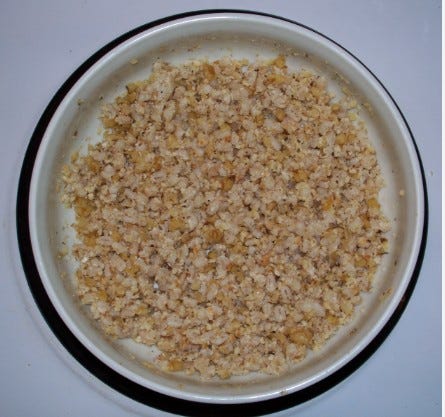
Koliva
Our weekends were anchored by a holy taxonomy of snacks. On Friday nights, my sister and I stood in the fellowship hall of our synagogue, eyes locked on the Oneg Shabbat table. We would stack our paper plates with cheddar cubes, Ritz crackers, and slices of braided challah, washing it down with red fruit punch that stained our tongues. On Sunday mornings, the scenery shifted to the fellowship hall at the Greek Orthodox cathedral. There, the spread featured chocolate chip cookies, leftover Andithero — the crusty, blessed bread from the liturgy — and more red fruit punch.
In both spaces, the adults congregated in loud clusters to talk. My sister and I had a different mission. We were Γουρουνάκια — little pigs. We hovered near the food lines, completely oblivious to the spiritual weight of the rooms we had just vacated.
Our dual existence felt entirely seamless. Our parents did an excellent job of immersing us in both religions. We saw no contradiction in the fact that we wore velvet yarmulkes at my Jewish father’s Passover Seder, only to crack dyed red eggs at my mother’s Orthodox Easter a few weeks later. To us, religion was a grand, sensory pageant, and we were its most enthusiastic culinary critics.
Every few years, the lunar calendars lined up perfectly, forcing Orthodox Holy Week and Jewish Passover to collide into one mega-week of spiritual observance that resulted in a hilarious, agonizing gastrointestinal crisis. For my sister and me, this meant navigating the strict dietary laws of two religions simultaneously. For Orthodox Holy Week, we had to fast from all meat. For Passover, we had to strictly avoid chametz, meaning no leavened bread of any kind.
The resulting daily menu was a dietary nightmare. We were trapped in a culinary purgatory of plain Passover matzo peanut butter and jelly sandwiches in our lunchboxes. Matzo is notoriously binding, and when combined with a complete lack of fat from the Orthodox fast, our digestive systems ground to a screeching, concrete halt. By Holy Saturday, my sister and I were bloated, miserable, and profoundly desperate to poop. We knew that if we could just survive until Easter Sunday, the culinary dam would break.
And of all the delicacies that rotated through our childhood weekends to break that fast, nothing matched the rare, mythical appearance of koliva.
To our young eyes, koliva was the height of dessert treats in the fellowship hall. It looked like a tiny, edible mountain landscape. Only now do I know what it was made of: a mound of boiled wheat berries laced with raisins, walnuts, and pomegranate seeds was completely buried under a pristine, sprinkling of powdered sugar. The top was sometimes decorated with crosses molded from raisins or Jordan almonds. Best of all, it was jeweled with dragees — tiny, metallic silver balls that looked like treasure.
“It’s so fancy,” my sister would whisper, her eyes wide.
Whenever a massive clear plastic bowl of koliva appeared on the fellowship table, our Γουρουνάκια instincts went into overdrive. We became aggressively helpful. We volunteered to hand out the tiny plastic spoons and styrofoam cups. We offered to spoon it out for elderly parishioners. We hovered like tiny, devout vultures, ensuring that every time a cup was filled., We ate cup after cup of it, the powdered sugar dusting our lips. We loved the gritty, nutty crunch of the wheat, the sudden burst of raisin sweetness, and the hard, metallic snap of the silver treasure between our teeth. It tasted like pure celebration.
We had no idea that we were feasting on a graveyard.
It was years before the linguistic and cultural dots finally connected, long after we had grown too old to huddle beneath the snack tables. The revelation didn’t come in a sudden, dramatic flash, but rather as a quiet, sobering dawn.
Koliva wasn’t a celebratory Sunday treat. It was a memorial food.
Every single ingredient in that plastic bowl was a heavy piece of theological architecture. The wheat berries were a physical manifestation of the Gospel of John: a grain of wheat must fall into the ground and die before it can bring forth life. The wheat symbolized the dead, buried in the earth, waiting for the resurrection. The raisins and pomegranate seeds represented the sweetness of heaven and the abundance of life everlasting. The herbs, parsley or mint represented the green pastures of heaven. Ground cinnamon and cloves remind us of spices used in preparing Christ’s body for burial. The powdered sugar was his white shroud.
And those beautiful, glittering silver balls we fought over? They represented the preciousness of the souls that had departed this earth.
The reality of our childhood joy finally hit me with a bitter, hollow thud: the only reason we ever got to eat our favorite, fancy dessert was because someone in our community was grieving. The rare appearance of the plastic bowl meant that a mother, a father, a child, or a spouse had died, and the family was marking the forty-day or one-year anniversary of their loss. Our Sunday morning sugar rushes were entirely funded by the tears of mourning families.
Looking back, the memory of those Sunday afternoons shifts under the light. I used to think of koliva as a symbol of our vibrant, chaotic, inter-faith childhood — just another delicious stop on our weekend tour of traditions and snacks. Now, I see it as something much deeper.
There is a profound, messy beauty in the way children interact with the sacred. While the adults stood in the fellowship hall carrying the crushing, silent weight of mortality and remembrance, my sister and I were there to remind the room of life. We were sticky-fingered, loud, and blissfully ignorant, crunching on silver souls and chasing each other through the hall.
We didn’t know the meaning of the food, but in a strange way, our childish greed honored the tradition better than we knew. We took a dish meant to conquer the bitterness of death, and we made it sweet.
메타데이터
- post_id
- 0d073e6db5ce
- slug
- the-feast-of-the-little-pigs-0d073e6db5ce
- url
- https://medium.com/@nicolekesslersnook/the-feast-of-the-little-pigs-0d073e6db5ce
- canonical_url
- https://medium.com/@nicolekesslersnook/the-feast-of-the-little-pigs-0d073e6db5ce
- author_url
- https://medium.com/@nicolekesslersnook
- status
- ok
- fetched_at
- 2026-07-31 01:59:15

