How Parents Can Help Kids Build Strong Vocabulary at Home (Without Stress)
Simple, science-backed strategies that make word learning natural, playful, and effective.
How Parents Can Help Kids Build Strong Vocabulary at Home (Without Stress)
Simple, science-backed strategies that make word learning natural, playful, and effective.

Introduction
A rich vocabulary is one of the strongest predictors of reading success and academic achievement. Children who know more words understand texts better, express themselves more clearly, and learn new concepts faster.
Yet many parents worry about how to help their children build vocabulary at home — especially without turning learning into pressure or memorization drills.
The good news: vocabulary grows best through everyday interaction, play, and meaningful exposure. With the right activities and tools, parents can support word learning naturally and enjoyably.
In this article, we explore practical, research-supported ways to strengthen children’s vocabulary at home.
Talk More — and Talk Richly
Children learn words primarily through conversation. The number and variety of words they hear directly influence vocabulary growth.
Effective strategies:
- Describe what you’re doing
- Name objects and actions
- Expand on child speech
- Use varied descriptive words
Example: Child: “Big dog.” Parent: “Yes, that’s a huge, fluffy brown dog.”
This expansion introduces new vocabulary in context.

Read Together Every Day
Shared reading exposes children to words rarely used in daily speech. Storybooks introduce:
- Descriptive language
- Emotions
- Actions
- New concepts
Interactive reading improves retention. Ask:
- “What is happening here?”
- “Why is the character sad?”
- “What do you think this word means?”
This encourages active processing.
Make Words Playful
Vocabulary grows faster when children manipulate and explore words rather than just hearing them.
Playful word activities include:
- Rhyming games
- Silly word creation
- Word families (cat, hat, bat)
- Letter rearranging
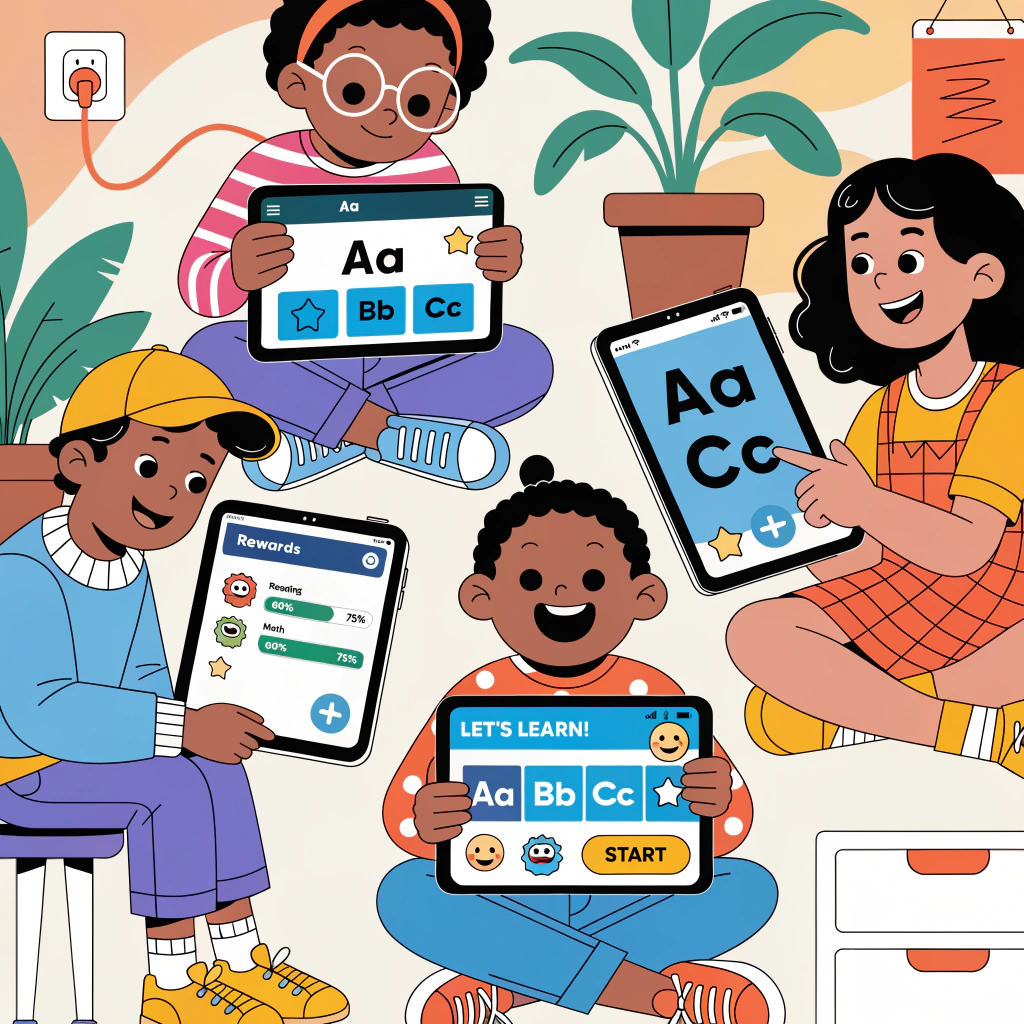
👉 Tools like Word Crafter extend this play digitally by letting children experiment with letters and build new words in a creative, interactive environment.
Explore Word Crafter here:
https://freedesigner.gumroad.com/l/WordCrafter

Connect Words to Real Life
Words stick when linked to experiences.
Examples:
- Cooking → ingredients vocabulary
- Shopping → food categories
- Nature walk → plants and animals
- Home tasks → action verbs
Real-world context strengthens meaning and recall.
Use Visual and Color Cues
Younger children remember words better when paired with visual anchors such as color and imagery.
Color-coded letters and symbols help:
- Recognize word patterns
- Distinguish letters
- Build associations
👉 Early literacy tools like ABC ColorPlay support vocabulary foundations by strengthening letter recognition through consistent color cues.
Explore ABC ColorPlay:
https://freedesigner.gumroad.com/l/ABC-ColorPlay

Encourage Curiosity About Words
Children expand vocabulary when they feel free to ask and explore.
Support curiosity by:
- Explaining unfamiliar words
- Encouraging questions
- Modeling interest in language
- Celebrating new words learned
Make word discovery feel exciting.

Create a Low-Stress Word Environment
Vocabulary learning thrives in relaxed, positive settings. Avoid:
- Forcing memorization
- Correcting excessively
- Testing constantly
Instead:
- Model language naturally
- Repeat words in context
- Praise attempts
- Keep activities playful
Confidence supports language growth.
Conclusion
Children build strong vocabulary through conversation, reading, play, and meaningful interaction — not memorization pressure. When parents integrate word exploration into daily life, vocabulary expands naturally and joyfully.
Interactive tools can further support this process by making word building and letter recognition engaging and exploratory. Creative literacy activities such as Word Crafter and color-based learning tools like ABC ColorPlay align with how children naturally acquire language.
Explore them here:
👉 Word Crafter
https://freedesigner.gumroad.com/l/WordCrafter
👉 ABC ColorPlay
메타데이터
- post_id
- 0d41b77a070a
- slug
- how-parents-can-help-kids-build-strong-vocabulary-at-home-without-stress-0d41b77a070a
- url
- https://medium.com/@magdi.talaat/how-parents-can-help-kids-build-strong-vocabulary-at-home-without-stress-0d41b77a070a
- canonical_url
- https://medium.com/@magdi.talaat/how-parents-can-help-kids-build-strong-vocabulary-at-home-without-stress-0d41b77a070a
- author_url
- https://medium.com/@magdi.talaat
- status
- ok
- fetched_at
- 2026-09-03 07:15:57