The Girl Who Cried a River (And Why That Was Never the Problem)
There is a Nine Days song from the late nineties that has been stuck in my head this week. This is the story of a girl, who cried a river…
The Girl Who Cried a River (And Why That Was Never the Problem)
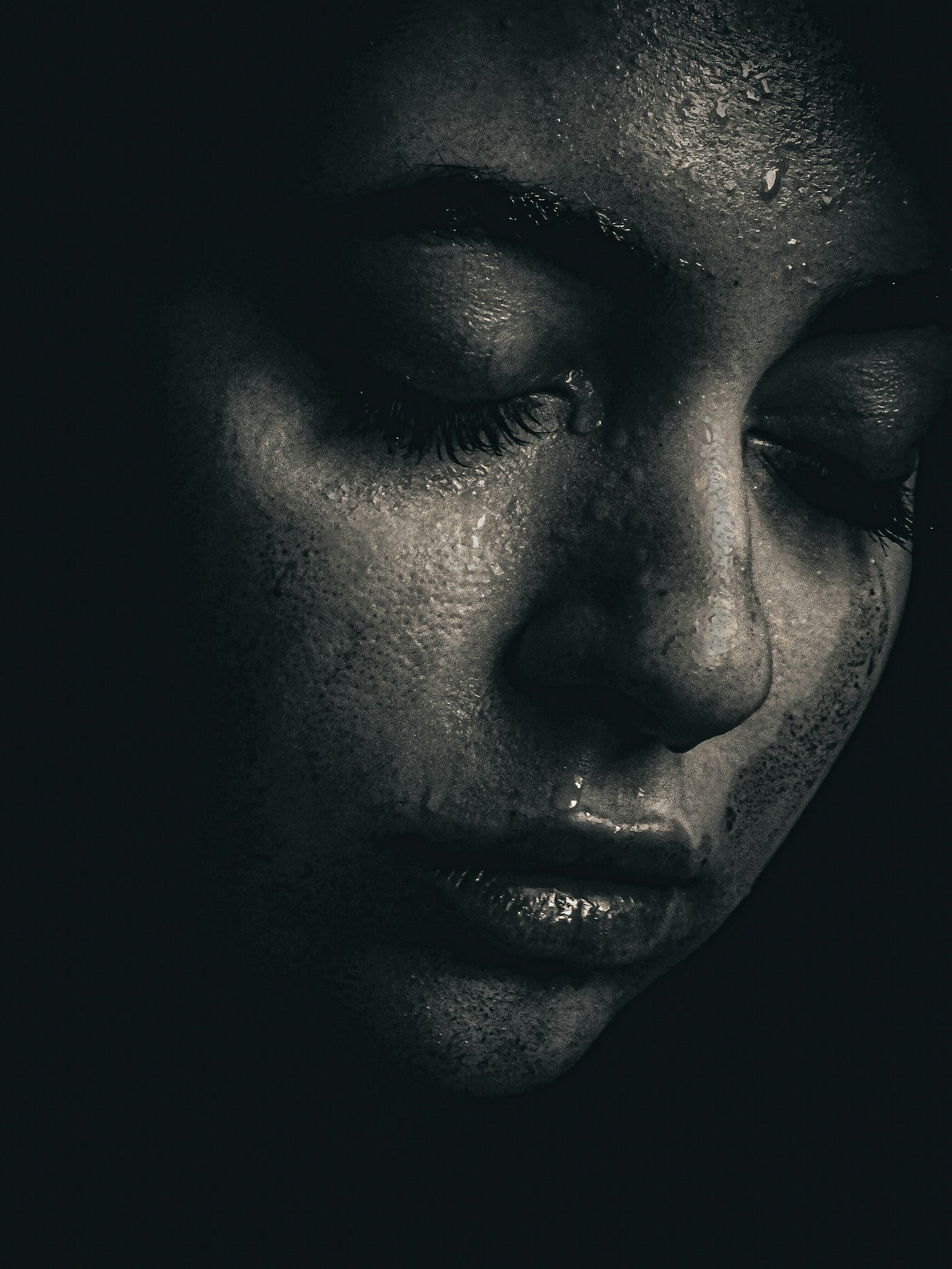
Source: https://unsplash.com/photos/a-black-and-white-photo-of-a-womans-face-KTxKgXDVoCU — Photographer: Reza Shahriari
There is a Nine Days song from the late nineties that has been stuck in my head this week. This is the story of a girl, who cried a river and drowned the whole world. I have not thought about that song in years, but the line landed differently when it came back to me. Because I have been that girl. More times than I can count.
And I think a lot of us have been — regardless of gender, regardless of what our lives look like from the outside.
Here is something I feel strongly about: the stigma around crying, around admitting that you are not okay, around saying I am struggling out loud, is doing real damage. Not in a vague, collective sense. In specific, measurable, human lives. We have started talking more openly about men’s mental health in recent years, and that conversation is overdue. Too many people — men in particular — have been taught that sitting with pain quietly is strength. It is not. It is just pain, made heavier by silence.
I am not a man, but I have watched the cost of that silence in the people I love. And I have paid the cost of a different kind of silence in my own life.
The Seasons and What They Do to Me
For me, the end of summer is not just a change in weather. It is a neurological event.
I live with Seasonal Affective Disorder, and I say that plainly because I spent too long calling it something smaller — the winter blues, a bit of low mood, just needing more sleep. It is none of those things. It is a significant, predictable shift in brain chemistry that arrives every year when the light changes and the days shorten, and it affects everything: my energy, my motivation, my ability to feel any kind of forward momentum, my relationship with my own thoughts.
The fatigue that comes with it is not ordinary tiredness. It does not go away with an early night. It sits in your bones and makes the simplest things feel like they require planning and courage you do not currently have. The isolation that follows is not chosen — it is the path of least resistance when everything else costs too much.
I know when it is coming. And it still arrives like a surprise every single time.
When the Body Joins the Fight
SAD does not arrive into a neutral life for me. It arrives into a life that already includes chronic illness and the particular kind of fatigue that comes with managing a body that requires constant negotiation.
If you have a chronic illness, you already know the maths of it. Every day involves a calculation. What can I spend today and still have something left for tomorrow? You get very good at this calculation. You get very bad at explaining it to people who have never had to make it.
When SAD hits on top of that, the maths stops adding up. The drop in temperature often worsens my physical symptoms. The physical flare-ups destroy whatever mental resilience the SAD has left intact. They feed each other, these two things, in a loop that is genuinely exhausting to describe and more exhausting to live.
There are mornings in winter when I wake up, register the grey sky outside the window, feel the familiar ache in my body and the familiar heaviness in my chest, and cry before I have even gotten out of bed. Not from self-pity. Not from despair. Just from the sheer accumulated weight of it.
And I have learned, slowly and imperfectly, to let that happen.
On Crying and What It Is Actually For
We have been taught to apologize for tears. To hold them back in public, to manage them in private, to treat them as a sign that something has gone wrong with us. Men get this message louder than anyone — that visible emotion is weakness, that needing help is failure, that the appropriate response to drowning is to swim harder and say nothing.
That narrative is not just unkind. It is physiologically incorrect.
Emotional tears are chemically different from the tears your eyes produce when you chop an onion. They contain stress hormones. When you cry, you are not losing control — you are physically releasing stress from your body. It is a pressure valve. It is your nervous system doing something intelligent with something that would otherwise stay inside you, compounding.
I am not saying crying fixes everything. It does not. But I am saying it is not the problem. It is the evidence of a system that is trying to manage something genuinely difficult, and sometimes the most useful thing you can do is get out of its way.
For the Heavy Days
If any of this is familiar — if you are living with SAD, or a chronic illness, or both, or something else entirely that makes ordinary days expensive and winter days almost impossible — I am not going to tell you it gets easier in a way that feels like a promise I cannot keep.
What I will say is this.
You are not broken for struggling. You are not weak for crying. You are not behind because some days the most you could manage was getting through them. And you do not have to perform being okay for the comfort of people who have never had to fight on as many fronts as you do.
Feel what you feel. Say it to someone if you can. Rest when your body tells you it is not optional. And on the days when the river runs — let it run.
The other side of it is still there. It always has been.

Follow The Orange Journal so you don’t miss a post. Do you love to write about self-improvement and personal development? Learn how to be added as a writer here. 🍊
메타데이터
- post_id
- 0d42e14f1e49
- slug
- the-girl-who-cried-a-river-and-why-that-was-never-the-problem-0d42e14f1e49
- url
- https://medium.com/the-orange-journal/the-girl-who-cried-a-river-and-why-that-was-never-the-problem-0d42e14f1e49
- canonical_url
- https://medium.com/the-orange-journal/the-girl-who-cried-a-river-and-why-that-was-never-the-problem-0d42e14f1e49
- author_url
- https://medium.com/@ejzeelie
- status
- ok
- fetched_at
- 2026-06-09 15:37:30