Finding Kurukshetra
An archaeology researcher and his professor debate on epics and history.
Sacred History
Finding Kurukshetra
An archaeology researcher and his professor debate on epics and history.
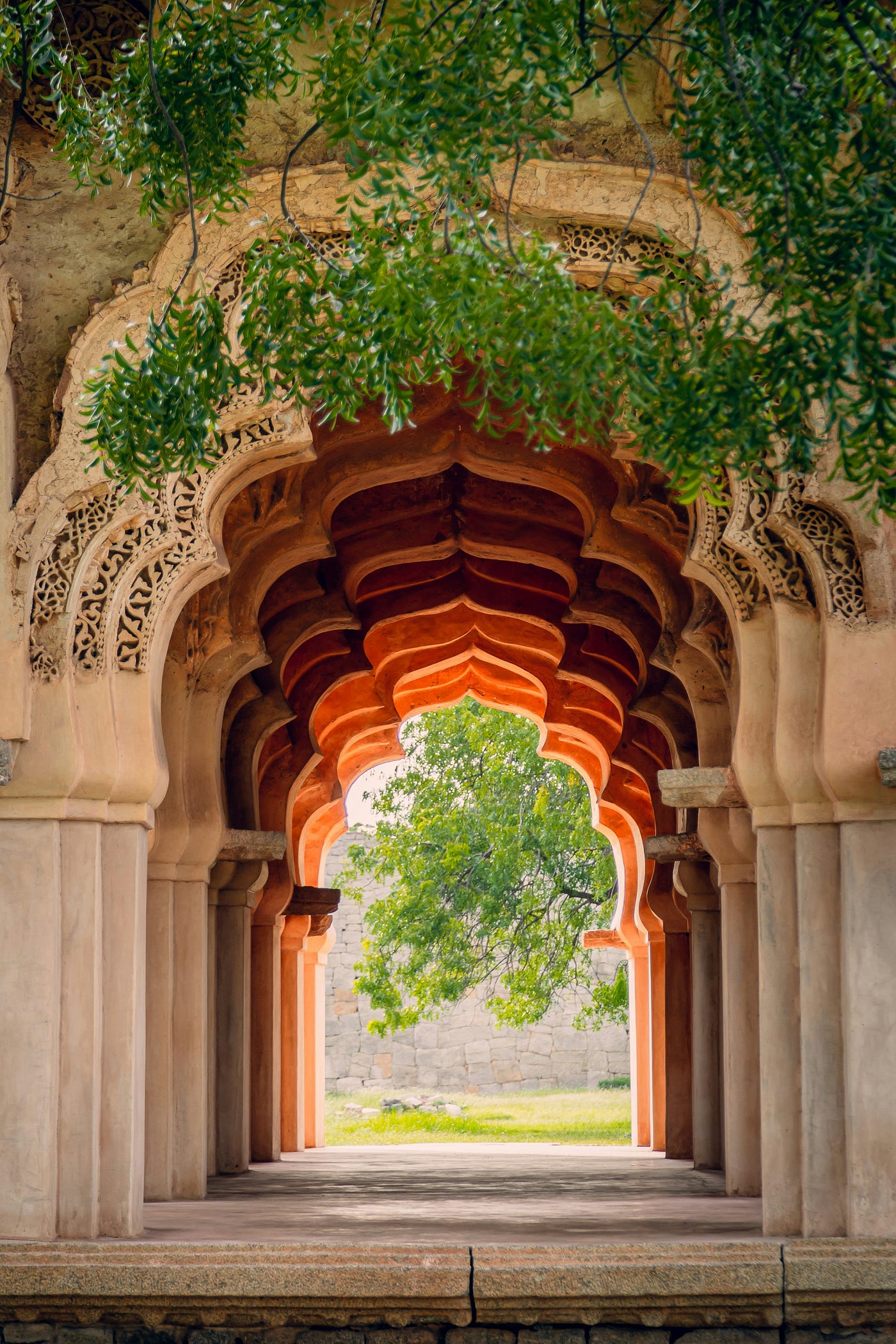
Photo by Arun Prakash on Unsplash
Afternoon sunlight entered in narrow strips and rested upon the old scholar’s blanket. Surrounding his bed stood humming machines softly. The oxygen tube beneath his nose seemed too odd an accessory for a man who had spent most of his adult life among ancient manuscripts.
On the bedside table lay a worn copy of the Mahabharat, its pages yellowed with age. The corners were dog-eared from decades of reading and re-reading.
The scholar’s former student entered carrying a laptop bag and a stack of printed papers. He looked excited, catching which the old man smiled.
“Come,” he said. “You look like the talented Arjun just before entering the battle.”
The student laughed.
“Perhaps a better comparison would be a researcher just a few steps away from the greatest discovery of all time.”
“Even more dangerous,” the teacher replied, balancing his laughter with his breath.
The student pulled a chair close to his teacher's bed. For years, he had worked with historians, archaeologists, linguists, and satellite-imaging specialists.
Having travelled across the country and also to the other side of the border, deep into present-day Pakistan, studying ancient settlements, river systems, inscriptions, and genetic records, his work had earned him wide recognition. He was invited to conferences and quoted by journalists. His theories had become part of a larger conversation within the Indian sub-continent.
Today, he had come to share his greatest triumph,
“Guruji,” he said, unable to conceal his excitement, “the evidence keeps growing. I am so close to the truth!”
The teacher listened. The student placed a tray table across his teacher’s waist, then spread photographs over it. There were ancient riverbeds, excavation sites, carbon-dating reports, and maps overlaid with satellite imagery.
“Ancient river patterns align with descriptions in the texts. Settlements are being dated more accurately. It gives me such pleasure when I find a trade route that matches one described in the Mahabharat. We are discovering correlations nobody imagined possible twenty years ago.”
The old man examined the photographs carefully,
“And?”
The student’s eyes brightened,
“I believe we are getting closer to proving that many events described in the epics were historical.”
The scholar nodded without any expression in his eyes. The student leaned forward,
“For generations, people dismissed these works as mythology, but what if they were recording actual events? What if we can finally demonstrate that these stories really happened?”
The old man remained silent, as his nods grew slower, as if he was thinking deeply. The student mistook the silence for skepticism.
“You see, this changes everything,” he said.
“Ok, tell me, how does it change anything?”
“Now people will have to take the epics seriously.”
A faint smile appeared on the teacher’s face,
“My dear boy, do you really think people have not taken these epics seriously throughout all these centuries?”
“But not in the same way.”
The teacher raised an eyebrow,
“Ok, beta. Please explain to this old man. In which way?”
The student welcomed the challenge,
“If the epics are historical, they become more than literature. They become evidence of an ancient civilization’s memory. We restore continuity between the present and the past. We challenge the assumption that our ancestors merely imagined these worlds.”
The teacher nodded approvingly,
“A fair argument.”
Encouraged, the student continued,
“For centuries, the British historians wrote our history for us. Many traditions were dismissed before they were studied. If evidence exists, should we not pursue it?”
“Certainly, we should.”
The answer surprised him.
“Certainly!”
“Of course. After all, history matters, Indian perspective matters, evidence matters, and above all, the truth matters.”
The student smiled,
“Then we agree.”
The old man looked toward the window.
“I agree in parts, but with the rest, I am trying my best to agree. So, I am not sure we do. The first thing is that neither is history superior as compared to literature nor is literature superior when compared to history. Both serve different purposes.”
After a long silence, the teacher asked,
“Tell me something, beta. Once your theories are proven, will good people stop remaining silent when fellow citizens get killed?”
The student blinked.
“What?”
“In every generation,” the teacher said, “decent people watch injustice unfold and convince themselves that staying silent is the wise thing to do. Have you found a cure for that?”
The student frowned.
“No.”
“Do you think that proving these epics to be historical events will help people walk the path of Dharma, and fight against the targeted oppression cast upon the common people of present-day India?
The student shook his head,
“I think you are misunderstanding the purpose of my theories.”
“Maybe, I am, or maybe I am not. Let’s see, but do tell me, if you prove those epics to be historical events, would it prevent love from turning into an urge to possess?”
“No.”
“Will it stop men from disrobing and raping women?”
The student slowly shook his head while the teacher continued,
“Will it stop brothers from becoming enemies? Will it prevent us from feeling pride, and then disguising it as virtue, or worse, as patriotism?”
“No. No. Nothing like that.”
“Then maybe it will surely stop our personal ambitions from convincing us that we are doing it for the higher good?”
The student again shook his head negatively while staring at the photographs spread in front of his teacher. Silence grew in the room, only to be periodically interrupted by the monitor beside the bed.
The teacher smiled,
“Then the way I see it, those epics remain far ahead of us. Instead of understanding the lessons those epics conveyed, and following them in our own personal lives, why have we jumped into this race of proving them as history? What exactly do we want to achieve? Whose examples are we following and trying to replicate?”
The student shook his head.
“That is not fair.”
The old man looked amused.
“Oh! Isn’t it fair?”
“No. You are comparing different things. Archaeology and historical research cannot solve moral problems.”
“Exactly my point, beta.”
The student paused, then he smiled,
“And neither can literature.”
The old man’s eyes brightened because now he knew that the debate had finally begun.
“Go on.”
The student leaned back.
“You taught me that every person reads the epics differently. Some see politics, some see spirituality, some see ethics, but if we discover they are rooted in actual events, does that diminish them? Why should truth threaten meaning?”
The teacher nodded,
“A very good question.”
The student continued,
“I think history and wisdom can coexist. If Kurukshetra actually existed, its lessons remain, and if Ram was a historical king, the idea of an ideal man remains. Why must it change if an epic turns into history?”
The teacher closed his eyes,
“Now think about this. Platform 9¾ does exist in London. Akasaka Station in Tokyo is designed to pay homage to the literary achievement of J K Rowling. Centuries from now, if a brilliant researcher finds those stations in ruins, and is passionately driven to prove the events in Harry Potter as historical events, what would you think?”
The student looked surprised. The old man opened his eyes again,
“Are you comparing The Mahabharat and The Ramayan to Harry Potter!”
“I am not comparing the literary works. I am comparing the present misguided passion with the ones possible in the future. You have to understand that those epics turning into history is not the actual danger.”
The student waited,
“Once we prove they happened, we will treat them in the same way as we treat our history, as something to be remembered as factual events written in stone. What happens to the regional variations of our epics? Aren’t those important? And, once we begin to see them as events that happened, what happens to the metaphorical value of these epics? Without its poetry, the metaphors will be lost, and without metaphors, the multi-dimensional meaning will be lost.”
The student looked at his teacher, trying to form an answer, while the teacher continued softly,
“History tells us what happened, on which date, in what context, and then we derive from those events whatever is possible to derive.”
He touched the cover of the Mahabharat and continued,
“Epics urge us to think about what human vices led to the occurrence of those tragedies? And why do they still keep recurring? And what stops us from changing our ways? You must understand that the context is malleable in epics, and so the values are universal. Historical events occur in the rigid frame of geo-politics of that time, so they do not have that kind of liberty.”
The student fell silent as the teacher closed his eyes,
“Do you remember the first class you attended?”
The student smiled.
“How can I not? That was exactly thirty-four years ago.”
“You sat in the last row.”
“Oh! You remember that?”
The teacher smiled,
“I remember very well, because even back then, you argued with me.”
The student laughed,
“You said the Mahabharat was not just a story.”
“And I remember, you disagreed.”
“I said stories were fiction, so why even use the terms Mahabharat and story in the same sentence?”
“And do you remember what I had said?”
The student answered immediately,
“You said that was the least interesting question you had ever heard.”
The teacher winked as he smiled,
“Good. Now I know, at least one of us was listening.”
The student let laughter escape in the waves of ideas being exchanged between them,
“You know, Guruji, the memory of your answer irritated me for years.”
“Maybe because I, too, was irritated by your question, and you took it as complete disagreement.”
The old man studied him carefully.
“Tell me. Why did you become a researcher?”
“Because I wanted to know what was true.”
“No. No.. No… I hope you are not telling yourself that lie.”
The answer came quickly. The student stared as the teacher shook his head.
“You became a researcher because you had already decided what the truth was. You wanted to take the path of research, just to reach that pre-conceived conclusion. If any other path shows up that leads to a truth that doesn’t look like your version of truth, doesn’t it offend you?”
The teacher’s words were spoken calmly, but the student felt a sharp edge run through him. Memories came flooding back to him, of all the years he had spent measuring historical sites, all those years spent in cataloguing artefacts, all those nights spent transforming possibilities into conclusions.
The teacher continued gently,
“Don’t get me wrong, beta. There is nothing wrong with looking for evidence. Evidence is one of humanity’s noblest pursuits.”
With his fingers resting on the old book, he continued,
“But some truths become smaller when we approach them without the curiosity for getting to know them, and equipped with our own version of the truth that we want to impose upon the world as the final truth. In your pursuit of turning epics into history, did you ever doubt that the truth could be something far bigger, far richer than your pre-conceived version of the truth?”
The student looked away, then he countered,
“Or maybe it’s just that the truth becomes stronger when a version of it merges with it.”
The teacher smiled,
“Another good argument. That’s why I am fond of you. You are an intelligent boy.”
The student smiled and continued,
“People dismiss ancient wisdom because they assume it belongs entirely to imagination. Proving that the epics are actual historical events may compel them to look again at that wisdom, as something real.”
The teacher nodded,
“That’s possible.”
“Then why do you resist it?”
The old man laughed softly.
“My dear boy, I do not resist it.”
The student looked confused,
“You don’t? But haven’t you been disagreeing with me on this topic?”
“No, I am too small to disagree and impose my version as the only truth.”
The teacher pointed toward the photographs.
“Search, dig, discover, publish, but please stay open for your beliefs to be proven wrong. That would be a truly curious mind seeking the truth.”
The student stared,
“I do not understand. You say you are fond of me, but then you hurl words that pierce through me like spears. Why?”
The teacher was silent for a long moment, then finally he asked,
“Do you really think I intend to hurt your feelings?”
After taking a deep breath, the teacher continued,
“Suppose tomorrow every question is answered, every site is confirmed, every date gets verified, and all intellectual disputes are settled, what do you think humanity will do the following morning?”
The student smiled,
“We will know more about ourselves.”
“Really? Will we?”
The teacher’s eyes narrowed playfully.
“Are you telling me that the epics in their mythological form are not telling us everything about ourselves already?”
The student squeezed his eyes,
“Ok, they are, but I still don’t understand, what’s the harm if they get proven as history?”
The teacher nodded.
“Seems, I have miserably failed to convey my concern on this topic until now.”
The student looked thoughtful. The old man pointed toward the photographs,
“You search for the ruins of Kurukshetra.”
As he said this, the teacher’s hand trembled as he placed it on his student’s hand, and continued,
“But I see Kurukshetra every time two brothers fight over the inheritance of the same house. So, is Kurukshetra in the ruins, or is it in the disputed houses and lands around us?”
The student felt something move in his chest, as the teacher continued in his coarse voice,
“You search for evidence of Ravan, but I see Ravan every time intelligent people display arrogance by convincing themselves that they deserve to own everything they desire.”
The teacher continued, as the machines continued to beep,
“In our world, we have brilliant people like you, who go searching for ancient cities, but is anyone searching for the ancient vices that still govern the inner cities of our conscience?”
A memory surfaced unexpectedly. Years earlier, while walking across the university campus, he had asked his teacher who his favourite character in the Mahabharat was.
He had expected the answer to be Krishna or Arjun or Bhishma, or, knowing his teacher’s love for seeing things from all sides, he thought the answer could be Barbarik. Instead, the teacher had said instantly,
“Dhritarashtra.”
The answer had shocked him.
“That blind king?”
“Yes, yes, that blind king.”
“But why??? What’s so special about him?”
The teacher had laughed at his student’s surprise,
“Because in the present day, he is everywhere.”
“What do you mean?”
“See, I have never met someone like a Krishna or a Bhishma or a Yudhistir or a Karna. Very rarely, I have met people who display some characteristics of Duryodhan or Dushasan or Arjun or Bheem or Sahadev or Nakul or Draupadi”
The teacher had pointed toward people passing by.
“But I meet Dhritarashtras every day, blindly in love with their little pursuits, blindly in love with their children, blindly in love with their political leaders, blindly in love with their racial supremacism, just blind. You see, how common that blind king is in our present day? And since I love people with all their flaws, how can I not love Dhritarashtra?”
As he reclaimed himself from that memory, the student looked at the hospital bed. The same lesson was being repeated today. Now he understood it a little more.
The teacher was not interested in proving that the epics happened or did not happen. He was interested in proving that they never stopped happening,
“Do you know why these stories survived?” the old teacher asked.
The student did not answer, as he lowered his gaze. The teacher opened the volume of the Mahabharat,
“They survived because every generation found itself inside these pages.”
A long silence followed. Then the teacher laughed softly,
“Imagine discovering tomorrow that every event occurred exactly as described.”
The student smiled,
“Wouldn’t that be remarkable?”
The old man nodded.
“Maybe just as an achievement for you, but I do not see how it will be remarkable, if that discovery doesn’t help us become less jealous of each other, or less proud of ourselves, or less cruel, or less greedy, or less cunning, or less blind.”
The teacher’s smile deepened,
“Then wouldn’t proving that those stories happened once be less important than understanding why they keep happening over and over again?”
In the fading light of the afternoon, the student reached for the old man’s hand. In the silence between them, the teacher whispered,
“Our ancestors may or may not have recorded history in the form of these epics, but in each of these epics, they definitely left mirrors for us. Do you want to break those mirrors?”
Surrounded by evidence of the past, the student sat beside the dying man and stared at the photographs that had once seemed so important.
Now he saw how the greatest mystery was how Kurukshetra kept rebuilding itself all around us, and without our realising, Ravan kept rearing his head within each of us again and again and again.
© 2026 Samir Satam. All rights reserved.


New Literary Society
메타데이터
- post_id
- 0d4a3bb53346
- slug
- finding-kurukshetra-0d4a3bb53346
- url
- https://medium.com/new-literary-society/finding-kurukshetra-0d4a3bb53346
- canonical_url
- https://medium.com/new-literary-society/finding-kurukshetra-0d4a3bb53346
- author_url
- https://medium.com/@samir.satam
- status
- ok
- fetched_at
- 2026-06-24 11:06:28