PCBA Supplier Checklist: 4 Essential Checks Before You Place an Order
Choosing the right PCBA supplier can directly impact product quality, production timelines, and overall business success. Whether you’re…
PCBA Supplier Checklist: 4 Essential Checks Before You Place an Order
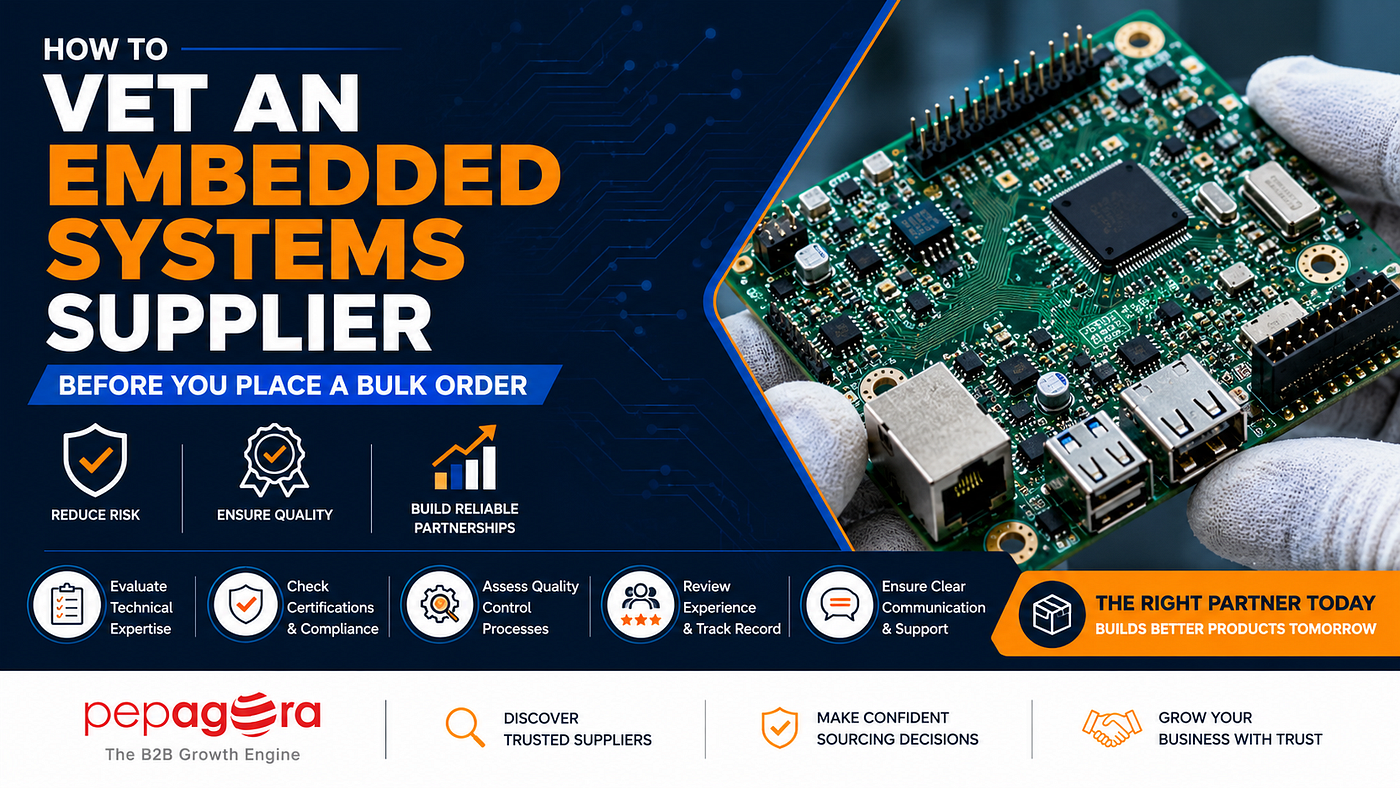
Choosing the right **PCBA supplier **can directly impact product quality, production timelines, and overall business success. Whether you’re developing industrial automation systems, consumer electronics, medical devices, or IoT products, your PCB assembly partner plays a critical role in bringing your design to life.
Many buyers focus primarily on price when comparing suppliers. While cost matters, it should never be the only factor. A low-cost supplier that delivers poor-quality assemblies, misses deadlines, or lacks testing capabilities can create far greater expenses in the long run.
That’s why having a clear PCBA Supplier Checklist is essential before placing an order.
In this guide, we’ll walk through four important checks every buyer should make before selecting a PCB assembly supplier. These checks can help reduce risks, improve product reliability, and ensure a smoother manufacturing experience.
Why Choosing the Right PCBA Supplier Matters
Printed Circuit Board Assembly (PCBA) is more than simply placing components onto a board. It involves precision manufacturing, quality control, testing, sourcing components, and maintaining consistency across production runs.
A reliable **PCB Assembly Supplier** can help you:
- Improve product quality
- Reduce manufacturing defects
- Ensure on-time delivery
- Minimize rework costs
- Scale production efficiently
- Maintain regulatory compliance
On the other hand, choosing the wrong supplier may result in production delays, field failures, customer complaints, and unexpected costs.
If you’re wondering how to choose a PCBA supplier, the following checklist will help you evaluate potential partners more effectively.
1. Verify Manufacturing Capabilities and Technical Expertise
The first item on any PCBA Supplier Checklist should be assessing manufacturing capabilities.
Not all suppliers are equipped to handle every type of project. Some specialize in prototypes, while others focus on high-volume production. Some excel in industrial electronics, while others primarily serve consumer products.
Before placing an order, ask the supplier:
What assembly services do they offer?
Look for capabilities such as:
- Surface Mount Technology (SMT)
- Through-Hole Assembly
- Mixed Technology Assembly
- Box Build Assembly
- Prototype Assembly
- High-Volume Production
Can they handle your board complexity?
Evaluate whether they can support:
- Fine-pitch components
- BGA packages
- Multi-layer PCBs
- High-density interconnect (HDI) boards
- Flexible and rigid-flex PCBs
What industries do they serve?
Experience in your industry often means better understanding of quality requirements and compliance standards.
For example:
- Industrial Automation
- Automotive Electronics
- Medical Devices
- Telecommunications
- Consumer Electronics
- Aerospace
A supplier with relevant experience is more likely to anticipate challenges and recommend improvements during production.
Questions to Ask
- How many years have you been manufacturing PCB assemblies?
- What is your production capacity?
- Can you share case studies or project examples?
- Do you provide Design for Manufacturing (DFM) support?
Technical expertise should always be one of the first factors considered when deciding how to choose a PCBA supplier.
2. Evaluate PCB Testing and Inspection Processes
One of the most overlooked aspects of supplier selection is quality assurance.
Even the best manufacturing equipment cannot eliminate defects entirely. That’s why robust PCB Testing and Inspection procedures are essential.
Quality testing helps identify issues before products reach customers, reducing costly failures in the field.
Common PCB Testing and Inspection Methods
A reliable supplier should offer several testing options, including:
Automated Optical Inspection (AOI)
AOI systems use cameras to inspect solder joints, component placement, and assembly quality.
Benefits include:
- Fast defect detection
- Consistent inspection standards
- Reduced human error
X-Ray Inspection
X-ray inspection is especially useful for:
- BGA components
- Hidden solder joints
- Internal PCB defects
In-Circuit Testing (ICT)
ICT verifies electrical performance by testing individual components and circuit connections.
Functional Testing
Functional testing evaluates whether the assembled board performs according to design specifications.
This is often the final quality checkpoint before shipment.
Ask Suppliers About Their Quality Process
Questions to consider include:
- What inspection methods do you use?
- Is AOI performed on every assembly?
- Do you provide test reports?
- What is your defect rate?
- How do you handle non-conforming products?
Strong PCB Testing and Inspection procedures are often what separate professional suppliers from average ones.
3. Review Component Sourcing and Supply Chain Reliability
A PCB assembly project is only as strong as the components used in production.
Component shortages, counterfeit parts, and unreliable sourcing can lead to serious manufacturing problems.
That’s why supply chain evaluation should be a key part of your PCBA Supplier Checklist.
Assess Their Component Procurement Process
Ask suppliers where they source components.
Reliable suppliers typically work with:
- Authorized distributors
- Original Component Manufacturers (OCMs)
- Certified supply chain partners
Avoid Counterfeit Components
Counterfeit parts can cause:
- Product failures
- Safety issues
- Warranty claims
- Brand reputation damage
Your supplier should have clear procedures for verifying component authenticity.
Inventory Management Matters
A strong PCB Assembly Supplier should be able to:
- Manage lead times effectively
- Forecast component availability
- Provide alternative component recommendations
- Maintain traceability records
Questions to Ask
- Do you source from authorized distributors?
- How do you verify component authenticity?
- Can you provide traceability documentation?
- What happens if a component becomes unavailable?
The recent global electronics supply chain disruptions have shown why supplier sourcing capabilities are more important than ever.
4. Assess Communication, Certifications, and Customer Support
Manufacturing success depends on more than machines and components.
Clear communication and responsive support are equally important.
Many production delays occur because of misunderstandings, missing information, or slow responses.
Evaluate Communication Standards
Pay attention to:
- Response times
- Technical support availability
- Project updates
- Engineering assistance
- Issue resolution process
A supplier that communicates clearly during the quotation phase is more likely to remain responsive throughout production.
Check Industry Certifications
Certifications demonstrate commitment to quality and process control.
Look for certifications such as:
- ISO 9001
- IPC-A-610
- ISO 13485 (Medical Devices)
- IATF 16949 (Automotive)
- RoHS Compliance
- REACH Compliance
These standards indicate that the supplier follows established quality management practices.
Review Customer Feedback
Customer reviews and testimonials can provide valuable insights into:
- Delivery performance
- Product quality
- Technical expertise
- Customer service
Look beyond marketing claims and focus on actual customer experiences.
Questions to Ask
- What certifications do you hold?
- How do you manage customer projects?
- Can you provide client references?
- Who will be our primary point of contact?
A trustworthy supplier should be transparent and willing to answer these questions.
Quick PCBA Supplier Checklist
Before placing an order, verify the following:
✅ Manufacturing capabilities match your project requirements
✅ Experience with your industry and product type
✅ Strong PCB Testing and Inspection procedures
✅ AOI, X-ray, ICT, or functional testing available
✅ Reliable component sourcing practices
✅ Protection against counterfeit components
✅ Industry certifications and compliance standards
✅ Clear communication and responsive support
✅ Proven customer track record
✅ Scalability for future production needs
Using this checklist can significantly reduce supplier-related risks.
Conclusion
Selecting the right supplier is one of the most important decisions in electronics manufacturing. While pricing will always be a consideration, quality, testing capabilities, sourcing reliability, and communication often have a greater impact on long-term success.
If you’re evaluating potential partners, use this PCBA Supplier Checklist as a practical framework for decision-making.
When considering how to choose a PCBA supplier, focus on suppliers that demonstrate strong manufacturing expertise, comprehensive PCB Testing and Inspection, reliable component sourcing, and transparent communication.
The best PCB Assembly Supplier is not necessarily the cheapest option. It’s the one that consistently delivers quality products, meets deadlines, and supports your business as production grows.
Actionable Tip
Before confirming your next PCBA order, schedule a technical review call with the supplier. Ask detailed questions about testing methods, component sourcing, certifications, and production capabilities. A 30-minute conversation can reveal potential risks and help you make a more informed decision.
메타데이터
- post_id
- 0d69ec873f15
- slug
- pcba-supplier-checklist-4-essential-checks-before-you-place-an-order-0d69ec873f15
- url
- https://medium.com/@pepagora/pcba-supplier-checklist-4-essential-checks-before-you-place-an-order-0d69ec873f15
- canonical_url
- https://medium.com/@pepagora/pcba-supplier-checklist-4-essential-checks-before-you-place-an-order-0d69ec873f15
- author_url
- https://medium.com/@pepagora
- status
- ok
- fetched_at
- 2026-08-12 12:23:40