The Cyber Kill Chain and MITRE ATT&CK: Proactive Threat Hunting with OSINT
So, you know OSINT is important, but how does it really fit into the bigger picture of threat intel?
The Cyber Kill Chain and MITRE ATT&CK: Proactive Threat Hunting with OSINT
So, you know OSINT is important, but how does it really fit into the bigger picture of threat intel?
In this article, we are going to break down how OSINT plays with the Cyber Kill Chain and MITRE ATT&CK, giving you some practical insights you can use in the field.
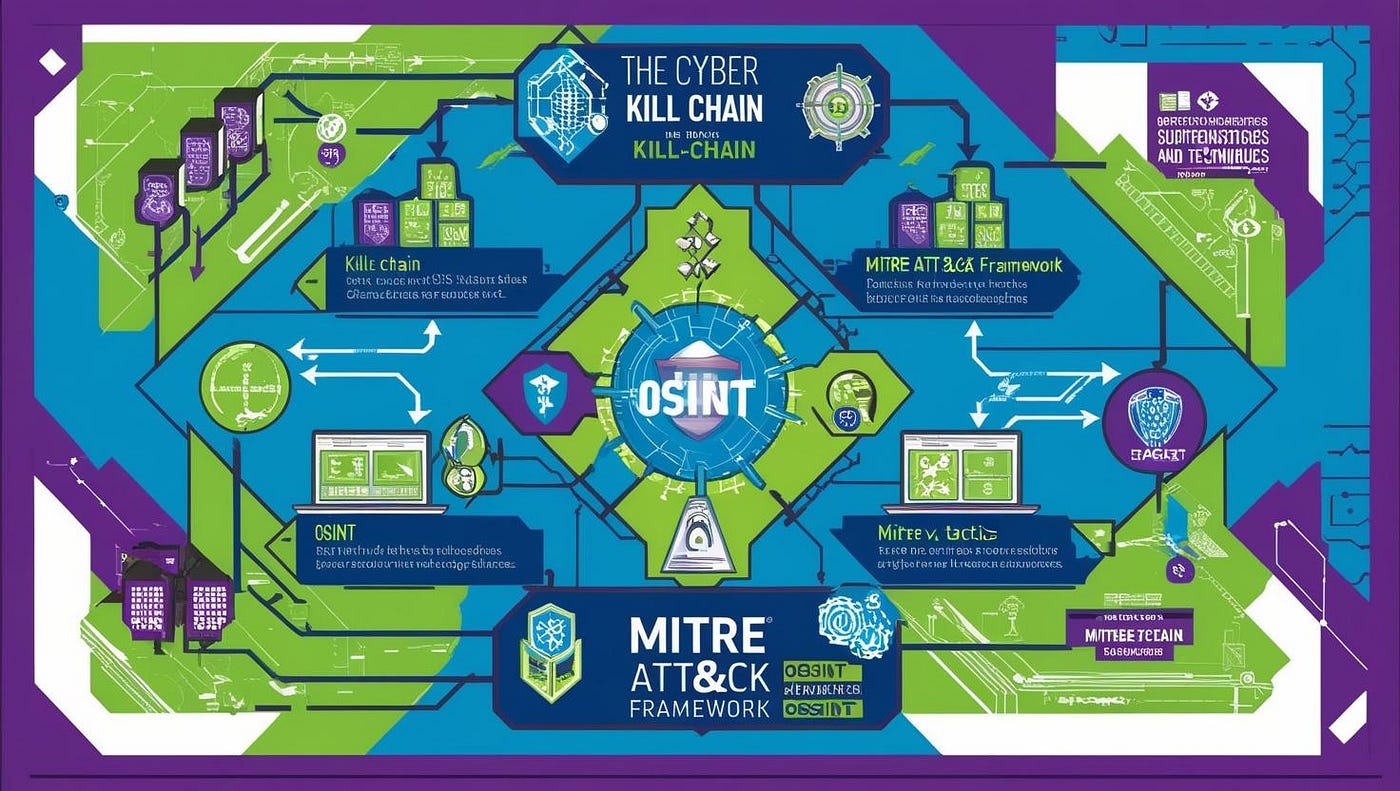
The Frameworks
- Cyber Kill Chain: This is your classic attack lifecycle: Reconnaissance, Weaponization, Delivery, Exploitation, Installation, Command and Control (C2), and Actions on Objectives. Think of it as the attacker’s step-by-step playbook.
- MITRE ATT&CK: This is the encyclopedia of adversary tactics and techniques (TTPs). It’s a structured knowledge base that helps you understand how attackers operate. It’s not just “what” they do, but the nitty-gritty details of how they pull it off.
OSINT: Your recon team, your early warning system, you
OSINT isn’t just for the Reconnaissance phase; it’s useful throughout the entire Kill Chain. Here’s more:
1. Reconnaissance (Cyber Kill Chain) / Reconnaissance (MITRE ATT&CK): The Obvious One
- OSINT Activity: This is where OSINT shines. Think passive reconnaissance: Shodan searches for exposed devices, social media scraping for employee info (watch those privacy implications!), digging into DNS records, and checking out job postings for tech stack details. We’re talking about gathering anything publicly available that could give an attacker an edge.
- MITRE ATT&CK Techniques: Gather Victim Host Information (T1590), Gather Victim Identity Information (T1589), Active Scanning (T1595) (though this can blur the line into active recon, be careful!), and even stuff like Search Open Websites/Domains (T1598).
*Pro Tip: Automate this if possible! Use tools like Maltego, SpiderFoot, or even custom scripts to gather and correlate this data.
2. Weaponization (Cyber Kill Chain) / Resource Development (MITRE ATT&CK): Building the Arsenal
- OSINT Activity: Here, we’re looking at what the bad guys are building. Monitoring dark web forums for exploit kits, checking malware repositories like VirusTotal for new samples, and keeping an eye on vulnerability databases (CVEs).
- MITRE ATT&CK Techniques: This maps to Develop Capabilities (TA0042) and Obtain Capabilities (TA0009). Think about how they’re getting their hands on exploits, malware, and infrastructure.
- Pro Tip: Track exploit development. Knowing what vulnerabilities are being actively weaponized gives you a heads-up on potential attacks.
3. Delivery (Cyber Kill Chain) / Initial Access (MITRE ATT&CK): Getting the Payload In
- OSINT Activity: This is about figuring out how they’re getting in. Analyzing phishing campaigns, looking for malicious URLs on social media, or even spotting compromised websites.
- MITRE ATT&CK Techniques: Phishing (T1566) (all flavors of it!), Drive-by Compromise (T1189), Exploit Public-Facing Application (T1190), and even things like Trusted Relationship (T1199) if they’re leveraging supply chain weaknesses.
- Pro Tip: Use URL scanning services and analyze email headers to dissect phishing attacks and identify patterns.
4. Command and Control (C2) (Cyber Kill Chain) / Command and Control (MITRE ATT&CK): Taking Control
- OSINT Activity: This is where you start hunting for the attacker’s infrastructure. Passive DNS analysis, looking for suspicious domains and IP addresses, and analyzing malware samples to extract C2 information.
- MITRE ATT&CK Techniques: This is squarely in the Command and Control (TA0011) realm. Think about different C2 channels: DNS Tunneling (T1071.004), Web Service (T1102), and even things like Data Encoding (T1132) to obfuscate communications.
- Pro Tip: Use threat intelligence platforms and community-driven threat feeds to enrich your C2 analysis.
OSINT and Cyber Threat Intelligence: The Intertwined Relationship
OSINT isn’t just data; it’s fuel for your threat intel engine:
- Threat Actor Profiling: Connect the dots. Use OSINT to link TTPs to specific actors, building a profile of their motivations and capabilities.
- Infrastructure Mapping: Visualize the attacker’s network. This helps you understand their scale and identify potential targets.
- Malware Analysis: OSINT can provide context to malware analysis. Where did the sample come from? What other campaigns is it associated with?
- Vulnerability Research: Stay on top of emerging threats. OSINT helps you understand how vulnerabilities are being exploited in the wild.
- Phishing Detection: Proactively identify and block phishing campaigns before they hit your users.
Conclusion
By understanding how OSINT maps to the Cyber Kill Chain and MITRE ATT&CK, you can significantly enhance your threat intelligence capabilities and proactively defend against cyberattacks. It’s all about connecting the dots and using the available information to get ahead of the bad guys. Happy researching :)
메타데이터
- post_id
- 0d9b5adc8a2d
- slug
- the-cyber-kill-chain-and-mitre-att-ck-proactive-threat-hunting-with-osint-0d9b5adc8a2d
- url
- https://meetcyber.net/the-cyber-kill-chain-and-mitre-att-ck-proactive-threat-hunting-with-osint-0d9b5adc8a2d
- canonical_url
- https://meetcyber.net/the-cyber-kill-chain-and-mitre-att-ck-proactive-threat-hunting-with-osint-0d9b5adc8a2d
- author_url
- https://medium.com/@d3adw0k
- status
- ok
- fetched_at
- 2026-06-20 20:29:01