Mushroom Leather: How Fungi Are Reshaping the Future of Sustainable Design
In a world where sustainability is no longer a trend but a necessity, designers and innovators are constantly searching for materials that…
Mushroom Leather: How Fungi Are Reshaping the Future of Sustainable Design
In a world where sustainability is no longer a trend but a necessity, designers and innovators are constantly searching for materials that are both environmentally responsible and aesthetically powerful. One of the most fascinating innovations emerging today is mushroom leather — a biodegradable, cruelty-free alternative that could redefine fashion, interiors, and product design.
Yes, leather made from fungi.
At first glance, it sounds experimental, almost futuristic. But mushroom leather is already entering luxury fashion, furniture design, and sustainable product development, proving that nature itself may hold the answer to some of the design industry’s biggest environmental challenges.
What Exactly Is Mushroom Leather?
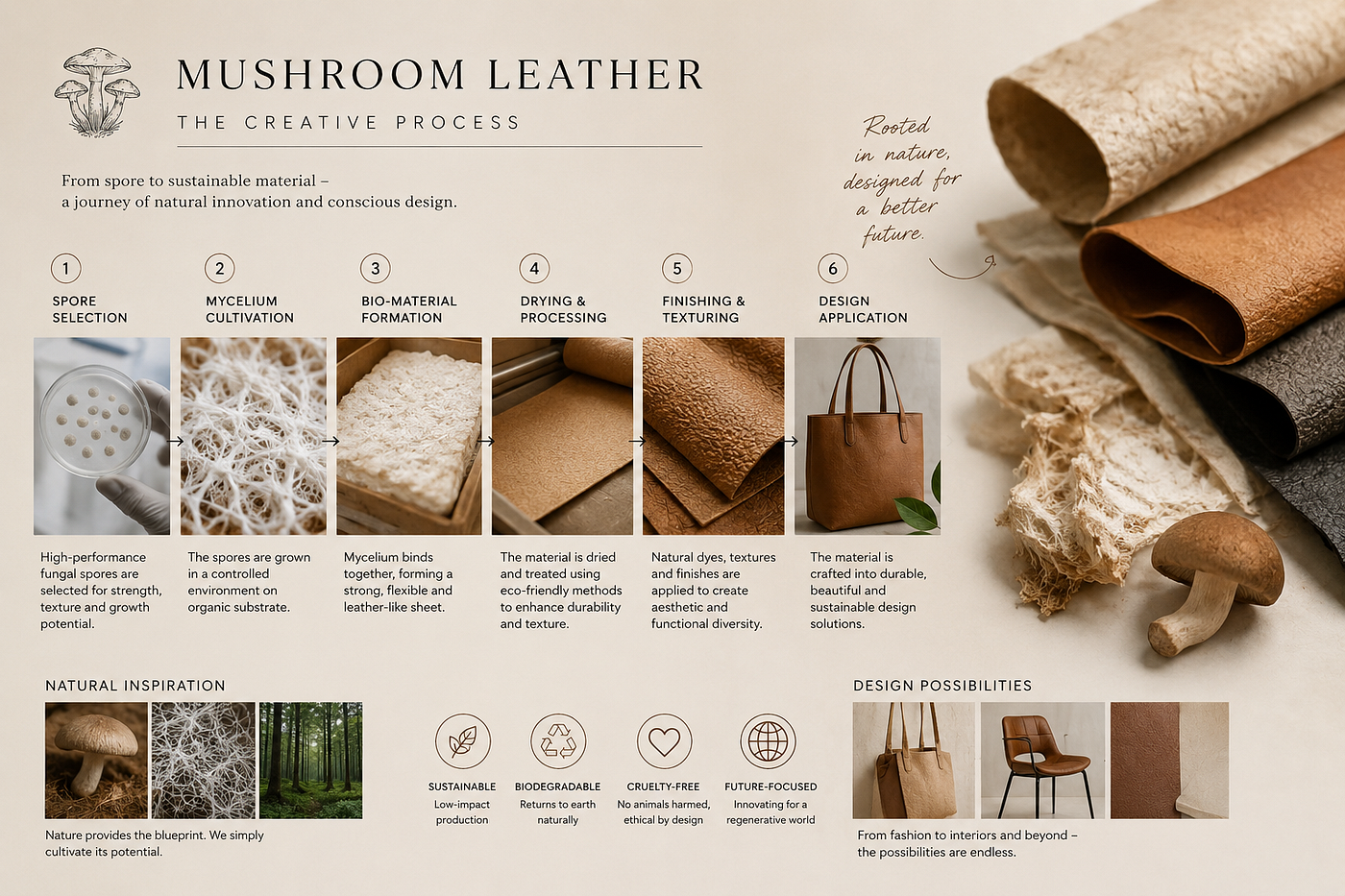
Mushroom leather is created using mycelium, the root-like structure of fungi. Mycelium grows underground and acts as a natural network that helps mushrooms absorb nutrients. Under controlled conditions, this organic structure can be cultivated into sheets that resemble traditional leather in texture, flexibility, and appearance.
Unlike animal leather, which involves intensive farming, chemical tanning, and high water consumption, mushroom leather grows rapidly within weeks and requires significantly fewer resources.
The result is a material that is:
- Sustainable
- Biodegradable
- Lightweight
- Durable
- Cruelty-free
For designers focused on ethical innovation, this material is opening entirely new possibilities.
Why Designers Are Paying Attention
The design industry is undergoing a major shift. Consumers are becoming more conscious of what they wear, use, and surround themselves with. Materials are no longer judged only by aesthetics — they are evaluated based on environmental impact, lifecycle, and ethical sourcing.
Mushroom leather answers many of these concerns.
1. Sustainability
Traditional leather production contributes heavily to deforestation, carbon emissions, and chemical pollution. Mushroom leather drastically reduces these environmental costs because it can be grown organically with agricultural waste and minimal water usage.
2. Aesthetic Flexibility
One of the most exciting aspects of mushroom leather is its adaptability. It can be soft, textured, smooth, or structured depending on how it is cultivated and processed. Designers can experiment with finishes, colors, and forms without compromising sustainability.
3. Faster Production Cycles
Animal leather takes years to produce. Mycelium can grow in a matter of days or weeks, making it a highly efficient alternative for future manufacturing systems.
Beyond Fashion: Interior Design Applications
While fashion brands are already exploring mushroom leather, the material also has incredible potential in interior design.
Imagine:
- Sustainable upholstery
- Eco-conscious wall panels
- Biophilic furniture finishes
- Decorative surfaces with organic textures
- Luxury interiors with reduced environmental impact
As biophilic and sustainable design continue to dominate modern interiors, mushroom leather aligns perfectly with the growing desire to reconnect spaces with nature.
For interior designers, this material represents more than innovation — it represents a design philosophy rooted in responsibility and regeneration.
The Future of Material Innovation
Mushroom leather is part of a larger movement toward bio-based materials. Designers are now experimenting with algae, hemp, recycled plastics, bamboo composites, and bacterial cellulose to create products that reduce ecological harm.
This shift is redefining the role of the designer.
Today, designers are not only creating beautiful experiences; they are shaping the environmental future of our planet through material choices and sustainable thinking.
The rise of mushroom leather proves that innovation does not always come from machines or technology alone. Sometimes, it grows naturally beneath our feet.
Final Thoughts
Mushroom leather is more than a material trend. It symbolizes a future where sustainability and creativity coexist seamlessly. As industries continue to evolve, materials like mycelium challenge us to rethink luxury, production, and the relationship between design and nature.
The future of design may not be made in factories alone.
It may be grown.
메타데이터
- post_id
- 0da87f891fae
- slug
- mushroom-leather-how-fungi-are-reshaping-the-future-of-sustainable-design-0da87f891fae
- url
- https://medium.com/@eshabhandari/mushroom-leather-how-fungi-are-reshaping-the-future-of-sustainable-design-0da87f891fae
- canonical_url
- https://medium.com/@eshabhandari/mushroom-leather-how-fungi-are-reshaping-the-future-of-sustainable-design-0da87f891fae
- author_url
- https://medium.com/@eshabhandari
- status
- ok
- fetched_at
- 2026-06-27 18:20:27