Is the U.S. Building a Warrior Class?
The U.S. Military once again seeks to restore a “Warrior Ethos”
Is the U.S. Building a Warrior Class?
The U.S. Military once again seeks to restore a “Warrior Ethos”
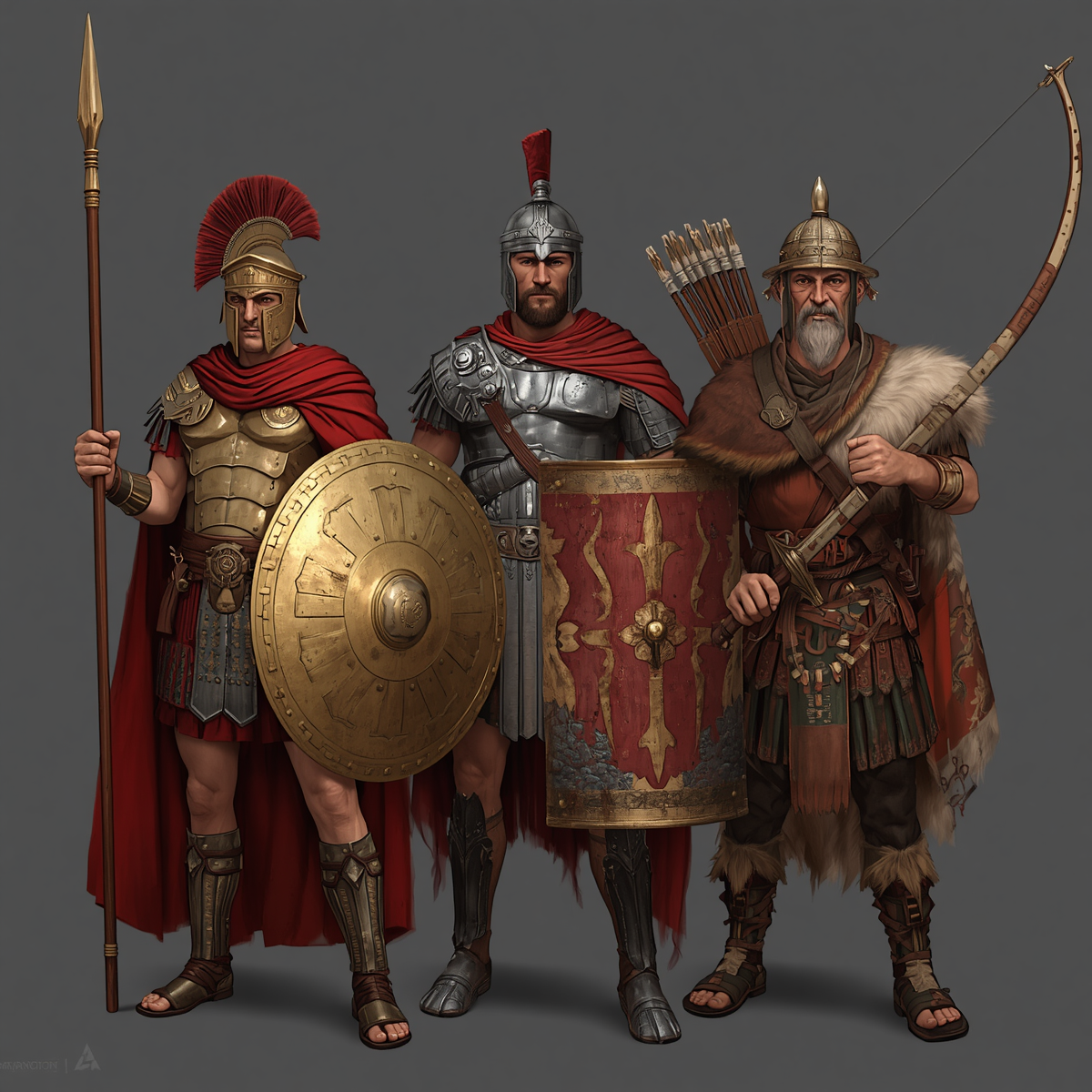
AI Generated from Canva
This story’s foundation is credited to an anonymous U.S. Army engineer officer, who wrote the linked WordPress post below, almost ten years ago:
I was surprised to read a rejection of being called a ‘warrior’ by the rank and file. Many of the aspects of being a warrior versus being a soldier have a vastly different ethos. Hearkening back to the days of Spartan warriors with bronze helmets and red capes does not seem to be a viable end-game for any country’s modern military, yet the language being used today by U.S. civilian leaders appears to invoke such images:
We will revive the warrior ethos and restore trust in our military. We are American warriors. We will defend our country. Our standards will be high, uncompromising, and clear. The strength of our military is our unity and our shared purpose. Secretary Hegseth, 1/25/25.
We are not defenders anymore. We are warriors, trained to kill the enemy and break their will. Secretary Hegseth, 3/2/25.
So my message to all of the warriors here today is that your commander in chief supports you totally. I have — I support you more than — I know you’ve had a couple of good ones, not that many, if you want to know the truth.
But we support you more than any of them and you’re going to get out and when needed, you’re going to fight, fight, fight, you’re going to win, win, win. And we’re going to continue to make our country bigger and better and stronger than ever before. And that’s exactly where we are right now. We are the most respected country anywhere in the world. President Trump, 2/13/26
Hegseth made his views on the warrior ethos quite clear in his own book, published less than a year before he was named U.S. Secretary of Defense, entitled, The War on Warriors:
Critique of “Woke” Culture: Hegseth argues that focusing on social justice initiatives, critical race theory, and extremism training distracts from the military’s primary mission: lethality and national defense.
Meritocracy vs. DEI: Hegseth contends that promoting diversity quotas undermines unit cohesion, standards, and the natural meritocracy required in combat.
Rules of Engagement: Hegseth criticizes restrictive battlefield rules, arguing that legal caution and bureaucratic oversight have hampered soldiers’ instincts and ability to win wars decisively.
Erosion of Leadership: Hegseth asserts that modern military leadership has lost its moral compass, prioritizing social engineering over the operational needs of the warfighter.
And both Hegseth and Trump are clearly making a distinction between those who are soldiers and who are warriors. Soldiers transition to other roles in societies, warriors do not. Warriors never surrender. And while I imagine no one wants their own military to be likened to Mongol barbarians, it’s probably okay to think of our enemies in that way. It is worth noting that at its peak, the Mongol Empire controlled roughly **17.8% of the Earth’s landmass**, making it the largest contiguous land empire in human history. It encompassed about 12 million square miles across Eurasia, ruling over an estimated 100 million people (about a quarter of the global population at the time).
Also of note, Spartan warriors were a class; they were the only citizens of Sparta, and needed to be supported by the helots. Most accounts describe these folks as an enslaved or indentured class of native Greeks who were bound to the land and forced to perform all agricultural and domestic labor. This system allowed full Spartan citizens (Spartiates) to dedicate their entire lives to rigorous military training and the protection of their state.
Spartiates were also supported by the *Perioikoi — *free, non-citizen residents of surrounding villages to Sparta. They supported the Spartan war machine by manufacturing weapons, armor, and naval supplies, and frequently served alongside the full citizens as light infantry. Remember, this was a society with a class system. Spartan warriors didn’t do housework, cook their own meals, or even make their own swords and spears.
Is the United States building a warrior class system?

Source: US Army North: https://www.arnorth.army.mil/Media/News/Article/3922295/framing-the-future-of-homeland-defense-multi-domain-resiliency-zones/
The image above of an MDRZ — Multi-Domain Resiliency Zone is from public (unclassified) outreach material produced by the U.S. Army, going back to at least 2024. An MDRZ is designed to fully support the warriors when there is war — whether they are training at home or fighting a battle elsewhere. The MDRZ is also designed to protect not only the warrior camps or bases, but also the adjacent roads and ports and support services needed to sustain the warriors. Even the manufacturers of the weapons that the warriors use — what is today called the defense industrial complex — are enveloped within the society of the MDRZ.
All together they can become a modern Sparta.
If you want to learn more about the planning for civilian support to military operations in the U.S., visit the Center for Emergency Management Intelligence Research’s Substack site, as a paid subscriber.
History has shown that the Spartan warrior civilization is no more. Unlike the expanding Roman Empire, which replenished its ranks by granting citizenship to conquered peoples, Sparta kept its elite citizen pool restricted to a shrinking group of families. Their strict laws and rigorous social requirements meant that if a warrior was killed, or if a citizen lost their wealth, they couldn’t be replaced. By the 3rd century BC, their military was a fraction of its former size.
In 396 AD, Sparta was brutally sacked by the Visigoths under King Alaric. The city was rebuilt but on a much smaller scale. Within a century, ancient Sparta was abandoned entirely, and regional power shifted to the nearby Byzantine town of Mystras. The modern Greek city of Sparti was artificially established on the ruins of the ancient site in 1833 by King Otto of Greece to preserve historical prestige.
The best lesson from Sparta is not that modern troops should imitate Spartans and create a warrior caste. It is that military culture does matter, but it must be tied to strategic reality. The U.S. military needs warriors in the sense of people who are disciplined, resilient, courageous, and committed to mission and comrades. But it also needs citizens in uniform who can think critically, operate ethically, master complex technology, work with allies, and understand the political purposes of military power.
A healthy warrior ethos should therefore be demanding without becoming theatrical, inclusive without lowering standards, aggressive in combat preparation without glorifying violence, and disciplined without becoming anti-intellectual. Sparta’s rise shows the power of shared martial values. Sparta’s fall shows the danger of making those values too rigid, too narrow, and too detached from the whole of society.
메타데이터
- post_id
- 0dd26bd84b8d
- slug
- is-the-u-s-building-a-warrior-class-0dd26bd84b8d
- url
- https://medium.com/policy-panorama/is-the-u-s-building-a-warrior-class-0dd26bd84b8d
- canonical_url
- https://medium.com/policy-panorama/is-the-u-s-building-a-warrior-class-0dd26bd84b8d
- author_url
- https://medium.com/@bartondunant
- status
- ok
- fetched_at
- 2026-07-09 13:13:48