Patriarchy Stress Disorder
Being a woman in this culture leaves measurable negative impacts on women’s brains and lives
Patriarchy Stress Disorder
Being a woman in this culture leaves measurable negative impacts on women’s brains and lives
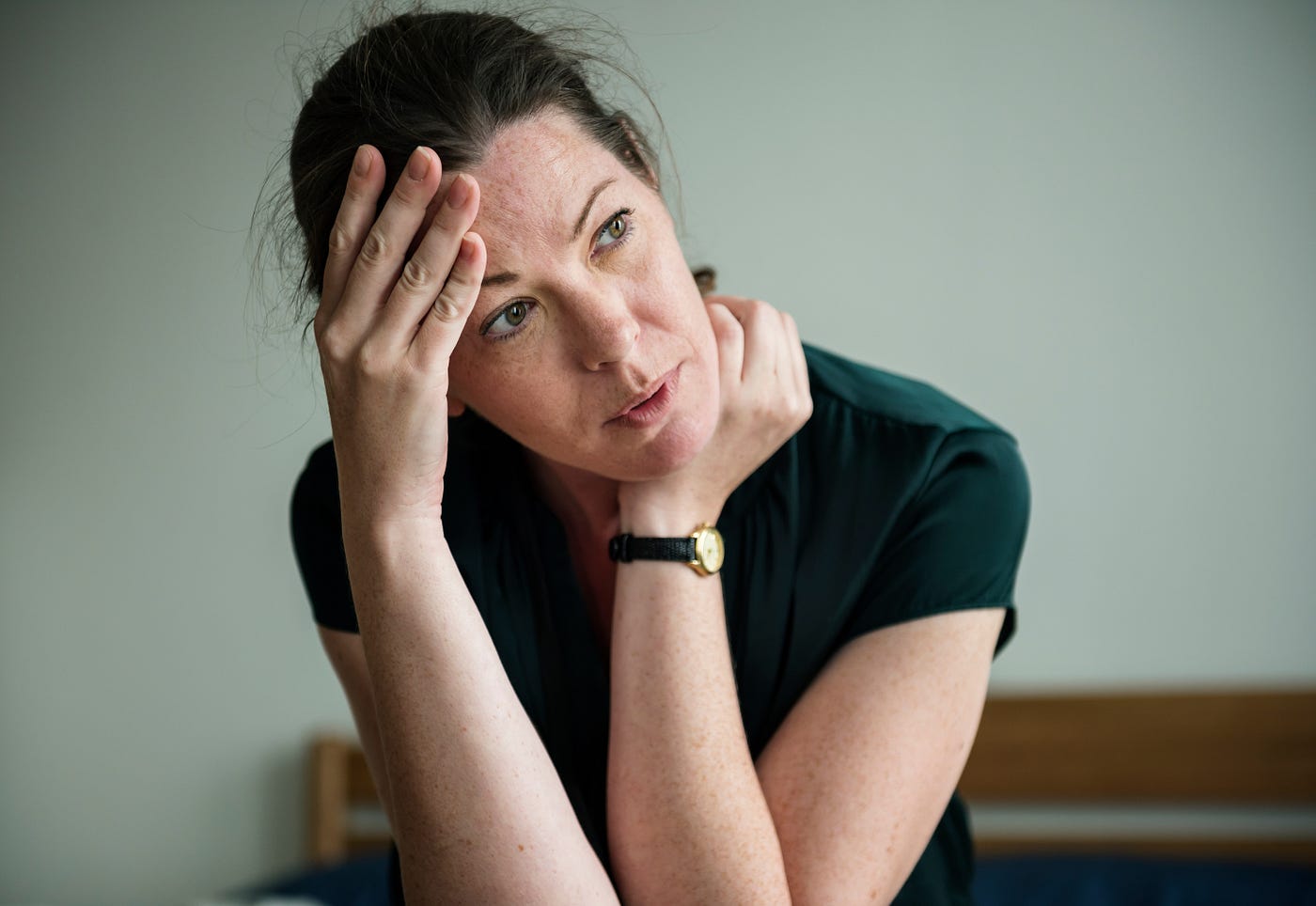
Licensed from Adobe Stock
I’ve known for a while about a psychological condition called Racial Trauma. It’s the cumulative effects of being in group that is pervasively and continuously discriminated against and marginalized — from micro-aggressions to outright hostility based on race — and how that can negatively affect someone’s nervous system and brain function. For example, it may cause things like insomnia, anxiety, and even PTSD.
Every woman I know or come across online right now seems to be suffering — to a greater or lesser extent — from a gender version of this dynamic, where the constant trauma of living in a patriarchy — and a US society that is currently hellbent on taking women’s rights and autonomy back to the Middle Ages — is having a deep and profound psychological effect on them.
Women are angry and fed up these days, but they’re also completely exhausted. The Epstein Files debacle was a major turning point, (coming on the heels of a lifetime of other outrages, including the somewhat recent loss of body autonomy for women in the US). But the rape academy and the ways that many men have responded to (or often ignored) both of these key indicators of how this culture treats women really pushed many of us over the edge.
It’s pretty clear that while some men are sickened by all this and speaking up about ways to have a saner, less violent culture where women don’t have to exist in a constant state of Fight or Flight, many men are really just fine with violence against women so long as they don’t have to hear about it. They want to cling to the belief that if they haven’t personally intentionally done anything wrong, this isn’t about them, but that isn’t how a society works.
“I believe that men who are silent in the face of other men’s violence — whether the silence is intentional or not — are complicit in the perpetration of that violence. We’re not guilty because we’re men. We’re responsible — because we’re men — either for speaking out or for not speaking out about other men’s violence. This is hardly a new concept. Some of the proudest moments in the history of this country are grounded in the principle that members of dominant groups have a critical role to play in the struggle for equality.”
— The Macho Paradox: Why Some Men Hurt Women and How All Men Can Help (How to End Domestic Violence, Mental and Emotional Abuse, and Sexual Harassment) by Jackson Katz
#MeToo
I remember like it was yesterday when #MeToo hit a critical mass and swept the internet. We discovered not only that powerful men had been abusing women with impunity, but that almost every woman you met had a personal story or 5 about that from their own lives. Women knew it was common, but we didn’t realize just how common until then.
I also vividly remember the backlash that came from a lot of men. Rather than an overwhelming outcry from guys of, “I had no idea; what can we do to improve this situation?” there was often some version of, “Shut up bitch and stop making men look bad,” that was extremely common.
I can say from repeated personal experiences, but also from relevant research, that the only thing worse than being assaulted or traumatized in some way is for that to be mocked, questioned, trivialized, or turned around so that you are now the “bad guy.”
Cate Blanchett recently noted that the #MeToo movement didn’t actually lead to substantive changes and that things are largely back to the status quo.
“It got killed very quickly, which I think is interesting,” Blanchett said. “There are a lot of people with platforms who are able to speak up with relative safety and say this has happened to me. And the so-called average woman on the street, person on the street, is saying me too. Why does that get shut down? What it revealed is a systemic layer of abuse, not only in this industry, but in all industries, and if you don’t identify a problem, you can’t solve the problem. If you shut that conversation down, you can’t move on.” — *Rolling Stone*
She’s exactly right, and yet I still routinely encounter guys, often progressive ones who seem to care about equality, lamenting the #MeToo movement and how it purportedly went too far.
I honestly don’t understand what that even means in a culture where 1.9 million women are raped every single year and 6.54 million women experience other forms of sexual violence each year in the US. We live in a culture where 85% of girls started getting sexually harassed in childhood, often as young as 9 or 10 years old — the same as when I was a young girl.
Nothing has changed, and nothing is likely to change until more men stop turning a blind eye to the pervasive harm that women ubiquitously experience at the hands of people acting on mainstream masculine gender norms and pretending like calling that out is hateful to men.
Some of the rhetoric is apparently about the fear of false accusations in an environment where women are finally likely to be at least slightly more believed than in the past — but only slightly. Disbelieving women is nearly as rampant as ever and false accusations are still rare. While they are inexcusable, false accusations typically fit a known set of conditions or circumstances. They are also so unlikely that a man is 230 times more likely to be raped than to be falsely accused.
Over 91% of sexual violence is perpetrated by men. Men and Boys are 230X more likely to be raped than falsely accused of rape. 72% of adults who experienced sexual abuse as a child do not tell anyone at the time of the abuse. 1 in 3 trans/ non-binary individuals never told anyone about their abuse. — *RSACC*
Once again, let me reiterate that false accusations are not acceptable and can cause harm. I’m not saying they are no big deal. I’m saying that responding to the reality that nearly all girls and women have been and will continue to experience sexual violence throughout their lives by turning the focus back on to men who might potentially be falsely accused is both a deflection from having to act, as well as an intentional redirection of the spotlight away from women and back onto men.
Answering glaring evidence of systemically entrenched misogyny and abuse of women in all areas of this society with the assertion that it’s probably being invented and falsely reported is not just galling, it’s demoralizing and it’s taken a toll on women.
Patriarchy Stress Disorder
In a groundbreaking study, researchers introduced the smell of cherry blossoms to mice while simultaneously zapping their feet with mild electric shocks. The mice were then bred, and their children and grandchildren, when exposed to the smell of cherry blossoms, showed a strong fear and anxiety reaction. Let that sink in. The researchers saw that these traumatic experiences had been genetically transmitted.
So what is PSD? PSD is women fearing the smell of cherry blossoms. What are the “cherry blossoms” in this context? For us, they are everything that we desire and everything that has historically been forbidden and dangerous and punishable for women: shining brightly, expressing ourselves unapologetically, being in touch with our desires and going after them, loving who we love, being wealthy, being visible, being powerful. — *PSD*
And just as with Racial Trauma, PSD can induce anxiety, insomnia, depression, chronic exhaustion, and even coronary heart disease. Even those of us who are not suffering the most extreme effects of many generations of patriarchy— including our own experiences as well as those of our mothers and grandmothers — are still negatively affected nonetheless.
More and more women are moving away from relationships with men unless they add to the peaceful lives they have built for themselves alone — and this is a worldwide trend. Every time I mention this, some guy comes in with the counter that many men are unhappy with relationships with women right now too. They apparently have no sense of the current zeitgeist and the extreme levels of trauma and disgust that women are feeling right now about this culture.
Women are absolutely capable of crappy, wounded, selfish behavior, but it’s never something that women have been socialized or encouraged to do. By contrast, traditional male socialization teaches men they have the right to women’s attention, care, and bodies, and that controlling women is a key element of making your mark in male hierarchies. After all, who wears the pants in your house? Are you pussy whipped? Are you leading or is she?
Outside of ultraconservative households, most women aren’t interested in unearned hierarchy. Honestly, why on earth does anyone think being born with a penis magically gives you leadership skills? Meanwhile, every heterosexual household I’ve ever seen was very clearly led by the woman, who ran the day to day management of things, monitored the emotional wellbeing of the family, and did the bulk of the care and feeding of the entire group, including mankeeping her husband.
Most women today want men who will be real partners, doing their share of the second shift after work in the labor market, and not expecting emotional labor that they are not also engaging in. About 71% of mothers with children under 18 are in the workforce. Who exactly is doing all the providing here? Because even if your paycheck is larger than hers, if you aren’t an equal partner in the rest of your life, that’s sponsorship and she is the one doing the actual providing.
In conclusion
As Valerie Rein, who coined the term Patriarchy Stress Disorder notes:
Over the years of my work as a therapist and in social conversations, I’ve been hearing women express the feeling of being stuck, imprisoned. Women talked about wanting more — more intimacy in their relationship, more impact of their work in the world, more fulfillment in life, feeling more comfortable in their skin, more peace and happiness. They expressed frustration, feeling like as they try to reach for this more, they are running into an invisible inner wall. — *Valerie Rein*
Patriarchy is hard on men too, and many guys today are struggling as well. Younger men, in particular. I’m sympathetic to that but at least some of it is related to losing unearned privilege and place in society that their fathers and grandfathers took for granted. Some of it is failing to adjust to a new, and more egalitarian society where women are no longer legally and structurally second class citizens, as was the case a mere 50 years ago.
Absolutely none of it for men is related to being viewed as prey every time they leave the house. None of it is due to having different human rights in different states. None of it is due to intergenerational trauma from being viewed as not a person, but an accessory to someone else — someone who has the right to fuck and beat your body at will with the law supporting it.
Historical efforts and the accumulated fatigue of so many years of struggles are added up to us women: for having the right to life, freedom of decision, the right to education, to be able to vote, have a bank account, get married or not — when, how and with whom they want — to have a place at the decision table and a voice that is heard and respected. Let us not fool ourselves. When their advances passed on to us, our predecessors also passed on their sufferings. We accumulate achievements, we accumulate fatigue. — *ReVista*
The guys who don’t grasp this are not paying attention, or they don’t have a sufficient capacity for empathy. Women around the world are increasingly fed up and women in the US (and elsewhere) are adjusting their lives to have a little bit more peace whenever they can (but sometimes they really just can’t).
We are exhausted, pissed off, and struggling with things like depression and insomnia related to the the trauma that a patriarchal social system has inflicted on women in this culture. Even so, we are not going back to the 1800s or even the 1950s. We are not going into The Handmaid’s Tale. As tired as we are, women will continue to fight for the lives that they deserve, which include peace, safety, and healing from inherited trauma as well as that which we ourselves have experienced at the hands of a patriarchal culture.
“What about men?” is a deflection. Have that conversation in another thread. It’s not that this question doesn’t count, but it is not appropriate here. Men are harmed by patriarchy in different ways than women, and many of them have yet to seek to throw off the yoke, because it does still offer them some advantages that it doesn’t offer women.
Some women are clinging to patriarchy as well. That’s also not the point here. Patriarchy stress disorder is a real and it harms women on an intergenerational level. We are exhausted. We are frustrated. We are traumatized. Care about that or don’t but don’t try to pretend that it isn’t real.
© Copyright Elle Beau 2026
For more stories about Patriarchal Stress Disorder and the exhausting work of being a woman in 2026, follow Fourth Wave. Also check out our Livestreams and sign up for our Newsletter. Let’s grow the community! Have you got a story or poem that focuses on women or other targeted groups? Submit to the Wave!
메타데이터
- post_id
- 0e08b51047fd
- slug
- patriarchy-stress-disorder-0e08b51047fd
- url
- https://medium.com/fourth-wave/patriarchy-stress-disorder-0e08b51047fd
- canonical_url
- https://medium.com/fourth-wave/patriarchy-stress-disorder-0e08b51047fd
- author_url
- https://medium.com/@ellebeauworld
- status
- ok
- fetched_at
- 2026-06-09 15:37:30