A Retailer’s Long Overdue Identity Crisis — Seller or Creator?
Retail businesses in Kenya moving beyond selling to making — and what it really means for them
A Retailer’s Long Overdue Identity Crisis — Seller or Creator?
Retail businesses in Kenya moving beyond selling to making — and what it really means for them
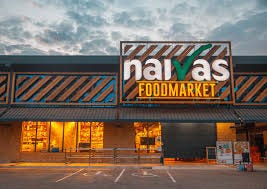
The essence of retail has always been creating spaces where both the seller and the buyer can interact; well with a small mark-up obviously.
However we can’t ignore the reality of business: season’s change, industry dynamics change, new opportunities arise or rather the possibility of certain realities become very clear.
Retail businesses have always had an upper- hand. They get to interact directly with the customer; if anything, their true gold mine is customer data. This means they did and still do have what it takes to expand their territory to production.
But is it as straightforward as it seems?
The Kenyan Retail Scene
We are in the early 2000s, picture an industry, with a handful of players, many of whom continue to be top industry players, starting off as modest wholesale shops and gradually expanding to the capital city, Nairobi.
When I spoke about a not so straightforward strategy, it was in reference to the Kenyan market. This is a market that largely values consistency in quality, reliability, and affordability — a tough balance to strike, if you ask me.
Fast forward to 10 years ago, the landscape has completely shifted: retailers started investing in massive expansions, huge investments in marketing, introduced 24/7 stores, and leaned into proximity, accessibility, and reliability as loyalty drivers for the Kenyan consumer. Not forgetting retailers who began to double as locations to grab a quick bite; introducing food courts and bakeries.
It was this shift that quietly signaled retailers of their capacity to venture upstream in the supply chain; that yes we can sell other people’s products and tap into an even greater opportunity if we sold our own products.
This meant more control, more margins, and more loyalty. This, you will agree with me, is every business’ holy grail.
While this transition offers clear value, it also introduces complex challenges. The question is not if this strategy works — but when, for whom, and at what cost.
Observation: The Vertical Leap
With a focus on two retail brands that stand out to me: Quickmart and Naivas, the vertical leap began with food courts and bakeries.
Moving into the non-perishables, these retail giants took the next step into bottled water, a safe product, intentionally priced the least.
From bottled water, to cereals.
These choice of products in themselves tell you so much about the demand for the said products as well as cost to produce, but that’s a story for another day.
This has been the roadmap for both retail brands with some venturing into toiletries. Given that this is a momentum that has carried on in less than 5 years, I would think that this is just but the beginning of this vertical leap.
Just but the beginning of a long overdue reality that I believe retailers have been afraid of stepping into.
This is not denying the fact that it could also be a strategic move that only began making economic sense recently; right after the Kenyan retail scene boom.
This already introduces a number of questions that I would like to define through the current opportunities available to retail brands: in the journey of sellers morphing into producers while identifying as sellers.
The Kenyan Retailer Reality
Compared to western countries, the Kenyan retail scene could be considered a fast growing industry.
All in all, retailers know what the customer wants; they receive complaints from consumers, understand what product within a niche flies off shelves and ones that don’t and most importantly they have the why behind most if not all customer decisions.
They have direct consumer intelligence.
What retailers aren’t outrightly articulating is that they wish to have their cake and eat it too.
They are most certainly not cutting off the hand that has fed them all this while but neither are they standing on the side lines waiting for business to come to them, they are exploring new opportunities to ramp up their margins.
- Brand Stretch or Brand Blur? There is the brand identity question. A retailer is trusted by the consumer to stock their favorite yogurt brand but will they trust your version of greek yoghurt? There’s a couple of factors such as brand loyalty and brand exploration, based on price, that could work for or against a retailer venturing into production. However, this is a dance that retailers can only determine as producers; a clear but not guaranteed opportunity right here.
- Profit Facade in the face of Operational Costs The more you own, the more control you have. Control over price, turn over time, agility in response to new customer wants. But the other unspoken side of the coin is exposure to operational risks previously absorbed by suppliers. Getting the advantage of owning the process can not be refuted but capital expenditure, regulatory compliance, HR changes, and a supply of raw materials is an equal reality. For larger chains, it might be an uphill but manageable climb. For smaller or growing retailers watching from the sidelines, the price tag might not justify the jump.
- To Be or Not To Be in the Suppliers Good Books Fast-moving consumer goods, holding the majority share of a retailer’s product offering, are made up of many suppliers offering homogenous products. You have a cereals market filled with a gazillion suppliers, many of whom are your suppliers — then boom, you enter the chat. Existing suppliers are right to feel threatened — raising prices, withdrawing, or negotiating tough terms. This might cause key brands to disappear and loyal customers to shift spend to competitors. However, if we consider a best-case scenario, suppliers understand that this is a free market and anyone could join at any time, causing them to focus on their differentiation strategy rather than their exit strategy.
- Infrastructure Investment with Looming Uncertainty
Investing in production capabilities may signal long-term growth and help retailers control supply chain disruptions by their acquired control of the process. That initial market entry phase requires alot; capital expenditure. Hence, in the reality of a not so instant ROI, if the venture does not align with the proposed business plan, it’s not just sunk cost, but a dent in expansion plans.
Final Thought
We can all agree, whether or not this new retailer identity is working in the brands’ favor, it has become the go-to strategy for retailers today. They cracked the code of maintaining multiple partnerships with various sellers, expanding across locations and placing their mark in the market. Now, it’s all about ramping up the numbers.
But whether it remains a competitive advantage or becomes a costly distraction will depend on how clearly each retailer defines their role in the value chain — and whether they can live up to both names.
The businesses that succeed won’t necessarily be the boldest — but the best-informed, best-prepared, and most aligned internally. For some, staying in your lane and owning what you are best at becomes the wisest move. For others, going upstream could be the unlock that transforms margins and market share.
So I pose this question to you, “Do you believe the customer insight, infrastructure, operational acumen and influence that retailers yield is enough to step into manufacturing?”
메타데이터
- post_id
- 0e0986cb633c
- slug
- a-retailers-long-overdue-identity-crisis-seller-or-creator-0e0986cb633c
- url
- https://medium.com/@jtyembu626/a-retailers-long-overdue-identity-crisis-seller-or-creator-0e0986cb633c
- canonical_url
- https://medium.com/@jtyembu626/a-retailers-long-overdue-identity-crisis-seller-or-creator-0e0986cb633c
- author_url
- https://medium.com/@jtyembu626
- status
- ok
- fetched_at
- 2026-06-27 23:56:40