There Is a Cost to Becoming an Image
On Britney Spears, social media, and the temptation to trade personhood for visibility
There Is a Cost to Becoming an Image
On Britney Spears, social media, and the temptation to trade personhood for visibility
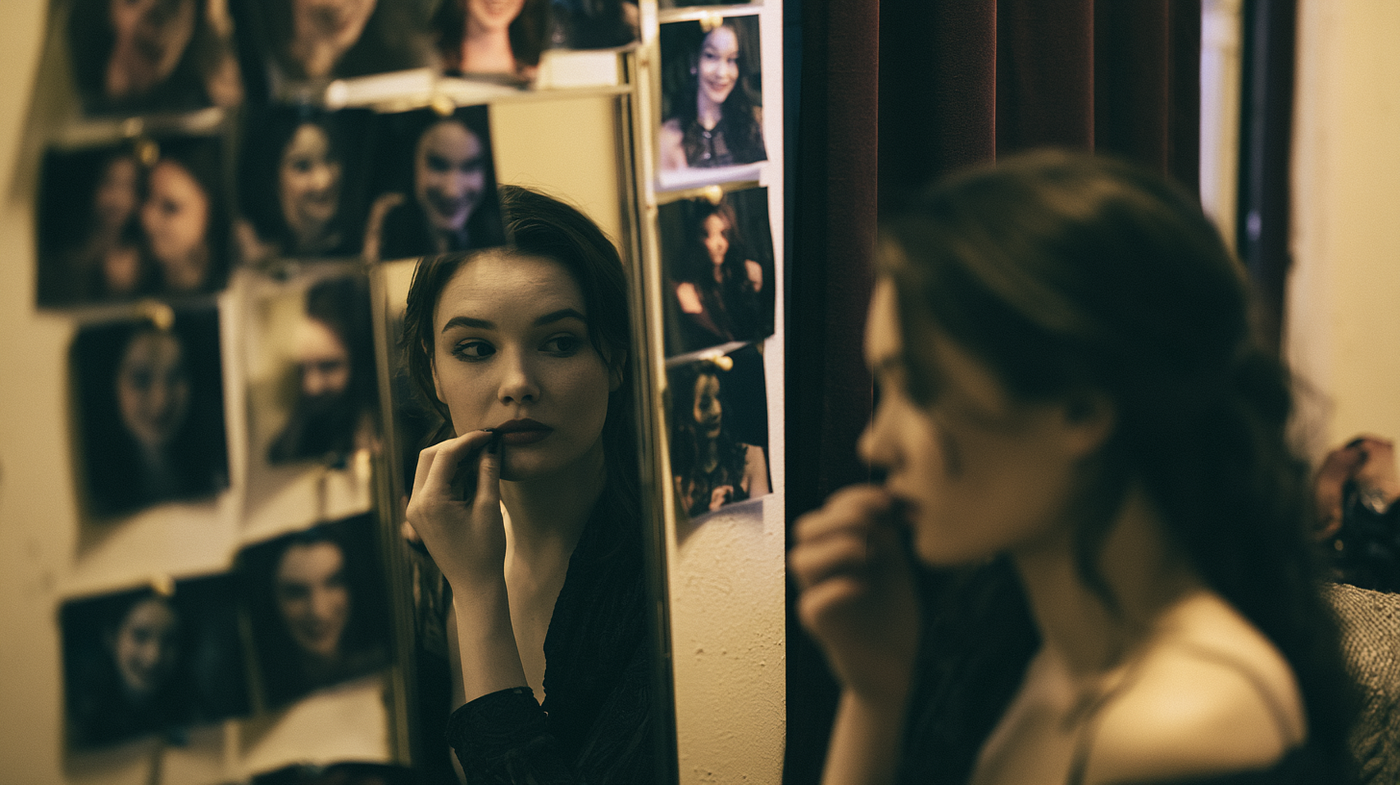
AI-generated illustration
We often ask what happened to Britney Spears.
The question lingers decades later because it never really felt answered.
People offer explanations.
Fame.
Family.
Mental illness.
Exploitation.
Control.
Conspiracy.
Maybe each contains a piece of the truth.
But lately, I wonder if Britney Spears isn’t the story at all.
Maybe she’s the magnifying glass.
Maybe what unsettles us isn’t her life specifically.
Maybe it’s the uncomfortable recognition that many of us are participating in the same forces in smaller, quieter ways.
Human beings were never meant to become all at once.
We were meant to unfold.
To try on identities.
To embarrass ourselves.
To change our minds.
To have awkward phases.
To fail privately.
To grieve.
To disappear for a while and return different.
Most of human history allowed for this.
You became yourself in relative obscurity.
A few family members knew who you had been.
A few neighbors witnessed who you were becoming.
There was room for contradiction.
Room for evolution.
Room to become.
Then came the cameras.
At first, they belonged to celebrities.
The beautiful.
The talented.
The exceptional.
We watched them from a distance.
Projected ourselves onto them.
Consumed their stories.
Turned human beings into symbols.
But celebrities were once anomalies.
Exceptions.
Now I wonder if they were prototypes.
Because we’re all carrying cameras now.
We’re all building versions of ourselves.
We’re all learning which parts of ourselves receive approval and which parts are quietly punished.
Which photos get likes.
Which opinions get engagement.
Which versions of us people reward.
And little by little, something subtle begins to happen.
The question shifts.
Instead of asking:
Who am I becoming?
We begin asking:
Who do they want me to be?
Being known is one of the deepest human desires.
We want to be seen.
Recognized.
Witnessed.
Loved.
There is nothing pathological about that.
But being consumed is different.
Consumption asks:
How entertaining are you?
How attractive?
How useful?
How productive?
How inspiring?
How desirable?
What value do you provide me?
And what happens when you stop providing it?
What happens when the image no longer matches the person underneath?
Because there is a cost to becoming an image.
An image cannot evolve naturally.
An image has expectations.
An image belongs to an audience.
An image must remain coherent long after the human being underneath has changed.
Eventually, something has to give.
Sometimes it’s authenticity.
Sometimes it’s privacy.
Sometimes it’s dignity.
Sometimes it’s sanity.
Sometimes it’s simply the ordinary messiness required to become a person.
I think that’s why celebrity breakdowns haunt us.
Not because they’re entertaining.
Not because they’re mysteries to solve.
But because they expose something we recognize.
We recognize the cost of asking a human being to function as a product.
And somewhere deep down, we understand that the distance between celebrity and ordinary life is shrinking.
We’re all carrying cameras now.
We’re all performing versions of ourselves.
We’re all navigating the tension between being known and being consumed.
The ancient stories warned us about temptation, but not always in the ways we imagine.
The serpent didn’t tempt Eve with suffering.
It tempted her with becoming more.
You could be extraordinary.
You could be admired.
You could be desired.
You could step beyond the ordinary constraints of being human.
The temptation wasn’t ugliness.
It was glory.
And perhaps that’s why image is so seductive.
It promises recognition without relationship.
Worth without becoming.
Visibility without vulnerability.
It offers us the appearance of being fully seen while quietly separating us from the parts of ourselves that cannot be curated.
The ordinary.
The contradictory.
The unfinished.
The human.
I don’t think social media created this temptation.
I think it industrialized it.
It handed each of us the tools once reserved for celebrities and invited us to become both performer and audience.
To market ourselves.
Brand ourselves.
Monitor ourselves.
Consume one another.
To transform identity into something measurable.
Followers.
Views.
Reach.
Engagement.
Visibility became currency.
Image became labor.
And personhood became increasingly difficult to protect.
We often ask what fame did to Britney Spears.
But perhaps the more unsettling question is what happens to a society when everyone becomes both performer and audience.
When image becomes currency.
When visibility becomes survival.
When being seen slowly begins to replace being known.
Because celebrities were never the anomaly.
They were simply the first to bear the cost of becoming an image.
The rest of us are only now catching up.
I don’t claim to have the answers. I’m simply paying attention to the patterns and asking the questions I can’t seem to let go of.
Many of those questions eventually found their way into my upcoming book, The Structure Beneath Reality.
🖋️ More essays on Medium 📲 Instagram: @livingterrain 🔗 Linktree (books and current work)
메타데이터
- post_id
- 0e174fb767cb
- slug
- there-is-a-cost-to-becoming-an-image-0e174fb767cb
- url
- https://medium.com/readers-digests/there-is-a-cost-to-becoming-an-image-0e174fb767cb
- canonical_url
- https://medium.com/readers-digests/there-is-a-cost-to-becoming-an-image-0e174fb767cb
- author_url
- https://medium.com/@livingterrain
- status
- ok
- fetched_at
- 2026-06-23 17:05:31





