Do AI Detectors Work for Non-English Content? Let’s Test It
The first time I ran a French essay through an AI detector, I expected clarity. Instead, I got chaos. The same text that passed cleanly in…
Do AI Detectors Work for Non-English Content? Let’s Test It
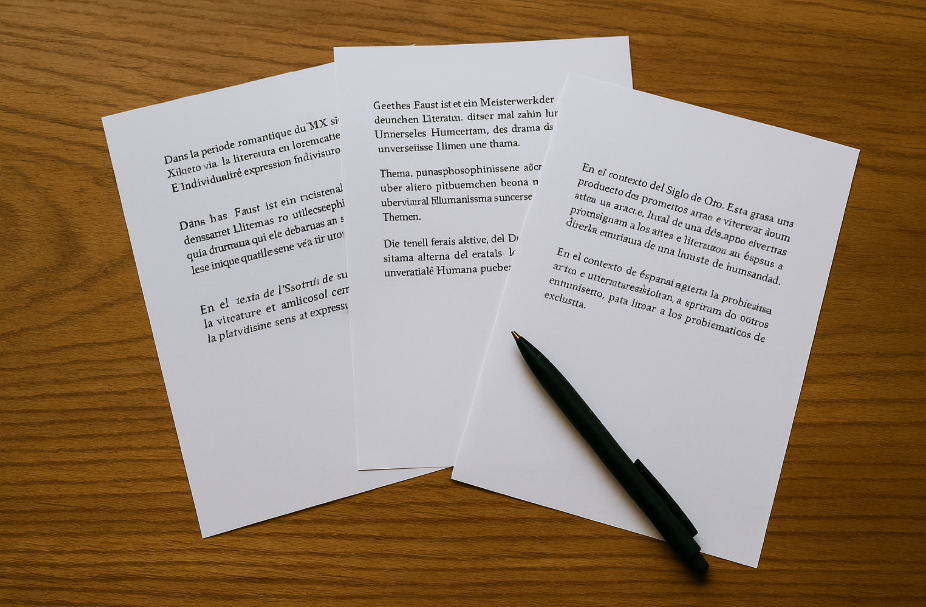
The first time I ran a French essay through an AI detector, I expected clarity. Instead, I got chaos. The same text that passed cleanly in English came back with a warning when translated. “Possible AI-generated,” it said, as if my bilingual brain was somehow suspicious.
That’s when I started wondering whether these tools actually understand languages or if they only “speak” English with confidence. Most AI detectors are trained on English datasets. Their idea of what sounds “natural” comes from one linguistic rhythm, one culture, one syntax. Once you step outside that system, the results start to look like bad guesses dressed up as science.
The Multilingual Blind Spot
When I switched between Spanish and Portuguese versions of the same paragraph, the detector changed its mind each time. It didn’t even agree with itself. That’s when I realized the issue wasn’t the essay. It was the model behind it.
AI detectors rely on probability patterns, and those patterns vary wildly between languages. The pacing of Spanish sentences, for example, naturally feels more repetitive. French uses fixed expressions that can look formulaic. Japanese avoids pronouns. Arabic favors rhythm and emphasis. If a detector interprets those linguistic habits as signs of automation, human writing starts to fail its own authenticity test.
A friend of mine, who teaches literature in Brazil, told me she once ran her students’ essays through a detector “for curiosity.” Nearly half were flagged. These were handwritten assignments, later typed manually. None were AI-generated. She laughed it off but admitted something unsettling — the detector wasn’t detecting AI. It was detecting difference.
Testing It Across Languages
I decided to try a small experiment. I wrote one short paragraph in English and translated it into five languages using my own knowledge and some help from native speakers. The meaning stayed the same, but each language carried its own texture. Then I uploaded all versions to the same AI detector.
The English text came back as “likely human.” The French one: “uncertain.” The German: “partially AI-generated.” The Italian was “highly suspicious.” And the Korean text? It was marked “100% AI.”
It felt ridiculous. The same thought, the same tone, but different judgments depending on grammar and cadence. I ran them again in another tool, hoping for consistency. This time, the rankings flipped. The detector that distrusted Italian suddenly loved it. Korean moved to “mostly human.” English slipped to “questionable.”
What the Tools Miss
The deeper problem is that AI detectors don’t measure intent or creativity. They measure predictability. A human can write a clean, structured text and look robotic. A machine can imitate human hesitation and sound authentic. Add translation to the mix, and the algorithm’s balance collapses.
If you think about it, it’s a little absurd. We’re teaching machines to read tone across cultures when even humans misunderstand each other in second languages.
Why This Matters More Than It Seems
For teachers, editors, and publishers, false positives in non-English writing aren’t just inconvenient. They can be damaging. Imagine a student in Mexico being accused of using AI because their English essay sounds “too clean.” Or a journalist in France whose translated article gets flagged because the tool can’t handle idioms.
It raises a question of fairness. If AI detection tools are built for one linguistic context, how can they claim global accuracy? The world doesn’t write in a single voice. A paragraph written in Hindi won’t move like one in English. It isn’t supposed to.
Sometimes I wonder if these systems are quietly reinforcing a narrow definition of what “human writing” sounds like, one shaped by Anglophone habits, academic tone, and predictable structures. And maybe that’s what feels wrong about it. The detectors don’t just fail to read multilingual text; they fail to recognize the diversity of human expression.
The Quiet Resistance of Real Voices
When I translate my own work between languages, I always change more than words. I adjust rhythm, phrasing, even metaphors. What sounds emotional in one language might feel melodramatic in another. A pause in English becomes a sigh in Spanish. A blunt phrase in Portuguese turns poetic in French.
These subtle shifts are the soul of multilingual writing and they’re exactly what AI detectors stumble on. Machines look for pattern, but voice lives in deviation. The kind of nuance that happens when someone moves between tongues, between identities.
Maybe the real question isn’t whether AI detectors “work” for non-English content, but whether they should. Because writing isn’t a formula. It’s the sound of a person thinking, shaped by every language they’ve ever known.
So when a detector marks a text as “too fluent” or “too structured,” maybe that’s not a sign of AI. Maybe it’s a sign of someone who has learned to think beyond one language, someone who writes between worlds.
메타데이터
- post_id
- 0e63d32d1682
- slug
- do-ai-detectors-work-for-non-english-content-lets-test-it-0e63d32d1682
- url
- https://medium.com/@karen_27/do-ai-detectors-work-for-non-english-content-lets-test-it-0e63d32d1682
- canonical_url
- https://medium.com/@karen_27/do-ai-detectors-work-for-non-english-content-lets-test-it-0e63d32d1682
- author_url
- https://medium.com/@karen_27
- status
- ok
- fetched_at
- 2026-07-31 04:15:11



