23. Project:Twlight
Can Doctor Who grow up without losing its soul?
Can Doctor Who Grow Up Without Losing Its Soul?

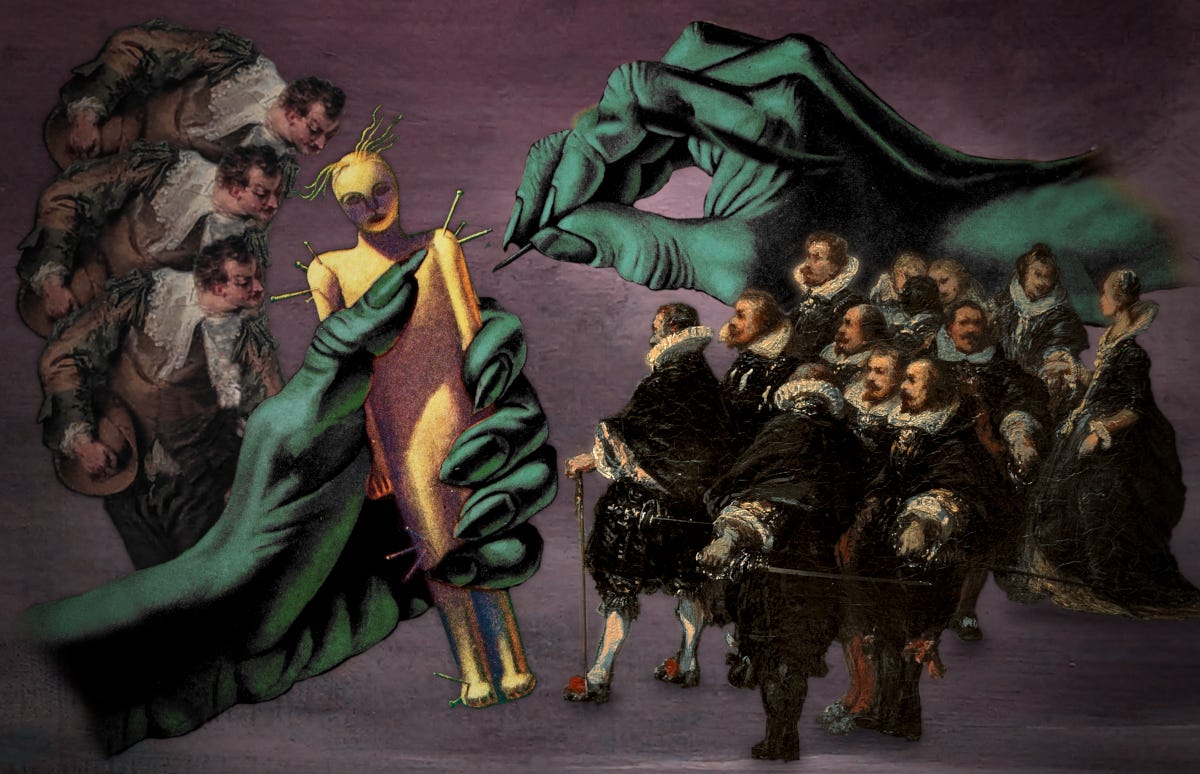
Alternate artwork by https://www.deviantart.com/pandplayerhd/art/Doctor-Who-MR-23-Project-Twilight-TEXTLESS-1025366698
There comes a point in any long-running series when it must decide what it wants to be. Not just for the next story, but for the next decade. Project: Twilight is that moment for Big Finish: the instant when ambition meets execution, and the audio range announces it’s no longer content to simply exist in the shadow of the television series. This isn’t just horror with teeth. It’s a declaration that Big Finish intends to build something bigger, darker, and more emotionally complex than anything attempted before.
Strip away the vampires, the government conspiracies, and the South London setting, and what remains is a story about hunger. Not just the literal craving for blood, but the desperate human need for control, identity, and escape from circumstances that have already devoured everything you were. Project: Twilight understands that the most effective horror doesn’t announce itself with fangs bared. It creeps in through the cracks of plausibility, settling into the space between myth and modernity until you can’t quite remember where one ends and the other begins.
The premise is deceptively straightforward: vampires in Bermondsey, government bioweapons experiments gone rogue, and a shiny new casino concealing decades of buried secrets. But this isn’t gothic melodrama or camp excess. If anything, the story recalls Channel 4’s Ultraviolet from 1998: grounded, politically conscious, and disturbingly plausible. Both works understand that vampirism becomes truly unsettling when stripped of its romantic trappings and examined as biological warfare, as social control, as the logical endpoint of treating human beings as resources to be exploited.
When Horror Means Business
What distinguishes Project: Twilight from earlier Monthly Range entries is its narrative discipline. Cavan Scott and Mark Wright have crafted something that moves with purpose, each scene advancing either plot or character without indulging in the kind of atmospheric wandering that can bloat audio drama. The runtime feels exactly right, tight enough to maintain tension but generous enough to let the horror breathe and the characters develop beyond their initial sketches.
Gary Russell’s direction builds a soundscape that feels tactile and immediate. You’re not just listening to actors in a studio; you’re standing in those damp Bermondsey alleyways, feeling the cold radiate off the Thames, catching the scent of takeaway food mixing with something far less savoury. The production creates a sense of place so specific that the Dusk Casino becomes as much a character as any of the speaking roles, its chrome-and-velvet facade barely concealing the rot beneath.
The score threads through this world with admirable restraint. Too often, horror productions telegraph their scares with aggressive musical cues. Here, the music understands that dread accumulates in the quiet moments, in the spaces between dialogue where your imagination fills in what the microphone can’t capture. It’s sophisticated work that trusts the audience to meet the story halfway.
The Long Game Begins
But what makes Project: Twilight genuinely significant isn’t just its success as a standalone horror piece. It’s the way it lays groundwork for something far more ambitious: a multi-Doctor, multi-year narrative architecture that will span dozens of releases and fundamentally reshape what Big Finish can accomplish. The Forge makes its first appearance here, introduced not with fanfare but as a name that carries weight before we fully understand why.
This is bold storytelling, the kind that requires faith from both creators and audience. Seeds planted here won’t germinate for months or even years of releases. A throwaway reference to Zagreus won’t pay off until we’re ten stories deep into a different arc entirely. The mother fleeing with her son in this story will circle back in ways that transform both into central figures of heartbreaking significance.
It’s the kind of serialised storytelling that television Doctor Who has often struggled to achieve, constrained by production realities and the need to serve casual viewers alongside devoted fans. Big Finish, operating in a different medium with a self-selecting audience, can afford to play the long game. Project: Twilight is the first clear signal that they intend to do exactly that.
Performance and Presence
Colin Baker continues to reveal new dimensions to his Doctor with each release. The Sixth Doctor here operates at full theatrical volume when the situation demands it, but Baker has grown remarkably skilled at knowing when to strip away the performance and let genuine emotion show through. His reaction to discovering the human blood bank is played with devastation rather than bombast, a choice that makes the moment land far harder than righteous fury ever could.
The partnership between the Doctor and Evelyn has matured into something genuinely special by this point. Maggie Stables brings warmth and intelligence to every scene, but it’s her work opposite Rosie Cavaliero’s Cassie that provides the story’s emotional foundation. The decision to pair these two characters rather than defaulting to Doctor-and-guest-star dynamics is inspired. Their scenes together feel intimate and real in ways that action-heavy plotting rarely allows.
Cavaliero herself delivers a performance that refuses easy categorisation. Cassie could have been a simple victim, a mother in peril whose only function is to need rescue. Instead, she’s allowed complexity: fear and fury, desperation and determination. She makes choices, sometimes poor ones, and the story never punishes her for being human under impossible pressure. It’s a remarkably sympathetic portrayal that makes her eventual importance to the broader Big Finish continuity feel entirely earned.
The Monsters We Make
The villains here operate on multiple levels. On the surface, we have Reggie ‘The Gent’ Mead and Amelia Doory, vampire gangsters building their criminal empire in London’s underworld. But the real horror lies in the institution that created them: the Forge, with its clinical detachment and bureaucratic efficiency, turning human suffering into experimental data and mythological creatures into potential weapons.
Holly De Jong’s Amelia is particularly effective, playing the character as someone who’s learned to weaponise charm while nursing genuine ambition beneath the smile. She’s not just surviving; she’s strategising, planning to transform London into her personal feeding ground. The performance balances menace with sophistication in ways that make her abrupt and ambiguous exit from the story feel like a genuine loss. There’s a full character arc here that deserved proper resolution, even if that resolution was her downfall.
The introduction of Dr William Abberton feels less successful, primarily because the story doesn’t give itself enough time to establish him before demanding we care about the reveal. It’s one of the few places where the otherwise excellent pacing falters, asking the audience to invest in a twist involving a character who’s been more referenced than present.
Prejudice and Recognition
One of the story’s subtler achievements is how it handles the Doctor’s prejudice against vampires. State of Decay established that the Time Lords and vampires have a genocidal history, and the Doctor carries that cultural trauma with him. Here, faced with victims of human experimentation who happen to be vampiric, he has to confront the gap between his instinctive revulsion and the reality in front of him.
Baker plays this internal conflict with admirable nuance. The Doctor doesn’t suddenly abandon his caution or declare vampires misunderstood. Instead, he struggles to reconcile categories that no longer fit the situation. These aren’t the ancient enemies of Gallifrey; they’re people who’ve been transformed against their will and then weaponised by human institutions. The story forces him to recognise that sometimes the real monsters are the ones holding clipboards and authorising experiments.
It’s a small thread in a dense narrative, but it adds psychological depth to what could have been a straightforward horror runaround. The Doctor’s discomfort with his own prejudice feels honest, and the story never lets him off the hook with an easy answer.
Hunger as Theme
Everyone in Project: Twilight is starving for something. The vampires hunger for blood, obviously, but also for autonomy and recognition as something more than failed experiments. The Forge hungers for control, for the ability to catalogue and weaponise anything that doesn’t fit within accepted scientific frameworks. Cassie hungers for safety and a future for her son. Evelyn hungers for understanding in a situation that defies rational explanation.
Even the Doctor, beneath all his confidence and verbal pyrotechnics, seems to be searching for certainty in a moral landscape that refuses to provide it. The story understands that horror and hunger are intimately connected, that fear and desire often occupy the same psychological space. What we crave can consume us. What we flee from might be the only thing that makes us feel alive.
This thematic coherence elevates Project: Twilight beyond simple genre exercise. The vampire mythology becomes a lens through which to examine larger questions about agency, exploitation, and what happens when institutional power treats people as problems to be solved rather than lives to be valued.
A Bite That Won’t Heal
So can Doctor Who grow up without losing its soul? Project: Twilight answers with a qualified yes. The maturity here doesn’t come from cynicism or grim-dark posturing but from a willingness to treat characters as complex individuals, to allow consequences genuine weight, and to trust that audiences can handle ambiguity and long-term storytelling.
The horror works because it’s grounded in recognisable institutional evil rather than supernatural abstraction. The character work resonates because people are allowed to be messy and contradictory rather than serving neat narrative functions. The broader arc launching here succeeds because it’s built on emotional investment rather than mere plot mechanics.
This is where Big Finish stopped simply making Doctor Who audios and started building something more ambitious: a shared universe where actions in one story create ripples that become waves stories later, where characters can develop across years rather than hours, where tragedy and triumph accumulate the way they do in actual lives rather than being reset at the end of each adventure.
Project: Twilight changed what was possible. It demonstrated that audio drama could support complex, serialised storytelling without sacrificing individual story quality. It proved that darkness and depth needn’t come at the expense of character or hope. And it left marks that still haven’t fully healed, scars that remind us of the moment everything changed and hunger became not just a vampire’s curse but a creative philosophy that would reshape Big Finish for the decade to come.
메타데이터
- post_id
- 0e9134cff83e
- slug
- 23-project-twlight-0e9134cff83e
- url
- https://medium.com/doctor-who-the-big-finish-reviews/23-project-twlight-0e9134cff83e
- canonical_url
- https://medium.com/doctor-who-the-big-finish-reviews/23-project-twlight-0e9134cff83e
- author_url
- https://medium.com/@tim_53834
- status
- ok
- fetched_at
- 2026-08-19 05:47:14