We Only Look at the World Once. The Rest Is Memory.
After childhood, we mostly stop seeing and start recognizing.
We Only Look at the World Once. The Rest Is Memory.
After childhood, we mostly stop seeing and start recognizing.
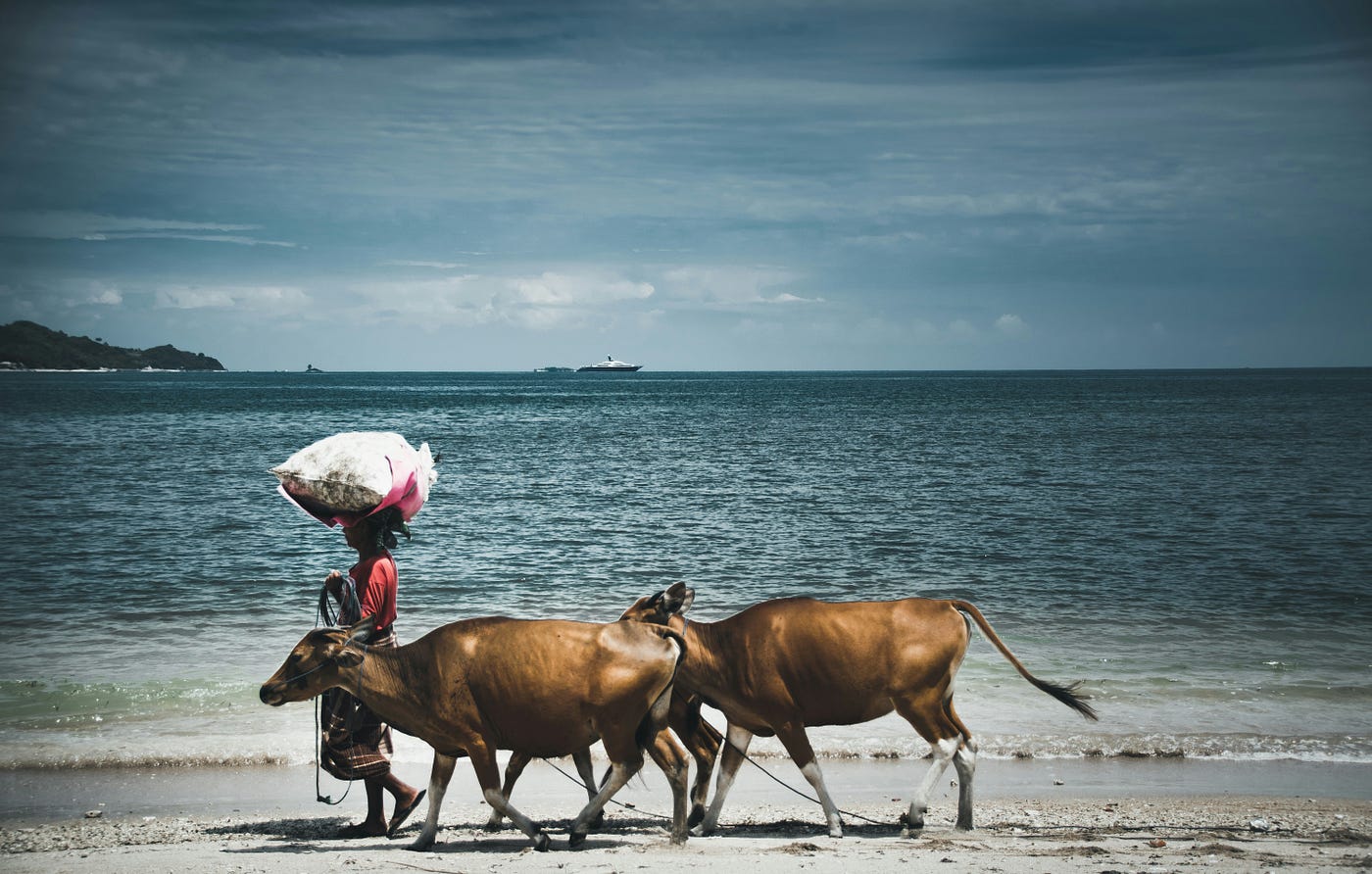
Photo by il vano on Unsplash
Not a Medium member? Read this story here.
When I was maybe nine, my cousin came to stay during the monsoon, and one night, drunk on the kind of energy that only exists at that age, we snuck out into the rain. The whole street had turned into a black mirror, streetlights smeared across the puddles, the air thick with that smell of wet earth that I still can’t describe but could recognize instantly if I smelled it right now. There was a vegetable vendor near the corner who slept in a little tin-and-tarpaulin hut beside his cart, and for reasons that made total sense at nine and make no sense at all now, we decided it would be thrilling to scare him. We picked up stones and hurled them at his hut, the rain hammering down, the tin going dhak dhak dhak like a drum, and we ran, shrieking, hearts exploding, absolutely certain we were the most alive creatures in the universe. I remember every second of it. The cold, the fear, the wicked joy. And then I went home and threw up the entire night, over and over, some guilty fever gripping my body, and I lay there in the dark thinking, in a nine-year-old’s language, that the world had noticed and the world was angry. Karma, I’d call it now. My body knew I’d done something ugly before my mind had the words.
That night, so many years ago, I can see. I can still see the smeared lights, still hear the tin, still feel the specific texture of that guilt. But yesterday? Gone. Most of my adult life has dissolved into a smooth grey paste. And that gap points at something genuinely unsettling about how human beings experience being alive.
The reason childhood feels so vivid isn’t nostalgia. It’s that a child is genuinely seeing the world, encountering it raw, for the first time, with no template to file it under. An adult almost never sees anything. An adult recognizes.
You walk into a kitchen and your brain doesn’t examine it; it just goes “kitchen,” slaps a label on it, and moves on to whatever it’s worrying about. Neuroscientists describe the brain as a prediction machine. Rather than processing the flood of raw sensory data every moment, which would be exhausting, it runs on models built from past experience and only bothers to update when something violates the prediction.
A child has no models yet, so everything violates the prediction, so everything gets fully processed, fully seen. You, the adult, are mostly running on cached memory. You’re not looking at the world. You’re looking at your own stored assumptions about it.
This is also why time accelerates so cruelly as you age.
That monsoon night stretched out enormous because it was packed with genuinely new information, first-time sensations, novel fear, unfamiliar guilt. Your brain lays down dense memory around novelty and almost none around routine. When everything is new, as it is in childhood, time feels vast and slow and rich. When everything is a repeat, the days blur and a whole year can evaporate leaving barely a trace, because nothing crossed the novelty threshold worth recording. The reason your childhood summers felt endless and your adult years feel like they’re on fast-forward isn’t that time changed. It’s that you stopped encountering and started recognizing. You traded seeing for efficiency.
The Russian critic Viktor Shklovsky named the problem beautifully a hundred years ago.
He said that through habit, perception becomes automatic, that we stop truly seeing the objects in our lives and merely acknowledge they exist, like reading the first letter of a word and skipping the rest.
He argued the entire purpose of art was to reverse this, to make the stone stony again, to force us to actually see what habit had turned invisible.
The Zen tradition arrived at the same place from another direction with the idea of “beginner’s mind,” the effort to meet each moment as if for the first time, precisely because the expert’s mind has stopped looking. Both were describing the same lost thing: the child’s way of seeing, before memory papered over the world.
The world hasn’t gotten duller. You’ve gotten faster.
This is the part worth sitting with. The world is exactly as astonishing as it was on that rain-soaked night. The lights are still smeared across the puddles, the wet earth still smells like that, the tin still drums under the rain for any child who happens to be out in it. Nothing dimmed. What changed is that you built such an efficient library of recognition that you rarely have to actually experience anything anymore. You’ve optimized yourself out of your own life. The tragedy of adulthood isn’t that the magic left. It’s that you got so good at predicting the world that you stopped bothering to look at it.
You can’t return to the child’s total novelty; the models are built and they won’t unbuild. But you can break the prediction.
Take a different route home and watch how the ordinary suddenly reappears, how your neighborhood becomes visible again the instant your autopilot can’t run.
Travel does this too, which is why a week abroad can feel longer and denser than a month at home; everything is unfamiliar, so you’re forced to see again, and time swells back up.
Pay ferocious attention to one small thing, the way a child or an animal studied a single beetle for an hour. Do something for the first time, badly, and feel how alert and awake the fumbling makes you. Each of these drags you, briefly, out of memory and back into perception.
That night in the rain was a genuinely rotten thing to do, and my body was right to punish me for it. But it’s also one of the last times I remember being fully, painfully awake to the world, seeing it and being seen back, before adulthood wrapped everything in the soft grey gauze of the already-known. We really do look at the world once, wide-eyed, in childhood. Everything after is mostly memory playing back. The rare gift is to catch yourself, just occasionally, actually looking again, to stand in the rain as a grown person and, for one strange second, genuinely see the lights smear across the water as if you’d never seen water in your life.
메타데이터
- post_id
- 0eb0ebfe5c4d
- slug
- we-only-look-at-the-world-once-the-rest-is-memory-0eb0ebfe5c4d
- url
- https://medium.com/the-writing-table/we-only-look-at-the-world-once-the-rest-is-memory-0eb0ebfe5c4d
- canonical_url
- https://medium.com/the-writing-table/we-only-look-at-the-world-once-the-rest-is-memory-0eb0ebfe5c4d
- author_url
- https://medium.com/@sadhvipharasi
- status
- ok
- fetched_at
- 2026-07-16 14:44:18