What Causes Grey Hair at a Young Age? The Truth Behind Premature Greying
There’s something strangely emotional about spotting your first grey hair. For some people, it happens in their forties or fifties and…
What Causes Grey Hair at a Young Age? The Truth Behind Premature Greying
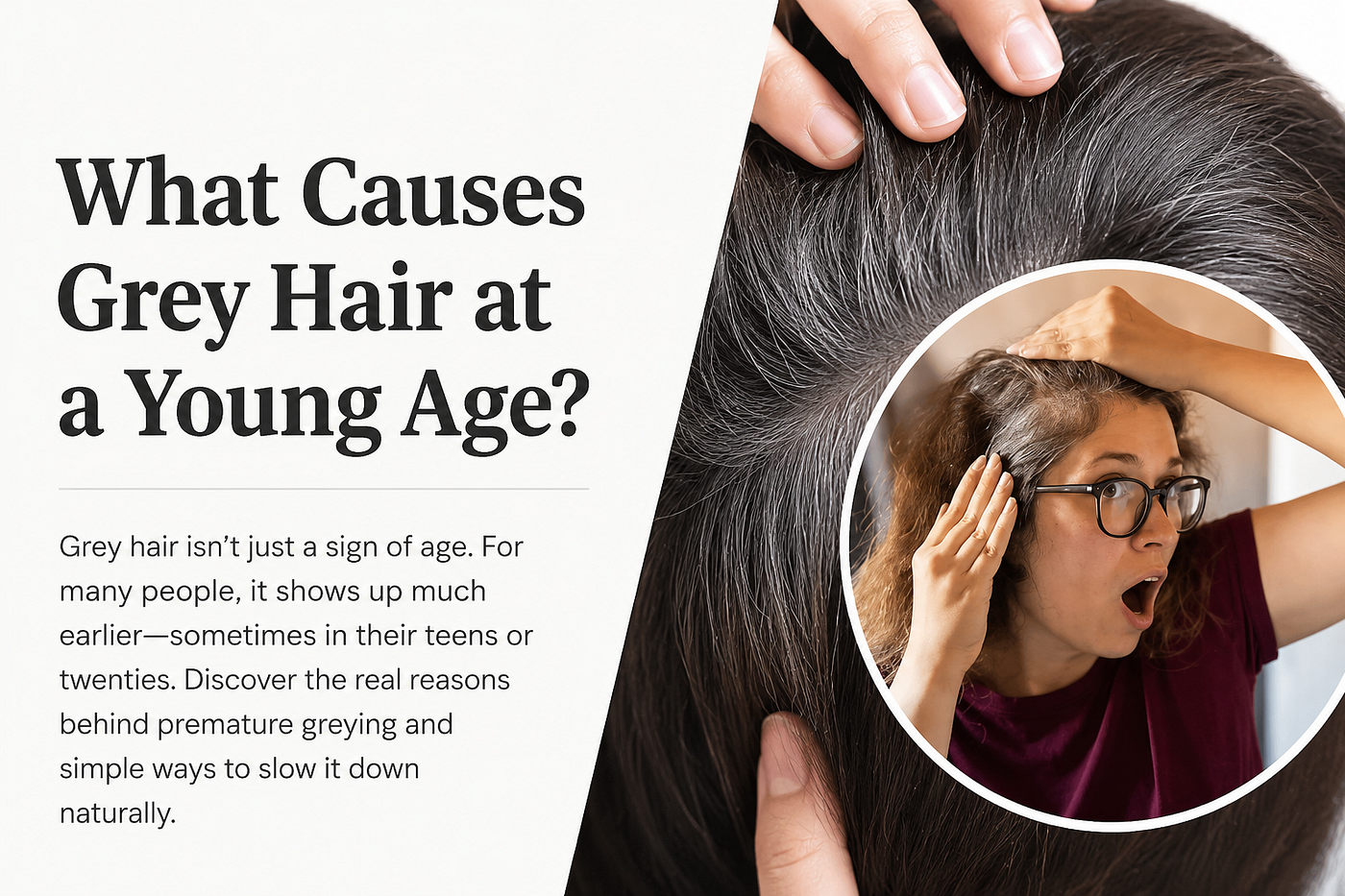
There’s something strangely emotional about spotting your first grey hair. For some people, it happens in their forties or fifties and feels expected. But when grey strands begin showing up in your twenties or even your teenage years, it can feel confusing, frustrating, and sometimes even stressful.
Premature greying is becoming increasingly common today, and it’s not always just about aging. In many cases, your hair is reflecting what’s happening inside your body. Stress, poor nutrition, lifestyle habits, genetics, and even environmental exposure can all play a role in turning hair grey earlier than expected.
If you’ve been wondering why it happens and whether it can be slowed down naturally, this guide breaks it down in a simple and practical way.
For a detailed guide on this topic, you can also read: What Causes Grey Hair at a Young Age?
Why Does Hair Turn Grey?
Hair gets its natural color from a pigment called melanin. This pigment is produced by cells known as melanocytes located inside hair follicles. The amount and type of melanin determine whether your hair is black, brown, blonde, or red.
As the body ages, melanocytes gradually slow down melanin production. Eventually, they stop producing pigment completely, and the hair turns grey or white.
But when this happens much earlier than normal, it’s usually connected to a combination of internal and external factors.
Genetics: The Biggest Influence
Genetics is one of the strongest reasons behind premature greying. If your parents or grandparents experienced early grey hair, there’s a good chance you may experience it too.
Some people naturally inherit a faster decline in melanin production. While genetics cannot be changed, lifestyle choices can still influence how quickly grey hair progresses.
Nutritional Deficiencies and Hair Pigment Loss
Your hair needs proper nutrition to maintain healthy pigment production. Deficiencies in certain vitamins and minerals can weaken hair follicles and reduce melanin levels.
Some of the most important nutrients include:
- Vitamin B12
- Vitamin D
- Iron
- Copper
- Vitamin E
Low levels of these nutrients can affect oxygen delivery and melanin synthesis, leading to early greying.
This is especially common in people following restrictive diets or dealing with poor nutrient absorption.
Stress and Grey Hair
For years, people have blamed stress for grey hair, and science now supports that idea.
Chronic stress affects stem cells responsible for regenerating melanocytes. Over time, prolonged stress may reduce pigment production and accelerate greying.
Stress also impacts blood circulation, hormone balance, and scalp health, all of which influence hair quality and color.
Although one stressful week won’t instantly turn your hair grey, years of chronic stress can definitely contribute.
Oxidative Stress and Environmental Damage
Every day, your body is exposed to free radicals caused by pollution, poor diet, smoking, lack of sleep, and environmental toxins.
These unstable molecules damage healthy cells, including the melanocytes responsible for hair color. This process is known as oxidative stress.
Over time, oxidative stress accelerates aging in the body and may lead to premature grey hair.
Smoking and Lifestyle Habits
Smoking is strongly linked to early greying. Cigarette smoke contains harmful chemicals that damage DNA and restrict blood circulation to the scalp.
Smokers are significantly more likely to develop premature grey hair compared to non-smokers.
Poor sleep, dehydration, unhealthy eating habits, and excessive alcohol consumption can also weaken hair health and increase oxidative damage.
Hormonal Imbalances
Hormones play a major role in regulating hair growth and pigmentation.
Conditions like hypothyroidism and hyperthyroidism can affect the hair cycle and contribute to early greying. Hormonal changes during pregnancy, menopause, or periods of stress may also impact hair pigmentation.
When hormones become imbalanced, hair often reflects those internal changes.
Damage from Hair Products
Ironically, many people trying to hide grey hair may unknowingly make it worse.
Frequent use of bleach, harsh dyes, heat styling tools, and chemical treatments can damage melanocytes and weaken hair follicles.
Hydrogen peroxide, commonly found in hair products, may gradually bleach natural pigment over time.
Switching to gentler or natural alternatives can help protect long-term hair health.
Can Grey Hair Be Reversed?
One of the most common questions people ask is whether grey hair can be reversed naturally.
The answer depends on the underlying cause.
- If genetics is the primary reason, reversal is unlikely.
- If nutritional deficiencies, stress, or lifestyle habits are contributing factors, improving those conditions may help slow down greying and sometimes restore partial pigmentation.
The earlier you address the root cause, the better your chances of maintaining natural hair color longer.
Natural Ways to Slow Premature Greying
While there is no guaranteed cure, healthy habits can support stronger and healthier hair.
Eat Nutrient-Rich Foods
Include foods rich in antioxidants, vitamins, and minerals such as:
- Spinach
- Eggs
- Nuts and seeds
- Berries
- Fish
- Leafy greens
Reduce Stress
Meditation, yoga, exercise, deep breathing, and proper sleep can help reduce stress levels and improve overall scalp health.
Avoid Harsh Chemicals
Limit excessive coloring, bleaching, and heat styling whenever possible.
Improve Scalp Health
Regular scalp massages can improve blood circulation and nutrient delivery to hair follicles.
Quit Smoking
Reducing exposure to toxins can significantly improve hair and scalp health over time.
Final Thoughts
Grey hair at a young age is more than just a cosmetic issue. In many cases, it’s your body’s way of signaling imbalance, whether it’s related to stress, nutrition, hormones, or lifestyle habits.
While genetics may influence when grey hair appears, healthy habits can make a noticeable difference in slowing the process and improving overall hair quality.
Instead of focusing only on covering grey hair, it’s important to understand what your body may be trying to tell you. Healthy hair starts from within, and taking care of your overall well-being is often the best long-term solution.
메타데이터
- post_id
- 0ed63ee16559
- slug
- what-causes-grey-hair-at-a-young-age-the-truth-behind-premature-greying-0ed63ee16559
- url
- https://medium.com/@jeevajayanthan2003/what-causes-grey-hair-at-a-young-age-the-truth-behind-premature-greying-0ed63ee16559
- canonical_url
- https://medium.com/@jeevajayanthan2003/what-causes-grey-hair-at-a-young-age-the-truth-behind-premature-greying-0ed63ee16559
- author_url
- https://medium.com/@jeevajayanthan2003
- status
- ok
- fetched_at
- 2026-07-24 21:42:37