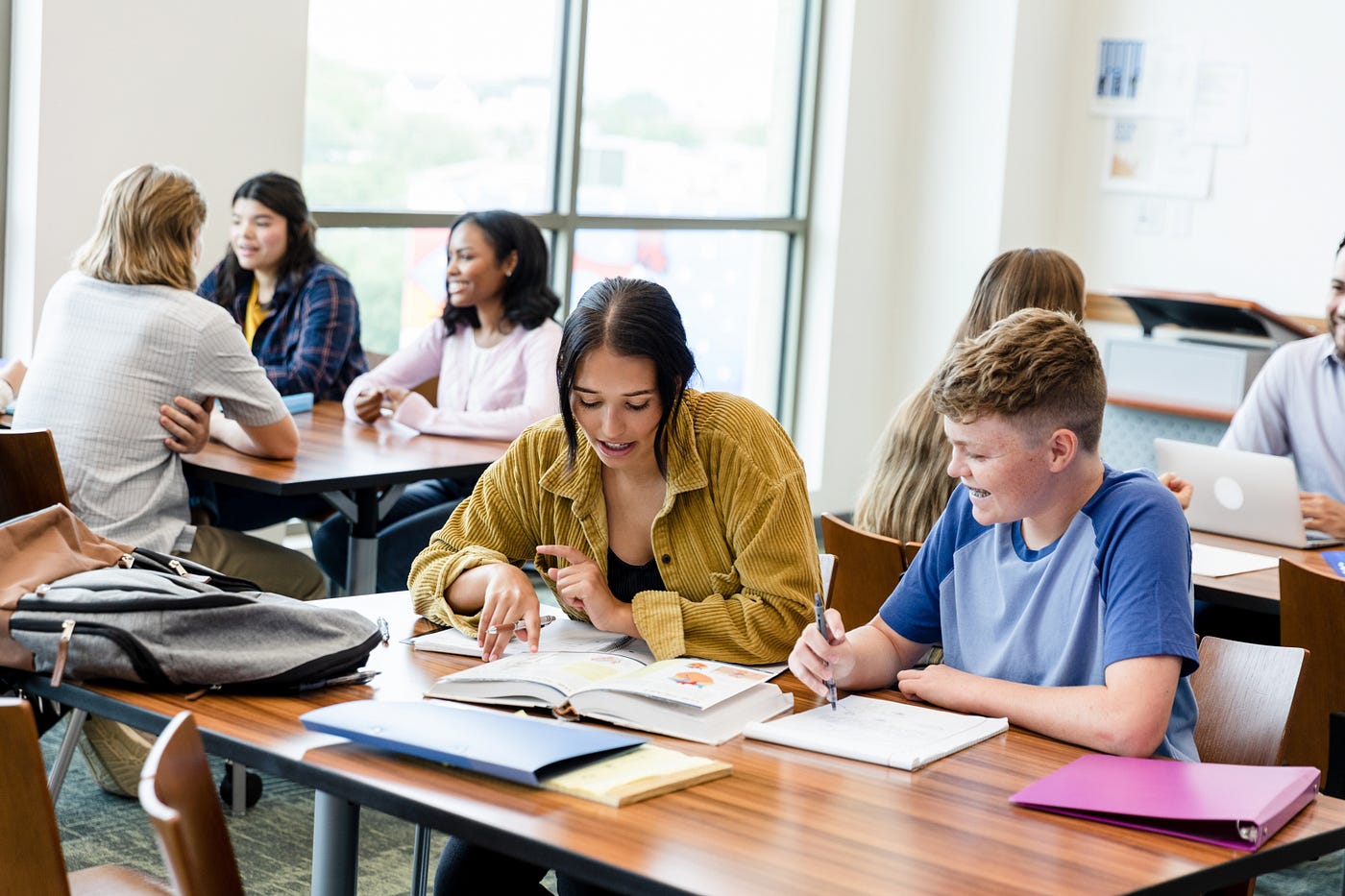
Why Visuals and Gestures Matter for Multilingual Math Learners
By Georgina Rivera, M.Ed.
Why Visuals and Gestures Matter for Multilingual Math Learners
By Georgina Rivera, M.Ed.
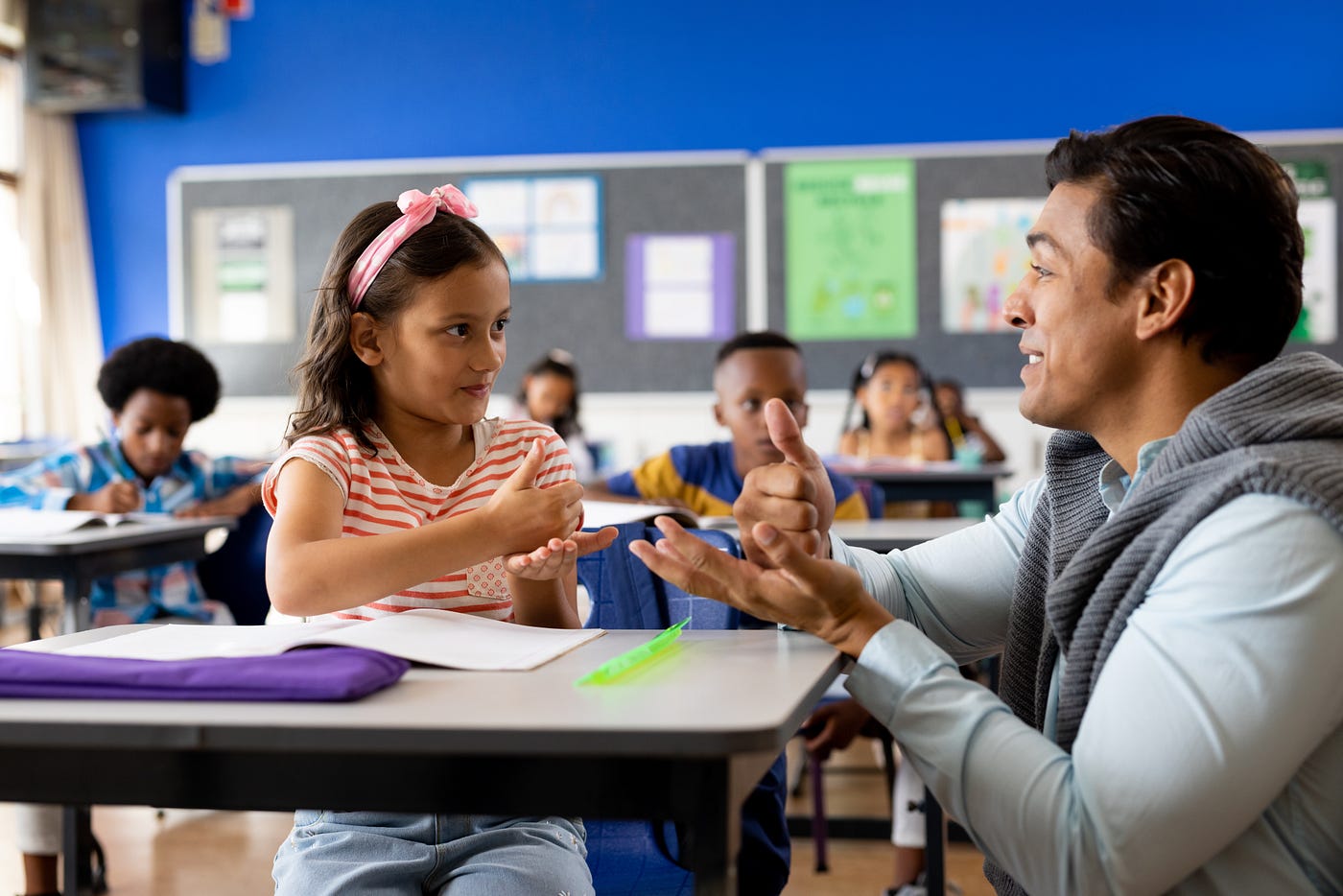
Practical ways classroom, dual language and bilingual teachers can help every student access the language (and the joy!) of mathematics.
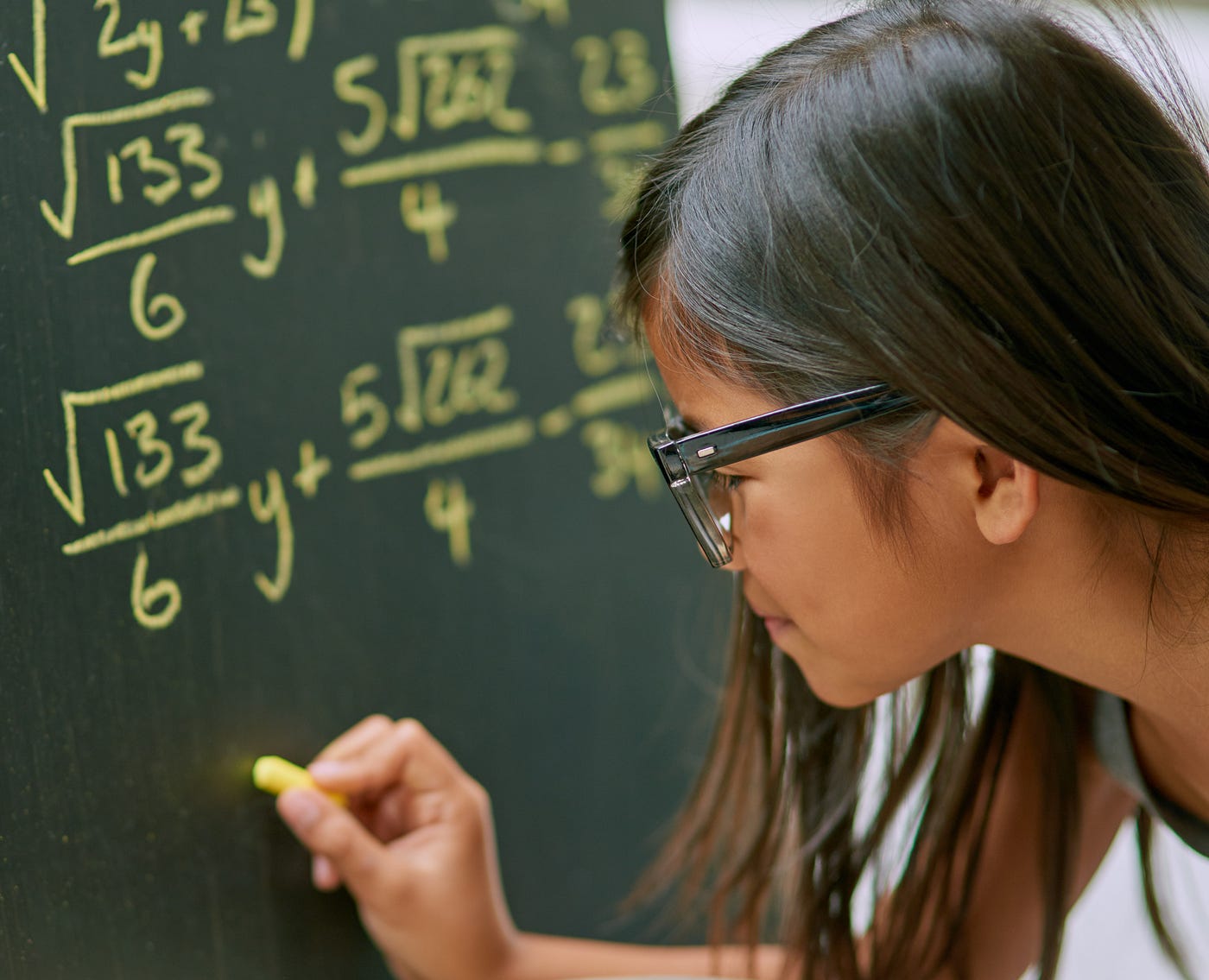
Mathematics is far from a “language-free” subject. To truly engage with mathematical tasks and develop a deep understanding of mathematical concepts requires verbal discussion and understanding of key vocabulary. For multilingual learners, language can be a barrier, standing between them and a math skill or concept they’re capable of mastering.
The good news: there are simple but powerful tools to highlight the language of math and close the barrier for multilingual learners already at your disposal. Seeing is understanding: Visuals and gestures give students a way into mathematics before, during, and after the words arrive. Here’s why they matter, and how to put them to work in your classroom.
Visuals Are Essential for Multilingual Learners (and They Help Everyone)
Sometimes students learn best when they can see an idea, not just hear it described. Mathematics is rich with visual possibilities, which gives you a natural advantage in instruction. You can draw on:
- Pictures in your program materials
- Real objects already in your classroom
- Manipulatives that help students interpret quantities and contexts
- Quick sketches you create on the spot
Each of these gives students a concrete reference point to hold onto while they make sense of new numbers, contexts, and vocabulary. A simple shift is having a visual vocabulary wall, and there you pair the vocabulary with the images so all students can reference them throughout the lesson. This simple shift not only helps multilingual learners but also all students because they are all learning the language of mathematics.
Gestures Make the Language of Math Visible
Gestures in instruction can help students connect the language of math to meaning. A simple movement can communicate an idea long before a student has the words for it. For example, gesturing while explaining the terms greater than and less than can help students understand the difference between those two words.
Consider describing a large quantity by spreading your hands wide, then a small one by bringing them close together. In a single gesture, students see and feel the meaning behind the vocabulary. Pairing words with movement gives multilingual learners an extra, reliable channel for understanding that doesn’t depend on already knowing the term.
Connecting the Visual to the Abstract
Visuals can bridge students from the concrete to the abstract. Imagine a set of counters arranged in three rows of five. With that picture in front of them, you can write 3 × 5 = 15, and students can literally see how the symbols connect to the arrangement they’re looking at.
That picture-to-symbol, concrete-to-abstract connection is exactly the kind of sense-making that deepens conceptual understanding. When you use visuals and gestures together, students build meaning around both the mathematics and the vocabulary, which is critical for multilingual learners engaging with grade-level content.
What The Language of Math Looks Like in Curricula
These principles are woven throughout the *California Reveal Math and [Reveal Math](https://mhk12.us/RevealMLL)* curricula, which are designed to give multilingual learners repeated, meaningful access to visuals and discourse.
Be Curious: Launching with a Visual
Each lesson opens with Be Curious, a vivid image students can notice and wonder about. They can count, compare, and make connections to their own lives. It’s an intentional invitation for discourse: multilingual learners can share their thinking in their home language, while emerging bilingual students can share in English. Students should be empowered to speak in whatever language lets them express their understanding most fully. Starting with a visual invites all students into the mathematics.
Activity-Based Exploration: Discourse and Discovery
The activity-based exploration gives students multiple opportunities to use visuals and/or manipulatives to make sense of the mathematics and engage in discourse, both as a whole class and with peers. These moments also serve as built-in formative assessment: listen for the mathematics your students already understand. Through seeing, talking, and exploring, students build the kind of conceptual understanding that lasts.
How You Can Support Your Multilingual Learners in Class Tomorrow
To summarize, here are a few strategies you can implement in your classroom to support your multilingual learners (and all your students!) in understanding the language of math:
- Lead with visuals. Use textbook images, real-world images (that you bring in or students share), classroom objects, manipulatives, and quick drawings to give students a concrete anchor for new ideas.
- Pair words with gestures or movement. Movement and gestures make math vocabulary visible and give multilingual learners a second channel for meaning.
- Bridge concrete to abstract. Connect a visual directly to its symbolic form (an array to 3 × 5 = 15), so students see how the math fits together.
- Make room for discourse. Welcome home language and English contributions alike. What matters is that students can express and extend their thinking.
- Listen as you go. Use visual-rich activities as formative assessment to surface what students already know and where to go next.
When visuals and gestures become a regular part of your math instruction, you give every student (and especially your multilingual learners!) a clearer path into the concepts, the vocabulary, and the curiosity that make mathematics come alive.
To learn more about California Reveal Math, visit: https://bit.ly/CARevealMLL
To learn more about National Reveal Math, visit: https://mhk12.us/RevealMLL

Georgina Rivera is a mathematics leader educator, coach, presenter, and author. Currently, she serves as the Principal for Charter Oak International Academy, an IB School in West Hartford, CT. Georgina has previously served as an Elementary STEM Supervisor, and district-wide elementary mathematics coach, and began her career as a middle school mathematics teacher. She serves on several boards including the CAS Activities Board, Vice President for the National Supervisors of Mathematics and co-designed a National Conference, and serves on the advisory board for Math Teacher’s Circle for Social Justice. As an author, her titles include Math by the Book (Grade 1), Answers to Your Biggest Questions About Teaching Elementary Math, K-5 and 6–8 Reveal Math Textbook Series by McGraw Hill, and Culturally Relevant Mathematics Leadership. Her most important role is working with teacher leaders to create equitable math classrooms for every student.
메타데이터
- post_id
- 0efca4423e7c
- slug
- why-visuals-and-gestures-matter-for-multilingual-math-learners-0efca4423e7c
- url
- https://medium.com/inspired-ideas-prek-12/why-visuals-and-gestures-matter-for-multilingual-math-learners-0efca4423e7c
- canonical_url
- https://medium.com/inspired-ideas-prek-12/why-visuals-and-gestures-matter-for-multilingual-math-learners-0efca4423e7c
- author_url
- https://medium.com/@mheducation
- status
- ok
- fetched_at
- 2026-06-21 19:25:17