THE REMAINDER OF WRATH
A Sermon on Psalm 76 — God’s Sovereign Restraint of Evil
THE REMAINDER OF WRATH
A Sermon on Psalm 76 — God’s Sovereign Restraint of Evil
Primary Text:
Psalm 76:10 — “Surely the wrath of man shall praise thee: the remainder of wrath shalt thou restrain.”
Supporting Texts:
2 Kings 18–19; Isaiah 10:5–7; Romans 9:17; Revelation 12; Matthew 10:28
I. INTRODUCTION — A Song for Troubled Times
Beloved, I have a favourite song — a setting, rendering of Psalm 76 that most might cringe at, but it stands out for me. It spells out every word of the Psalm, and the emphasis and tone are excellent once imbibed.
I had a friend who said that the best test of a calm person is one who can stay reasonable under extreme provocation. The recent events of the world have shown the opposite. Men in authority have displayed abnormal levels of unrestraint — cursing and threatening at levels unheard of since time began. Even Jezebel, when she threatened Elijah, displayed an authority no one bestowed upon her — like the attitude of many in the world today wielding power they were never given.
The Psalm before us is a victory song — composed, as many scholars believe, after Sennacherib’s 185,000-strong Assyrian army was laid to nought overnight. The bows, arrows, swords, and shields that threatened the people of God were broken. And yet, as if the world would learn its lesson, it still threatens the people of God today.
This Psalm is pregnant with lessons, rich in metaphor, and a good place to come and see the goodness and mercy of the Lord in answer to the heartfelt cry of His people. I have never known any of the Lord’s to lack bread, as we read elsewhere. The Lord will move mountains for His people’s faith of the size of a mustard seed — because faith is faith, and God is God, and He does nothing in small measure.
II. THE CONTEXT — Sennacherib’s Invasion
Let us set the scene. The year is approximately 701 BC. Sennacherib, king of Assyria — that great empire which had already crushed the northern kingdom of Israel in 722 BC — has marched against Judah. He has taken forty-six fortified cities. He boasts on his Taylor Prism of shutting up Hezekiah “like a bird in a cage” .
And now he stands before Jerusalem. His officials mock the living God. The Rabshakeh, his spokesman, cries out: “Hath any of the gods of the nations delivered his land out of the hand of the king of Assyria?” (2 Kings 18:33).
Hezekiah receives the threatening letter. He goes up to the house of the Lord, spreads it before the Almighty, and prays .
And the Lord answers through Isaiah the prophet: “Thus saith the LORD concerning the king of Assyria, He shall not come into this city, nor shoot an arrow there, nor come before it with shield, nor cast a bank against it. By the way that he came, by the same shall he return” (2 Kings 19:32–33).
That night, the angel of the Lord went out and struck down 185,000 in the camp of the Assyrians . Sennacherib withdrew in shame, and years later, while worshipping in the house of his god Nisroch, his own sons murdered him (2 Kings 19:37) .
And so the Psalmist sings: “Surely the wrath of man shall praise thee: the remainder of wrath shalt thou restrain.”
III. THE MEANING OF THE TEXT
The Hebrew of this verse is rich with meaning. The phrase can be read in two ways, both true. The older translations render it:
“The remainder of wrath shalt thou restrain”
— that is, God holds back the full fury of man’s anger .
But the more literal reading is striking:
“Thou shalt gird Thyself with the remainder of wrath”
. As a warrior girds on his sword, as a king puts on his robe, so God takes the left-over rage of His enemies and wears it as an ornament of praise.
Adam Clarke comments: “The rage of Sennacherib shall only serve to manifest thy glory. The stronger he is, and the more he threatens, and the weaker thy people, the more shall thy majesty and mercy appear” .
John Calvin writes that this Psalm celebrates “the continual care of God in defending the Church” so that the faithful “without any doubt or hesitation” may glory in His protection .
And E.J. Waggoner observes: “God makes the wrath of man to praise him, using their utmost fury as a garment of praise” .
What does this mean for us? It means this:
God is never outmatched by evil. He is never surprised by rage. He takes the very plans devised against Him and uses them for His glory.
IV. THE PATTERN OF WRATH IN SCRIPTURE
We see this pattern running throughout the Word of God.
Consider Joseph. His brothers sold him into slavery out of envy and hatred. They meant it for evil. But God meant it for good — to preserve much people alive (Genesis 50:20). The wrath of those brothers became the salvation of Egypt and Israel .
Consider Pharaoh. God raised him up — that is, permitted him to come to power — “for this cause have I raised thee up, for to shew in thee my power; and that my name may be declared throughout all the earth”
(Romans 9:17). The wrath of Pharaoh, displayed in his hardness of heart, became the backdrop for the greatest display of redemption before the cross.
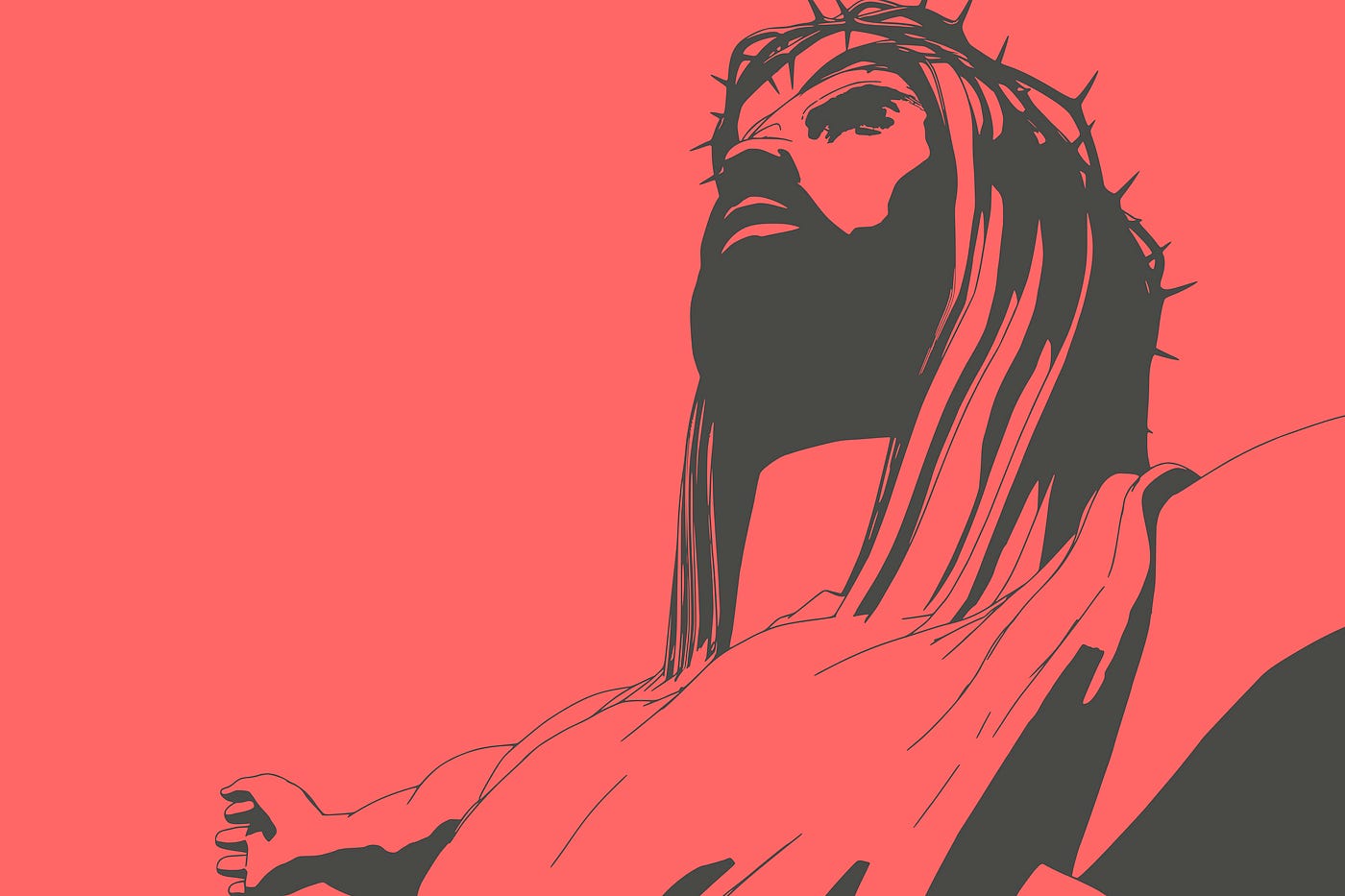
Consider the cross itself. The high priest counselled the death of Christ, intending to end His influence. Herod and Pilate, Gentiles and Jews, gathered together against the Lord’s Anointed. They did what God’s hand and counsel determined before to be done (Acts 4:27–28) . The greatest act of wrath in human history — the murder of the Son of God — became the greatest act of salvation.
This is the principle:
God so overrules the evil designs of men that they turn to His advantage and His glory. He suffers them to do some mischief, but not all they would or can do.
V. THE WRATH OF MAN TODAY
Now, beloved, consider our own day.
Is not the same pattern visible? The world rages. The nations imagine a vain thing. The rulers take counsel together against the Lord and against His Anointed (Psalm 2:1–2).
We see:
The origin of this wrath — as we read how the dragon stood to slay the child Emmanuel (Revelation 12:4). From the garden to the cross to the present hour, the serpent has sought to crush the seed of the woman.
The scale of the wrath — the length to which kings go to prepare their campaigns of hatred. I am struck by reading how the timescale between the rebellion and the arrival of armies sometimes takes up to three years. This points to the patience of God, who shall display His wrath to the uttermost on the great assize.
The thoroughness of the exercise of wrath — hooks in noses, led like animals back to the king’s place. They raid the country of every valuable, for the gathered soldiers must be paid.
The extent of cruelty — children dashed against stones, women defiled and discarded, eyes plucked out. It is gruesome and dreadful what happens when the king arrives with his treasures of the land.
But in this Psalm we read that none of this is an impediment to the Lord. Their disregard does not stop Him from showing His might in a renowned way. For generations to come, men still talk of the victory wrought by the Lord on behalf of His people.
VI. WHEN THE PEOPLE CRY OUT
Notice what happens when the people of God cry out sincerely in repentance. He sends deliverance swiftly.
Mostly, the people of God wait until the enemies arrive before the cry. We are slow to prayer. We try securing help from others before we turn to God. Sometimes we approach Syria or Egypt — political alliances, military solutions — and we are mostly crushed with the people of God.
But when we pray, when we spread the letter before the Lord as Hezekiah did, then God arises.
The Psalm goes on to exhort and proclaim the power of God over the battle. His restraining might — though man has exercised upon man the extent of crushing strength — yet they cannot destroy the soul, as Christ told us (Matthew 10:28). Even death itself, Christ showed His power over by raising the dead through His prophet, and then by raising Himself from the grave. “O death, where is thy sting? O grave, where is thy victory?” (1 Corinthians 15:55).
The armies were equipped to inflict death and destruction, but the pleading prayer of God’s people overcame them. They were caught in the net they had cast.
VII. THE FEAR OF THE LORD
The description of the enemies is striking. It is said: “When God arose.”
Not that God slumbers, but He watches. He sees everything, as we read in the opening chapter of Ezekiel — the wheels full of eyes of the four living creatures. Their strength, intent, and execution were not phantom. They came present. And the meek of the earth saw them. They came fearless and met with those whose strength is the Lord.
And He put that strength to their protection — as the strength of the Lord on the cross, exercised in bearing the sins of the world, is offered to all who will hear.
But some have turned a blind eye, as many today do to the blighting of Satan. They say: “Oh, there is no evil. Peace, peace. We have no need of the protection of the Lord in our lives.”
Well, as we read elsewhere, the besieging on the walls resulted in conquest and slavery. That is what awaits those who fail to see the evils and destruction in and around us — slavery to sin and eternal damnation.
VIII. THE FINAL WRATH DONE AWAY
The final wrath was done away in Christ for those He chose to die for — the elect. The wrath of man, like any of his other activities, cannot reach perfection. It is like the number of the beast — 666. It falls short. It falters, fails, frays, and dies away.
The doing away of wrath results in the rescue of the people of God. Sennacherib, with all his splendour, was murdered by his sons. So does destruction await all who continue to attack — passively or actively in home, workplace, public, business — ridiculing and suppressing people purely because of their belief and proclamation of the love of Christ.
The Lord is the One who ought to be feared. He has displayed His power in many diverse ways. The heavens declare His glory. Our hearts beat with anything attached to Him — and when that stops, we cease to exist in this realm and face eternal judgment.
We are to vow and pay unto the Lord our God and bring presents to appease our daysman. Who are we to appease such a One — our Creator and Maker? Therefore He brought by Himself a propitiation — Himself dying on the cross for the remission of sin. That is the best and only gift He accepts in exchange for our redemption from sin and its guilt.
IX. CONCLUSION — The Maxim for All Saints
A good maxim has been taken from this verse:
God often so counterworks the evil designs of men against His cause and followers that it turns out to their advantage and His glory. Nor does He permit them to go to the extent of what they have purposed and of what they are able to perform. He suffers them to do some mischief, but not all they would or can do
Wrath, fear, regardless of the might we face — we must attain to His good grace by first fearing Him, because He is mightier than any we know. He is mighty to save, a Redeemer of men. He has made this known, for the Bible is full of His redemptive acts, over and over, telling us in diverse manners that we may come though our sins be crimson — stains that cannot be removed.
I have read that if blood were spilt, no matter how you wash the place, it can be traced — even on garments. But God: the blood of Christ washes all clean. He shed it to make us whiter than snow. Untraceable. Our sins done away with in Christ.
In this Psalm we read how He broke the power of tyranny in a single night. Usually these battles take months, years, and end terribly. Not this. This was a quiet, strong moving of power, effectually, without any shadow of doubt. The enemies were goners.
The day cometh when no man will die anymore — that eternal day, no more night, except for those who tarry in sin.
The fear of God is the beginning of wisdom and the end of it: the saving of your soul. For God does nothing in small measures. He finishes what He starts. He is a God who keeps all His promises — the good Shepherd who not only saves but leads us all the way home, where He as the forerunner went and prepared for us.
Be a member of His. Come unto Him. Do not perish in your unbelief. All men are by nature fallen with the first Adam. Do not perish as an enemy, for all who are not for Him are against Him.
And God has chosen Him in whom He is well pleased. Why leap ye, all hills? For this is the hill the Lord delighted to dwell in. They came to Salem but never left.
Come to Salem — and live.
Amen.
Soli Deo Gloria
메타데이터
- post_id
- 0f093f10fa4d
- slug
- the-remainder-of-wrath-0f093f10fa4d
- url
- https://medium.com/@todumala/the-remainder-of-wrath-0f093f10fa4d
- canonical_url
- https://medium.com/@todumala/the-remainder-of-wrath-0f093f10fa4d
- author_url
- https://medium.com/@todumala
- status
- ok
- fetched_at
- 2026-06-15 20:49:13