When Research Reuse Becomes Evidence Laundering
In recent years, a great deal of effort in UX research has gone into solving a particular problem: how to make research reusable. The…
When Research Reuse Becomes Evidence Laundering
Photo by Logan Voss on Unsplash
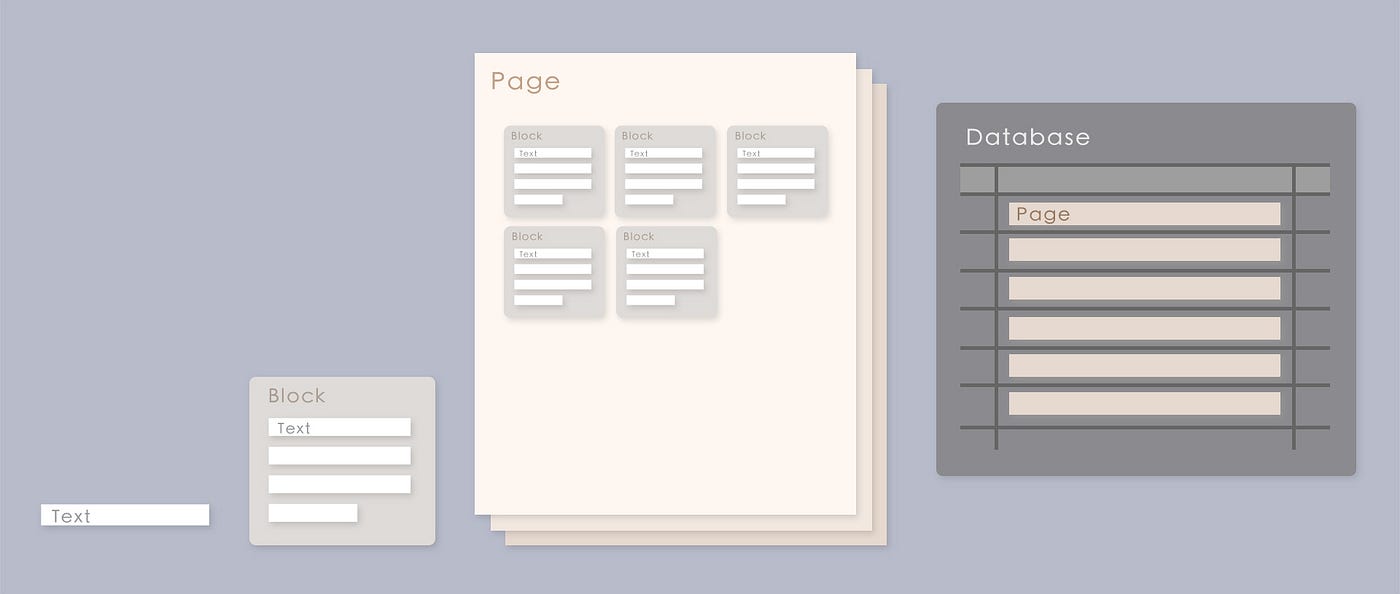
In recent years, a great deal of effort in UX research has gone into solving a particular problem: how to make research reusable. The diagnosis is familiar. Insights are trapped in decks and documents, tied to specific projects, and quickly forgotten. The proposed solution is equally familiar: break research into smaller units, store it in structured repositories, tag it, and make it searchable across time and teams.
The promise is straightforward. Instead of starting from scratch, teams can build on what is already known. Research becomes cumulative rather than episodic. Knowledge is preserved and made available for future use.
Under the right conditions, this promise is real, but under other conditions, something very different happens.
From Reuse to Retrieval
The shift from reports to repositories changes not only how research is stored, but how it is accessed. Research is no longer encountered as a structured argument — an account of a specific problem, investigated in a specific way, under specific conditions. Instead, it is encountered as a collection of fragments: observations, quotes, “facts,” and insights, each tagged and retrievable on demand. This makes research easier to find. It also changes what it means to use it.
In its original form, research carries context. The methods, the sample, the framing of the study, and the uncertainties involved all shape how findings should be interpreted. When research is atomized, much of this context recedes. What remains are portable fragments — units that can be recombined and applied elsewhere. The assumption is that this increases reuse, yet more often it enables something else.
The Emergence of Evidence Laundering
In many organizations, product decisions are not made by neutrally evaluating evidence. They emerge from a mixture of intuition, incentives, constraints, and advocacy. Stakeholders come to the table with ideas they want to pursue, features they want to build, or directions they already favor.
In this environment, a repository of atomic insights does not function as a learning tool. It functions as a search engine for supporting evidence.
The workflow becomes familiar:
An idea is proposed. The repository is queried — not to ask whether the idea is sound, but to find fragments that can support it. Relevant quotes, observations, or insights are extracted and assembled into a narrative of validation. The result appears evidence-based. In reality, the evidence has been selected after the fact.
This is not research reuse. It is evidence laundering.
The term is deliberate. Just as financial laundering obscures the origins of money, evidence laundering obscures the origins and conditions of knowledge. Findings are detached from the studies that produced them, stripped of their constraints, and reintroduced as generalized support for decisions that were already in motion.
What gives the process its force is not the quality of the research, but the credibility of its fragments. A well-tagged repository makes those fragments easy to find and deploy.
How Systems Amplify Culture
At this point, it is tempting to blame misuse on individuals. But the deeper issue is structural. Knowledge systems do not operate in isolation. They reflect and amplify the norms of the organizations that use them. In a culture where research is treated as a way to explore uncertainty and inform judgment, a repository can support continuity and memory. In a culture where research is treated as a way to justify decisions, the same repository becomes a tool for selective validation.
The system does not correct the behavior. It accelerates it.
Atomic research, in particular, lowers the cost of cherry-picking. By design, it separates insights from their original context and makes them independently retrievable. This is precisely what makes it powerful for reuse — and precisely what makes it vulnerable to misuse. The easier it is to extract a fragment, the easier it is to ignore the conditions under which that fragment was meaningful.
The result is a subtle but important shift. Research is no longer used to challenge assumptions or reshape decisions. It is used to support positions that already exist.
The Loss of Context
What is lost in this process is not just nuance, but constraint. In its original form, a research finding is embedded in a set of limits. It applies to a particular user group, under particular conditions, observed through particular methods. These constraints are not incidental; they are what give the finding its meaning. They define where it holds and where it does not.
When findings are extracted and reused as standalone insights, these constraints often disappear. The insight becomes more general than it should be. It travels further than it was meant to. It begins to function less as a piece of knowledge and more as a rhetorical device.
This is why the misuse can be difficult to detect. The fragments themselves are not false. They are simply being used outside the context that would give them proper interpretation.
The Consequences
Over time, this pattern has predictable effects. Decisions appear to be grounded in research, but are not genuinely informed by it. Teams develop confidence in directions that have not been critically examined. Contradictory evidence is easy to ignore, because the system rewards retrieval rather than evaluation. Research loses its role as a source of constraint and becomes a source of justification.
The costs are not only intellectual. They show up in products that fail to address real user needs, in wasted development effort, and in missed opportunities to correct course. The organization becomes more efficient at producing the appearance of evidence-based decision-making, while becoming less capable of actually learning from research.
Reuse Without Laundering
None of this means that research reuse is a bad goal. The problem is not reuse itself, but the conditions under which it occurs.
For reuse to be meaningful, it must preserve context as well as content. Insights must remain connected to the questions that produced them, the methods that support them, and the limits that define them. More importantly, they must be brought into decision processes in a way that invites scrutiny rather than enabling confirmation. This is a higher bar than most repository systems are designed to meet.
It suggests that the real challenge is not how to store research, but how to structure its use. Without that, even the most sophisticated knowledge management system risks becoming a mechanism for reinforcing existing beliefs rather than expanding understanding.
Conclusion
The push toward atomic research and reusable insights reflects a legitimate concern: that valuable knowledge is being lost. But in solving for storage and retrieval, it introduces a different risk. By making research more modular and accessible, it also makes it easier to detach findings from their context and repurpose them for rhetorical ends.
When that happens, reuse becomes evidence laundering. And the organization, rather than learning from its research, only learns how to use it to justify itself.
메타데이터
- post_id
- 0f5e2ad0c85b
- slug
- when-research-reuse-becomes-evidence-laundering-0f5e2ad0c85b
- url
- https://medium.com/@jwilliams1454/when-research-reuse-becomes-evidence-laundering-0f5e2ad0c85b
- canonical_url
- https://medium.com/@jwilliams1454/when-research-reuse-becomes-evidence-laundering-0f5e2ad0c85b
- author_url
- https://medium.com/@jwilliams1454
- status
- ok
- fetched_at
- 2026-06-09 15:37:30