A God Who I Can Understand Is a God I Would Not Have Chosen
And other wisdoms of the enigmatic Rebbe of Kotzk
A God Who I Can Understand Is a God I Would Not Have Chosen
And other wisdoms of the enigmatic Rebbe of Kotzk
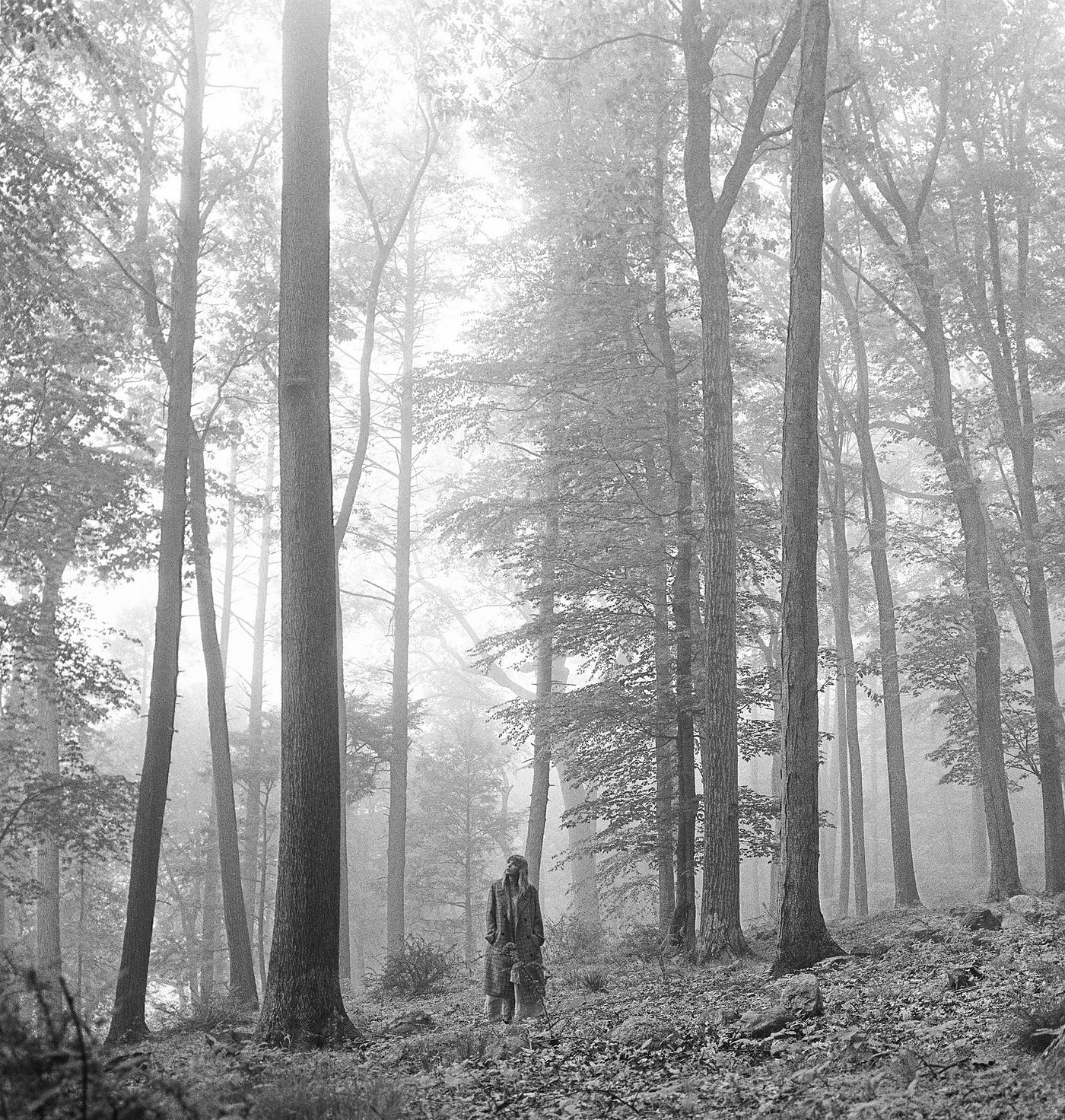
Photo by Darius Bashar on Unsplash
A rebbe has been compared to a geologist, one who points out where to dig beneath the earth to find diamonds and precious stones. He’ll tell you where to dig and what you’re likely to find, but you must do the digging yourself to find the treasure within you.
“I don’t have your treasure,” he’d say. “You have it, not me.”
A rebbe is a teacher, master, spiritual guide, and so much more.
A rebbe’s followers, called hassidim ( and he usually has many), come to him for all kinds of reasons. Some go to get advice, or receive a blessing, plead for a miracle, or sometimes just to have someone bear witness to their torturous journey.
I sought out a few rebbes myself when I was in my twenties and living in Jerusalem, where meeting such people was just a bus ride or a door knock away. These experiences were generally so life-giving, they got me curious about the rebbes of long ago, from the past three centuries.
(For anyone who would like to get a flavor of various Hassidic rebbes, I recommend Elie Wiesel’s enthralling book, “Souls on Fire: Portraits and Legends of the Hassidic Masters.)
My latest rebbe, whom I’ve taken up, is the Kotzker Rebbe, who lived in the 18th century. He intrigues me, I think, because he was the master of the sharp one-liner, and because he strikes me as so modern.
Kotzker Sayings:
Everything in this world can be imitated except for the truth.
There is nothing so whole as a broken heart.
One should dance on the roof of the highest building and on a razor’s edge.
If I am I, because you are you, and you are you, because I am I, then I am not I, and you are not you. But if I am I because I am I, and you are you because you are you, then I am I and you are you, and we can talk.
Man must guard himself and his uniqueness, and not imitate his fellow, neither in thought or deed… for initially man was created ‘in his own image’, and only afterwards in the image of God.
You don’t love fish. If you loved the fish, you would not have killed it and cooked it on a fire.
Do not take pride in the fact that you are humble. Be humble in your humbleness.
There are three inns that a person visits during one’s earthly journey: The Inn of Jealousy, the Inn of Desire, and the Inn of Glory. I managed to leave the first two fairly quickly and have never returned. But the third, the Inn of Glory, I struggled mightily to leave, until I felt that my very veins were snapping.
Whoever believes in miracles is an imbecile. Whoever does not is an atheist.
Someone once told the Kotzker Rebbe that Man’s purpose in this world was the perfection of his soul. The Kotzker didn’t accept that answer.
“If it were only for this, it wouldn’t be worth the trouble. Man was created, I am telling you, in order to lift up the sky!”
And he would declare, “If I had 300 men with cabbage leaves on their heads and straw belts on their hips, willing to climb on the roofs of the world and shout Hashem Hu HaElokim (God is God) I could achieve redemption.”
When I read this, a feeling of exhilaration rushes through me, makes me want to go back in time, climb that roof, and shout with him and all his followers: GOD! The Kotzker Rebbe reminds me that the spiritual life is also a dramatic one.
**
Once a hassid of the Rebbe poured out what was troubling him. “I think and think and can get no peace of mind.”
The Kotzker Rebbe asked, “What are you thinking about?”
“I’m wondering if there is a Supreme Judge who deals with this world justly.”
“What does it matter to you?” the Rebbe replied.
“If there’s no judge or justice, then all of this world doesn’t matter or make sense!”
“And why does this matter to you?” the Rebbe persisted.
The hassid sputtered, “Because if there’s no Judge or justice, then the Torah doesn’t make sense either.”
“And why does it matter to you?” insisted the Kotzker.
“Rebbe, how can you say that? Surely it matters to me! What’s the point of it all?”
Whereupon the Kotzker Rebbe replied, “If you are so concerned, then you must be a good Jew. A good Jew is allowed to think. It will do you no harm. Nothing bad will ever come from thinking.”
What strikes me is the Rebbe’s almost blasé attitude toward the hassid’s seemingly blasphemous questions. It’s as if the Rebbe is saying, “Nu, so you have some heretical thoughts? Nu, y’think God can’t handle them? Relax.”
I try to integrate the aspect of the Kotzker Rebbe that strikes me as practical, undemanding and reasonable, as conveyed in the above story, with his other aspects, which seem so very unreasonable and terribly demanding: how he walked around in a tattered suit and recoiled from money as though poison, kept his home wide open to all, even animals (he forbade his followers from even setting mouse traps), and never gave eulogies at funerals because he abhorred the flattering lies and exaggerations generally heaped the deceased. He called sameness a sickness, and routine a paralysis of the spirit, demanded of his followers — and himself a freshness, to never pray today as they had prayed yesterday, and he who prayed only out of duty and habit was no better off than a wicked person.
The Kotzker was warned by established Hassidic masters that his path was too radical. “Mendel,” said one, “your way leads to Moreshkhoyre” depression, or literally black spirit. “So what?” said the Kotzker Rebbe. “If truth is to be obtained by despair alone, is that a good enough reason to discard it?”
More sayings:
Not only is the one who hates his fellow called wicked but the one who hates himself is also called wicked.
Know why you want what you want.
To listen agreeably to the foolish talk of a fool is also a deed of charity.
Joyfulness is the outcome of holiness. That is why the holiday of Sukkot follows Yom Kippur.
If love is not bread then it is the wine of life.
“And you shall be a holy people unto Me.” (Exodus 22:30) Let your holiness be humane, reasonable, and acceptable to others.
More important than writing is erasing.
A great generation can make do with petty leaders. But a lowly generation needs great leaders. (Sadly, yes.)
No majority in the entire world can decide what is truth.
**
The Rebbe of Kotzk left no book of his own — he wrote down his Torah thoughts by day, then destroyed them by fire each evening. Before his death he made sure to burn any loose page or manuscript. But he couldn’t burn what his followers remembered about him.
And why did he burn his writings? My hunch is, the Kotzker didn’t want his hassidim to read and follow what he had written, but rather to write their own books and arrive at their own unique vision or approach to life.
After all, he believed they all could be rebbes, too.
메타데이터
- post_id
- 0f7a00a279b6
- slug
- a-god-who-i-can-understand-is-a-god-i-would-not-have-chosen-0f7a00a279b6
- url
- https://medium.com/mystic-minds/a-god-who-i-can-understand-is-a-god-i-would-not-have-chosen-0f7a00a279b6
- canonical_url
- https://medium.com/mystic-minds/a-god-who-i-can-understand-is-a-god-i-would-not-have-chosen-0f7a00a279b6
- author_url
- https://medium.com/@ruchamakingfeuerman
- status
- ok
- fetched_at
- 2026-07-31 00:41:58