How New Regenerative Ag Research is Turning Climate Science into Scalable Action Through Soil’s…
“We can now see carbon inside soil pores attached to minerals — the kind of carbon that stays for the long term.” — Dr Mary Beth Kirkham…
How New Regenerative Ag Research is Turning Climate Science into Scalable Action Through Soil’s Hidden Wealth

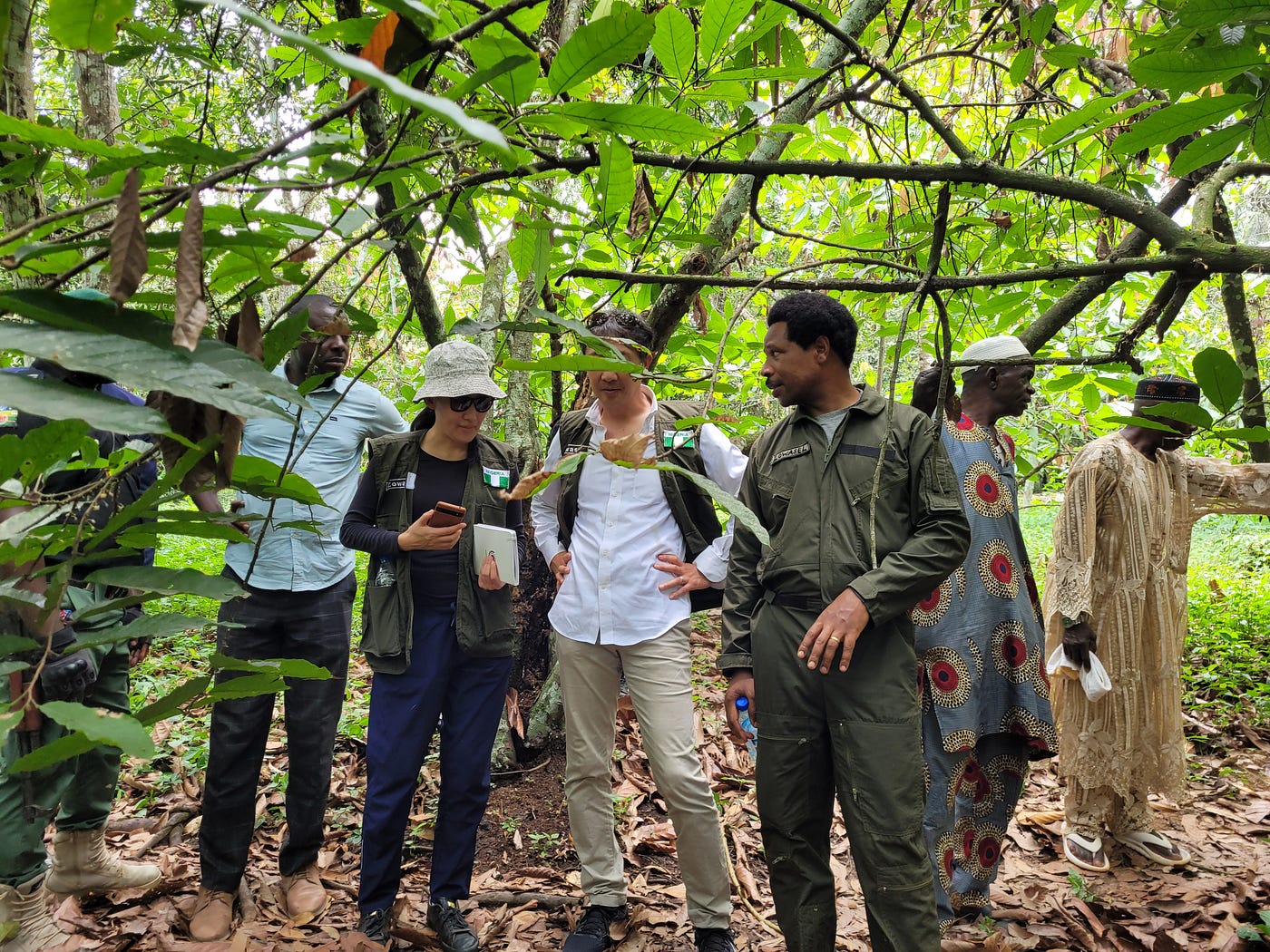
Zowasel Agronomists and Regenerative Experts anaylsing soil data from a Sorghum Farm in Kwara, Nigeria
“We can now see carbon inside soil pores attached to minerals — the kind of carbon that stays for the long term.” — Dr Mary Beth Kirkham, Kansas State University, Phys.org (2024)
A Scientific Breakthrough Beneath Our Feet
In a world racing toward net zero, one of the most powerful climate solutions may be right beneath our feet.
A groundbreaking study led by scientists from Kansas State University and the Canadian Light Source has found that farmland treated exclusively with organic fertilisers — such as compost and manure — over several decades stores significantly more carbon, and crucially, stores it in more stable forms.
Using high-resolution synchrotron imaging, the researchers visualised for the first time how carbon molecules bind within microscopic soil pores and attach to minerals, shielding them from decomposition and allowing the carbon to remain locked underground for decades or even centuries.
This transformative discovery marks a turning point in soil science. It provides mechanistic proof that regenerative farming practices — from composting to organic manure application — can deliver long-term soil organic carbon (SOC) storage, effectively transforming farmland into a credible and measurable carbon sink.
As reported by Phys.org (2024), the study revealed that soils amended with organic matter “store measurably more carbon — not just as loose organic material, but bound in pores and attached to minerals — and host richer microbial carbon pools,” a combination that increases the residence time of carbon in soils and enhances soil ecosystem resilience (Phys.org, 2024).
The research team emphasised that this microscopic evidence offers new confidence for climate accounting: “We can now see, not just infer, the mechanisms that make carbon durable in soil,” said one of the study’s authors, underscoring the potential of regenerative agriculture as a measurable climate solution.
From Discovery to Deployment: Crop Pilot MRV’s Next Frontier
This scientific breakthrough strengthens the case for robust, field-level SOC monitoring and verification. It directly supports the approach of Zowasel’s Crop Pilot MRV, a digital Measurement, Reporting, and Verification platform designed to track soil health, carbon sequestration, and regenerative practices across Africa’s agricultural landscapes.
Together, these findings and technologies create a new pathway: where cutting-edge science meets practical deployment, and where every farm can become part of the planet’s carbon solution.
Using AI, satellite imaging, and remote sensing, Crop Pilot MRV is already deployed across farms in Nigeria and Tanzania, helping processors, manufacturers, and farmer cooperatives monitor and improve their sustainability performance.
Now, with this new evidence on long-term soil carbon retention, Zowasel is adapting Crop Pilot MRV to monitor, report, and verify Soil Organic Carbon (SOC) sequestration — empowering farmers, agribusinesses, and corporate partners to quantify and monetise the carbon value embedded in their soils.
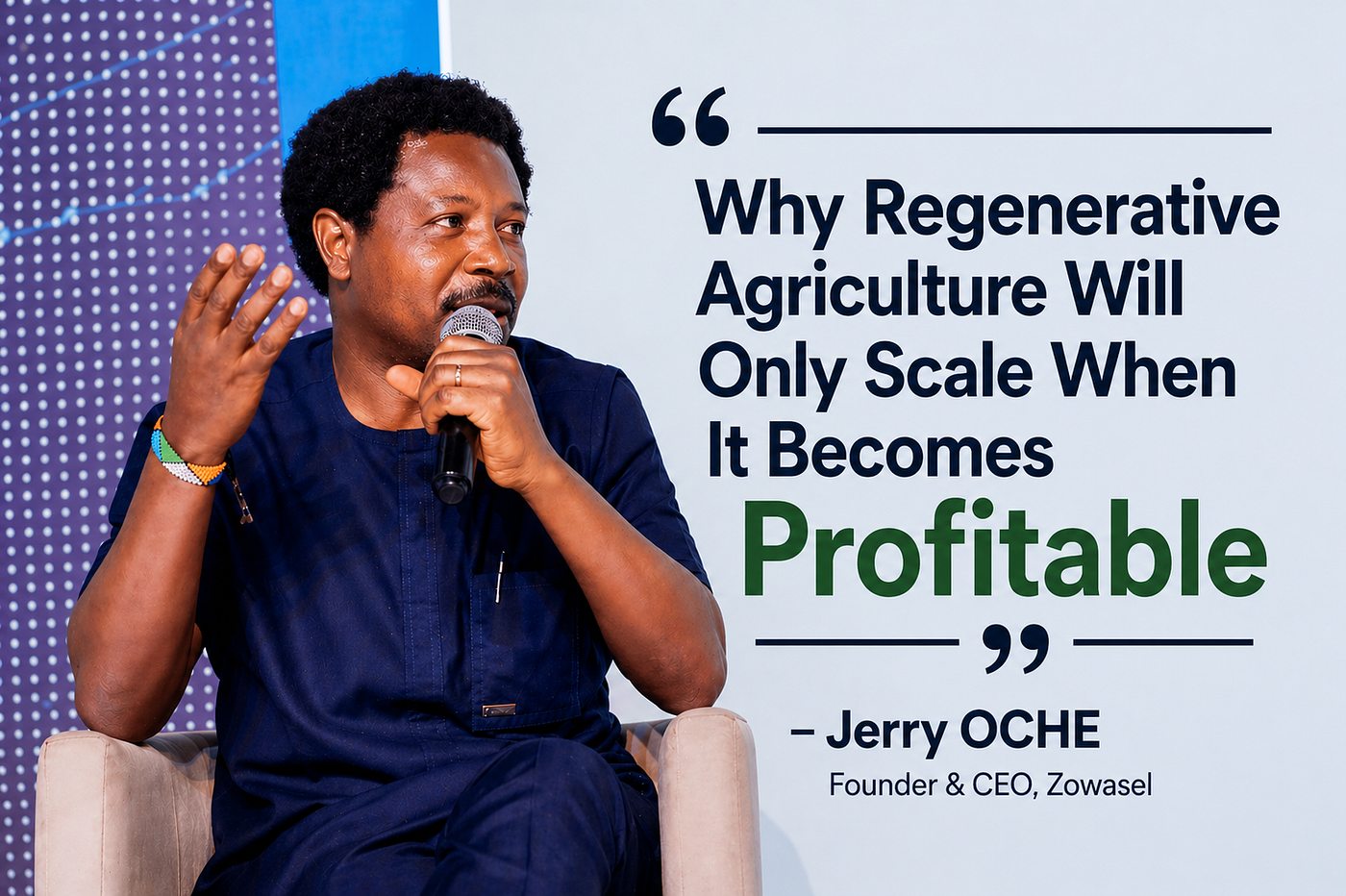
“This study gives us scientific confidence to measure and reward what farmers have always done right — build healthy soil,” says Jerry Oche, CEO of Zowasel.
Through a blend of ground sampling, spectral sensors, and machine learning, Crop Pilot MRV transforms every hectare of farmland into a live carbon dataset. Agronomists and field officers utilise the Crop Pilot mobile app to capture GPS-tagged soil samples, photographs, and lab-verified results, thereby creating a transparent and auditable trail from farm to cloud.
Result: Every farm becomes a verifiable climate asset in the digital economy.

Zowasel Extension Officers Conduct Farm Inspection on a Sorghum Farm in Kwara, Nigeria
The Multi-Stakeholder Benefits — Turning Science into Shared Value
Research conducted confirmed what regenerative farmers have long practised: organic and regenerative farming builds durable soil carbon. Through Crop Pilot MRV, Zowasel is translating this science into a scalable framework that benefits everyone across the agricultural value chain — from smallholders to multinational processors, financiers, and policymakers.
Farmers & Cooperatives — Turning Regeneration into Revenue
Crop Pilot MRV enables farmers and cooperatives to move beyond intuition and into precision. By combining field data, satellite analytics, and AI-driven insights, it transforms sustainability into both profitability and resilience.
- Earn Verified Carbon Rewards: Farmers gain access to carbon payments or price premiums for verified, climate-positive production.
- Improve Soil Health & Yields: Regenerative practices enhance soil fertility, water retention, and crop productivity, creating long-term resilience against drought and degradation.
- Access Credit Through ACESS: Zowasel’s Alternative Credit Evaluation Scoring System links verified farm and soil performance to formal finance, unlocking working capital for sustainable production.
- Vegetation Monitoring (NDVI, SAVI, EVI): Real-time satellite insights enable the early detection of crop stress and inform targeted interventions.
- Irrigation Planning & Water Optimisation: Soil-moisture and evapotranspiration analytics inform efficient irrigation scheduling, conserving water and energy.
- Pest & Disease Early Detection: AI-based anomaly detection provides early warnings to minimise yield loss.
- Yield Prediction Models: Machine learning forecasts yields pre-harvest to support aggregation and market planning.
- Localised Weather & Climate Analytics: Forecasts and seasonal outlooks enhance risk management and planting decisions.
- Smart Advisory Dashboards: Personalised agronomic insights reduce input costs and improve sustainability outcomes.
Result: Farmers and cooperatives can now manage their land with scientific precision, making regeneration not just sustainable but also bankable.
Processors & Manufacturers — Verified Compliance, Measurable Trust
Global food and beverage companies face growing regulatory and consumer pressure to ensure deforestation-free, low-carbon supply chains. Crop Pilot MRV provides them with the digital backbone to meet these obligations while strengthening sourcing relationships and brand trust.
- Soil Organic Carbon (SOC) Tracking: Quantifies carbon sequestration and regenerative practices for verified ESG and EUDR reporting.
- Nitrogen Stress & Nutrient Deficiency Detection: Identifies imbalances, enabling precision input management and lower emissions intensity.
- End-to-End Traceability & Compliance Verification: Digitally documents sourcing origins, farm practices, and due diligence alignment.
- Sustainability Performance Dashboards: Delivers visual, auditable ESG and Scope 3 reports for investors, regulators, and certification programs.
- Regional Supply Forecasting: Aggregates farm-level data to create productivity and procurement forecasts, enhancing planning and reducing volatility.
- Insetting Opportunities: Enables companies to finance carbon reduction directly within their own value chains — rewarding their farmer networks rather than relying on external offsets.
Result: Compliance becomes a competitive advantage. Corporate organisations can move from offsetting to insetting — transforming their supply chains from carbon sources to carbon sinks.
Financial Institutions — De-Risking Green Finance
Crop Pilot MRV closes the information gap between farms and finance. By integrating verified environmental and yield data with the ACESS credit scoring system, banks and investors can design smarter, lower-risk financial products.
- Verified Performance Data: Strengthens credit models and reduces default risk.
- Sustainability-Linked Loans: Provides the metrics needed for green finance and climate-aligned lending.
- Transparent Impact Reporting: Offers verifiable ESG evidence for investors and DFIs.
Result: Regenerative agriculture becomes investable at scale — supported by verifiable data and de-risked capital.
Donors, DFIs & Governments — Science-Based Climate Accountability
For public agencies and development partners, Crop Pilot MRV delivers the transparency and traceability needed to align agricultural programs with global climate goals.
- Aggregated SOC Data: Supports national greenhouse gas inventories and Paris Agreement NDC reporting.
- Impact Measurement: Provides credible evidence for donor-funded regenerative agriculture initiatives.
- Climate Finance Validation: Supplies auditable MRV infrastructure for carbon programs and sustainable subsidy design.
Result: Soil carbon moves from a scientific concept to a policy-ready climate asset, enabling donors and governments to direct funding where it delivers the most significant, verified impact.
From Soil Science to Climate Strategy
The Kansas State study proves what regenerative farmers have always known: when we nurture the soil, the soil gives back — in nutrients, yields, and now, verified carbon credits.
By embedding this science into digital MRV, Zowasel’s Crop Pilot empowers the world’s farmers to measure, report, and monetise the invisible climate value beneath their feet.
This is where data meets dirt, where science meets smallholders, and where sustainability becomes a shared, profitable journey for everyone in the agricultural value chain, all thanks to the rigorous scientific research that underpins regenerative agriculture.
One Platform, Shared Value
By connecting verified soil data with credit, carbon markets, and corporate sourcing, Crop Pilot MRV is creating an ecosystem where every stakeholder benefits — and where every hectare of farmland contributes measurably to the planet’s climate goals.
References:
- “Soil treated with organic fertilisers stores more carbon, study finds” — Phys.org, published 4 Sept 2024. Link: https://phys.org/news/2024-09-soil-fertilizers-carbon.html Phys.org
- “Soil Carbon Sequestration: A Mechanistic Perspective on Limitations and Future Possibilities” — MDPI Sustainability, Das et al., 2025. Link: https://www.mdpi.com/2071-1050/17/13/6015 MDPI
메타데이터
- post_id
- 0f93f55d07d1
- slug
- how-new-regenerative-ag-research-is-turning-climate-science-into-scalable-action-through-soils-0f93f55d07d1
- url
- https://medium.com/zowasel/how-new-regenerative-ag-research-is-turning-climate-science-into-scalable-action-through-soils-0f93f55d07d1
- canonical_url
- https://medium.com/zowasel/how-new-regenerative-ag-research-is-turning-climate-science-into-scalable-action-through-soils-0f93f55d07d1
- author_url
- https://medium.com/@zowasel
- status
- ok
- fetched_at
- 2026-06-10 08:17:25