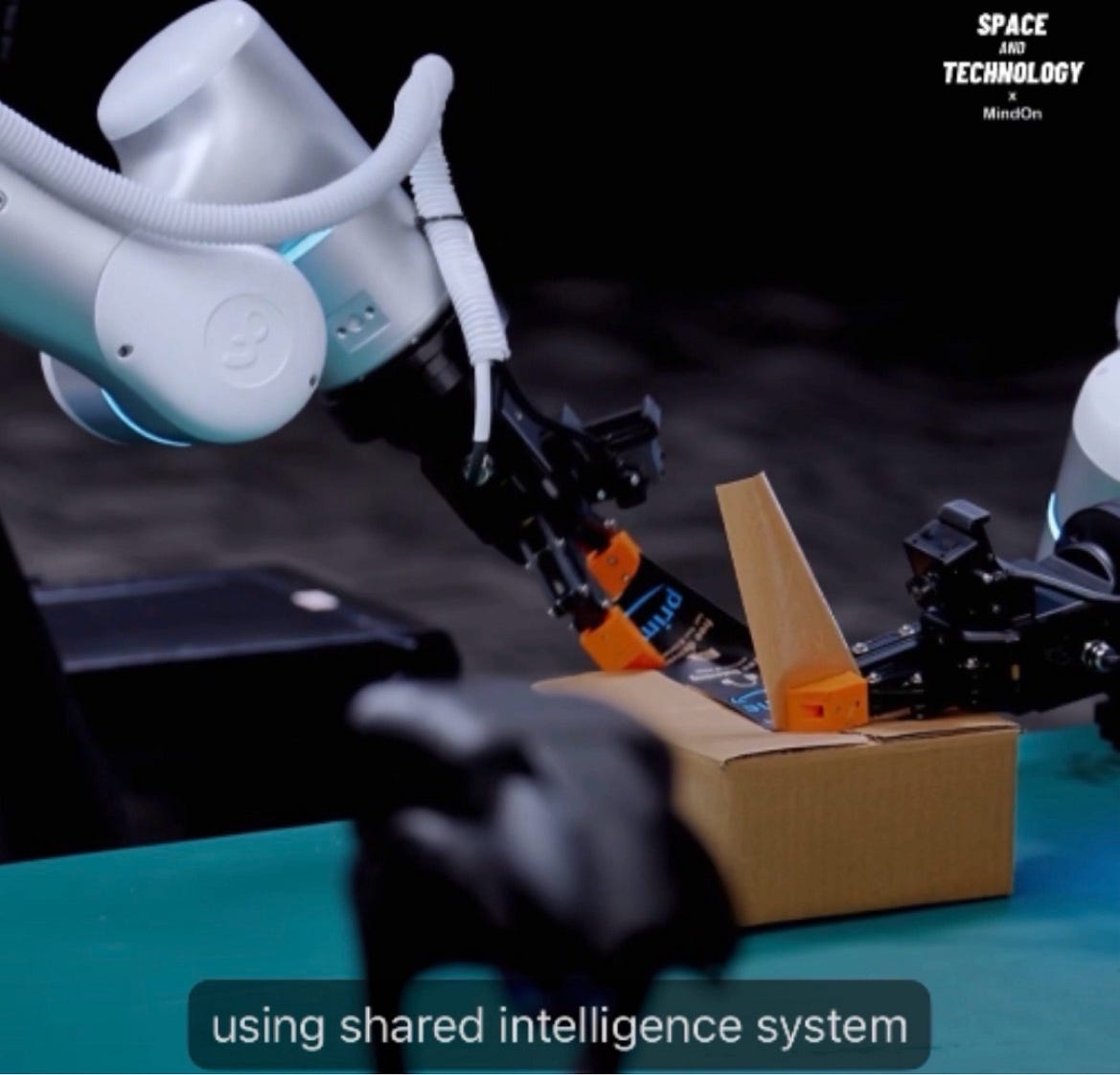
AGIBOT Thinks Humanoid Robots Should Move Like Living Systems. AGILE Is Their Answer.
AGIBOT Thinks Humanoid Robots Should Move Like Living Systems. AGILE Is Their Answer.
There’s a quiet architectural shift happening in humanoid robotics right now — and most people outside the field probably haven’t noticed it yet.
For years, robotics companies focused on hardware first:
better actuators, stronger motors, more stable joints, improved balance systems, faster processors.
But the next generation of humanoid robotics is no longer being defined purely by hardware.
It’s being defined by adaptation.
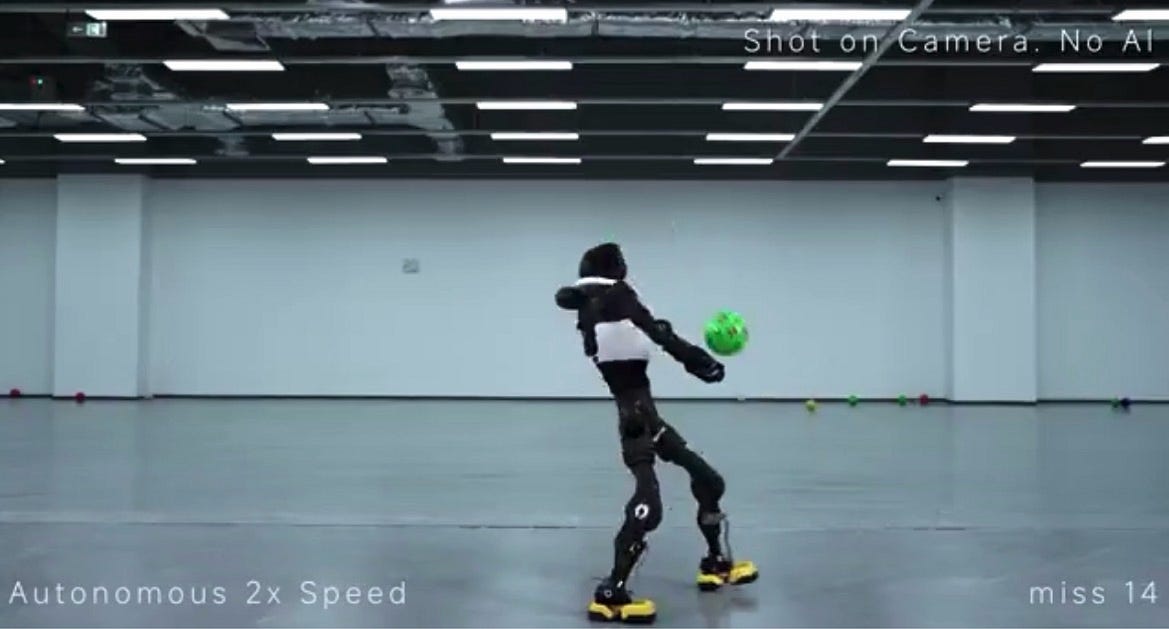
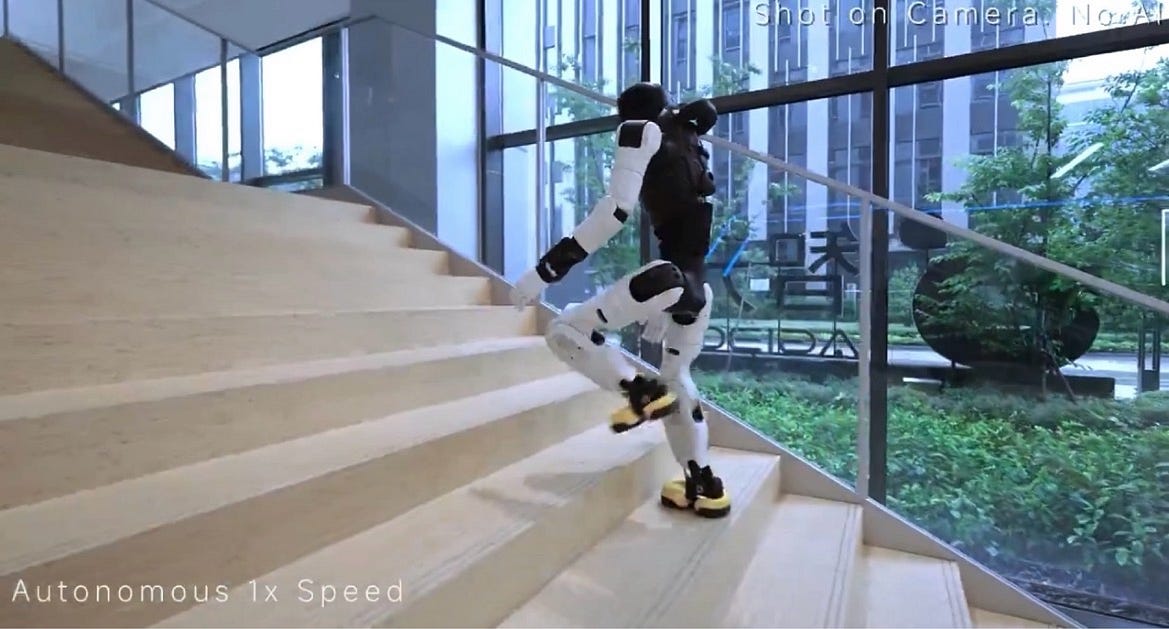
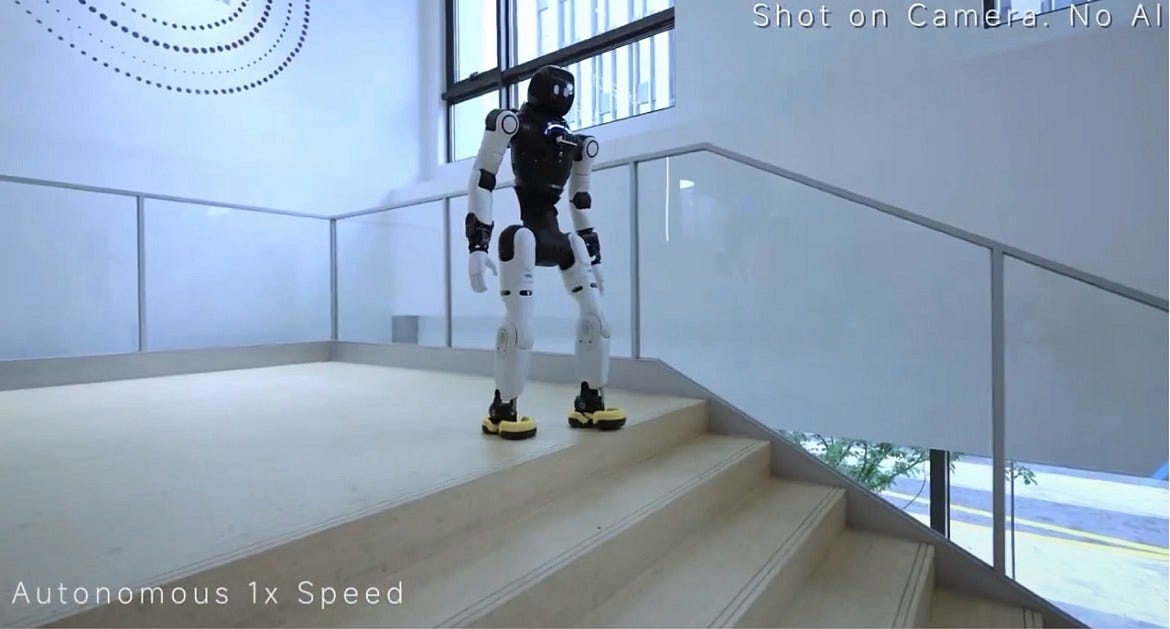
The ability for a robot to look at the world, understand terrain, react instantly, and modify movement dynamically — the same way humans and animals do naturally.
This is exactly what AGIBOT is attempting to solve with its newly unveiled system:
AGILE — AgiBot Generative Intelligent Locomotion Engine.
And technically, this is a much bigger deal than a simple locomotion update.
Because AGILE represents a shift away from scripted robotics… toward embodied foundation models for movement itself.
⸻
The Core Problem with Humanoid Robotics
Humanoid robots look impressive in demos.
They walk.
They wave.
They carry boxes.
They navigate carefully designed environments.
But real-world locomotion is still one of the hardest unsolved problems in robotics.
Not because robots can’t move —
but because they struggle to adapt.
Humans continuously make thousands of unconscious micro-adjustments while walking:
- shifting body weight
-
- compensating for uneven surfaces
-
- reacting to slippery terrain
-
- adjusting stride length
-
- predicting balance changes
-
- coordinating vision and movement simultaneously
And we do this instantly.
Traditional robots do not.
Most humanoid systems today still operate using highly separated pipelines:
- A perception system detects terrain and obstacles.
-
- A planner calculates a movement trajectory.
-
- A controller executes the motion.
-
- Feedback loops attempt corrections afterward.
This works in controlled environments.
But the real world is chaotic.
The moment terrain changes unexpectedly, timing drifts, latency appears, or balance calculations become outdated, the system begins to fail.
This is why humanoid locomotion still looks robotic.
Not because the motors are weak.
But because the architecture itself is fragmented.
⸻
AGILE Changes the Architecture
AGIBOT’s AGILE system attempts to remove these separations entirely.
Instead of dividing perception and motion into isolated systems, AGILE fuses:
- visual perception
-
- balance estimation
-
- locomotion control
-
- gait adaptation
-
- motion planning
into a single end-to-end foundation model.
That distinction matters enormously.
Because the robot is no longer:
“seeing first and moving second.”
It is perceiving and moving simultaneously.
Just like biological systems do.
According to AGIBOT, AGILE enables humanoids to:
- read terrain dynamically
-
- detect obstacles in real time
-
- adjust gait instantly
-
- react with millisecond-level latency
-
- operate without predefined trajectories
This means the humanoid is not merely executing a stored motion sequence.
It is continuously generating movement in response to the environment.
That’s a completely different category of robotics intelligence.
⸻
Why Preset Trajectories Are a Limitation
Historically, locomotion systems relied heavily on predefined trajectories.
Engineers manually designed walking patterns:
- foot placement
-
- stride timing
-
- balance corrections
-
- recovery sequences
The robot would then follow these motion scripts with limited flexibility.
The problem:
the real world is not scripted.
Factories change.
Floors shift.
Objects move.
Humans interfere.
Terrain varies constantly.
A robot following fixed trajectories becomes brittle under uncertainty.
AGILE appears designed around the opposite philosophy:
continuous adaptation over predefined precision.
This mirrors what’s happening across AI more broadly.
Large language models stopped relying on handcrafted rules and instead learned dynamic representations from massive-scale data.
Humanoid locomotion is beginning to undergo the same transition.
Movement itself is becoming generative.
⸻
The “Cerebellum” Analogy Is Surprisingly Accurate
AGIBOT describes AGILE as the locomotion “cerebellum” complementing its Genie Operator “brain.”
That framing is actually technically meaningful.
In humans:
- the cerebral cortex handles reasoning and intent
-
- the cerebellum handles coordination, balance, timing, and movement adaptation
You consciously decide to walk somewhere.
But your nervous system handles the physical execution automatically.
Modern humanoid systems are starting to mirror this division:
- high-level foundation models for reasoning and planning
-
- low-level adaptive foundation models for movement execution
This separation may become one of the defining architectures of Physical AI.
Reasoning alone does not create useful robots.
A humanoid must also:
- remain stable
-
- adapt physically
-
- recover from errors
-
- coordinate whole-body movement
-
- respond to unpredictable environments in real time
That requires motor intelligence.
And AGILE is fundamentally a motor intelligence model.
⸻
The Shift from Robot Controllers to Robot Foundation Models
This is where the industry is heading.
Traditional robotics relied heavily on:
- hard-coded control systems
-
- task-specific policies
-
- handcrafted movement pipelines
-
- environment-specific tuning
But foundation-model robotics changes the equation entirely.
Instead of programming motion directly,
companies now train generalized systems capable of adapting movement dynamically across environments and embodiments.
That’s exactly what AGILE represents.
And AGIBOT is not alone.
Across the industry:
- NVIDIA is building foundation models for humanoid simulation and behavior
-
- Skild AI is building omni-bodied robot brains
-
- Figure AI is pursuing generalized humanoid cognition
-
- Physical Intelligence is focusing on cross-embodiment learning
-
- Unitree is rapidly scaling low-cost humanoid deployment
-
- Boston Dynamics continues pushing dynamic locomotion research
The field is converging toward a shared idea:
Humanoids will not scale through scripted control systems.
They will scale through adaptive learned intelligence.
⸻
Cross-Embodiment Transfer Is the Bigger Story
One of the most important details in AGIBOT’s announcement is that AGILE works across multiple robot embodiments:
- A1
-
- A2
-
- A3
-
- X2
That may sound like a small implementation detail.
It is not.
Historically, locomotion systems have been highly robot-specific.
A walking policy trained on one robot often fails on another because:
- limb geometry changes
-
- actuator strength differs
-
- center of mass shifts
-
- balance characteristics vary
-
- sensor calibration changes
This makes scaling robotics incredibly difficult.
Every new robot body requires enormous retraining and engineering effort.
But foundation-model locomotion changes this.
Instead of learning one robot,
the model learns generalized movement principles.
That’s the same leap language models made:
from memorizing tasks to generalizing patterns.
The implication is massive.
If locomotion intelligence becomes transferable,
robot deployment scales exponentially faster.
And that may ultimately matter more than the hardware itself.
⸻
Real-Time Local Inference Matters More Than Cloud Intelligence
Another important technical detail:
AGILE runs locally with millisecond-level response time.
That’s critical.
Humanoid locomotion cannot rely on cloud latency.
A robot balancing dynamically must react almost instantly:
- slips
-
- collisions
-
- terrain changes
-
- force shifts
-
- obstacle appearance
Even small delays can destabilize the system.
This means high-performance on-device inference is becoming a core requirement for Physical AI.
The future humanoid stack increasingly looks like this:
- local low-latency motor intelligence
-
- onboard perception systems
-
- edge AI processing
-
- cloud-assisted high-level reasoning
Not everything can happen in the cloud.
Movement must happen at biological timescales.
⸻
The Bigger Industry Shift
The most important implication of AGILE is not locomotion itself.
It’s what locomotion reveals about where robotics is going.
The field is transitioning from:
robots as programmable machines
to:
robots as adaptive embodied systems.
That is a profound shift.
Because once a robot can:
- perceive dynamically
-
- reason generally
-
- adapt movement continuously
-
- transfer knowledge across embodiments
-
- learn from large-scale data
…it stops behaving like traditional automation.
It starts behaving like a physical intelligence system.
That’s the long-term destination of humanoid robotics.
And every major company in the space now appears to be converging toward it.
⸻
Why This Matters for Data
There’s another important layer here:
foundation-model robotics is fundamentally a data problem.
The quality of locomotion intelligence depends on:
- movement diversity
-
- terrain diversity
-
- environmental variation
-
- embodiment variation
-
- interaction complexity
The same principle that scaled language models applies here:
better data → stronger generalization.
This is why the industry’s focus on:
- egocentric video
-
- human demonstrations
-
- motion capture
-
- simulation
-
- real-world interaction datasets
has accelerated dramatically.
Humanoid systems need massive amounts of movement data to generalize effectively.
And as adaptive locomotion becomes foundation-model-driven, the value of high-quality real-world physical interaction data increases significantly.
⸻
The Humanoids That Win Will Adapt Fastest
The robotics industry spent years competing on hardware.
But hardware alone is no longer enough.
The companies that dominate the next phase of humanoid robotics will likely be the ones that solve:
- adaptation
-
- embodiment transfer
-
- real-time control
-
- scalable motor intelligence
-
- generalization under uncertainty
AGILE is one of the clearest signals yet that the industry understands this transition.
The future humanoid will not simply execute commands.
It will continuously adapt to the world around it.
And that changes everything.
Image credit: The Humanoid Hub
Original source: AGIBOT / The Humanoid Hub
Learn more about FileMarket AI Data Labs: https://filemarket.ai
Egocentric data inquiries: humanloop@filemarket.ai
메타데이터
- post_id
- 0fa5c21efdaa
- slug
- agibot-thinks-humanoid-robots-should-move-like-living-systems-agile-is-their-answer-0fa5c21efdaa
- url
- https://medium.com/@filemarketai/agibot-thinks-humanoid-robots-should-move-like-living-systems-agile-is-their-answer-0fa5c21efdaa
- canonical_url
- https://medium.com/@filemarketai/agibot-thinks-humanoid-robots-should-move-like-living-systems-agile-is-their-answer-0fa5c21efdaa
- author_url
- https://medium.com/@filemarketai
- status
- ok
- fetched_at
- 2026-06-09 15:37:30