Network Security Fundamentals (From Data Storage to Encrypted Communication)
Aspects of NAS (Network Attached Storage)
Network Security Fundamentals (From Data Storage to Encrypted Communication)
Aspects of NAS (Network Attached Storage)
An NAS is a storage device accessible via the network, allowing user and device access to files for sharing on that network.
It works that file-level access is given where users access data in forms of files/folders.
NAS devices conform to standard networking protocols such as NFS (Network File System) for Unix/Linux or SMB/CIFS (Server Message Block/Common Internet File System) for Windows systems.
It is easy to install and configure, often requiring little to no IT expertise, making it a perfect choice for small and medium-sized businesses (SMEs).

NAS is quite simply centralized file storage where many users can store, retrieve, and share files from various hardware devices.
They are used for backing up data, media storage, and co-authoring file access.
They are capable of blending into an existent local area network (LAN) and thus are not only effective but also affordable.
NAS servers usually maintain their own operating system and are capable of providing features such as remote access, user authentication, and automatic backups.
Performance is fine for basic file-serving but not necessarily for high-performance applications.
It is widely used in domestics, offices, and educational facilities for the central accessibility to documents, options, images, videos, and any other files.
Basics of a SAN (Storage Area Network)
A SAN is a high-speed specialized network connecting storage devices to servers with only block-level access to data.
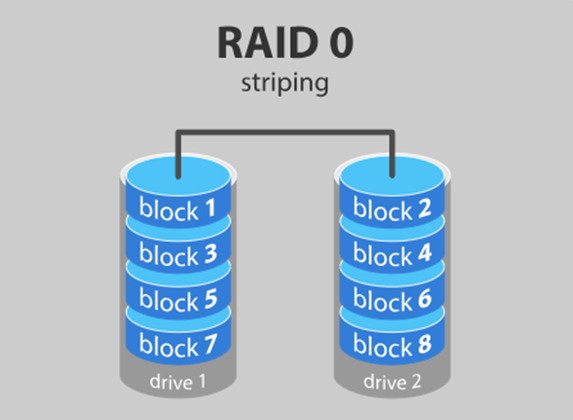
Block access means treating data in blocks rather than as files, which is similar to how hard drives function internally.
SAN provides the illusion to servers that storage is directly attached, even when storage is remote.
Usually, it relies on advanced communication protocols like Fibre Channel or Internet SCSI (iSCSI).

SANs in essence were designed mainly for enterprise applications, especially applications that require high throughput, low latency, and massive storage capacity.
It is really the best to run database servers, virtual machines, and systems with high transaction demands.
Centralized storage management, replicated data, and fast backup and recovery are features of SAN.
Although they tend to require higher initial investments and technical management, such networks can be increased as per the growing needs of the business.
Generally, dedicated hardware is involved in the setup of a SAN, which may include switches, host bus adapters (HBAs), and controllers for storage.
Missions in which performance, reliability, and redundancy are paramount find their SANs in data centres .
Key Differentiators Between NAS and SAN
The type of access: NAS-for file-level access; SAN-for block-level access.
Use cases: NAS is more suited for file sharing and backup; SAN, for heavy data processing and critical applications.
Storage Accessibility: NAS employs NFS/SMB; SAN employs Fibre Channel/iSCSI.
NAS is relatively less complex and easy to manage when compared to SAN, whose implementation requires technical setup and maintenance.
Performance: SAN has faster speeds and lower latencies than NAS.
Cost: NAS is less expensive; however, SAN is costly because of its specific hardware and infrastructure.
Secure Sockets Layer (SSL):
Development of this protocol was with regard to cryptographic means to secure messages end-to-end, specifically at the level of the internet.
It allows reading thereof by anybody else, apart from the sender (client, e.g. web browser) and receiver (server, e.g. website).
SSL was the first and earliest very much adopted protocol to offer secured HTTPS connections.

Some of the newer vulnerabilities over time have made weakness in SSL that makes it too insecure for use today.
SSL is deprecated and no longer used or supported by the majority of browsers and modern security systems.
Outdated and not recommended for use in any new system or software development: SSL.
TLS, or Transport Layer Security:
TLS refers to the next generation of technology in the development of Internet security applications and protocols.
Substitutes SSL whereby its operations are similar, but more secure and less likely to be evaded by modern disaster-protection attacks.
TLS is the encryption, authentication, and privacy of data exchanged over the Internet.

Transparent Severed Hardware Infrastructure Relevance: They include HTTPS, email (SMTP/IMAP), and VPNs.
This occurs in the application layer, wrapping other protocols in a secure connection.
The recently released editions of the TLS protocol (The Last Standard 1.2 and 1.3) have become almost ubiquitous across all modern web browsers and operating systems.
TLS in addition to encryption is an integrity and authentication mechanism to ensure that no data are changed or intercepted.
Identity verification is undertaken using technologies such as digital certificates and public key infrastructure (PKI).
Key Differences between SSL and TLS
Security: It fixes a lot of the vulnerabilities in SSL.
Support: SSL is obsolete and is not supported in any current browser; again, it has been replaced by TLS.
Performance: TLS (and particularly 1.3) is also faster and more efficient at ensuring secure connections.
Strength of Encryption: The construction of TLS is advanced and configurable compared to SSL in terms of encryption algorithms.
Protocol versioning: This is where TLS can easily be said to be versioned by numbers (for example TLS 1.2, 1.3), while SSL was last available as SSL 3.0.
So, while NAS and SAN live under the same roof, they are very different in terms of the building interiors, performance, and designs they offer for their particular use cases. Likewise, while both SSL and TLS were made to secure internet communication, only TLS continues to be secure and recommended for use today. Thus, it gives a better understanding for choosing appropriate tools for safe and effective IT infrastructure.
메타데이터
- post_id
- 0fdd63cd24e5
- slug
- network-security-fundamentals-from-data-storage-to-encrypted-communication-0fdd63cd24e5
- url
- https://medium.com/@mazherimran6/network-security-fundamentals-from-data-storage-to-encrypted-communication-0fdd63cd24e5
- canonical_url
- https://medium.com/@mazherimran6/network-security-fundamentals-from-data-storage-to-encrypted-communication-0fdd63cd24e5
- author_url
- https://medium.com/@mazherimran6
- status
- ok
- fetched_at
- 2026-08-04 20:03:00