Common Skin Problems in Cats
Skin problems destroy the body’s immune system and lead to severe agony. Fungal infections, hormonal disorders, touching base allergies…
Common Skin Problems in Cats
Skin problems destroy the body’s immune system and lead to severe agony. Fungal infections, hormonal disorders, touching base allergies; bacterial infections are all common in cats.
Skin illness in cats is easy to spot. If your cat is scratching more regularly, the chances of skin issues are high. Unless the symptoms improve, an anxious cat will find it difficult to enjoy an ordinary life.
Acne in cats is one of the most dominant skin problems. It could only happen more than once in a lifetime. It has nothing to do with age, breed, or gender. It usually occurs between the ages of two to four years. The most typical sign of feline acne is a messy chin.
Nobody knows the main reason behind feline acne. Stress, hormone imbalances, a weak immune system, and unhealthy food are the main reasons.
You may observe chin acne, as well as irritated skin, itching, licking, chewing, ear infections, and hair loss. To get rid of feline chin acne, one has to avoid plastic bowls. Try to make an effort to cut your cat’s stress and confirm proper grooming to preserve healthy skin and fur and reduce the risk of hair follicle blockage.
Common Symptoms:
An issue with your cat’s skin might manifest itself in several ways. Cats scratch, bite, and itch their fur continuously to relieve symptoms of pet allergies, and that they also lick their fur to ease infections. Contact your veterinarian if your cat exhibits any of the symptoms listed below.
• Nasty Smell
• Stud Tail
• Dry Skin
• Bacterial Infections
• Ringworm
• Hair Loss
• Acne
• Redness
In simple terms, cat health plays a significant part in their skin disorders. Incorporating high-protein, omega-3-rich foods into their diet reduces the risk of developing skin problems.
Diagnosis:
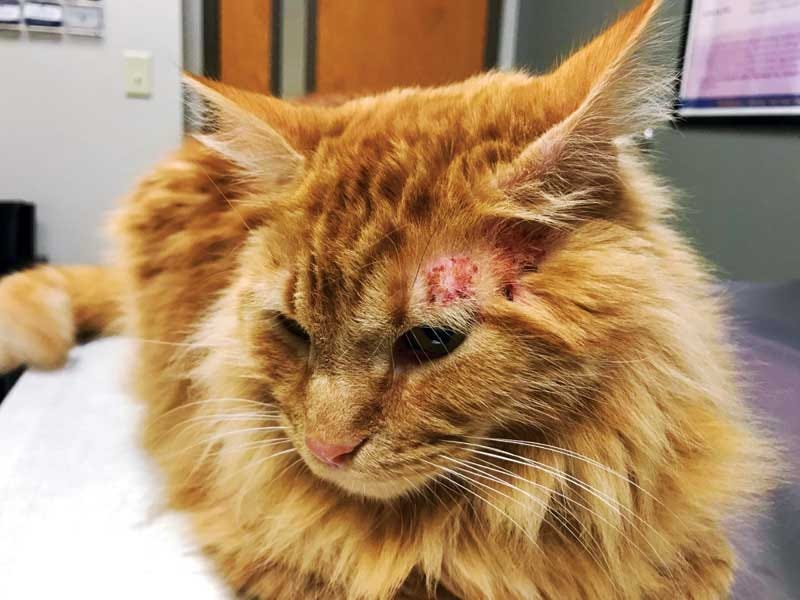
It can be difficult to identify the cause of skin illness in cats; however, in certain situations, it is easier to do so. Many skin diseases share the same symptoms, making it difficult to pinpoint the root cause. The veterinarian must thoroughly investigate the patient’s medical history, medical tests, and way of life. A complete physical examination is required to determine the kind and pattern of skin abnormalities that may indicate a reason for the skin condition. Diagnostic tests may be advised to rule out particular causes of skin disease based on the history and physical examination.
Blood and urine tests are particularly essential since they provide a detailed picture of the entire body’s condition. Skin biopsies are also used as a diagnostic technique, in which we extract a sample of tissue and point out every little feature.
Diagnostic tests may be advised to rule out particular causes of skin disease based on the history and physical examination. A cat’s response to a trial of medical therapy or food change may be used to make a diagnosis in some instances.
Treatments:
The first and most crucial step is to obtain a diagnosis. Although accurate diagnosis takes time, it is beneficial to arrive at the correct conclusion. An exact diagnosis implies the right approach.
If there is a symptom of flea then your veterinarian will prescribe flea treatment. If your cat has food allergies, your vet may have to change its diet. To decrease your cat allergic response, your veterinarian may need to administer an immune modifying drug.
To make your cat feel more at ease, anti-itch medicines might be utilized. Antifungal medicine will be provided if ringworm is found.
It’s important to work with your veterinarian to correctly explain the symptoms of cat skin. Then he will conduct a comprehensive examination and make a treatment recommendation. Dermatitis, or skin inflammation, is common in cats with skin illness, regardless of the reason. This inflammation might be caused by the same mechanism that causes the skin illness, such as some food allergies that produce irritated skin, or it could be caused by a cat scratching or biting itself in response to disease-related discomfort.
Prognosis:
The prognosis for cats with skin diseases varies depending on the origin and harshness of the disease. Although there are a few instances when skin diseases may be a sign of a more serious illness with a less favorable prediction, following your veterinarian’s instructions will usually result in shrinkage of the condition in affected cats.
메타데이터
- post_id
- 103b94097c4f
- slug
- common-skin-problems-in-cats-103b94097c4f
- url
- https://medium.com/@hiranazir295/common-skin-problems-in-cats-103b94097c4f
- canonical_url
- https://medium.com/@hiranazir295/common-skin-problems-in-cats-103b94097c4f
- author_url
- https://medium.com/@hiranazir295
- status
- ok
- fetched_at
- 2026-07-25 08:42:11